

Just Cook It! — A course on the history of Thanksgiving foods
Associated Press
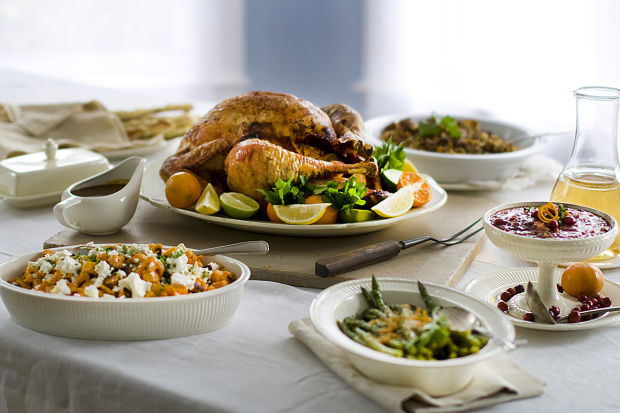
This holiday table features the turkey and all the trimmings for a Thanksgiving feast.
Associated Press
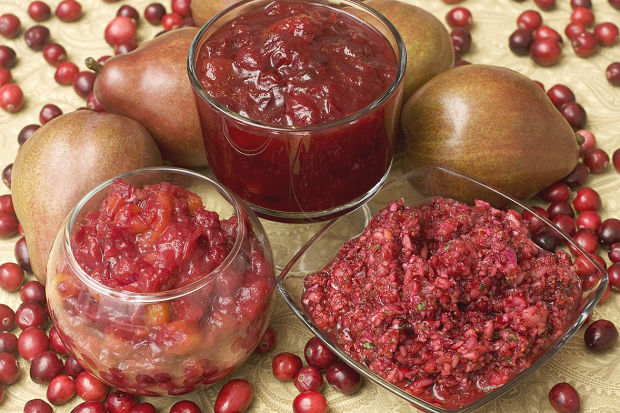
This photo shows homemade cranberry sauce.
Associated Press
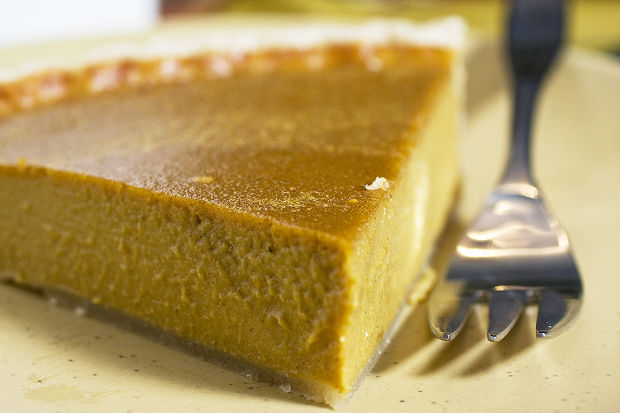
A piece of pumpkin pie is featured. According to historical accounts, the quintessential Thanksgiving dessert did not show up on holiday tables until the early 1800s.
et me be one of the first to wish you a Happy Thanksgiving in print, or on your computer screen if you are reading this at HeraldStandard.com! Today is the day we have all been looking forward to since last Thanksgiving. At the very least, Thanksgiving has been a major topic of discussion for the past month.
Today is great day, not only in the world of food, but also in the United States of America. Thanksgiving has been an annual celebration in this country since 1863. President Abraham Lincoln proclaimed a national day of “Thanksgiving and Praise to our beneficent Father who dwelleth in the Heavens.� This was during the Civil War, and in 1863, Thanksgiving was celebrated on Nov. 26. It is still celebrated on the fourth Thursday in November every year.
I’m not an expert in history by any stretch, but I think it is very important and relevant to know at least a little about why we are all getting together to eat large quantities of food and be merry today.
The first Thanksgiving was actually celebrated in 1621 by the Pilgrims after their first harvest in the New World. The first Thanksgiving lasted three days and in attendance was 90 Native Americans and 53 Pilgrims. ThatÄ¢¹½ÊÓƵ quite the crowd — how many pounds do you think their turkey weighed?
That, of course, is a trick question. No definitive proof exists that turkey was actually served during the first Thanksgiving dinner. According to the Pilgrim chronicler, Edward Winslow, the colonyÄ¢¹½ÊÓƵ governor, William Bradford, sent four men on a “fowlingâ€� mission. Wild turkeys were a common food source for both the Pilgrims and Native Americans, but then again so were ducks, geese and swans. What the “fowlingâ€� party returned with is not specifically known.
Whether they indulged on turkey during the first Thanksgiving is anyoneÄ¢¹½ÊÓƵ guess, but we do know that they most certainly ate their fill of meat over those three days. According to WinslowÄ¢¹½ÊÓƵ journal, they had at least five deer on the menu. Culinary historians believe that some of the deer was spit roasted over a smoldering fire while some was made into a stew.
As for the stuffing, it is not believed that they made the same bread based stuffing, or dressing that we enjoy today. Instead the Pilgrims would have most likely used onions, herbs or various nuts to dress their birds.
Vegetables were most likely plentiful at that feast since they were indeed giving thanks for the first autumn harvest. Vegetables such as beans, onions, lettuce, cabbage, carrots and peas were most likely large parts of their meal.
Corn was probably also served since records show that it too was indeed abundant that first harvest. Corn was most likely not prepared the way we are used to enjoying it today — slathered in butter on or off the cob. Instead, at the first Thanksgiving it was most likely ground into cornmeal and then cooked into a porridge or mush that was then sweetened with molasses.
We love a nice big blob of cranberry sauce on Thanksgiving. I prefer to make mine with cranberries, sugar, cranberry juice, orange zest, and a vanilla bean. But however it appears on your Thanksgiving table, chances are very good that it does. In 1621, however, the Pilgrims had already depleted most of their sugar reserves. Cranberries were most likely part of the meal since the Native Americans consumed them and even used them for natural dye, but they wouldn’t have been made into cranberry sauce.
Other fruits that were likely present would have been grapes, blueberries, plums, raspberries and gooseberries.
It is also believed that seafood was a major part of the first Thanksgiving celebration. Personally, I don’t know of many people who include seafood on their Thanksgiving menu but it doesn’t really sound like a bad idea. Who wouldn’t enjoy a roasted turkey and lobster surf and turf?
Mussels were abundant in New England and could have been easily harvested, so they were most likely a large part of the meal. Mussels with curds were popular in those days. Lobster, bass, clams, and oysters were also very likely to be found on the table back then.
This next part of the meal is kind of hard to believe, mostly because I don’t want to, but believe it or not — potatoes were not a part of the first Thanksgiving. Around 1570 is when the Spanish began introducing potatoes to the Europeans. When the Pilgrims boarded the Mayflower to come to the New World the potato had not yet become popular enough for them to take up valuable space to bring them. Since they weren’t popular enough to bring, they also weren’t yet popular enough to grow.
Just because there were no potatoes present on the first Thanksgiving table, doesn’t mean that other plant roots weren’t necessarily represented. Indian turnips and groundnuts were common in those days, but no one knows for sure if they were actually present during the first Thanksgiving dinner.
The last, and to some the most anticipated, part of the traditional Thanksgiving dinner is of course dessert. What would Thanksgiving be without pumpkin pie? It would be the first Thanksgiving!
The Pilgrims and Native Americans did in fact eat pumpkin and other squashes, but they did not have wheat flour or butter, which are necessary for making pies. They also didn’t yet have ovens for baking. According to some experts, the Pilgrims would hollow out pumpkins and fill their shells with a custard consisting of milk. honey and other spices. They would then roast the filled pumpkins in hot ashes.
The point I am trying to convey here is that while all of the “traditionalâ€� foods for Thanksgiving are fun and delicious they aren’t the end all be all to the holiday. A lot of people enjoy ham over turkey for Thanksgiving and thereÄ¢¹½ÊÓƵ nothing wrong with that. If you wanted to be more of a traditionalist you could make a valid argument for roasting venison instead of turkey.
Thanksgiving is what itÄ¢¹½ÊÓƵ name suggests — a day to give thanks. Thankfully, we don’t have to worry about a harvest anymore, and most of us will have the privilege of eating as much as we want today with plenty of food left over.
This Thanksgiving take a few moments to realize the true meaning of the holiday before diving into that giant plate of wonderful food in front you. Thank God, thank all of your loved ones that you get to spend the meal with, and really enjoy it.
Whether itÄ¢¹½ÊÓƵ turkey, ham, venison, mussels and curds, or whatever your Thanksgiving meal consists of this year — Just Cook It and have a very happy and delicious Thanksgiving!
Mario J. Porreca of Belle Vernon is a food personality, author, and the host of Just Cook It on WMBS Radio 590 AM. He can be reached via his website at: www.JustCookIt.net.