

Just Cook It: Playing fall favorites
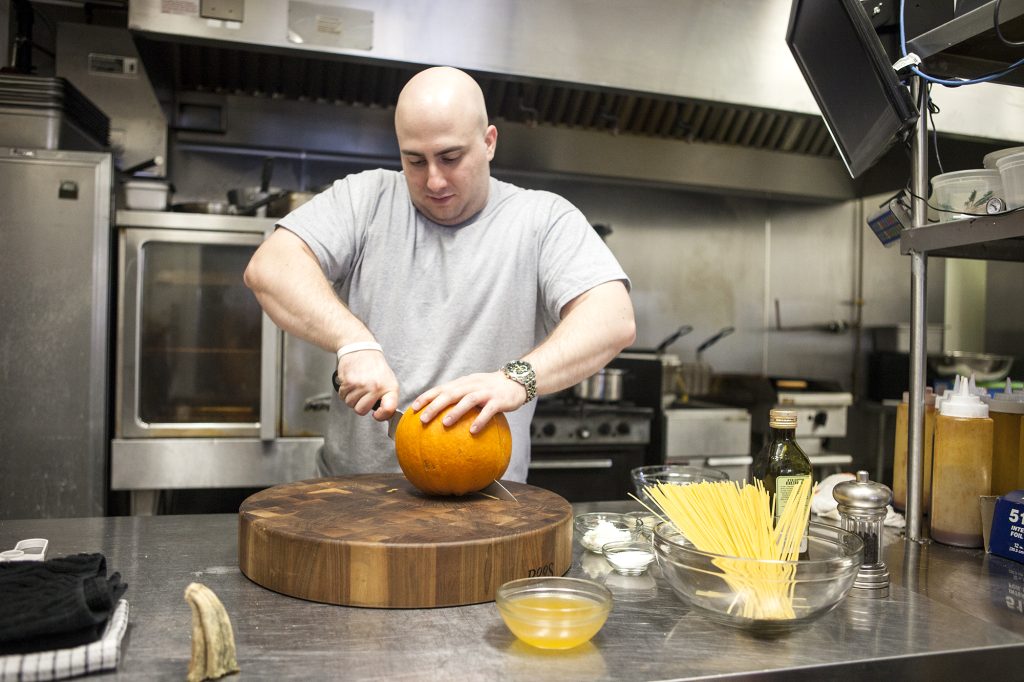
Chef Mario Porreca cuts a pumpkin for his fall linguini recipe.
Amanda Steen | Ä¢¹½ÊÓƵ
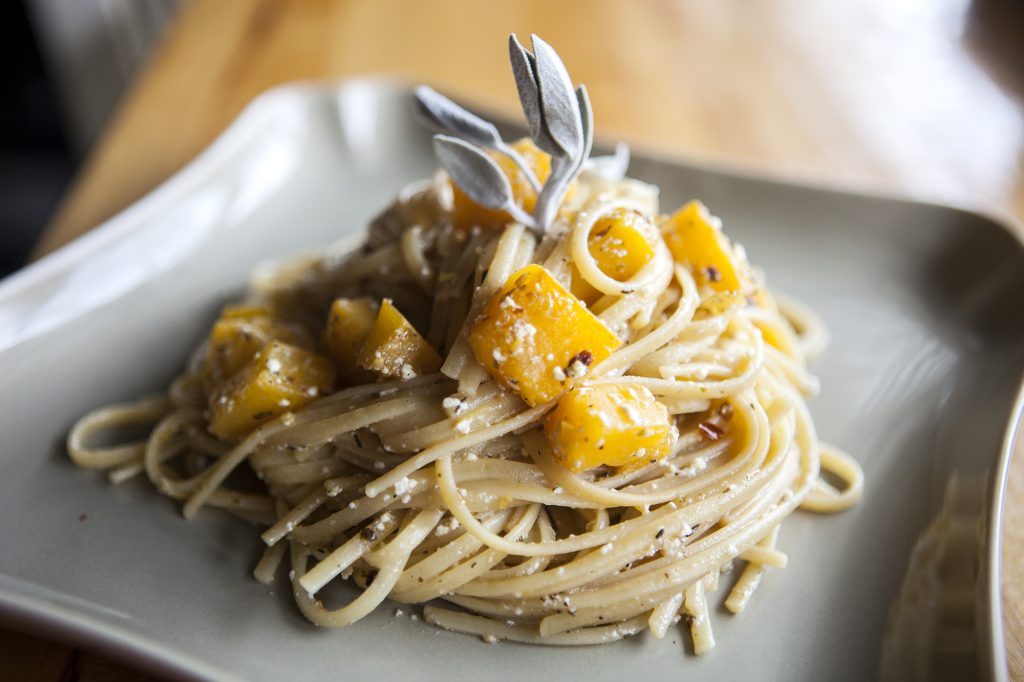
Chef Mario PorrecaÄ¢¹½ÊÓƵ pumpkin linguini
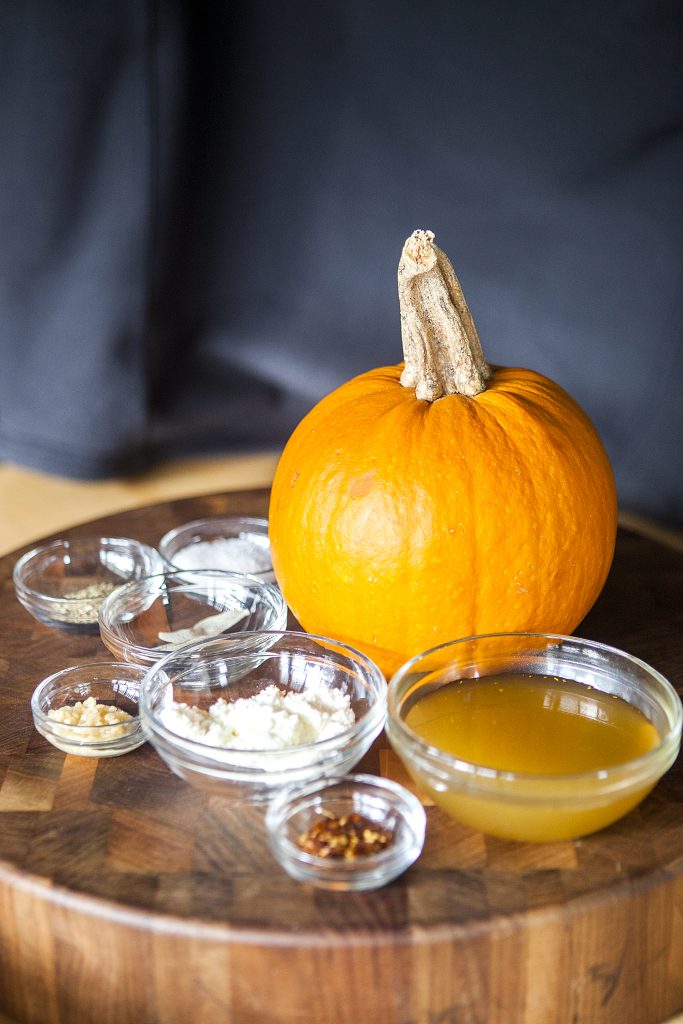
Amanda Steen | Ä¢¹½ÊÓƵ
In the top photo, Chef Mario Porreca cuts a pumpkin for his fall linguini recipe.
Directly above are some of the fresh ingredients for the recipe. At left is fall linguini ready to taste.
October is a fun month when it comes to food.
The fall season in general brings a lot of fun ingredients with it that we have discussed in past columns and will continue to discuss as the season marches on.
In my previous Just Cook It columns this fall season, we have discussed seasonal fall produce and even devoted an entire column to the undisputed king of fall – the pumpkin.
All of this seasonal food is wonderful, and we are going to continue to explore it; however, October is also known for something else that excites me just as much as the seasonal food it brings with it. October is National Pasta Month.
I’m obviously very proud of my Italian ancestry, but you don’t have to be Italian to love pasta. I consider pasta to be a universal food and it is beloved by both children and adults alike.
I love all types of pasta, and it continues to be a staple on our dinner table every Sunday afternoon at my grandfatherÄ¢¹½ÊÓƵ. I’ve eaten pasta in Italy, in numerous restaurants across the United States, and made it myself countless times, but I can honestly say that the pasta my grandfather makes every Sunday is my favorite.
I don’t usually like to play favorites when it comes to food, but I have been quoted in the past as claiming that pasta (specifically our family Sunday pasta) is my favorite food. I can’t tell you exactly why, but I can tell you that I’ve been eating pasta for as long as I can remember and it is the undisputed king of comfort foods for me – much like pumpkin is the king of the fall season.
Pasta is widely recognized, at least here in the United States, as being an Italian food. This assumption is normally correct depending on the preparation of the dish. We don’t know much about the invention of pasta since it is on record of being enjoyed so long ago.
There are many types of pasta made in many different cultures by many different nationalities – i.e. people with a Polish background (many in this area) enjoy pierogies. However, for this column we are going to focus on the more mainstream varieties of Italian pasta.
There are numerous varieties and types of Italian pasta, and to simplify things, I like to break them down into two major categories, which are then divided into four smaller sub categories.
The two major categories of pasta are long form pasta and short form pasta.
Long form pasta or strand pasta can be explained as anything spaghetti like that can be twirled around your fork. Strand pasta can be round or flat, solid or hollow. Anything from angel hair to bucatini is considered to be long form or strand pasta.
A sub category of long form pasta is ribbon pasta. Ribbon pasta is the flat cuts of pasta. Fettuccine, lasagna, linguine, and tagliatelle are popular types of ribbon pasta.
The second major category of pasta is short form pasta. Short form pasta is divided into three sub categories – tubular pasta, shaped pasta, and stuffed pasta.
Popular types of tubular pasta include pasta such as elbows, manicotti, penne, and rigatoni. Tubular pasta can be tiny, jumbo, smooth, or ridged. They can also be straight or diagonally cut.
Shaped pasta includes farfalle (bow ties), fusilli (corkscrews), and ruote (wagon wheels – which happen to be my personal favorite). Any pasta that is twisted, curled, or shaped is included in this category.
Finally stuffed pastas include agnolotti, manicotti, ravioli, tortellini, and even dumpling like pasta such as gnocchi are included in this category.
Different regions in Italy specialize in different types of pasta. With something as diverse as pasta it can get confusing or even overwhelming to try to wrap your head around all of the different pasta varieties available.
For that reason I like to keep things as simple as possible by using the categories listed above.
For the recipe included with this column, I chose to share one of my favorite seasonal fall pasta recipes. The pasta used for this recipe is linguine, which is an easy to find traditional and economical (most pasta is) type of pasta.
Let me preface the upcoming paragraph by saying that I much prefer homemade pasta to store bought pasta. ThereÄ¢¹½ÊÓƵ nothing wrong with store bought pasta, but in my opinion the flavor and texture of homemade pasta is superior to the store bought variety.
That being said, the store bought or dried pasta is much more convenient to make at home. For that reason that is the type of pasta I used in the recipe below. However if you are willing and able to make homemade pasta, then by all means you absolutely have my blessing.
The secret to cooking store bought pasta is to read the label on the box. Many people think throwing it on the wall or something crazy like that is the best way to tell if it is done. ThatÄ¢¹½ÊÓƵ wrong and messy.
The best way to cook pasta is to read the instructions on the box and follow the guidelines for time listed.
One other tip, and then I promise to let you get started cooking and enjoying the recipe, when cooking pasta you should never use a colander to drain it.
When it is finished cooking, use tongs or a pasta fork to pull or scoop the pasta from the water and then transfer it directly to your pan with sauce or other ingredients that you are tossing your pasta with.
The water that the pasta is cooked in becomes almost like a pasta stock. The excess starch from the pasta leeches into the water along with there being flavor imparted into the water from salting it. The Italians say that pasta water should be seasoned to taste like the ocean. Salt your water, taste it, and use it when necessary.
If your sauce looks a little thin you can always add a few tablespoons of the pasta water to it and the starch in the water will actually help the sauce to stick to your pasta and give it a nice mouth feel. ThatÄ¢¹½ÊÓƵ what I mean when I say to use your pasta water when necessary.
Also, don’t be intimidated by the anchovy paste in the recipe below. I promise the final dish does not taste like anchovies.
The anchovy paste adds depth and gives the pasta another layer of flavor. My younger sister loves this dish and she is the pickiest eater I know. Give it a try and I think you’ll be surprised to find that you really like it, even with the anchovy paste.
Don’t forget to visit HeraldStandard.com to check out the video of me preparing this dish.
Mario Porreca of Belle Vernon is an entrepreneur, author, lifestyle strategist, and the host of Just Cook It Radio.
He can be reached via his website at: www.MarioPorreca.com. Twitter: @MarioPorreca
Fall linguini
Yield: 4 servings
2 tablespoons extra virgin olive oil
1 teaspoon anchovy paste
¼ teaspoon minced garlic
Pinch of red pepper flakes
8 ounces pumpkin, peeled, medium dice
Pinch of Italian seasoning
½ cup chicken stock
½ pound linguine pasta
2 tablespoons ricotta cheese
2 leaves fresh sage
Sea salt to taste
Fresh cracked black pepper to taste
Procedure:
1. In a large sauté pan over medium heat, add the olive oil, anchovy paste, minced garlic, and red pepper flakes and allow them to cook for one to two minutes to infuse the oil.
2. Add the pumpkin to the pan, season with a pinch of Italian seasoning, and lightly caramelize (a light golden brown color), about 5 minutes.
3. Add the chicken stock to the pan and turn the heat down to medium low. Simmer the sauce to reduce by about half.
4. While the sauce is reducing, cook the linguine in boiling salted water to al dente according to the directions on the package.
5. When the pasta is finished cooking, use tongs to take it straight from the cooking water to the sauté pan with the sauce. Toss the pasta with the sauce to coat evenly. If the sauce isn’t coating the pasta well, add a few ounces of the pasta water to the pan and continue tossing until the correct consistency is reached.
6. Add the ricotta cheese and sage leaves and toss again to evenly distribute. Season to taste with sea salt and fresh cracked black pepper and remove the sage leaves before serving.