

Just Cook It: Turning a dish into a ‘family recipe’
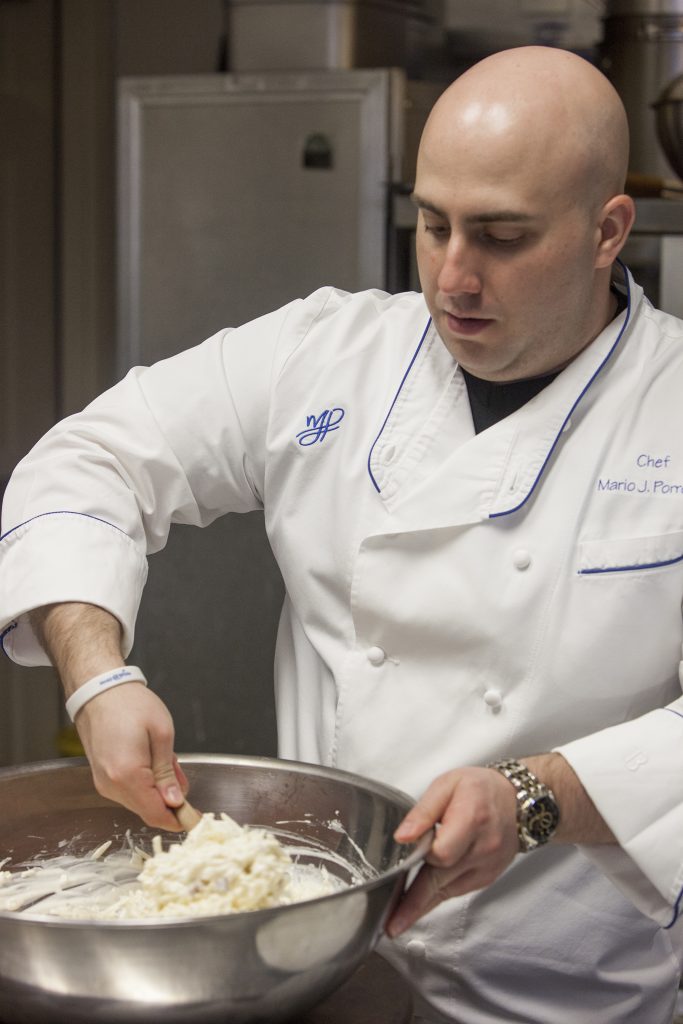
Chef Mario Porreca prepares his Goldfish-Crusted Cheesy Potatoes on the set of Just Cook It.
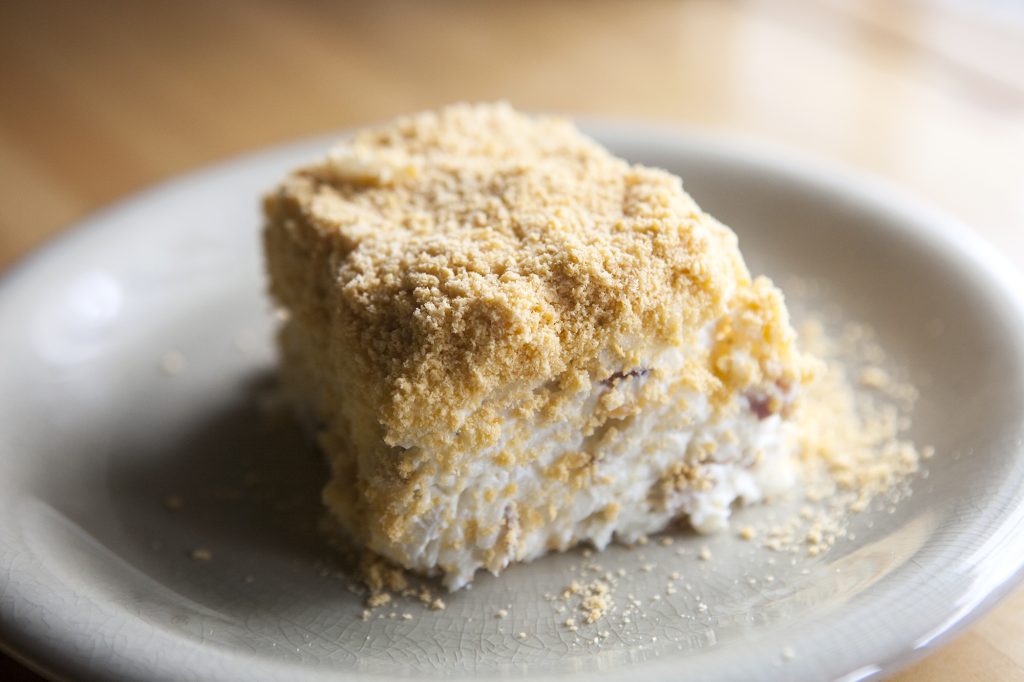
Thick-cut bacon and a rich custard gives new life to cheesy potatoes.
We all have that go-to recipe that we can make with our eyes closed. It started out as a recipe that you would try from a certain cookbook or a recipe that someone generously shared with you, probably quite sometime ago.
You made this recipe once and thought it was pretty good and easy enough to make. Then you were required to bring a dish to a social gathering of some sort — a Super Bowl party, birthday party, family reunion, or some other kind of similar gathering. You thought, “Hey that/those (insert dish name) was/were delicious and easy to make, I think I’ll make it/them again.�
Your dish ends up being a hit and the next thing you know itÄ¢¹½ÊÓƵ 20 years later and you’ve made this exact dish for the last 200 events/parties that you’ve attended. In fact, you’re pretty much known for this dish by now and no longer even need the original recipe to make it.
This is generally the timeline of events that lead to a recipe being called a “family recipe.� These recipes become a staple overtime and we all have them in our families. Sometimes they evolve to become specific to certain families and when that happens good luck getting your hands on the complete recipe. Family recipes tend to become top-secret property and can be of great value.
September is National Potato Month, so my initial thought was that I had to do a recipe for my monthly featured column that stars the humble potato. The potato is AmericaÄ¢¹½ÊÓƵ favorite vegetable. We Americans consume 140 pounds of potatoes per person every year. If you think thatÄ¢¹½ÊÓƵ a lot of spuds, think again because Europeans consume twice that amount.
The potato is a very popular vegetable to children and adults alike. Potatoes are actually the worldÄ¢¹½ÊÓƵ fourth food staple behind only wheat, corn, and rice. Almost every party and/or get together features some sort of potato dish. With itÄ¢¹½ÊÓƵ popularity as mentioned above it would almost be a crime not to have a potato dish at your event.
Allow me to tie all of this together for you. The story of the family recipe and National Potato Month do in fact have something in common. The dish that my family makes (it rotates between my mother and my aunt) is something we have called (for at least 20 years) Super Duper Potatoes. Yes, itÄ¢¹½ÊÓƵ a cheesy name – they are actually cheesy creamy hash brown potatoes baked in a casserole (see what I did there with the “cheesyâ€� reference).
I still believe that there is a place on our table for a creamy cheesy potato casserole; I just believe that the dish is in need of a special make over. I mentioned that these recipes could evolve over time, so I used my expertise to increase the speed of this particular evolution.
I took it upon myself to take classic family Super Duper Potato and reinvent it. ItÄ¢¹½ÊÓƵ the equivalent of giving it a shower, shave, and new suit. ItÄ¢¹½ÊÓƵ still the same person, it just reminds you of a new person since itÄ¢¹½ÊÓƵ a little different, more complex, and a little more put together.
When I say “complexâ€� I don’t mean complex in the manner that itÄ¢¹½ÊÓƵ more difficult to prepare. I mean the flavors are little more complex and the casserole overall has a bit more depth in flavor.
We should all be familiar with what a casserole is, but just in case you need further clarification allow me to explain. The word “casserole� comes from the French word for “saucepan.� It is a large, deep dish used both in the oven and as a serving vessel. The word also refers to the food cooked and served in such a vessel, with the cookware itself called a casserole dish.
For my makeover I decided to stick with the shredded hash brown potatoes that can be purchased from the freezer section of your local supermarket. I feel that this type of potato makes preparing this dish very easy and convenient without diminishing the quality of the final product. When you can make things easier I have always felt that you should take advantage of that. Work smarter, not harder.
If you want to make your own hash brown potatoes you can certainly do that. What you will have to do is first peel your potatoes; I would use russet potatoes for this dish. Then either steam or boil your potatoes until they are fork tender. Cool your potatoes until they are at least to room temperature and then grate them using the large side of a box grater. At this point you can then proceed with the recipe as normal.
For my version of this recipe I started with, what else, bacon and onions. Bacon makes everything better and I believe that onions and potatoes should spend as much time together as possible.
I use thick-cut bacon for this recipe. When I say thick-cut bacon, I mean the really thick specialty stuff that is about ¼ inch thick. I like for it to be substantial, and I feel like the thicker bacon contributes more flavor to this dish.
It is much easier to dice bacon when it is very cold or even partially frozen. A good tip is to stack your bacon in stacks that are about three strips high on a plate or sheet pan. Then place it in the freezer until it is partially frozen. Take one stack at a time out of the freezer and dice it. It will cut much easier for you and after it is diced it will thaw in a matter of minutes for you to then render it and proceed with the recipe.
I also like to dice my cheese for this recipe as opposed to using shredded cheese. The reason is that it will take the cheese a bit longer to melt as it bakes holding the dish together better, and I also like to get small pockets of cheese as I eat the potatoes as opposed to having an excessive amount of cheese throughout the dish.
I know this sounds unlike me and counterintuitive, but there is more flavor to this dish than just the cheese, and I want to allow the other flavors (bacon, onion, potatoes, etc.) to shine as well.
I also made an extremely rich custard that includes mayonnaise, sour cream, heavy cream, and eggs as opposed to the traditional Half and Half and cheese that holds the original recipe together. This specialized custard gives the dish more body, a better mouth feel, more creaminess, and an overall richer flavor.
The coup de grace, if you will, is the crunchy topping. I wanted to add more cheese here so that you get that extra cheese that the dish is traditionally known for. With that in mind, I chose to crust the top of this casserole with crushed cheddar cheese flavored Goldfish crackers.
I love Goldfish crackers and they work wonders on this dish. As the casserole bakes, it will slightly rise and when this happens the crust may crack a bit. A remedy for this is to have some extra Goldfish crumbs to sprinkle on top after it finishes baking. I’ve never heard anyone complain about extra Goldfish.
Finally, maybe the second best part of this recipe (after the taste) is the fact that it can in fact be made ahead of time. You can make this recipe the night before and store it in the refrigerator. Before serving, sprinkle fresh Goldfish crumbs on the top and slowly reheat in the oven at 275 to 300 degrees until it reaches 150 to 160 degrees in the center when tested with an instant read thermometer.
Don’t forget to visit HeraldStandard.com and watch the video of me making my made over version of Super Duper or Cheesy Potatoes. Enjoy the recipe and enjoy National Potato Month!
Mario Porreca of Belle Vernon is a food personality, entrepreneur, author, and the host of Just Cook It Radio on WMBS Radio 590 AM. He can be reached via his website at: www.MarioPorreca.com. Twitter: @MarioPorreca