

Eggstravaganza: Celebrating Easter with Slavic art classes, festivals
Katherine Mansfield
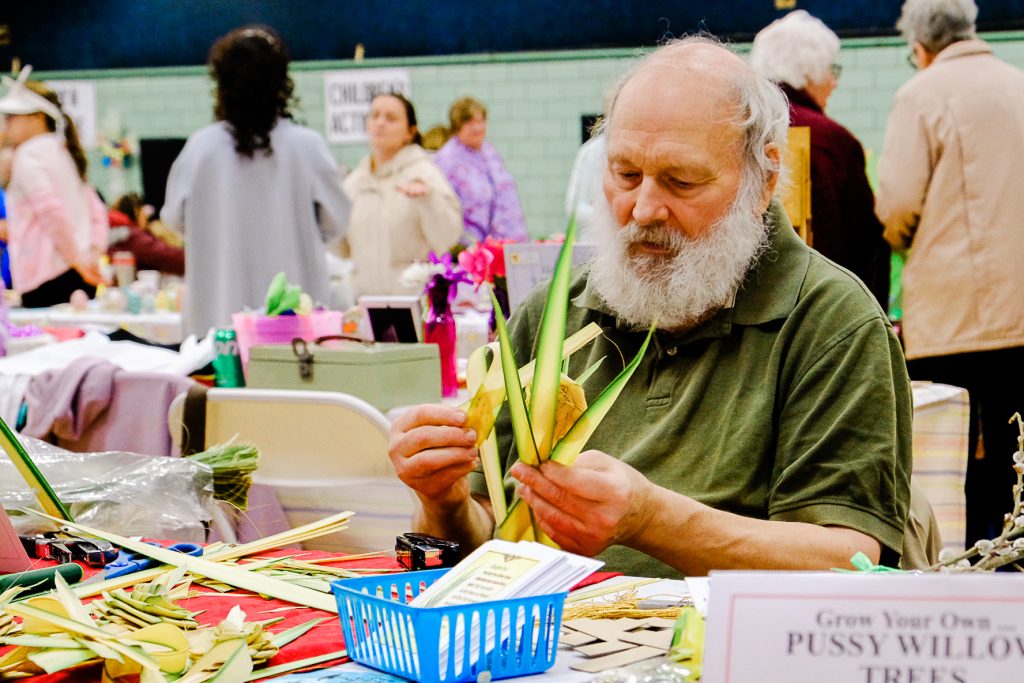
Lawrence Kozlowski continues the tradition of palm weaving, taught to him by nuns in elementary school, during the 16th annual Eggstravaganza in Uniontown in March. Kozlowski, of Monroeville, sold palm and pussy willow branches, which were traditionally used in Slavic countries to celebrate Palm Sunday.
Katherine Mansfield
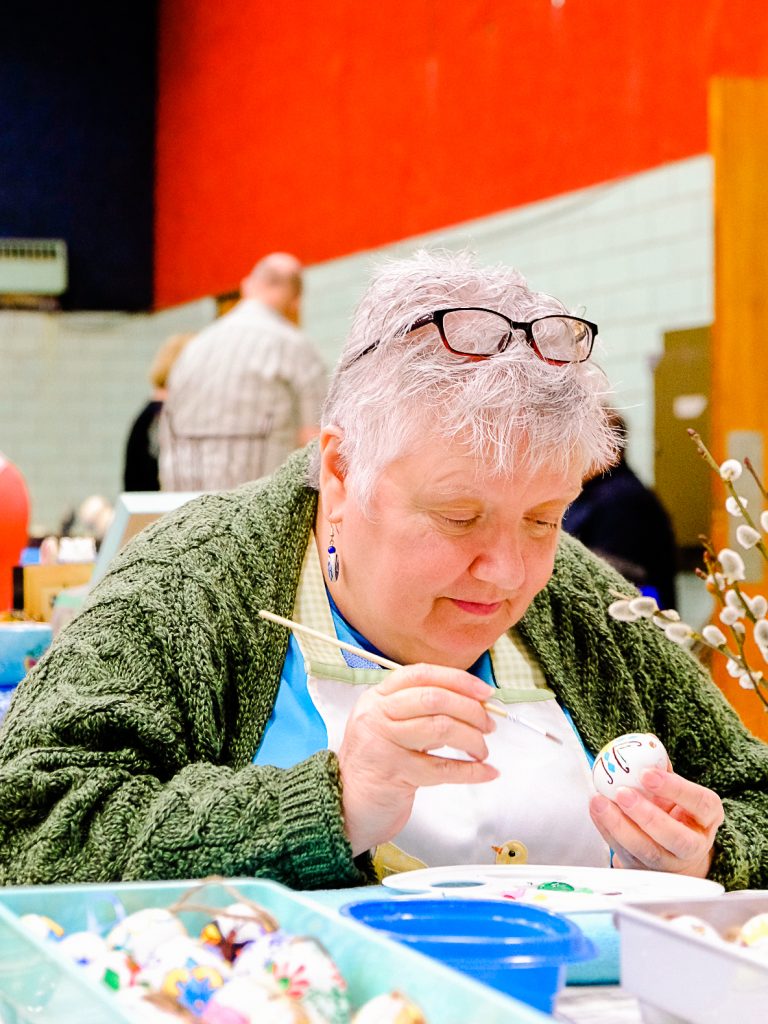
Sharon Tyborowski Hachman, of New Kensington, spent the Eggstravaganza painting eggs with acrylic paint, a tradition sheÄ¢¹½ÊÓƵ carried on from childhood. This was the egg artistÄ¢¹½ÊÓƵ second year participating in the Uniontown festival.
Katherine Mansfield
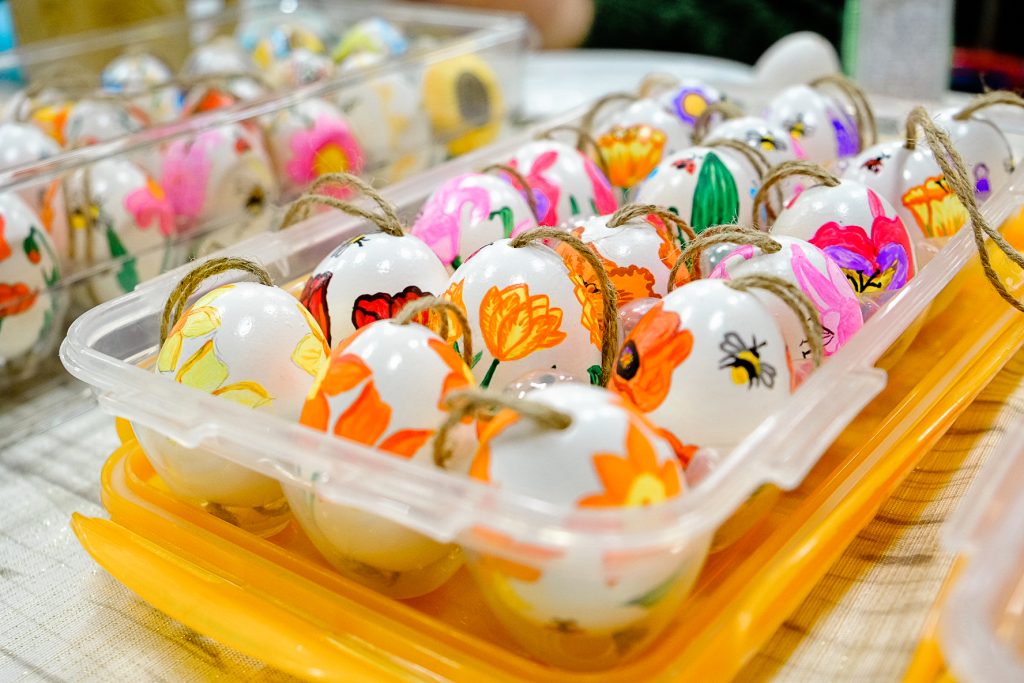
Acrylic paint on egg is Sharon Tyborowski HachmanÄ¢¹½ÊÓƵ spin on Easter egg tradition.
Katherine Mansfield
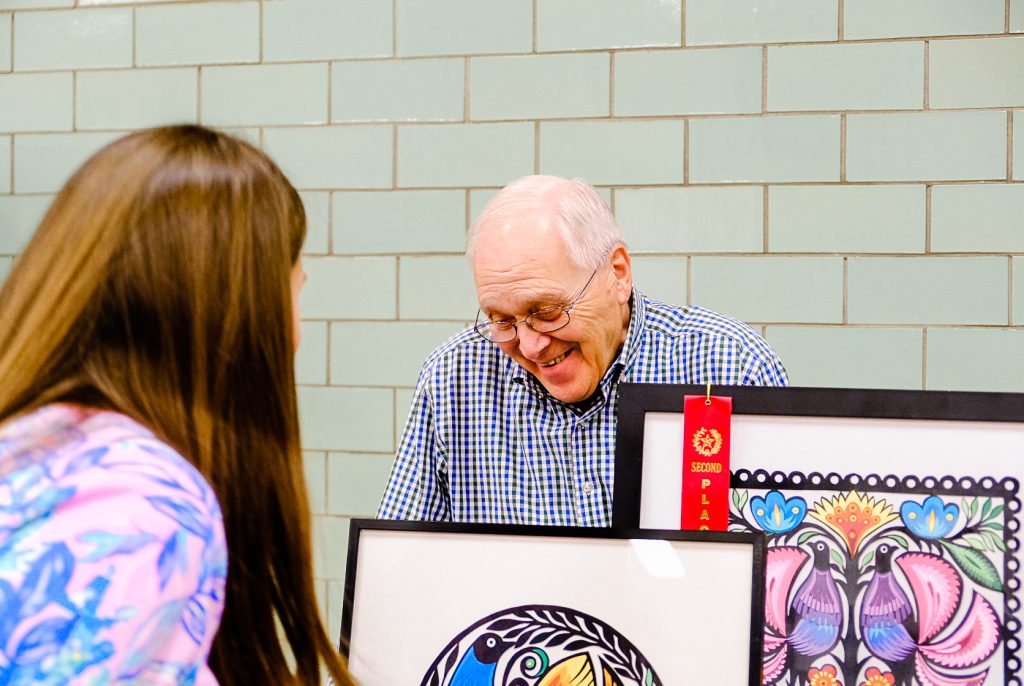
Joseph Borytsky talks all things Polish art at the 16th annual Eggstravaganza in Uniontown March 26. The artist showcased his paper cut artworks, pictured here, alongside Polish drop and pull, silk print and pysanky eggs.
Katherine Mansfield
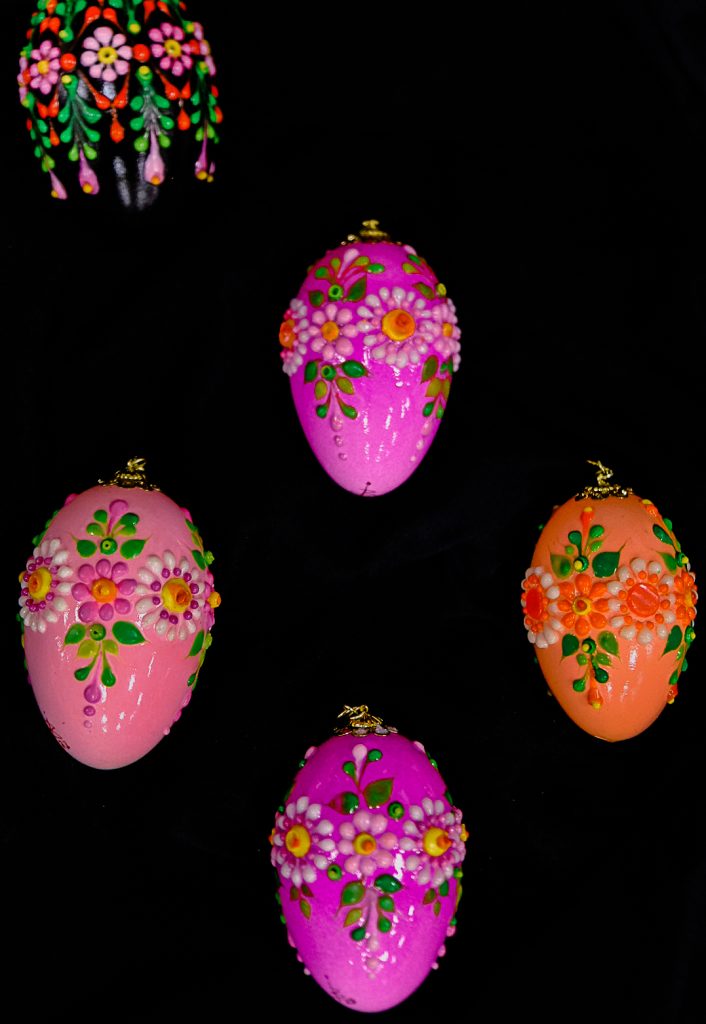
Joseph Borytsky uses the Polish technique of drop and pull to create brilliant, textured designs on eggs of all kinds. The Fairchance artist enjoyed sharing his creative process with Eggstravaganza attendees.
Katherine Mansfield
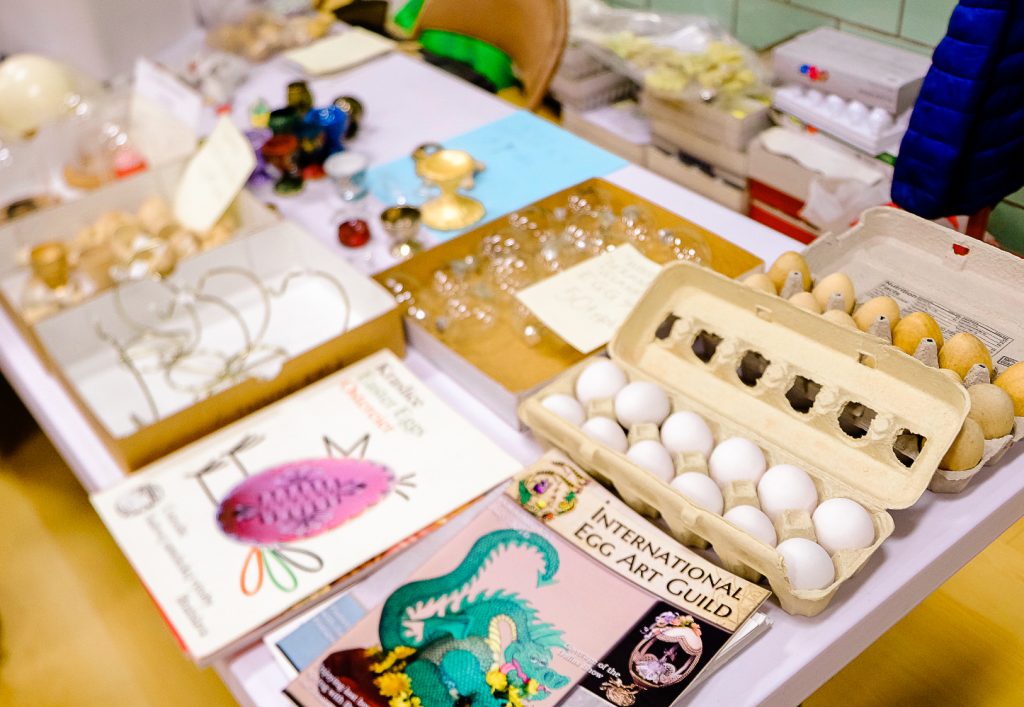
Egg art resources and other Lenten season decorations were available for purchase at the Eggstravaganza.
Katherine Mansfield
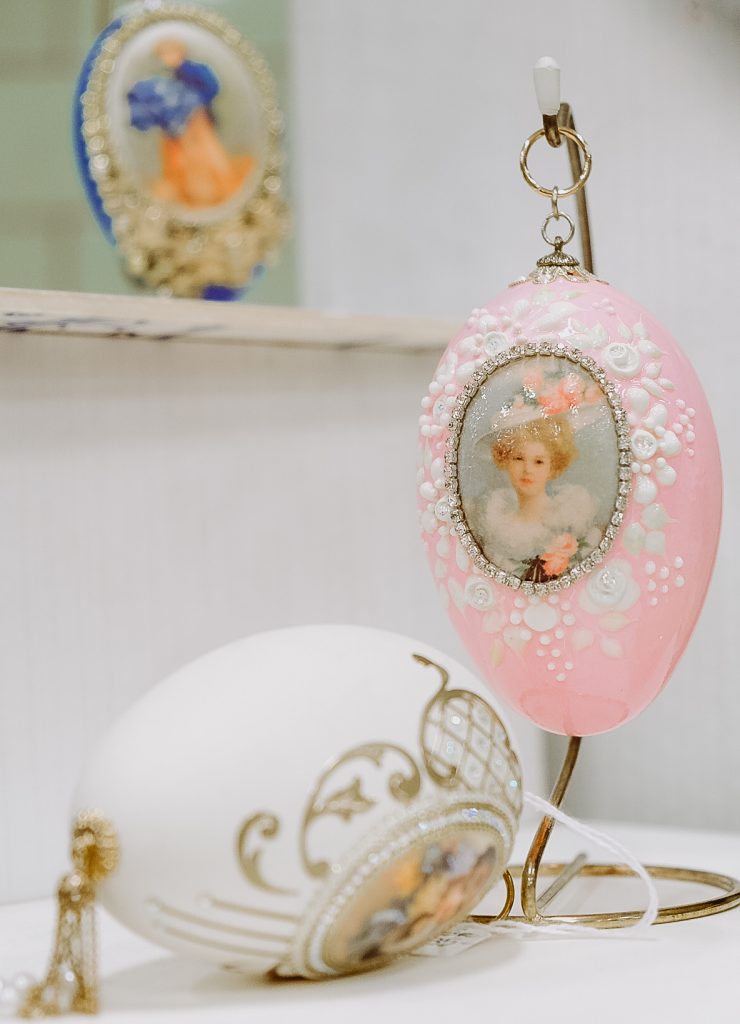
Along with traditional Ukrainian pysanky and Polish drop and pull eggs, Joseph Borytsky also handcrafts silk print eggs like these, which were displayed during the 16th annual Eggstravaganza in Uniontown last month. For more, please see PAGE C1.
Katherine Mansfield
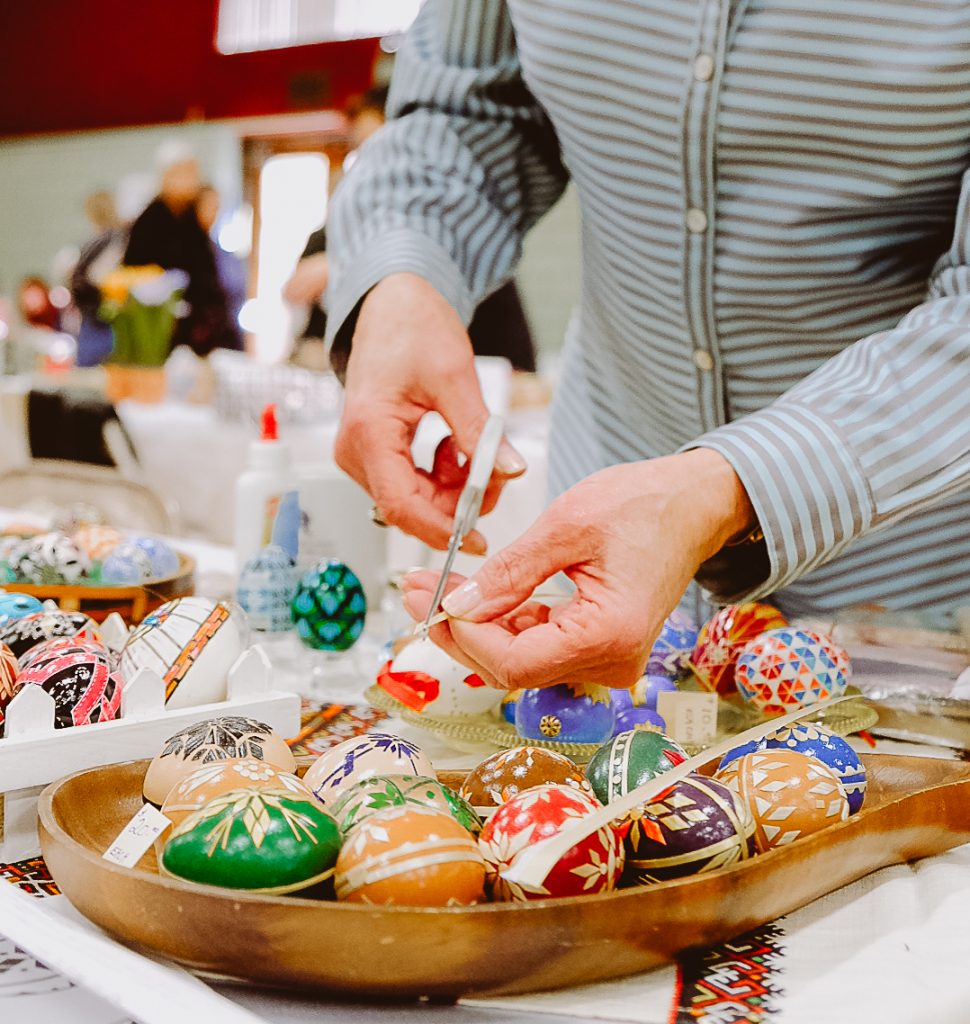
Lois Winslow cuts small pieces of palm leaves, which she often uses to add textured design to dyed eggs. Winslow showcased a variety of egg art techniques at the 16th annual Eggstravaganza in Uniontown March 26.
Katherine Mansfield
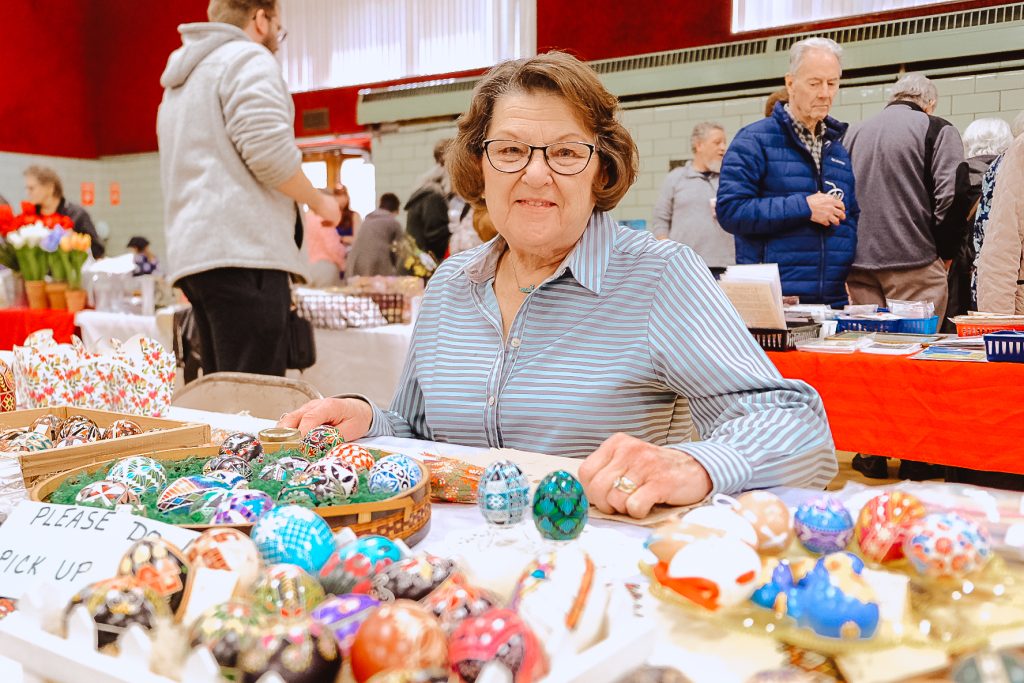
Lois Winslow sits among her art pieces, including traditional Ukrainian pysanky and Trypillian style eggs. Winslow, a retired math teacher, has been teaching the art of pysanky classes in her hometown of Perryopolis since 2000.
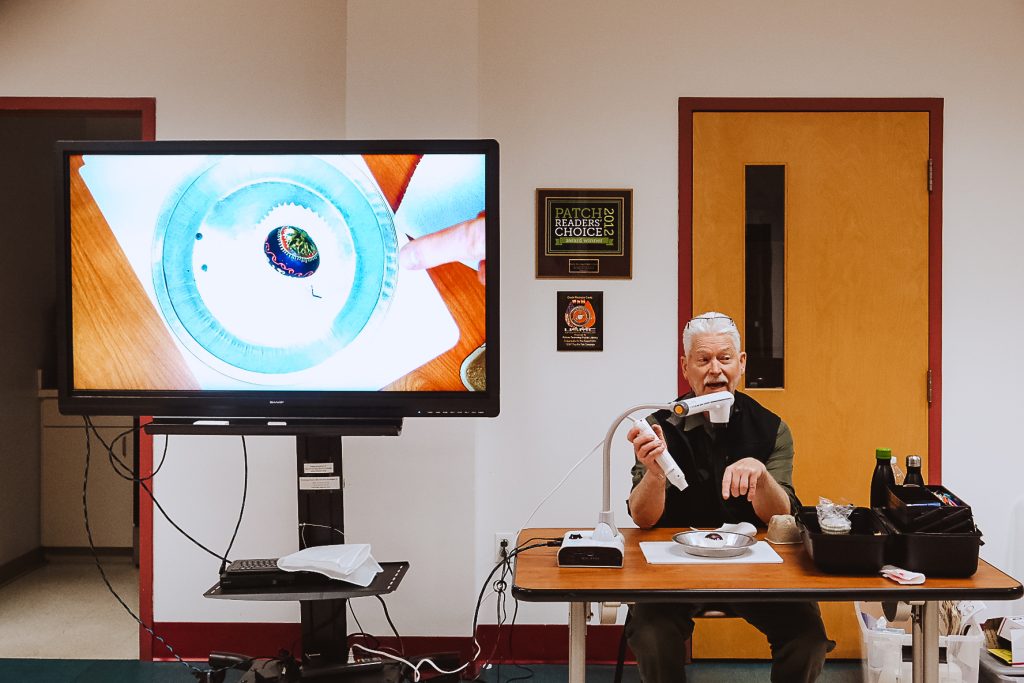
Michael Yanchek demonstrates ways to remove wax from pysanky eggs, to reveal the completed artwork, at Peters Township Library on March 2. About a dozen eager learners crafted pysanky eggs and learned the tradition's history during Yanchek's two-part workshop series.Â
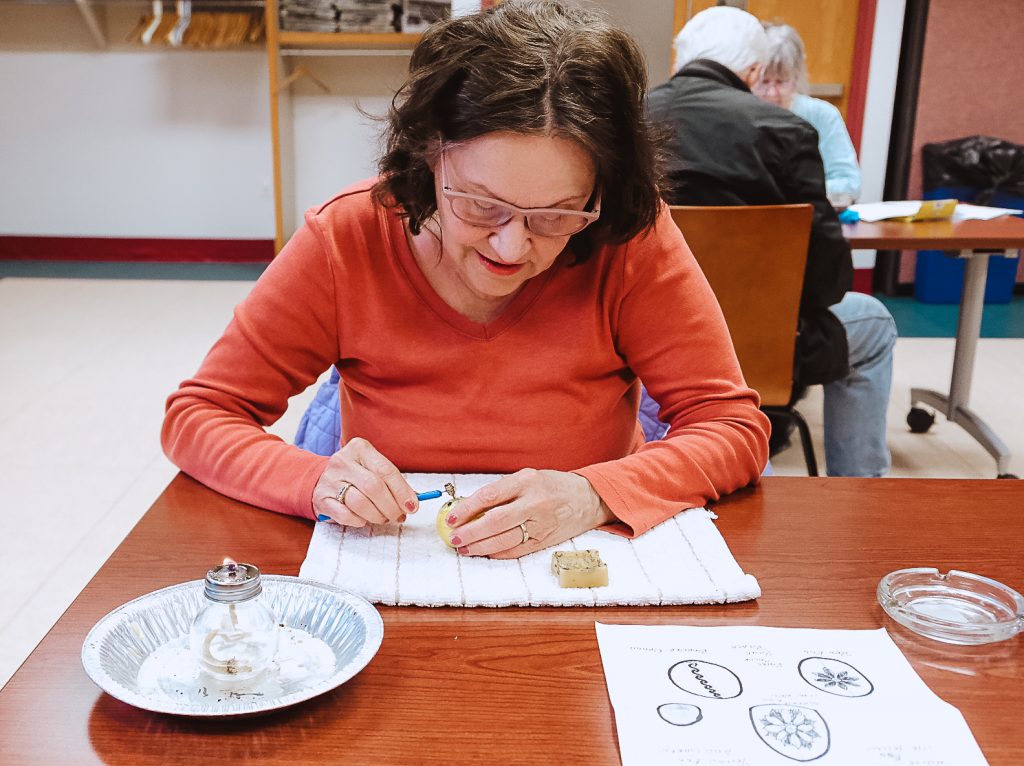
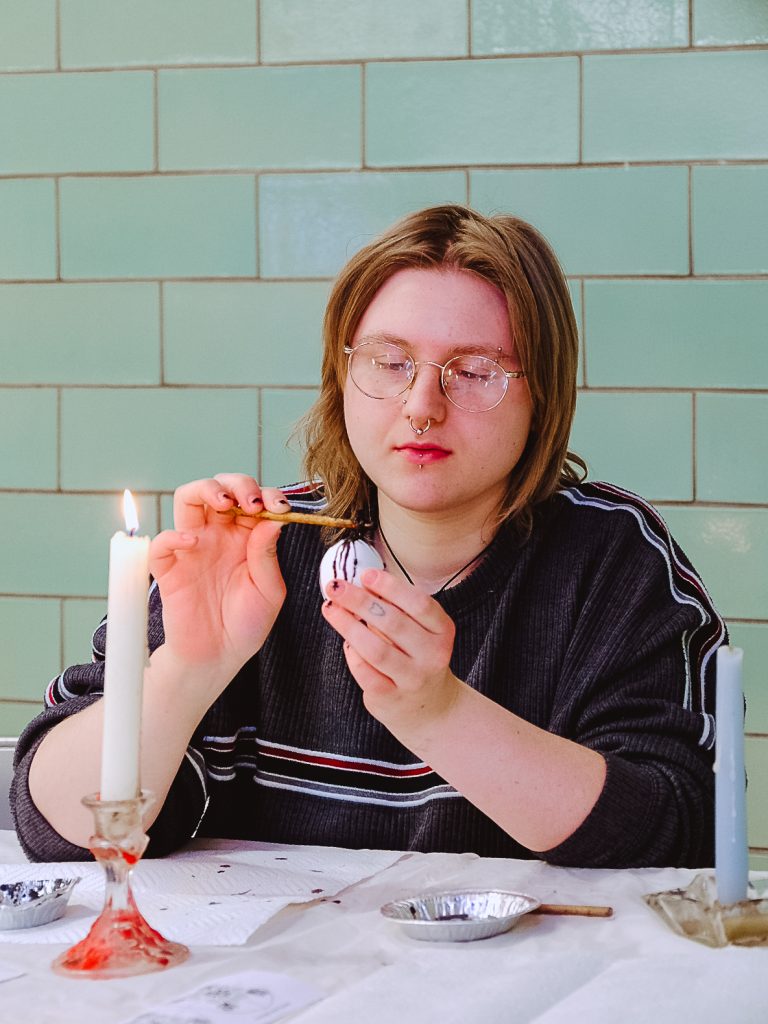
Ellen Murphy concentrates on writing in wax on her pysanky egg during the workshop at Peters Township Library in early March. Murphy enjoyed learning the art form, poked fun at her progress and joked that "unless it's your job, people should have fun and go with the flow."
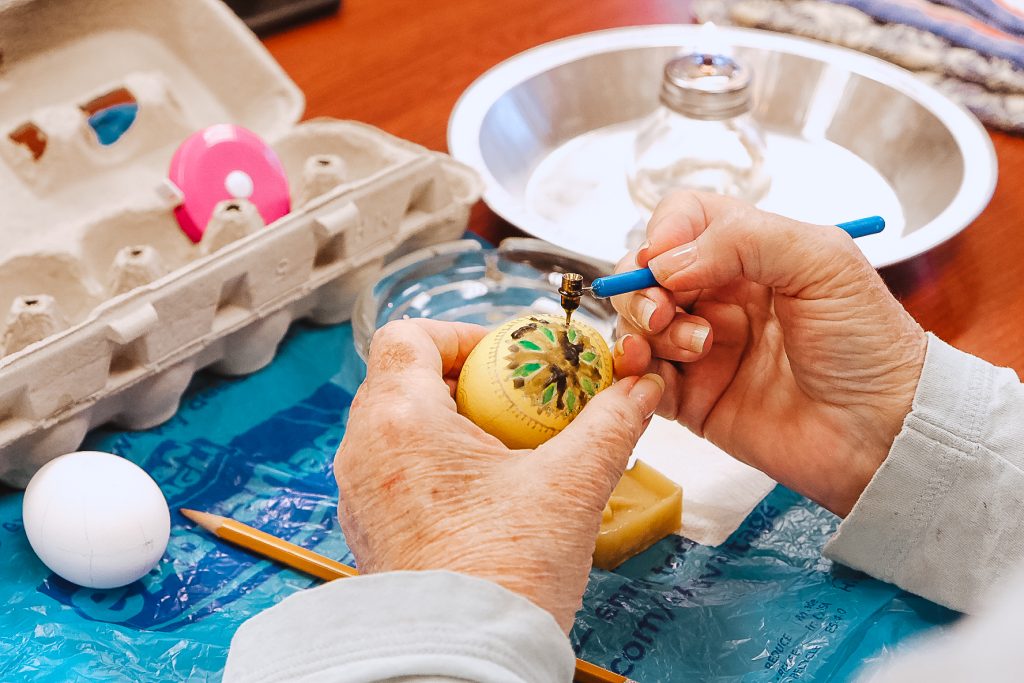
A woman writes in wax on her egg during the pysanky workshop at Peters Township Library, led by artist Michael Yanchek.
Katherine Mansfield
Erika Sweka and her grandparents drove about two hours from their home in Sykesville, Pa., to Uniontown for their first-ever Eggstravaganza at St. John the Baptist Byzantine Catholic Church. “My grandpa got a flyer from our church and he wanted to come,â€� she said, making her first pysanky egg. “ItÄ¢¹½ÊÓƵ really nice.â€�
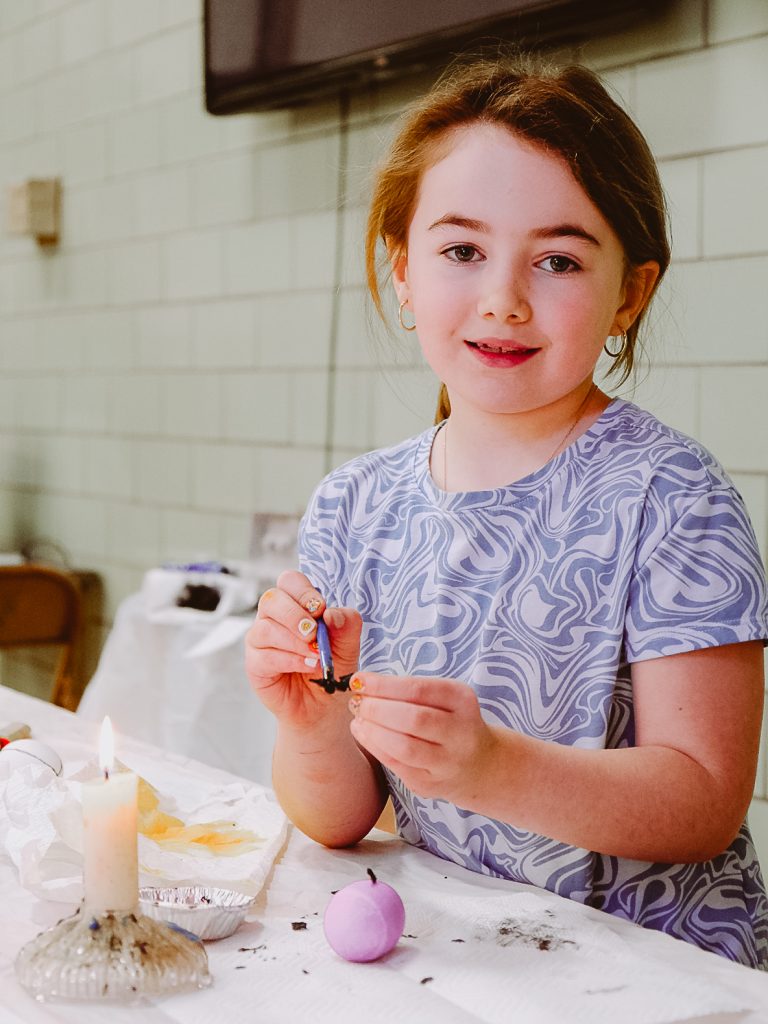
Isabella Luick, 7, makes her own pysanky egg during the 16th annual Eggstravaganza at St. John the Baptist Byzantine Catholic Church March 26. Luick and her mother, Synthia Luick, led pysanky classes during the event.
Katherine Mansfield
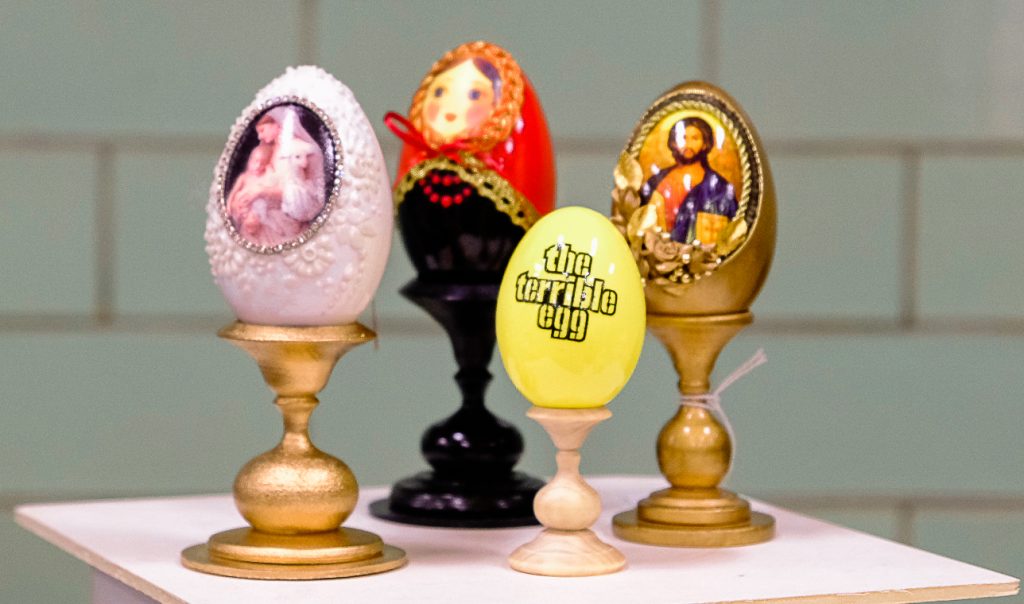
The Terrible Egg stands tall among silk print eggs, made by Joseph Bortysky of Fairchance, at the 16th annual Eggstravaganza in Uniontown March 26.
In the weeks leading to Easter, people of all backgrounds and beliefs gather inside local libraries and churches to learn the art of pysanky, a centuries-old egg decorating tradition revered for its rich colors and intricate designs written in wax on egg shell.
“Every east-central European country has an egg tradition of some nature,� said Michael Yanchak, a retired Peters Township police captain who teaches pysanky art at Peters Township Public Library each March. “I believe people should have an understanding of what goes on in some of the other countries. In the Pittsburgh area, there are a lot of people who have east-central European ties. People come in all the time and go, ‘Oh, my grandmother used to do that, my bubba used to do this.’ I enjoy sharing it, which is why I do it the way I do it.�
Yanchak learned pysanky from his father, of Ukrainian descent, who spent the weeks before Easter Sunday melting crayon wax over the familyÄ¢¹½ÊÓƵ gas stove and decorating eggs with rich, waxy colors. Eager to have his own eggs included in the Easter blessing basket, Yanchak poured his energies into learning the art form.
Decades later, he is a regular attendee at regional retreats, conferences and festivals, and passes on tradition through workshops and lectures at the library.
YanchakÄ¢¹½ÊÓƵ classes are part history lesson, part art lesson. Over the course of two, two-hour hands-on sessions, attendees learn to measure eggs, gain understanding of the process and apply theory.
“If you leave here with the ability to measure, relatively accurately, on an egg and can look at an egg design and go, ‘Oh, I can do that’ … then we’re good,� Yanchak laughed.
Those who attended YanchakÄ¢¹½ÊÓƵ pysanky workshops this year learned all that and more, including Ukrainian folklore – so long as mankind creates pysanky, an evil monster will remained chained, unable to destroy Earth – and art symbolism. On March 2, eight women showed up, eggs half-done, having been waxed and dyed several times the week before, ready to finish their masterpieces.
“I’ve always liked these. I’ve bought them, I have a few at home that, they’re just beautiful,â€� said Ellen Murphy, of Nottingham, gently writing with wax on her egg. “They’re like, to me, works of art. They’re like snowflakes, they’re all different, so they’re beautiful. ItÄ¢¹½ÊÓƵ a talent, definitely a talent, that people have to do this.
“But I can’t do it,� she added with a laugh, “because I don’t have a steady hand.�
The hardest part of pysanky art, many agreed, is making straight lines using the kistka, a wax stylus that vaguely resembles a pencil with a pointy, beeswax-filled tip where the eraser ought to be.
“They seem straight,� said Katie Gaynor, of Cecil, lightheartedly noting that upon closer inspection, some are slightly crooked.
But thatÄ¢¹½ÊÓƵ no matter; from a short distance, all the eggs are striking, layers and layers of colorful, delicate detail.
“The best part is taking the wax off. You can see it all coming together,� Gaynor said.
Gaynor attended YanchakÄ¢¹½ÊÓƵ class with her self-proclaimed “ride or die crafting friendâ€� Dionne Simpkins, also of Cecil, who has tried everything from quilting to pysanky with her bestie.
“When somebody says, ‘Have you ever?’ we can say, ‘Yeah,'� Simpkins laughed. Pysanky, she said, is “an equal amount of enjoyment and challenge.�
Even seasoned artist Jan Pini, a member of the McMurray Art League who said sheÄ¢¹½ÊÓƵ never met a medium she didn’t like, appreciated the challenge of creating pysanky.
“ItÄ¢¹½ÊÓƵ harder than I thought it was going to be,â€� said Pini, a first-time pysanky egg decorator. “Wax doesn’t want to behave, and itÄ¢¹½ÊÓƵ not very forgiving, but itÄ¢¹½ÊÓƵ fun. I have a newfound respect for anybody who can do this and make it look good.â€�
Pysanky is an art form that does take practice, and patience, Yanchak conceded, and there is so much to it that he now offers a separate lecture and Q&A series to workshop attendees. Sometimes, he even answers questions off the metaphorical clock.
“Every once in a while, I find people who continue to do it,â€� he said. “One year, I did the class. (After), I’m having dinner with the guys one night and I get a phone call. She goes, ‘My daughter made this really great design, and sheÄ¢¹½ÊÓƵ got a blob of wax sitting in the middle of the egg. How do you take that off?'â€�
Those are the moments that make teaching rewarding.
When he isn’t teaching pysanky, Yanchak is an active part of the art community. He recently set up shop at the 16th-annual Eggstravaganza at St. John the Baptist Byzantine Catholic Church in Uniontown, where hundreds gathered March 26 to watch live egg art demonstrations, create their own masterpieces and indulge in homemade pirohi.
“I started out doing Ukrainian eggs, but everybody in this area does Ukrainian eggs,� laughed Joseph Borytsky, of Fairchance. “My ethnic background, my father came from Poland, and so I started doing the Polish drop and pull wax relief on goose eggs and chicken eggs. The traditional way, you take your pinhead, dip it in your wax, take your white egg, then drop and pull, drop and pull. (The design) would be flat. I came up with the idea of coloring the beeswax. I started dropping the colored beeswax on the egg, which gives it three dimensions.�
The method gives BorytskyÄ¢¹½ÊÓƵ drop and pull eggs unique texture and sets those eggs apart from his traditional Ukrainian pysanky eggs. The Fairchance native also enjoys other Polish arts, like paper cuts, or wycinanki. Throughout his decade-spanning art career, BorytskyÄ¢¹½ÊÓƵ works have been displayed at such renowned institutes as the Pittsburgh Cathedral of Learning, the National Czech and Slavak Museum in Cedar Rapids, Iowa, and The Pope John Paul II Cultural Center in Washington, D.C.
At the Eggstravaganza, “The Terrible Egg,� a very Yinzer piece, stood proudly next to an egg decorated in a portrait of the Madonna and Child.
“These are silk prints,â€� he said, gesturing at the photograph-type egg. “ItÄ¢¹½ÊÓƵ just something different.â€�
Different kinds of egg art make the annual Eggstravaganza such a wondrous event. While Bortysky displayed traditional Polish art, other vendors showcased Ukrainian pysanky, and others, like Sharon Tyborowski Hachman of New Kensington, sold bright, spring-themed eggs decorated with acrylic paint.
“I came as a spectator,� said Tyborowski Hachman. “Last year was the first year I participated. My mom, she painted eggs when I was younger and I just sort of carried on the tradition.�
Several egg art traditions graced the table of Lois Winslow, a retired Connellsville High School math teacher and Perryopolis resident who delights in all forms of egg decoration.
Unlike many who grew up with kistka in hand, whiling away winter carefully drawing with wax, Winslow did not grow up crafting pysanky.
“I was a teacher. A lady came in one day and showed me some of her eggs she made in BonnieÄ¢¹½ÊÓƵ (Balas) class. I was enthralled,â€� said Winslow. “In 2000, I taught my first class in Perryopolis and I’ve been teaching (pysanky) ever since.â€�
Along with traditional pysanky, Winslow creates Trypillian eggs, a wax writing technique that borrows American southwest art color palettes and motifs. She also dyes decorated eggs with onion skins, and crafts marvelous pieces by wrapping chicken eggs in a rich, lovely handmade Japanese paper.
“I’ve gone to different retreats. They have various egg artists there I didn’t know about. We appreciate all types of egg art,� Winslow said.
Also on display at the Eggstravaganza: palm art, by Monroeville palm weaver Lawrence Kozlowski, who fashioned roses and other designs from palm leaves.
Kozlowski explained that traditionally, Palm Sunday was celebrated in Poland, Carpathian Ruthenia and other Slavic countries with pussy willow branches, the first tree to bloom in springtime. American churches mark the occasion with palm leaves, per biblical accounts, and immigrants took to the custom, he said.
“People began to weave them into beautiful designs. When we do this, we keep the memory of those people alive. When we do Easter eggs, make the pierogis, make bakery goods, those people live again and again and again,� Kozlowski said.
The Rev. Vasyl Symyon, of St. John the Baptist Byzantine Catholic Church, said it is important to share traditions like Ukrainian pysanky with Eggstravaganza attendees, some of whom are outside the faith.
“It is our inheritance, the richness of our culture. Through those traditions people can discover our church,� he said. “The church is still a place which preserves the history of the nation, culture of the nation, tradition.�