

Fallingwater, other Frank Lloyd Wright exhibits viewed in new light online
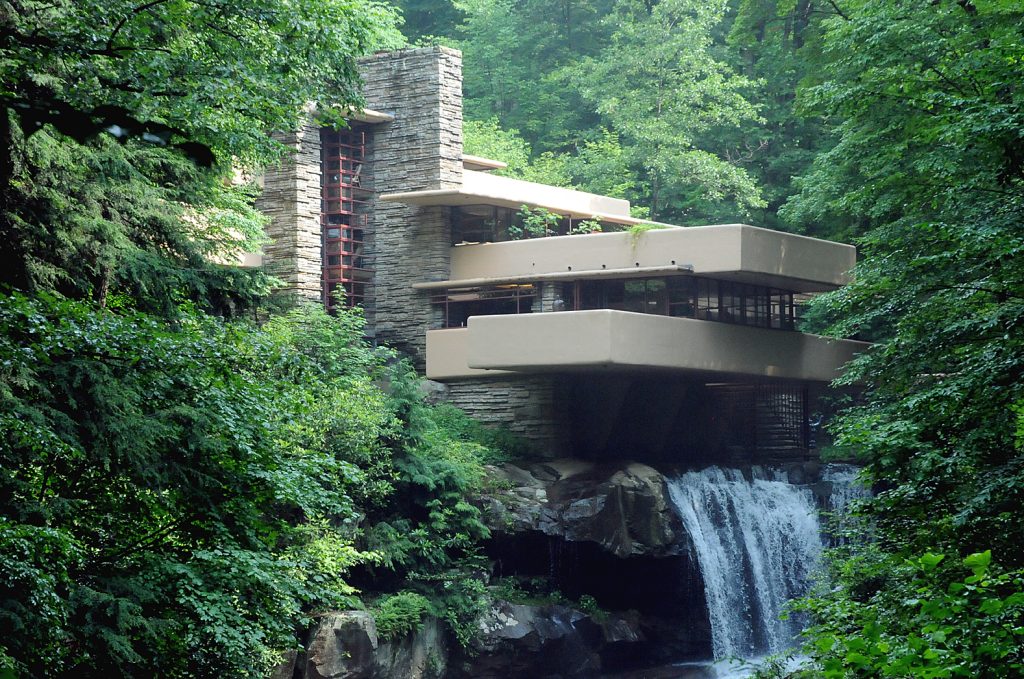
Frank Lloyd Wright's Fallingwater in Mill Run is available to tour virtually.
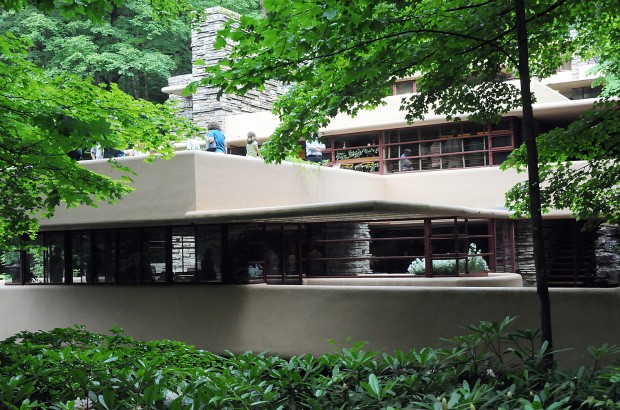
This 2011 file photo was taken at Fallingwater during its 75th anniversary.
Visitors can experience Frank Lloyd WrightÄ¢¹½ÊÓƵ work in a different way during the coronavirus pandemic, getting new views of Fallingwater and other sites online.
Directors at each site are putting short videos on Facebook, highlighting interesting parts of his work, showcasing a lesser known area or simply sharing the natural beauty of sites like Fallingwater in Mill Run. The project will continue through July 9.
Eric Rogers, events and communications manager for the Frank Lloyd Wright Building Conservancy, said he and their partners had conversations about an innovative approach to gain a new audience while informing the public about the need for funds to preserve their sites. He said their website audience has multiplied, showing that the public is craving the beauty that the sites afford.
He highlighted one video from Fallingwater, which was a brief and simple video showcasing the site without words.
“It was so meditative, and I really appreciated that,â€� he said, adding that from Chicago, he does not have access to nature during the pandemic. “I think itÄ¢¹½ÊÓƵ fair to say that everyone is craving what they can’t have right now.â€�
He said preservation for the sites is generated primarily from tour dollars, so that loss in income is a hard hit. At Fallingwater, he said the site was gearing up for the season, and had just stocked up its cafe with food that would not be eaten by visitors.
“They were a day or two from opening, and instead they had to go dark,� he said.
He said without income from tours, many of the smaller Frank Lloyd Wright sites could suffer.
“ThatÄ¢¹½ÊÓƵ our long-term concern is that the loss in revenue could impact the long-term viability, of especially some of the smaller sites,â€� he said.
He acknowledged the widespread economic impact that closures due to COVID-19 have on many people, businesses and organizations.
“We’re all doing this for the greater good, but thereÄ¢¹½ÊÓƵ a real cost to it,â€� he said. “It may not be an emergency right now, but itÄ¢¹½ÊÓƵ going to be important later for these sites to get peopleÄ¢¹½ÊÓƵ attention and support.â€�
Fallingwater was designed by Wright in the 1930s for Pittsburgh department store owner Edgar Kaufmann Sr. and his family as a weekend home.
Edgar Kaufman Jr. entrusted Fallingwater to the Western Pennsylvania Conservancy in 1963, and the property opened to the public in 1964.
Built over a 30-foot waterfall with cantilevered terraces, Fallingwater is designated as a National Historic Landmark, was named a Commonwealth of Pennsylvania Treasure in 2000 and received the National Trust for Historic Preservation Stewardship Award in 2006.
Local craftsmen and construction workers from Fayette County built Fallingwater from 1936 to 1939 using Pottsville sandstone quarried from the site.
Last year, Fallingwater was designated a World Heritage site by the United Nations Educational, Scientific and Cultural Organization.
In announcing the inscription of WrightÄ¢¹½ÊÓƵ architecture on the list, the UNESCO World Heritage Committee noted that the buildings reflect the “organic architectureâ€� that he developed, which includes an open plan, a blurring of boundaries between exterior and interior and the use of materials such as steel and concrete.
“Each of these buildings offers innovative solutions to the needs for housing, worship, work or leisure,â€� the committee observed, adding that WrightÄ¢¹½ÊÓƵ work from this period had a “strong impactâ€� on the development of modern architecture in Europe.
The videos from all Frank Lloyd Wright sites are compiled weekly at savewright.org.