

American Lung Association in Pennsylvania to provide free radon testing kits
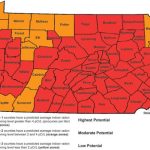
The American Lung Association in Pennsylvania recently unveiled a new program that will provide free radon testing kits to residents in 14 counties, including Greene and Fayette.
According to Kevin Stewart, director of environmental health with the American Lung Association in Pennsylvania, a study showed that two main factors were responsible for determining which counties would participate in the program.
“Number one, how many of the people (in the population) have done testing? Secondly, we wanted to look and see how severe the radon results were in those counties. What was the county median?� he said. “We looked across the state and tried to find groups of counties that had been well tested and where the need was higher; either people hadn’t tested frequently, or the testing levels had been higher.�
According to the Environmental Protection Agency (EPA), “Radon is a cancer-causing, radioactive gas.� It is an odorless and tasteless gas that has been estimated to have led to thousands of deaths each year.
“The big reason (for radon) is geology. There is plenty of rock (locally) that contains higher levels of uranium than other counties,� explained Stewart. “There is plenty of rock in Pennsylvania that is the shale type that has very thin layers that uranium can come through. All of these thin layers are like a book and between each layer the radon can find a way through and escape.�
Stewart said the most dangerous time for radon gas to be present in the home is when the house is closed up, because outdoor air does not freely circulate.
“We know houses are closed up most of the year because people have air conditioning or heat,� he said. “In Pennsylvania, radon levels do tend to be higher during the heating time of the year.�
With these new testing kits available, the American Lung Association hopes to help prevent radon in the home.
“First of all, these test kits are designed as do-it-yourself radon test kits,� said Stewart. “They (users of the kit) send them off promptly after the testing period to the lab for analysis. The purpose is (that) a screening test gives people a ballpark idea of what kind of radon levels they have. Once people do that test and the follow-up test, and they do have high levels, the advice is to do radon mitigation work.�
Stewart added that if a person needs mitigation work, they can contact a state-certified professional who will install a pipe in a building slab that would attach to a fine exhaust line that would expel the gas above the roof line of the house.
Currently, free testing kits are available by request online at lunginfo.org/freeradonkit.
The American Lung Association hopes to partner with schools and community organizations in the future to host mass kit distribution events. Anyone interested in hosting such an event can call Stewart at 717-541-5864 extension 36 or send an email to kstewart@lunginfo.org.