

Estate planning and mineral rights

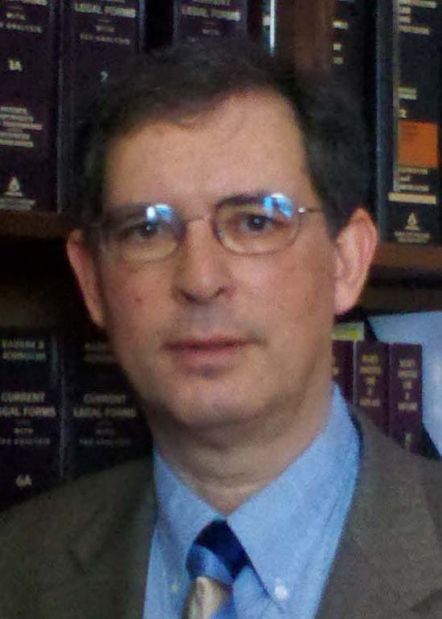
Joe Wilson is CEO of Infinity Resource Group, Inc., a professional mineral rights consulting firm in Parkersburg, W.Va., and a Registered Landman. David Pearl is managing director of a CNG patent holding company and president of a CNG fuel island development company. Your questions are welcomed by calling 412-535-9200 or by e-mailing joe@irg-energy.com.
Benjamin Franklin is attributed to the immortal saying, “Only two things in life are certain: death and taxes.� We know a life insurance salesman who would make it a point to mention to a husband (in front of his wife), “If you love your wife and family, you need to buy life insurance.� He sold a lot of insurance.
While most don’t like planning for oneÄ¢¹½ÊÓƵ demise, the fact is Ben Franklin is right … and the estate of a mineral rights owner can be devastated by federal estate taxes and (in some states) inheritance taxes and other “deathâ€� taxes.
If you are lucky enough to own mineral rights, there are two fundamental concepts you must determine in creating your estate plan. First, who do you want to bequeath your mineral rights to upon your death? Second, how can those rights transfer with minimal tax consequences to your loved ones?
Usually, mineral rights ownership is found in a deed registered in the land record office of the local county courthouse. Deeds trump Last Wills and Testaments, meaning one cannot change the ownership of deeded property rights through a Last Will and Testament. So for example, if mineral rights are owned by brothers Bill and George, and Bill wants George to inherit the mineral rights upon BillÄ¢¹½ÊÓƵ death, then the deed has to be worded in a way where that happens.
Typically, the mineral rights deed would say Bill and George are joint owners with rights of survivorship. If, however, Bill wants to have his rights pass to his (BillÄ¢¹½ÊÓƵ) wife instead of to his brother George, then the deed should be titled as either Bill and George as tenants-in-common, with provisions in BillÄ¢¹½ÊÓƵ Last Will and Testament to provide for his wife, or the deed should be drafted where Bill and his wife own half as tenants by the entireties (where the surviving spouse inherits immediately upon the death of a spouse).
Usually (but not always), a surviving spouse pays no or little estate taxes. The wording on a deed is quite technical and can get very complicated; it is advisable to consult with an attorney to make sure the title on the mineral rights deed properly reflects your intentions.
We recently had a meeting with a man who was very close to his eldest son from his first marriage. He also had two adopted children from a second marriage, but was estranged from them as he had not seen or heard from his adopted children in 20 years. The man was in a horrific car accident and almost died from his injuries.
We spoke to him from his hospital bed. As he was explaining his situation, we asked him whether he had a Last Will and Testament. He did not. We explained to him that if he was killed in that car accident, his eldest son would be sharing his property equally with the adopted children, unless he executed a Last Will and Testament reflecting his intentions, or prepare other documentation, like retitling his property or creating a trust, that would properly document his intentions. We immediately referred him to an attorney that specialized in wills, trusts and estates.
One way to pass along an interest in mineral rights to the next generation is called a “life estate.� A life estate is when you pass title to your appointed heirs during your lifetime, but you retain ownership of the minerals or income from the minerals until your death. The only right you forgo is the right to sell the property.
Upon your death, the mineral rights transfer to the next generation with virtually no paperwork and virtually no tax effect. While there may be a tax consequence (e.g. gift tax) when the life estate is created, it would be minimalized because title to the minerals is not fully divested thus the taxed or assessed value to be accounted for is also minimized.
Careful estate planning can help make the tax burden and the paperwork burden a bit lighter. Often times proper estate planning can eliminate the need for probate. Like any action fraught with legalese, it can be difficult to understand and difficult to conduct correctly without the advice of a good lawyer.
Before making any decision regarding the disposition of your mineral rights, it is always advisable to seek professional advice from a mineral rights consultant for an evaluation of your mineral rights, and to consult with your lawyer and tax advisor.