

Getting acclimated: PIAA rule helps football coaches get jump on season
Rob Burchianti | Ä¢¹½ÊÓƵ
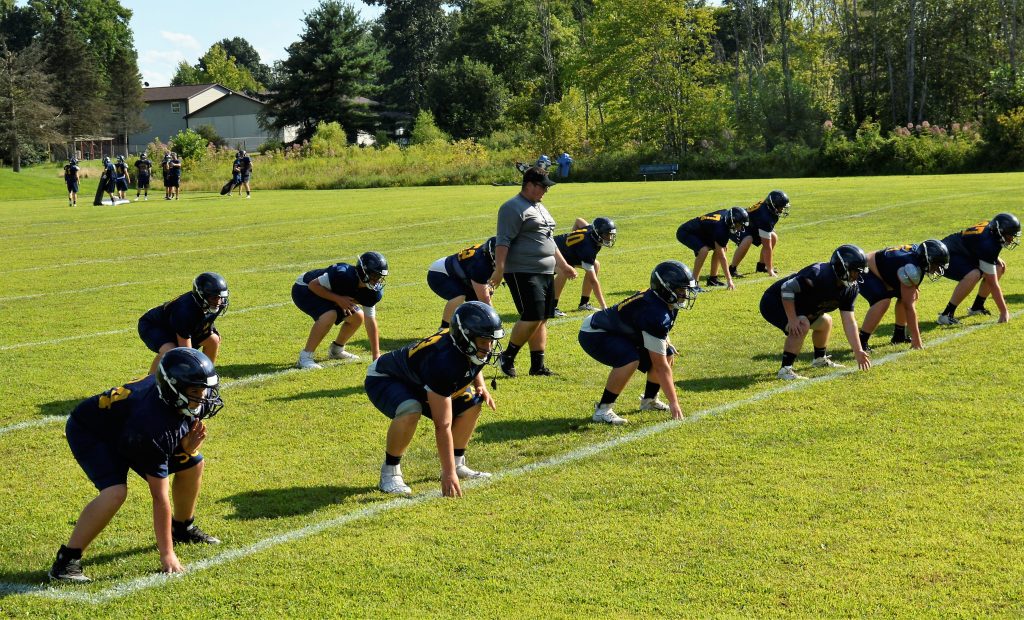
Carmichaels assistant coach Chace Johnston works with the Mikes’ lineman during heat acclimation week last Friday.
Rob Burchianti | Ä¢¹½ÊÓƵ
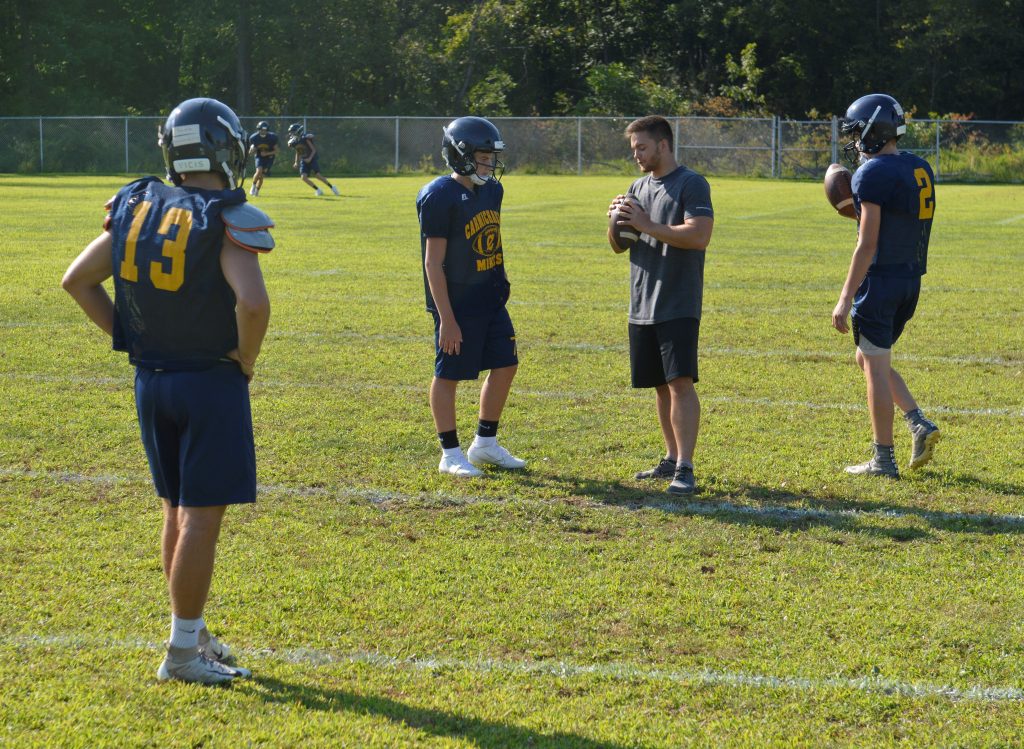
Carmichaels assistant coach Coty Allen works with the Mikes quarterbacks, including starter Kevin Kelly (13), during heat acclimation week last Friday.
Rob Burchianti | Ä¢¹½ÊÓƵ
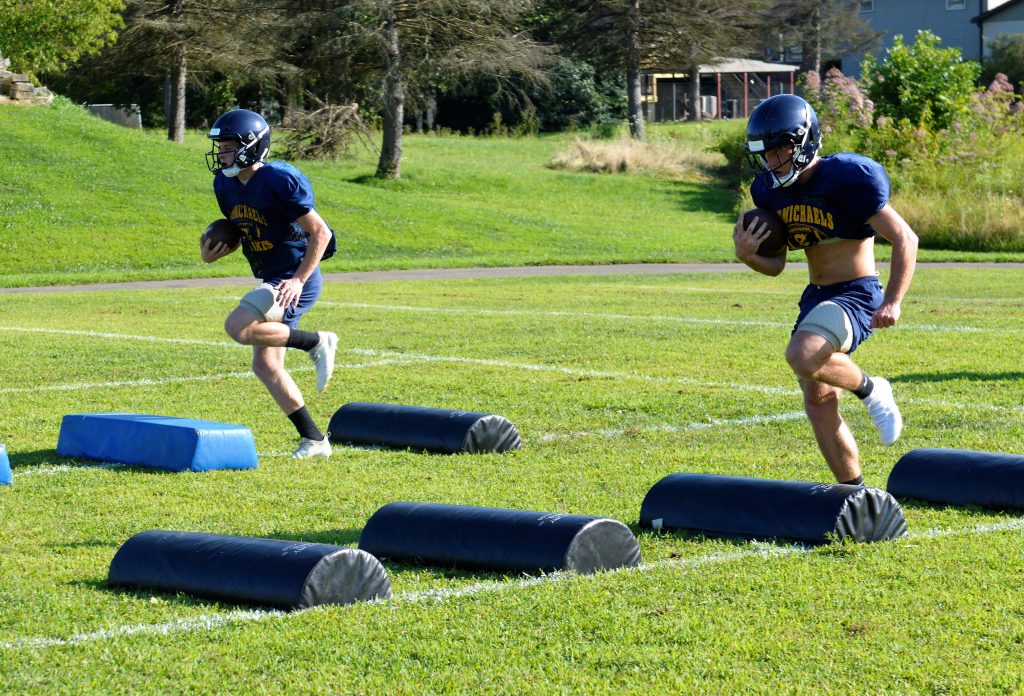
Carmichaels players execute a drill during heat acclimation week last Friday.
Rob Burchianti | Ä¢¹½ÊÓƵ
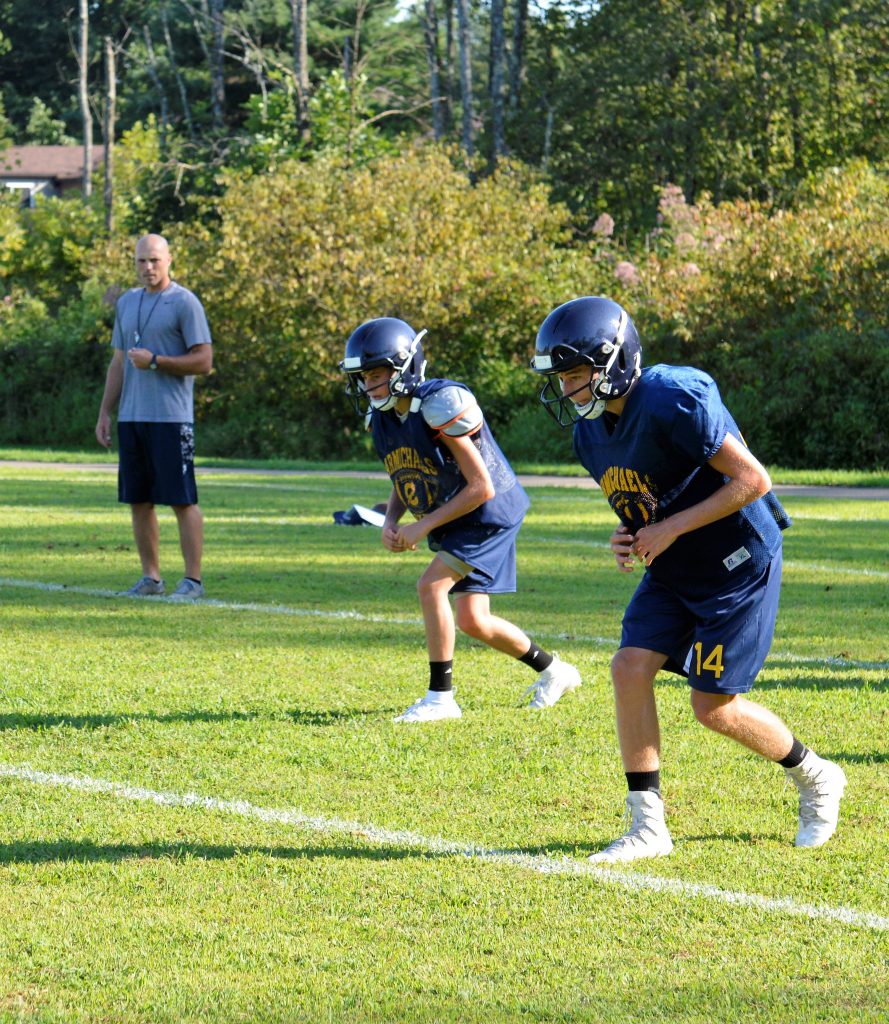
Carmichaels head coach Ryan Krull watches over the Mikes wide receivers as the prepare to execute a drill during heat acclimation week last Friday.
High school football players took to the field on Monday, Aug. 5 to prepare for the upcoming season.
There was no contact, however, as has been the case during what is called heat acclimation week since 2013 when the PIAA first instituted that policy. ItÄ¢¹½ÊÓƵ a week in which players are supposed to condition themselves in preparation for the first official week of fall practice which began on Monday.
The goal is to cut down on heat-related illnesses and injuries. The heat acclimatization program was three days long at first but was increased to five days in 2015.
Area coaches not only love it because it creates a safer environment but also because it gives them an extra week to work with their players.
“I think itÄ¢¹½ÊÓƵ a good thing, but it used to be that you could wear shoulder pads and helmets in July anyway,â€� Mapletown coach George Messich said. “If it does anything, I think it helps.
“You get the kids out. ItÄ¢¹½ÊÓƵ mandatory by the state so the kids know they have to be here.â€�
West Greene coach Brian Hanson was a head coach in Maryland last year which also has a heat acclimatization program.
“ItÄ¢¹½ÊÓƵ a good thing,â€� he said. “Anything for the kids’ safety and health is a positive.â€�
Carmichaels coach Ryan Krull also likes the policy but feels players should start the process on their own, long before the month of August begins.
“I get that the PIAA is trying to prevent some unfortunate incidents that have happened in the past such as heat strokes,â€� Krull said. “I don’t know of any physiologist or anybody who understands the human body that would tell you practicing for one week before football camp starts is going to get these kids in shape. You don’t get in shape in a week. ItÄ¢¹½ÊÓƵ a process that takes weeks, probably six-to-eight weeks minimum.
“Personally, it allows us to tell these guys and their parents we have to do this so it allows us to get a jump-start on the season. And I think any coach will tell you the earlier that we can officially get started, the better. They know they have to be here.�
Players are not permitted to be in full uniform during heat acclimation week.
“They wear everything except girdles and pants,� Messich said. “They can wear shorts, shoulder pads and helmets.�
“ThereÄ¢¹½ÊÓƵ no contact,â€� Krull said. “And thereÄ¢¹½ÊÓƵ time restraints on it, too. Practices have to be a minimum of three hours long and if you want to do a double-session (five hours of practice), there has to be two hours in between those.
“ThereÄ¢¹½ÊÓƵ a list and we look at it every year to make sure we’re following the guidelines.â€�
Still, Krull insists players, with a boost from their parents, should do more to prepare for a grueling season of football.
“I’m in favor of the policy, of course,� he said. “But I really do think it takes June and July to get ready for a football season. I don’t know if anybody just allows their kids to come to heat acclimation and gives them the rest of the summer off, like, ‘Hey, do what you want, don’t worry about working out, don’t worry about running.’
“If you’re going to do that, thereÄ¢¹½ÊÓƵ no way you’re going to get in shape in one week.â€�
The high school football season begins with Week Zero games on Friday, Aug. 23.