

Lenten tradition becomes prayer for peace in Ukraine
Alyssa Choiniere
Alyssa Choiniere
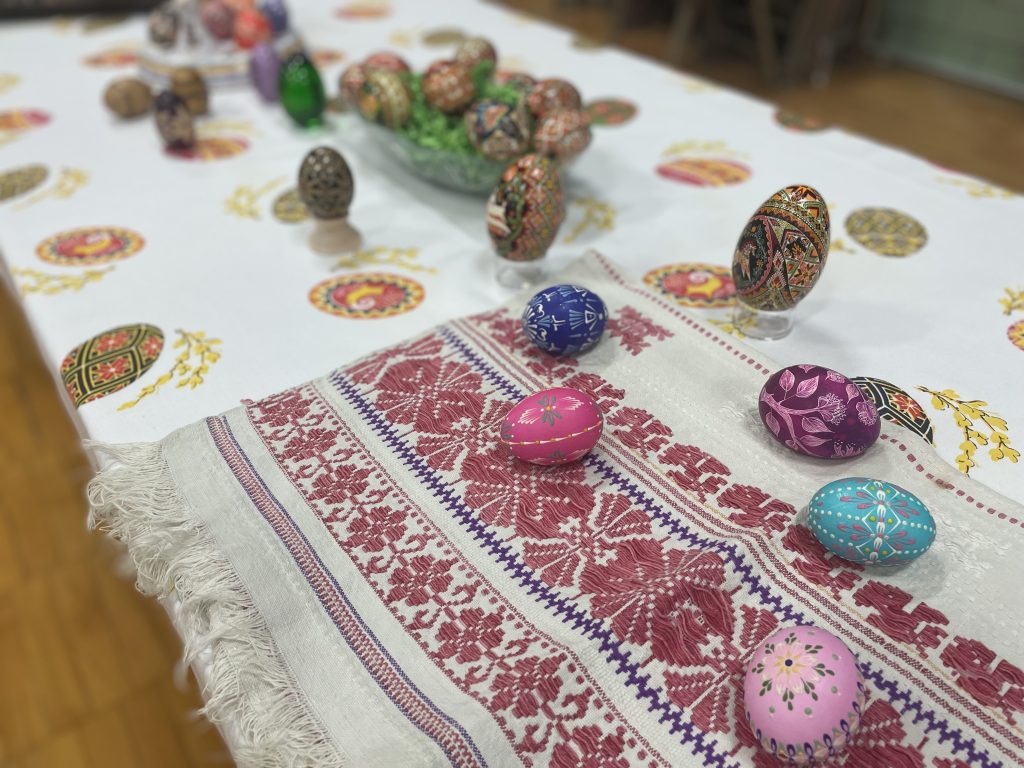
Pysanky eggs are displayed at St. John the Baptist Byzantine Catholic Church during a class at the church. Pysanky are Easter eggs decorated with religious symbols during Lent. The tradition stems from Eastern Europe, primarily Ukraine.
Alyssa Choiniere
Alyssa Choiniere
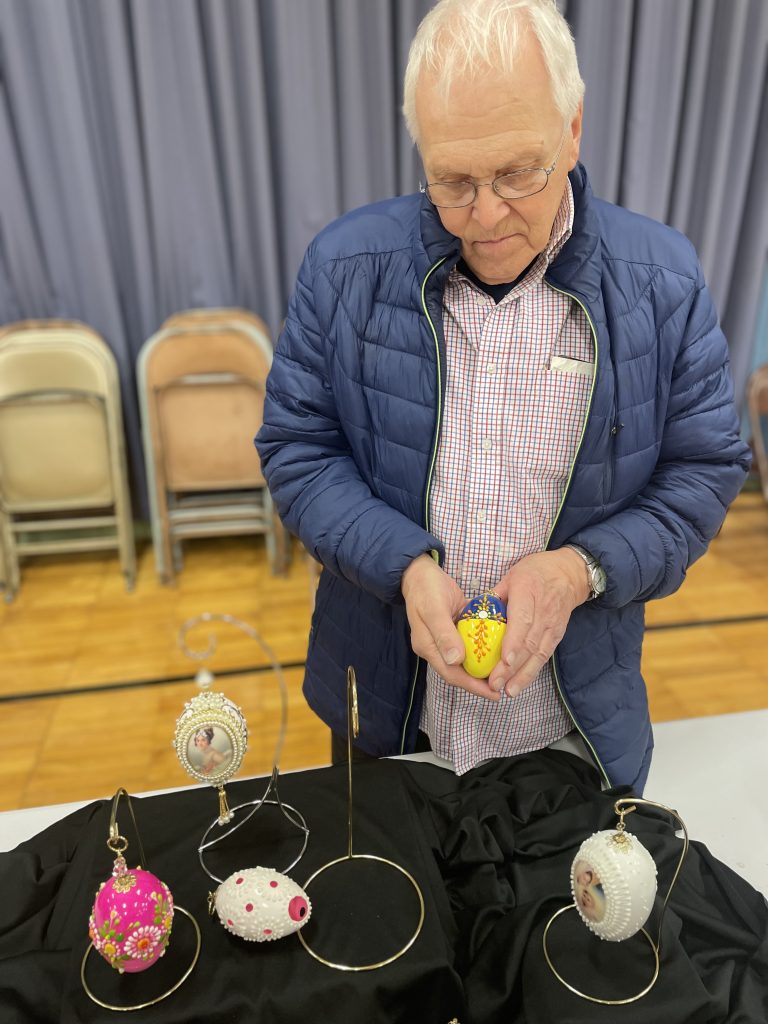
Joseph Borytsky holds a pysanky egg he designed with the colors of the Ukrainian flag to support the country in the invasion from Russian forces.
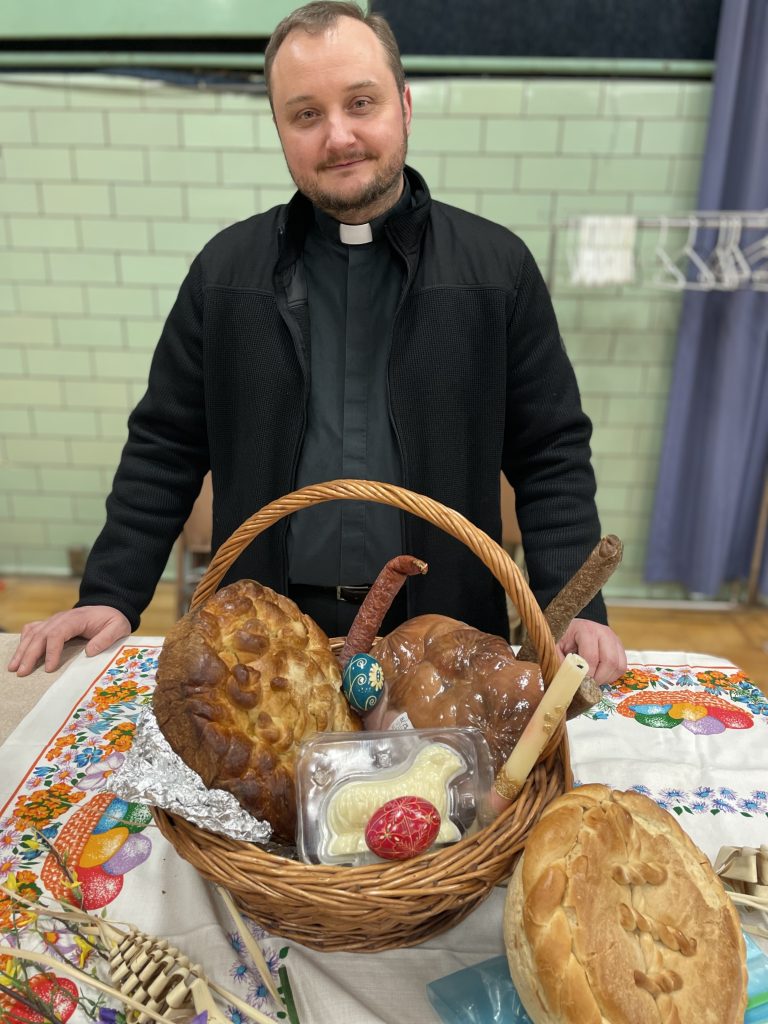
The Rev. Vasyl Symyon of St. John the Baptist Byzantine Catholic Church in Uniontown poses with a traditional Easter basket at the church. Easter baskets are filled with rich foods eaten after they are blessed by a priest and the Lenten fast is broken. (Photo by Alyssa Choiniere)
Alyssa Choiniere
Alyssa Choiniere
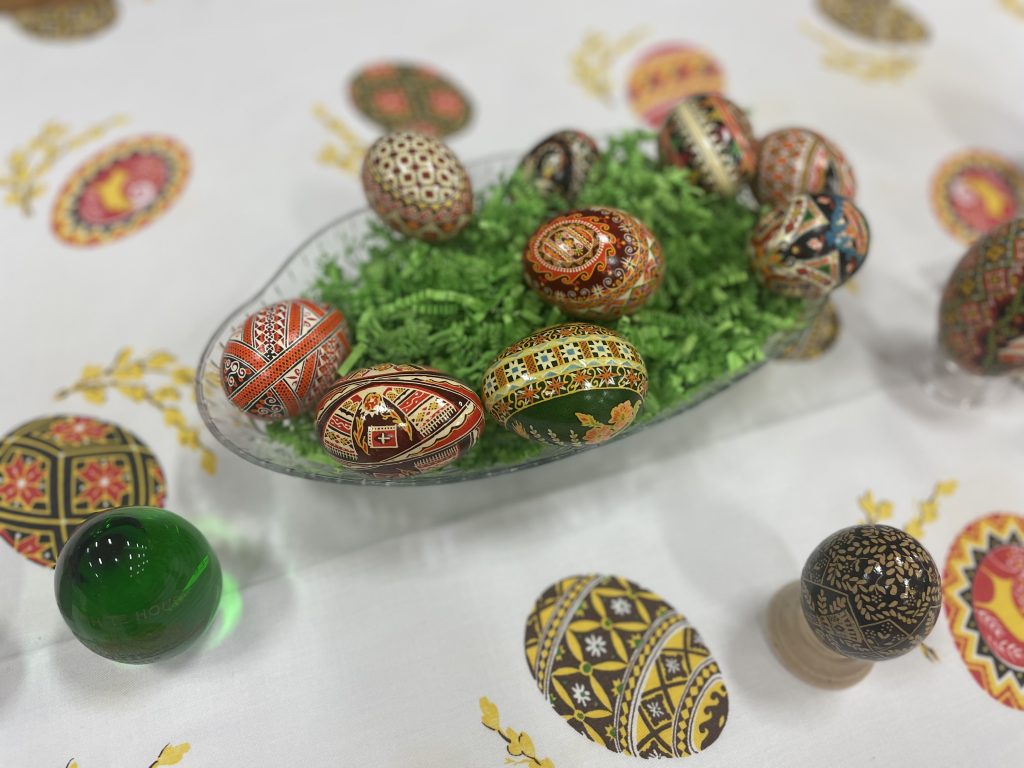
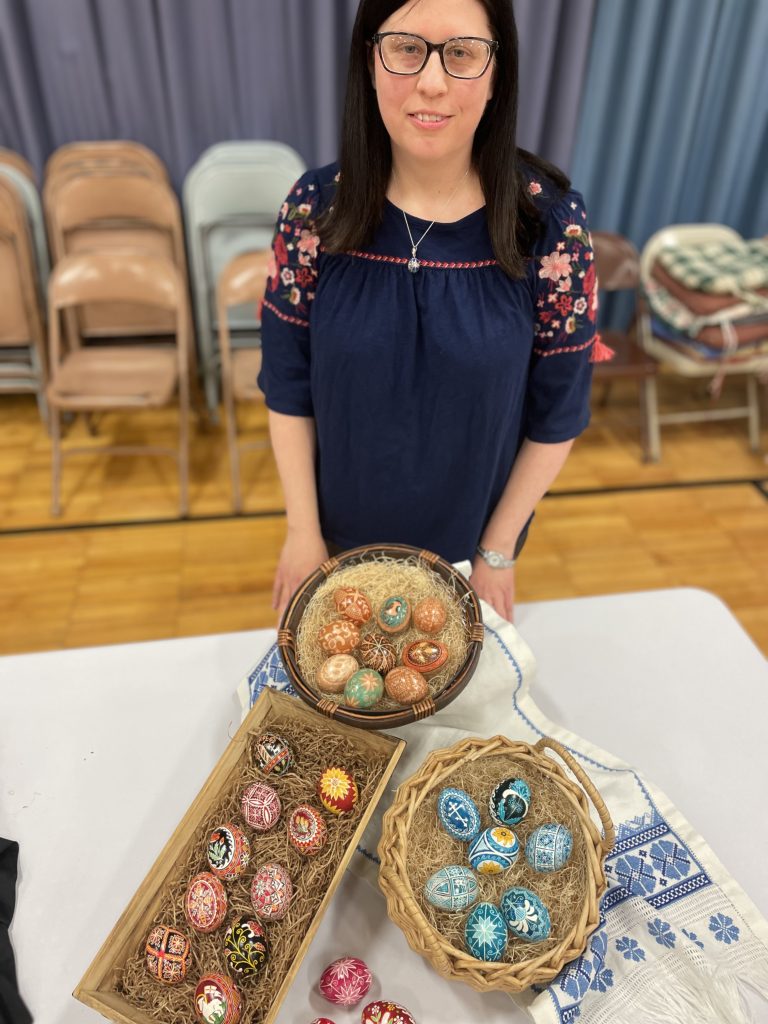
Pysanky eggs are displayed at St. John the Baptist Byzantine Catholic Church in Uniontown during a class at the church. Pysanky are Easter eggs decorated with religious symbols during Lent. The tradition stems from Eastern Europe, primarily Ukraine.
Alyssa Choiniere
Alyssa Choiniere
Julia Pillar poses with her pysanky eggs at St. John the Baptist Byzantine Catholic Church in Uniontown during a class at the church.
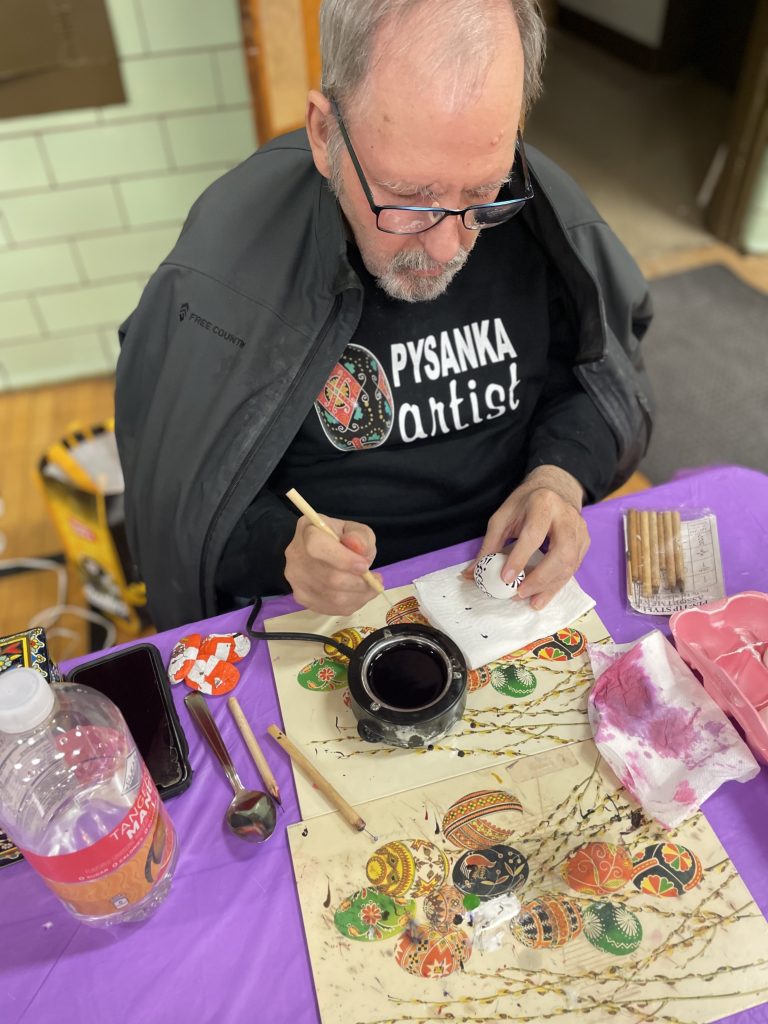
Mark Jesko demonstrates pysanky art at St. John the Baptist Byzantine Catholic Church in Uniontown during a class at the church March 14. (Photo by Alyssa Choiniere)
Alyssa Choiniere
Alyssa Choiniere
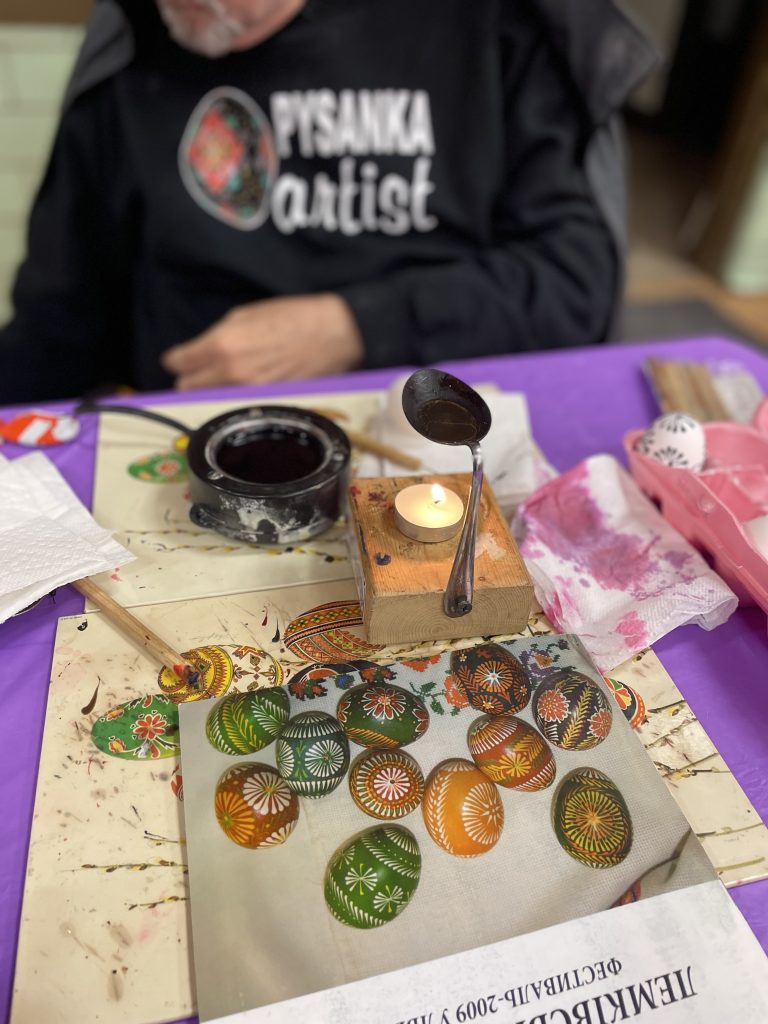
Mark Jesko demonstrates the traditional way to melt wax from a pysansky egg before electricity, using a spoon and a tea light.
As bombs fall on Ukraine, members of St. John the Baptist Byzantine Catholic Church in Uniontown are praying for peace while practicing a Lenten tradition that legend says will save humanity.
“The legend says that as long as people are making pysanky, the world will not end,� said egg artist Julia Pillar of Uniontown.
Pysanky are the intricately decorated Easter eggs which have their origins in the Carpathian Mountains of Eastern Europe. The legend says a monster lives in the mountains chained to a cliff, held by the religious rite they say began as a plea from the Blessed Virgin Mary to spare Jesus from crucifixion. The more pysanky that are created, the tighter the monsterÄ¢¹½ÊÓƵ chains. If the chains are loosened, evil will spread across the globe.
The style is traditionally claimed by Ukrainians, who use beeswax to draw designs onto eggs before dyeing them. Other Eastern European nations have their own spellings for the eggs, and create their own unique styles, using different types of eggs and tools for decoration.
Pillar and others have been preparing for the churchÄ¢¹½ÊÓƵ annual Eggstravaganza on April 3. ItÄ¢¹½ÊÓƵ a festival they’ve held for 15 years with psysanky as the star.
This year, though, the tradition holds special significance.
“The people in Ukraine would be preparing these eggs now,� said Bonnie Balas, who teaches pysanky classes during Lent. “Instead, they’re fleeing their homes.�
“People will still do this,� the Rev. Vasyl Symyon interjected softly. “The Ukranians are tough people.�
Symyon is from Ukraine, and was assigned to the Uniontown parish by the archbishop in December following an assignment in Italy. Most of his family members live in the western part of the country, he said, about 150 miles from the worst of the battles being fought. His cousinÄ¢¹½ÊÓƵ home was attacked, and he escaped, fleeing to the west to live with SymyonÄ¢¹½ÊÓƵ father.
“We are praying, all of us, for peace in Ukraine,� Symyon said.
Weekly meetings are being held at Mount Saint Macrina near Uniontown to pray for Ukraine. Symyon said he has been grateful for the local support, and he believes that God sent him to the area at this time for a purpose.
He said many Ukrainians and other Eastern Europeans settled in southwestern Pennsylvania because the region was so similar to home. Aside from his family, he said there is nothing he misses.
“We have the same traditions, the same nature,� he said. “The church always was a place where our cultural traditions are persevered. Church is a place that keeps our people together.�
Balas adopted the tradition of pysanky without knowing it was a part of her heritage. She said she took a class at the Uniontown YMCA and became “fascinated� with it.
“I was good at it automatically because of my heritage, because of my traditions,� she said.
Her grandmother was Carpatho Rusyn, a people that settled predominantly in western Ukraine and parts of Slovakia and Poland. Balas said her grandmother did not initially share her ethnic traditions with her granddaughter. When she learned Balas was making pysanky, she told her it was a tradition they shared, and showed her some of her designs on paper.
Pysanky designs bear symbols including dots which represent teardrops from the Blessed Virgin Mary at the crucifixion, and the egg represents life for the resurrection. The eggs are decorated during Lent and included in an Easter basket. The baskets hold treats including bread, sausage and ham to break the Lenten fast.
The eggs are hidden until just before Easter when they are given to loved ones. Balas said the eggs are decorated with a specific person in mind “like a Valentine,� including symbols that will bring good fortune for the recipient in the coming year. For example, a newlywed may be given an egg with birds to represent fertility.
This year, Balas said that as she decorates pysanky she is thinking of the Ukrainian people.
“Everywhere you go, you hear about the people leaving with only the clothes on their backs. I just feel blessed to be able to do this and to pray for these people,� she said.
Symyon said he believes God will keep his family safe and preserve his home country.
“These Russians, they are sending their bombs, but we are bombing them with prayers,â€� he said. “ThatÄ¢¹½ÊÓƵ a beautiful thing.â€�
The Eggstravaganza will be held at the churchÄ¢¹½ÊÓƵ social hall at 201 East Main Street in Uniontown on Sunday, April 3 from noon to 4 p.m. Artists will demonstrate the process, and guests can try their hand at pysanky. A traditional Lenten lunch will be sold and the church will hold a bake sale with traditional foods and a craft sale. A childrenÄ¢¹½ÊÓƵ area will include storytelling, crafts and other activities. Admission is free.
For more information, call the church office at 724-438-6027 or visit www.stjohnbaptist-byzcath-uniontown.org.