

Not In Vain: Mothers support group helps them cope with loss of children to overdose
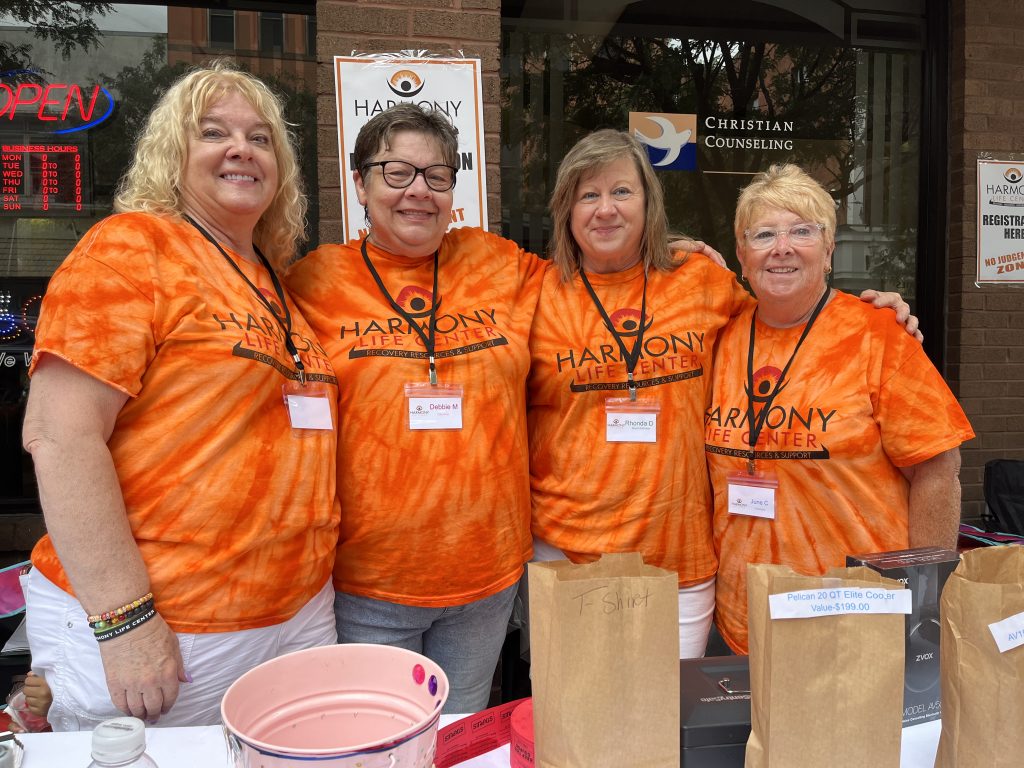
From left, Karen Bennett of Harmony Life Center, with Debbie Engle, Rhonda DiBello and June Chappel, who started a support group for parents whose children died from opioid addiction. (Photo by Karen Mansfield)
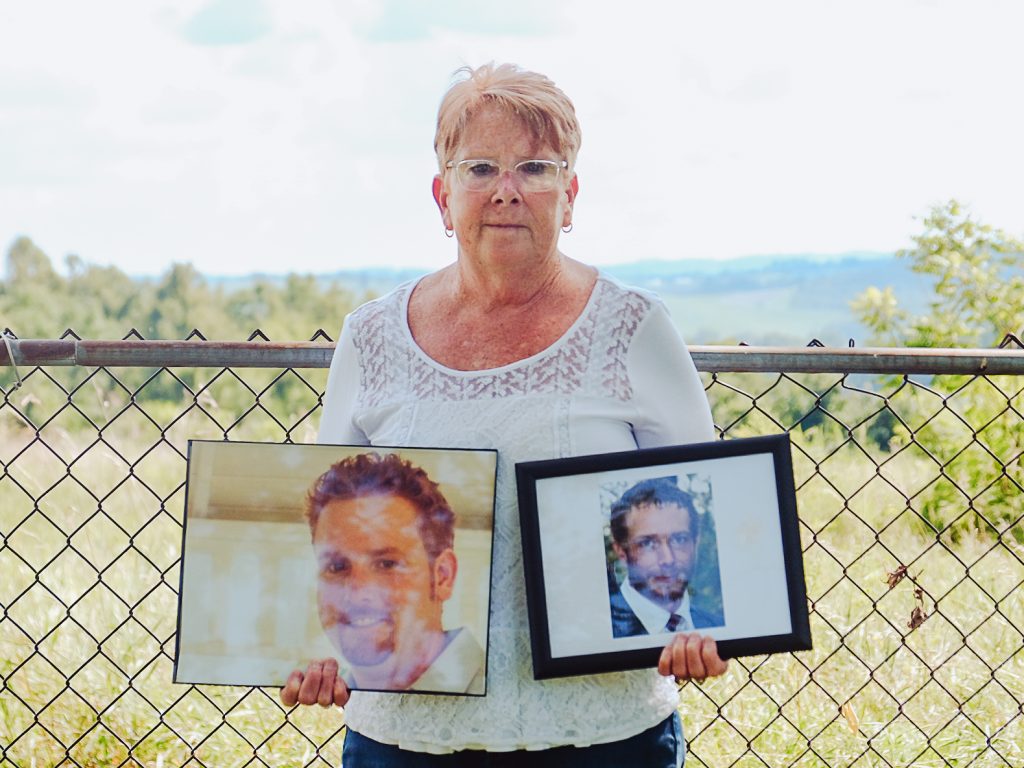
Photos are the only thing June Chappel has left of her sons Cody, left, and Dave, right, both of whom passed away to opioid addiction. (Photo by Katherine Mansfield)
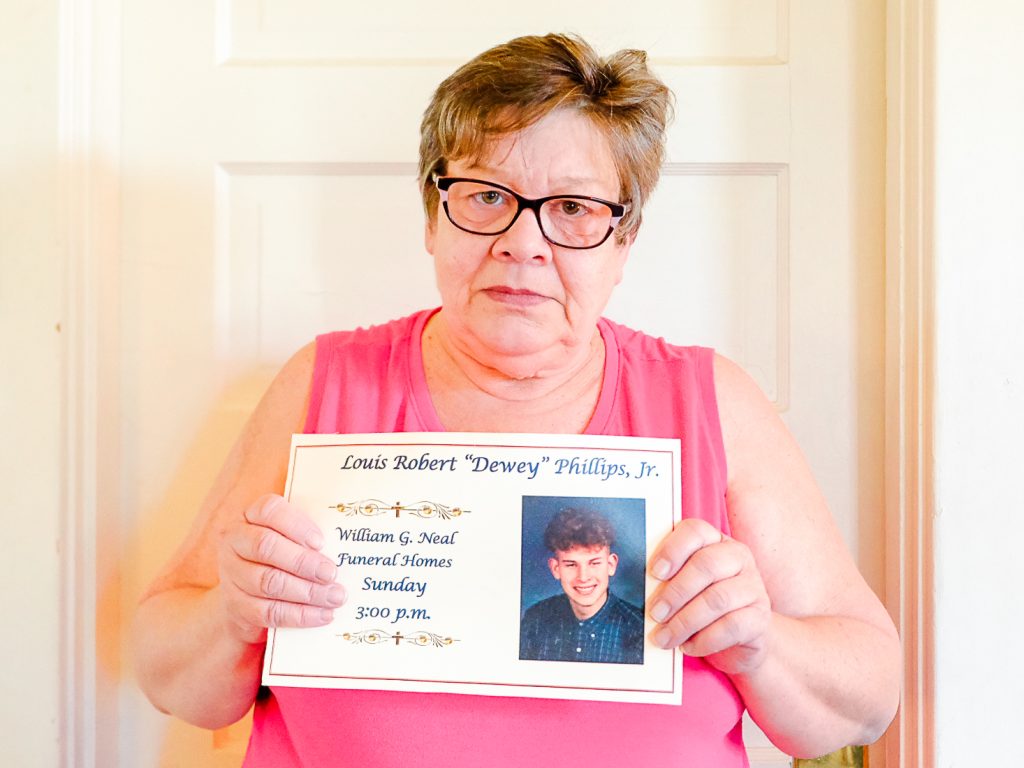
Sept. 12 will mark three years since Debbie Engel lost her son, Louis “Dewey� Phillips Jr., to addiction. (Photo by Katherine Mansfield)
Katherine Mansfield
Katherine Mansfield
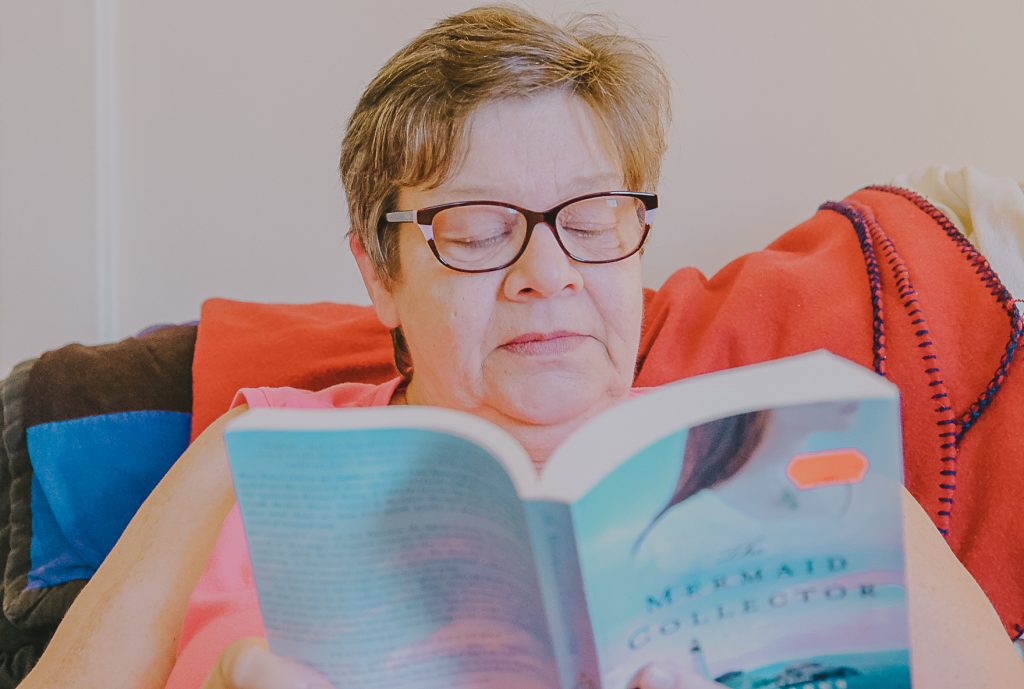
When she isn’t cross-stitching, doing crossword puzzles or spending time with her grandchildren, Debbie Engel enjoys getting lost in a good book. She reads in a chair left behind by her son Louis “Dewey� Phillips Jr., who passed away three years ago due to addiction.
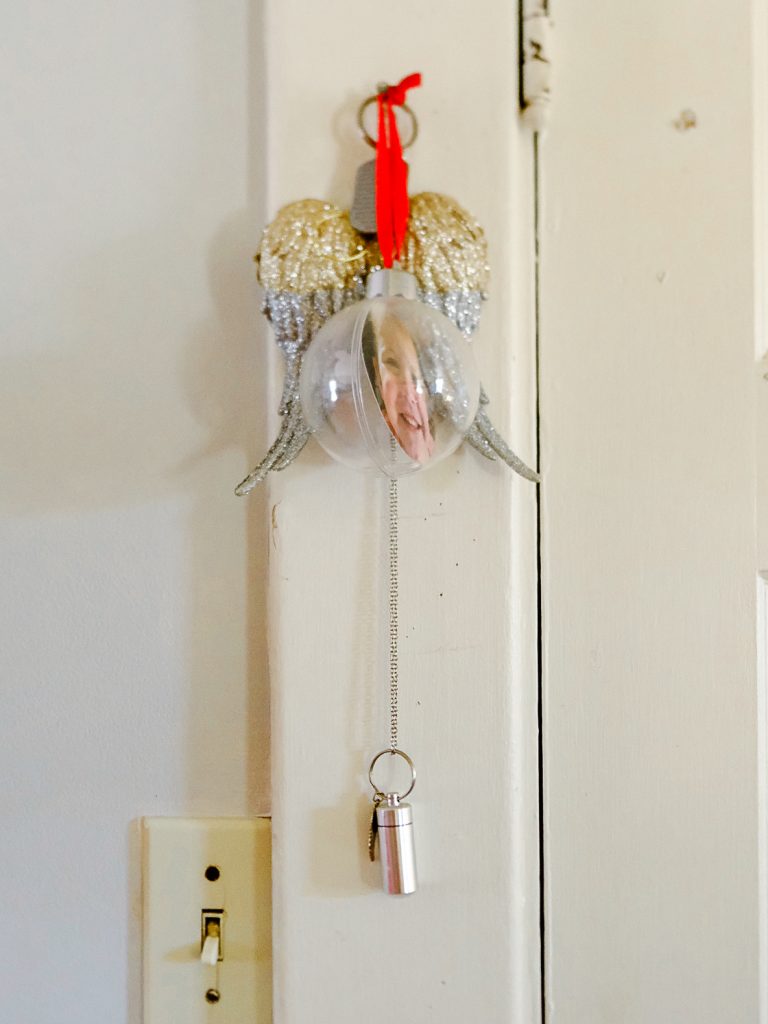
After losing her son Louis Phillips Jr. to opioid overdose in 2019, Debbie Engel created a memorial space to him, to help with healing. Before stepping out, Engel symbolically kisses her son good-bye, and she often greets him when she returns home. (Photo by Katherine Mansfield)
news@greenecountymessenger.com
There is no name for a parent whoÄ¢¹½ÊÓƵ lost a child.
But there is a nickname for a local support group formed by mothers who lost their children to opioid overdose: Not In Vain.
The group was founded two years ago by three grieving moms – Rhonda DiBello, June Chappel and Debbie Engel – who felt out of place in other grief support groups.
They meet one Monday a month, informally, in DiBelloÄ¢¹½ÊÓƵ hair salon, A Cut Above in Washington, to discuss their grief, share memories of their children, and to support each other.
“We cry in here all the time. We cry a lot,� said DiBello.
DiBello lost her daughter, Melissa Moeller, on Feb. 13, 2017, at the age of 27 after an accidental overdose.
As parents, the three have a close bond forged by having loved and lost a child to addiction.
“We count on each other. We trust each other. ThereÄ¢¹½ÊÓƵ no judgment here,â€� said Engel, whose son, Louis “Deweyâ€� Phillips Jr., died Sept. 12, 2019, following a more than 20-year battle with drug addiction. He was 42.
Chappel lost both of her sons to drug overdoses less than three years apart.
Her older son, Cody Jeffers, 32, died on Oct. 30, 2016. Her younger son, David “Davie� Chappel, passed away on April 19, 2019, at the age of 29.
At the July sentencing for the drug dealer who provided the fentanyl-laced heroin that killed David Chappel and a 26-year-old woman, June delivered a victim impact statement that she had rehearsed with her Not In Vain companions.
Also during the sentencing, Karen Bennett, president of the Harmony Life Center Board of Directors, gave a statement on behalf of the Not In Vain mothers.
DiBello, Engel and Chappel never miss a monthly meeting, and since the group formed, other mothers have attended off and on. The three invite anyone interested to join them.
“If anybody wants to join, they’re more than welcome to contact us. We know exactly how things are because we’ve all gone through the same thing,� said Chappel. “We tried to help our kids; we did everything we could.�
The deaths of DiBelloÄ¢¹½ÊÓƵ, ChappelÄ¢¹½ÊÓƵ, and EngelÄ¢¹½ÊÓƵ children are part of an ongoing opioid crisis that has impacted the country and Washington County.
Data released by the Washington County CoronerÄ¢¹½ÊÓƵ Office showed 106 drug-related deaths occurred in the county in 2021, the second-highest number of overdose fatalities on record.
In 2017, Moeller was among 97 people who died from opioid-related overdoses, the fourth-highest number of fatalities ever recorded in the county.
Overdose deaths have increased 39% from 2018, when 76 fatalities were reported, to 2021. In 2019, 81 deaths were recorded, and in 2020, fatal overdoses increased to 102.
Their childrenÄ¢¹½ÊÓƵ deaths – and the burden of guilt and sadness they carry – have upended the mothers’ lives.
Engel rarely ventures out.
“I’ve had people say, ‘If you had been a better mother, your child wouldn’t have been on drugs,'� said Engel. “I’ve been judged very severely. I never liked confrontation, so I just stay home.�
And itÄ¢¹½ÊÓƵ damaged their confidence.
At a recent Not In Vain meeting, ChappelÄ¢¹½ÊÓƵ eyes filled with tears as she said, “I think I’m a terrible mother. I must be. Both my sons are dead.â€�
EngelÄ¢¹½ÊÓƵ son, Phillips, left behind five children who range in age 20 and 3 years old. His youngest daughter was born six weeks after he died.
“My son was the most fun, happy guy. He was the one who always made everybody laugh,� said Engel. “He was a really good cook. He loved his kids, he loved his nieces and nephews very much. But the most wonderful people, they take drugs and they turn into someone else.�
When he was 21, Phillips broke his ankle on a dirt bike and was prescribed Oxycontin.
His addiction to prescription drugs led him to heroin, and he struggled to overcome his drug dependence for the next two decades, spending half of his adult life in prison. He overdosed in Washington County jail, and Engel, who was visiting her daughter in Las Vegas, Nev., flew home in time to say good-bye to him at WHS Washington Hospital.
“I think about him every day. There are always reminders,� said Engel, who carries some of Phillips’ ashes in a necklace in remembrance of her son. “I try to think of the happy things. Every time I talk to my oldest grandson I think of him because they have the same voice, and all five of his kids look like him. Anytime (his 3-year-old daughter) does crazy things, it makes me sad because he would have loved that.�
ChappelÄ¢¹½ÊÓƵ sons graduated from Avella High School. Cody was a popular student who was selected as class president and prom king, and played sports. He graduated from Bethany (W.Va.) College and enrolled in Pittsburgh Institute of Aeronautics, but never attended classes there.
Chappel said CodyÄ¢¹½ÊÓƵ drug addiction began in college. She suspected Cody dabbled with marijuana, but didn’t know he was using cocaine until she got a $900 bill from an ambulance company because her son had been transported to a hospital after he thought he was having a heart attack from the drug.
He died in Beaver County on a drug dealerÄ¢¹½ÊÓƵ couch after he overdosed on pills laced with fentanyl.
Davie, the father of two young sons, was an avid outdoorsman who enjoyed hunting and fishing with his father, David W. Chappel.
He earned masonry certification and worked in the gas industry.
After DavieÄ¢¹½ÊÓƵ father died of cancer, though, a friend offered him heroin, and Davie spent the next eight years in and out of rehab. In March 2019, Davie was clean, but he had his wisdom teeth removed and was prescribed a painkiller. Three weeks later, he was dead, Chappel said.
“Everything he did was with his dad, and when his dad died, that was the beginning of the end for Davie. I don’t think he knew how to go on without him, so he used drugs to try to cope with his pain. We tried everything to help him,� said Chappel. “My kids were good kids.�
Chappel and DiBello, it turns out, experienced their childrenÄ¢¹½ÊÓƵ drug addiction together because Davie and Moeller were close friends.
“They met through drugs, and they were pretty close. They were homeless together,� said DiBello.
When DiBello and MoellerÄ¢¹½ÊÓƵ father divorced when Moeller was 12, she moved in with her dad who, DiBello said, was a cocaine addict.
By the time Moeller was 14, she was drinking, using marijuana, and popping prescription medications.
She started dating a man nearly twice her age, “and thatÄ¢¹½ÊÓƵ when she really started getting into stuff,â€� said DiBello. “I tried desperately to help her. I went into drug houses not knowing if they were going to kill me, stepping over addicts lying on the floor, but you don’t care. I was looking for my daughter.â€�
The Not In Vain moms all are actively involved in helping raise their grandchildren.
“We do it for our grandbabies,� said DiBello, who has custody of her grandson, Preston Robison, 13.
She calls Robison “my blessing for losing my daughter.�
For the past five years, Robison has operated a lemonade stand and donates the money he raises to organizations that help people with addiction and recovery.
Not In Vain moms participated in International Overdose Awareness Day on Aug. 31, held by the Washington County Opioid Overdose Coalition in collaboration with the Washington Wild Things to honor the lives of loved ones who have died as a result of substance abuse.
The women have a mission – they want to share with other moms everything they have learned about navigating the systems in place, and to connect them with agencies and organizations that might help them. And they want to provide a shoulder to lean on, wherever parents are on their grief journey.
Said Engel, I don’t think the sadness, the rawness ever goes away, losing a child like that. The senselessness, itÄ¢¹½ÊÓƵ hard. That wound doesn’t heal. Anything good or bad, we can talk about here.â€�
Chappel agreed.
“Well, we’re still here, stronger than ever. Been through it,� said Chappel. “You don’t think you can go through it and make it, but you do. We have.�