

Southwestern Pa. poised to play large role in hydrogen energy
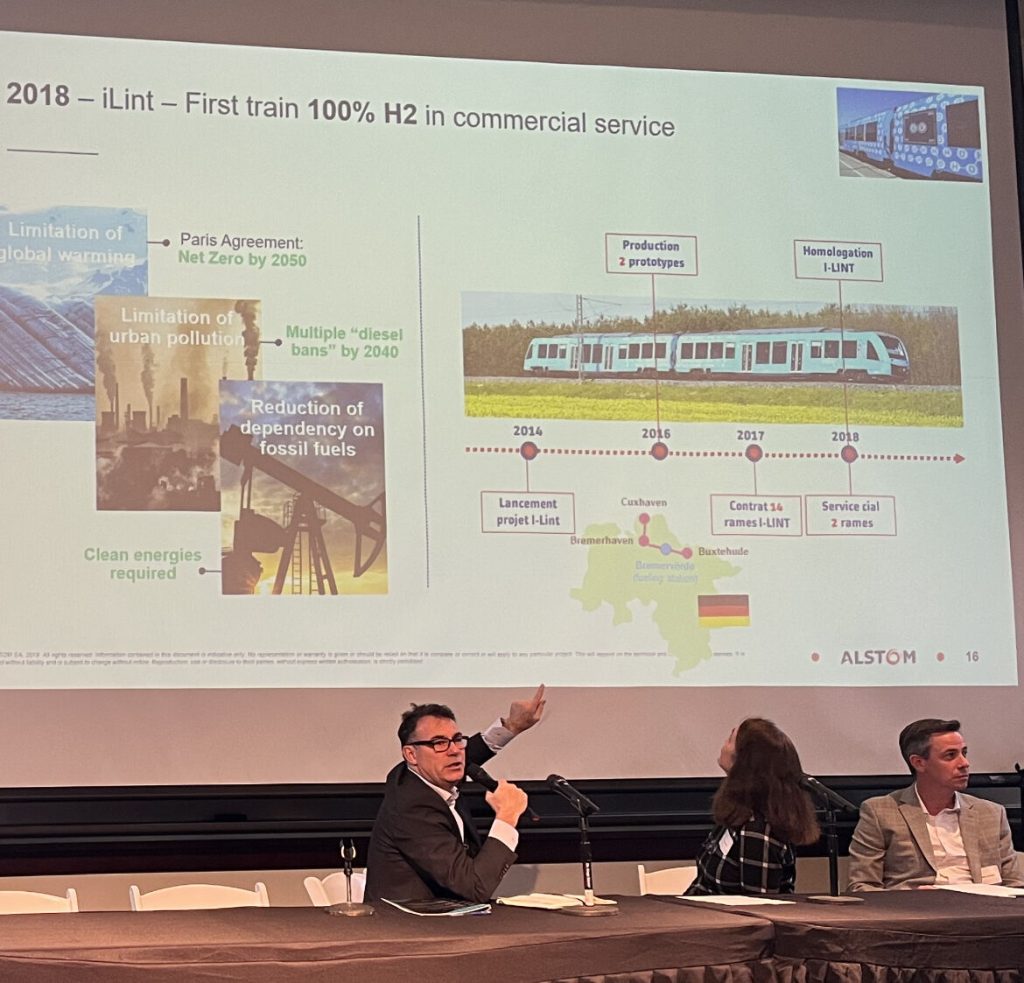
Eric Rondeau, left, discusses the hydrogen train his company, Alstom, operates in Canada during the Washington & Jefferson College Center for Energy Policy and Management discussion on hydrogen energy. He is joined by energy attorney Jean Mosites of Babst Calland, center, and Adam Walters, senior adviser for the Pennsylvania Office of Energy.
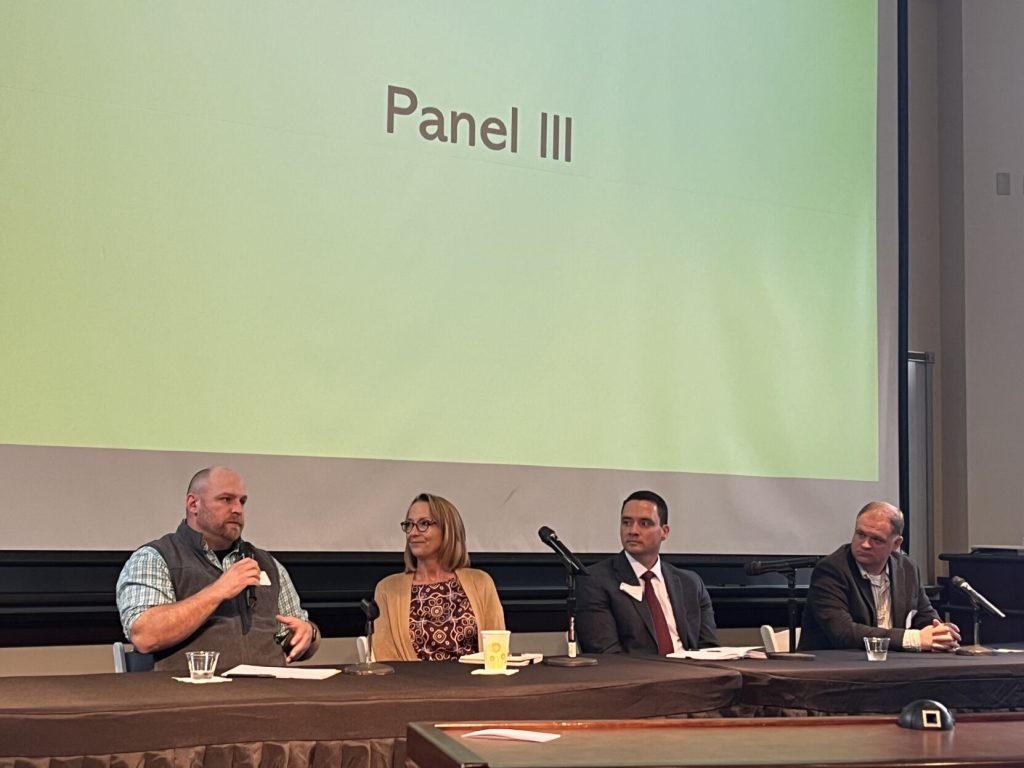
Serving on a panel to discuss the role of hydrogen energy at Washington & Jefferson College Center for Energy Policy and Management Tuesday were Jeremy Kelly, Greene County Director of Planning in the Planning and Community Development Department and Director of Finance and Budget; municipal planning expert Joy Ruff; policy adviser Kevin Sunday; and Michael Butler, mid-Atlantic Executive Director for the Consumer Energy Alliance. (Photos by Karen Mansfield)
news@greenecountymessenger.com
Southwestern Pennsylvania is positioned to play a significant role in hydrogen energy after the Biden Administration last week selected the ARCH2 Hydrogen Hub based in West Virginia as one of seven regional clean hydrogen hubs across the U.S. that will receive a portion of $7 billion in funding from the Bipartisan Infrastructure Law that aims to help the nation meet its climate goals while generating thousands of new high-quality jobs.
ARCH2, the Appalachian hub, is anticipated to bring more than 21,000 direct jobs – 18,000 for construction and 3,000 workers for the hub.
On Tuesday, the Washington & Jefferson College Center for Energy Policy & Management hosted “Harnessing Hydrogen: Exploring Local and Regional Opportunities in Appalachia,â€� where panelists from the public, private and government sectors discussed the development of hydrogen energy and carbon capture storage (CCS) and the impact it could have on the regionÄ¢¹½ÊÓƵ economy.
The panel focused on hydrogen economy in the United States and the growing interest in hydrogen due to its potential as a lower emissions energy source.
Panelist Adam Walters, senior adviser with the Pennsylvania Department of Energy, said, “The solutions and technologies that we bring to market and the solutions we are going to bring to bear are going to be globally relevant.�
The group addressed the economic, regulatory and technological challenges to development and deployment of hydrogen energy that exist, and emphasized the importance of education and collaboration among the private, public, and governmental sectors in the region.
Hydrogen energy has several advantages, including sustainability and cleanliness, but it faces substantial challenges in areas of storage, manufacturing, distribution, infrastructure, and cost.
Also among the panelists was Eric Rondeau, head of the North American Innovation Center for Alstom, a company the launched the first hydrogen-powered train in North America, which takes riders on a two-and-a-half hour trip through central Quebec.
Alstom, the Government of Quebec, and other groups are working to roll out hydrogen-powered trains across North America and to develop the necessary support ecosystem.
The new U.S. hydrogen energy hubs could play an important role in cutting climate pollution from sectors of the economy without good low-carbon alternatives, like steel making, fertilizer production and aviation. But some experts warn that, without proper guardrails, expanded use of hydrogen could also extend reliance on fossil fuels.
Panelist Richard Negrin, Secretary of the Pennsylvania Department of Environmental Protection, addressed hydrogen energyÄ¢¹½ÊÓƵ potential role in addressing climate change.
Negrin said hydrogen energy can bolster domestic manufacturing, create healthier communities, and deliver new jobs and economic opportunities in the region.
Negrin, the highest ranking Latino in the state, views environmental justice as something personal, and looks to combat the climate crisis and the social injustice while in office.
The new hubs aim to produce more than three million metric tons of clean hydrogen annually. They are estimated to help eliminate 25 million metric tons of carbon dioxide emissions, or roughly the combined annual emissions of over 5.5 million gasoline-powered cars.
The Appalachian Regional Clean Hydrogen Hub, which stands to be supported by up to $925 million, is slated to be among the largest of the seven in terms of production, and will be located across West Virginia, Southeastern Ohio, and Southwestern Pennsylvania. It is likely to use the regionÄ¢¹½ÊÓƵ methane gas to derive hydrogen.
The panel also addressed land use impacts, permitting issues, and regional economic development.
Panelists estimated it could take more than a decade for the ARCH2 hub to be operational.
The other hubs include: Mid-Atlantic Hydrogen Hub in Philadelphia; California Hydrogen Hub; Gulf Coast Hydrogen Hub in Texas; Heartland Hydrogen Hub in the Upper Midwest; Midwest Hydrogen Hub; and Pacific Northwest Hydrogen Hub.
Jeremy Kelly, who serves as Greene CountyÄ¢¹½ÊÓƵ Director of Planning for the Planning and Community Development Department and Director of Finance and Budget, said the county – where fracking has been prevalent for more than a decade – is preparing for development in the hydrogen energy sector.
“In Greene County alone, we have been run through the mill with extractive industries, we have been resilient. I believe our community is resilient. We have positioned ourselves for extractive industry for all of our existence, so whenever this comes, I feel that our community has been prepared for that,� Kelly said.