

NatureÄ¢¹½ÊÓƵ Ade
Native shrub confused with toxic relative yields refreshing summer beverage

Everyone enjoys a refreshing cold drink in hot weather, and any convenience store offers a head-spinning array of beverages to quench that summer-time thirst.
But thereÄ¢¹½ÊÓƵ an alternative to the glitzy over-packaging and hyper-sugared products of the corporate beverage industry. ItÄ¢¹½ÊÓƵ an all-natural replacement for pink lemonade thatÄ¢¹½ÊÓƵ delicious, easy to make, low cost, and as local as you can get.
My granddaughter, Safari (9), and I made a gallon last week. We enjoyed the process as much as the refreshing results. Kids today get bombarded with commercial electronic messages, aimed cleverly, sometimes deviously, at turning them into consumers, heedless of their health and well-being. Unless someone in their lives helps them learn to savor simple, authentic, physically engaging experiences with the natural world, kids can only assume they must pay some marketer for every satisfaction.
Safari kept prompting the project. I’d told her about making “lemonade� from sumac, and it planted a seed. So, there was no way I could deny an appeal like “Pappy, can we make sumac lemonade too?�
Confusion and misconception swirl around sumac (pronounced “shoe-makâ€�). The plant we used to make pink sumac-ade is the staghorn sumac (Rhus typhina). ItÄ¢¹½ÊÓƵ a native shrub that grows to about 15 feet high, mostly along woodland edges, roadsides, stream corridors, or abandoned pastures. Its large compound leaves give staghorn sumac a tropical appearance, but the plant is indigenous to the Appalachian and Great Lakes regions. Staghorn sumac is most conspicuous in autumn, when its foliage flames brilliant red. Entire spans of roadside blaze scarlet when sumac dons its fall color. The velvety “fuzzâ€� covering the twigs evoked staghorn sumacÄ¢¹½ÊÓƵ name. It resembles the fuzzy surface of a deerÄ¢¹½ÊÓƵ growing antlers in summer.
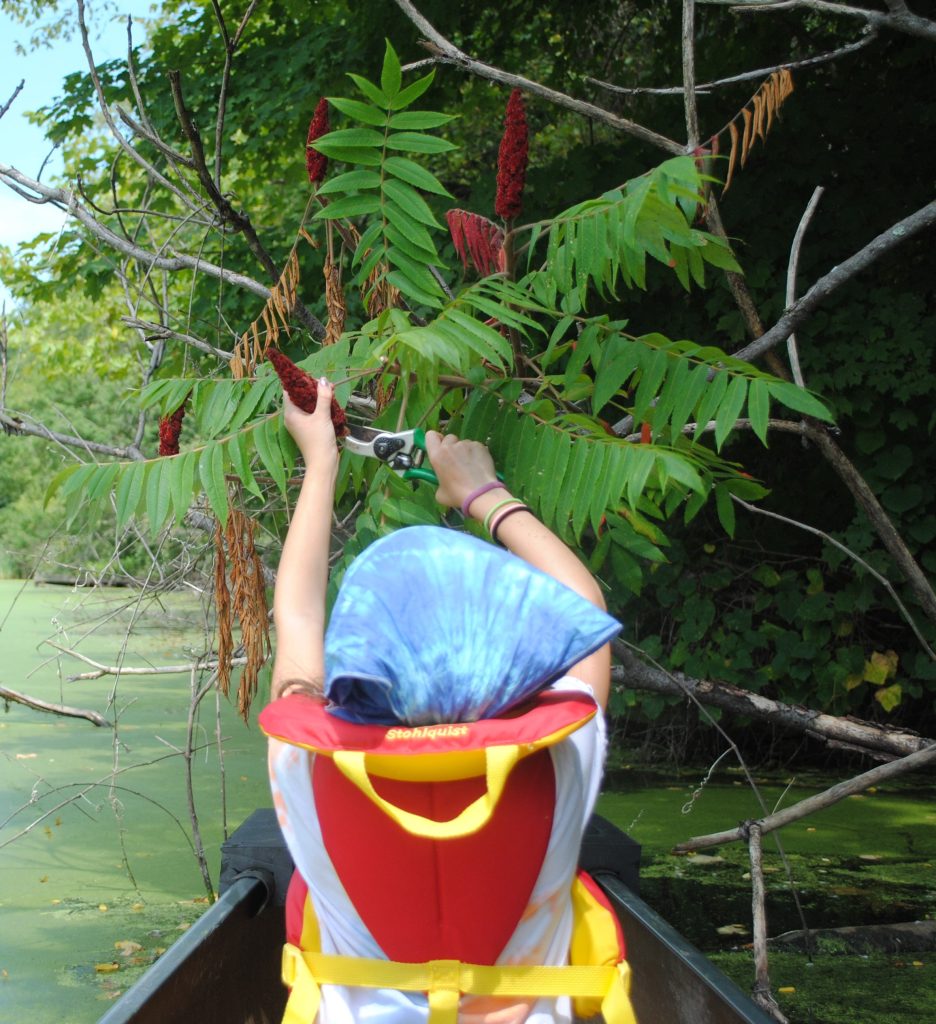
People often confuse staghorn sumac with a related plant — poison sumac (Toxicodendron vernix), but the two are different and easily distinguished. Poison sumac, which causes extreme irritation to the skin after contact, produces clustered white berries that hang downward. Perfectly safe staghorn sumacÄ¢¹½ÊÓƵ fruiting body is an erect cone of bright-red, tightly-packed seeds (drupes, actually, like a tiny cherry or peach). The tapered red cone is about the same length as a cellphone. When ripe and prime for making the drink in late summer, the cones are tacky or sticky to the touch.
Staghorn sumac is far more abundant in our region than poison sumac, which grows only in swampy terrain.
There is one valid caution. Staghorn and poison sumac are both members of the cashew family (Anacardiaceae). Those who have experienced allergic reactions to cashew nuts should avoid the otherwise wholesome staghorn sumac.
Since Safari had pushed the procedure, I decided to make it an adventure. I knew where some fruiting sumac overhung the shore of a lake where a young child could easily reach the seed cones from her seat in a canoe.
We launched, and I encouraged her to scrutinize the shoreline to spot our prize. It took her only a few minutes to point out the bright red fruit clusters. We eased up under the branches, she stowed her paddle, and with garden shears clipped eight prime clusters of sumac fruit.
Encouraged to taste one of the fuzzy, sticky drupes, her face bloomed. “Just like lemon,� she beamed.
From there it was simple. We took our sumac clusters home, placed them in a large bowl, and covered them with water. Some foragers recommend letting the sumac solution steep in a refrigerator overnight. But I favored a more active recipe for a young childÄ¢¹½ÊÓƵ introduction. So, we simply crushed the fruit cones with the end of cylindrical wooden rolling pin, handles removed. Safari marveled at the water turning an appetizing deep-pink tint. It was the kind of project thatÄ¢¹½ÊÓƵ ideal for a childÄ¢¹½ÊÓƵ ability and interest.
Next, we strained the red liquid through food-grade cheesecloth into a serving decanter — twice, to remove the last of the tiny “hairs� that had already surrendered their color and acidic, lemony taste to our beverage.
Finally, we chilled the liquid briefly, then tasted. “ItÄ¢¹½ÊÓƵ delicious, and so lemony, but it needs a little sugar,â€� Safari observed.
She spooned in a modest amount of the sweetener to blunt the drinkÄ¢¹½ÊÓƵ decidedly tart edge, we poured it over ice in tall glasses and enjoyed it with fried yellow squash from the garden. We agreed that we might have used honey or maple syrup to balance the taste but were both pleased with the outcome.
It was a simple little venture toward the end of a childÄ¢¹½ÊÓƵ summer vacation. But I hope it helps her to know there is always something of interest nearby in nature, accessible through your own knowledge, effort, and genuine fun.