

A little green luck for the New Year
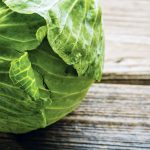
Happy New Year! I hope itÄ¢¹½ÊÓƵ not too late to say that. Especially after the challenging year we all just experienced.
Nearly everyone on the planet has now felt some degree of weight from this continuing pandemic. We have all spent the past two years adjusting and then readjusting to these strange new times. Yet, once again around the globe, people greeted 2022 with wishes of hope for good luck in the New Year.
In my family, it has been a tradition to invite good luck on Jan. 1 by having a meal of cabbage (in the form of sauerkraut) and pork. The tradition of eating sauerkraut on New YearÄ¢¹½ÊÓƵ Day is centuries old. German and other eastern European immigrants believed that the strands sauerkraut represented the amount of money the diners would receive in the coming year.
The idea of cabbage as a symbol of good luck is not unique to European countries.
Cabbage is also an important food during Chinese New Year. Within China and other Asian countries, cabbage is seen as a symbol of wealth and good luck, so much so that one word for cabbage is a combination of the words, “pak� (100) and “choi� (wealth), translated to mean “hundreds of types or years of wealth.�
Cabbage has long been cultivated by humans. Europeans have been growing cabbage and its relatives since about 1000 B.C. Cabbage is closely related to other popular garden plants like broccoli, kale, collard greens, Brussels sprouts, kohlrabi and cauliflower. Although very different in appearance, all are variations or cultivars of the species Brassica oleracea. Together they are referred to commonly as the “cole� crops, from which the name of the picnic favorite, cole slaw, is derived.
As a cool weather crop, cabbage requires six to eight hours of sun, and it does not mature well in high heat. With most varieties maturing in 70 to 80 days, gardeners can plant in both spring and mid-summer to fall.
If you are interested in growing your own cabbage, there are many choices. In addition to many varieties of green heading cabbage, gardeners can also choose the looser leaved savoy and Napa cabbages, red cabbage, or one of many other varieties.
Nearly all the sauerkraut I’ve eaten at New Years has come from cabbage my parents have grown. My parents, now in their 80s, still make a large batch about every two years. ItÄ¢¹½ÊÓƵ a family tradition, and my wife and I started growing and making our own sauerkraut a few years ago for traditional Polish Christmas Eve dinner, New YearÄ¢¹½ÊÓƵ Eve, as well as for cookouts and other events throughout the year.
Part of why I garden is for the feeling of reward that comes from putting food on a plate for these special celebrations.
If you think about it, it is not surprising that cabbage has worked its way so firmly into human culture. Having lived through cold Pennsylvania winters, I can imagine ancient humans waiting through winter for the next growing season to begin. Cabbage is ideal for spring planting, and later varieties mature in the fall, just in time to be fermented for winter storage.
My dad has told me that his parents kept a crock or two of sauerkraut all winter and would scoop out just the amount needed for meals. With that in mind, it is easy to understand how, in the days before refrigeration, having enough of a stored vegetable to fill a plate on New YearÄ¢¹½ÊÓƵ Day would be viewed as good luck, good fortune and good gardening.
May we all be so lucky in 2022.
The Penn State Master Gardeners offer resources for planting vegetables available at extension.psu.edu/programs/master-gardener/counties/berks/news/2020/gardening-resources-from-penn-state-extension. The 2020 Victory Garden webinars are still available, and free to the public covering basic gardening as well as providing information on a varieties of vegetable plants, management of common pests and other gardening topics.
For questions, email fayettemg@psu.edu and a master gardener will respond.