

Barbush had community spirit
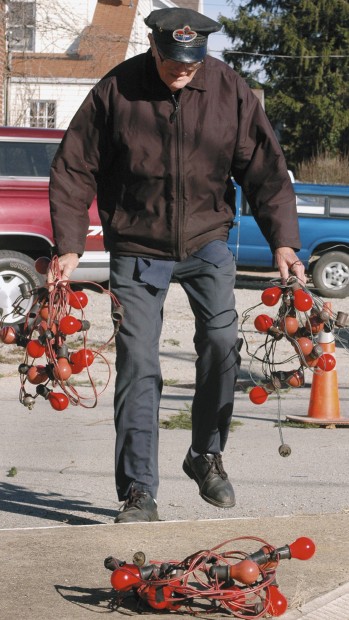
In this file photo taken December, 2006, Steve Barbush, longtime leader of the Fairbank Community Christmas Tree Club, carries the red lights that will be put on the annual Christmas tree in Fairbank.
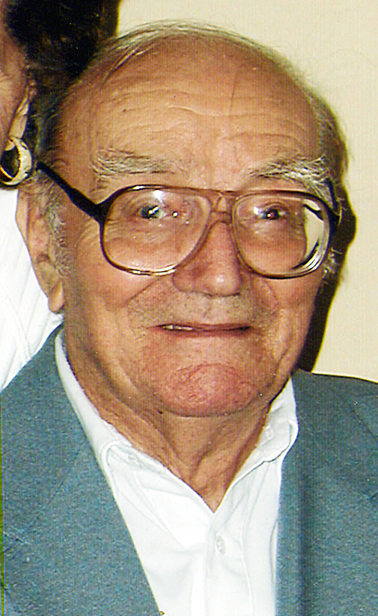
Barbush
?Stephen “Hacksaw” Barbush Jr. of Fairbank collected donations to buy fruit baskets for widows, led a group of volunteers who decorated the town for Christmas for more than 40 years and hosted daily pinochle games for a group of buddies at his gas station.
He was 83 years old when he died in Uniontown Hospital on June 23.
“He was proud of what he did for the community,” said his wife of 54 years Lenora Barbush.
“He was friendly and popular. He really enjoyed what he did,” said Al Apicella of Fairbank, a regular at the pinochle table. He refers to his longtime friend as “Hack.”
What Hack might have been best known for is organizing the set up and decorating of a Christmas tree in the center of town.
The first tree went up in 1964 and the tradition continued through last Christmas. However, wind blew down last yearĢ¹½ÊÓƵ tree and it wasn’t replaced.
Initially, Hack asked people to donate trees. As the tradition grew, people would call him to offer trees, Apicella said.
On the day he died, someone called to donate a tree, Barbush said.
Hack and Joe Ciarrocchi, owner of JoeĢ¹½ÊÓƵ Body Shop in neighboring Filbert, were in charge of the tree, Apicella said. Ciarrocchi used a flatbed tow truck to haul the three to Fairbank and deployed an elevated platform to decorate it.
“We’re talking 30 to 40 foot trees. They had nice trees,” said Clark Dearth, a friend who donated to HackĢ¹½ÊÓƵ efforts and the owner of the Dearth Funeral Home in New Salem where HackĢ¹½ÊÓƵ funeral services were held. “Steve was behind the whole thing.”
The popularity of the tree led Hack and his buddies to collect donations to decorate utility poles with lights and bells. Another local auto shop owner volunteered his cherry picker truck to decorate the poles. As that tradition caught on, increased donations allowed them to decorate more and more poles, Apicella said.
The Filbert playground was another project undertaken by volunteers led by Hack. They collected donations for playground equipment, a basketball court and fencing around the ball field.
“Most of the work was done by volunteers in the community,” Apicella said. “He’d get people to bring equipment down when necessary.”
Hack took it upon himself to ask businesses for donations he would use to buy fruit baskets that he would give to widows, he said.
“He’d take them to widows in Fairbank every Christmas,” Dearth said. “He was really active.”
He was also easy to find and recognize.
The Barbush Amoco Station, which Hack opened in 1952, the year he returned home from his service in the Army in the Korean war, was his home away from home and a place for friends to socialize.
“That was the gathering point in Fairbank,” Apicella said. “HackĢ¹½ÊÓƵ place was a place for all to gather. Since 1952, we played pinochle there every day.”
In the summer, he would set up a table or two with umbrellas outside for the pinochle circle. Sometimes he and his buddies played checkers and, if he wasn’t busy, he would set up a ping pong table in his garage bay.
People who moved out of Fairbank would stop by the gas station to talk to the guys whenever they returned for visits, Apicella said.
Some people wouldn’t recognize Hack if he wasn’t wearing his nostalgic Amoco hat, but he seemed to wear it all the time, he said.
“That Amoco hat, he was never without it,” Barbush said.
Closing the station in 2002 was difficult for Hack.
“When he closed it, he just lost part of his life. The station was his enjoyment and his life,” Apicella said. “I really miss it and I know Hack did too. It was nothing to see four old guys playing cards under an umbrella at the gas station.”
“It was like a hangout in Fairbank,” Dearth said.
HackĢ¹½ÊÓƵ friendly nature didn’t escape the senses of local wildlife.
A turtle would crawl more than 100 yards through a drain pipe from Dunlap Creek to an opening at the gas station where Hack would feed it, Apicella said.
Hack put a spot of red paint on its shell so he could recognize it and he looked for it every day. The turtle made regular visits during summers for at least five years.
“I think the only reason it stopped is because it got too big to fit through the pipe,” Apicella said.
Hack also was active in politics and was proud of a collection of hundreds of beer cans.
Apicella and Dearth said when they and others would travel, they always remembered to bring a can back for Hack.
“But guess who had to dust them?” Barbush asked rhetorically.