

Connellsville native William Clark amasses fortune in Montana during 19th century
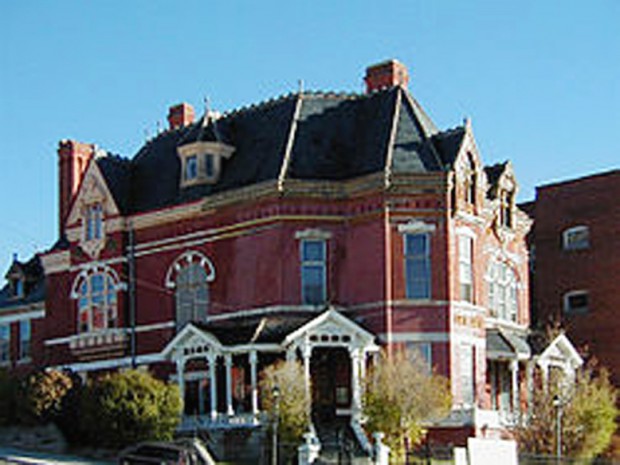
The Copper King Mansion, also known as the W.A. Clark Mansion, was built in 1884 to 1888 in Butte, Montana. The home features fresco painted ceilings, rare imported wood, gas and electric chandeliers and ornate, hand-carved fireplaces and stairways and stained glass windows. It is privately owned and operated as a bed and breakfast. The mansion was added to the National Register of Historic Places in 1970.
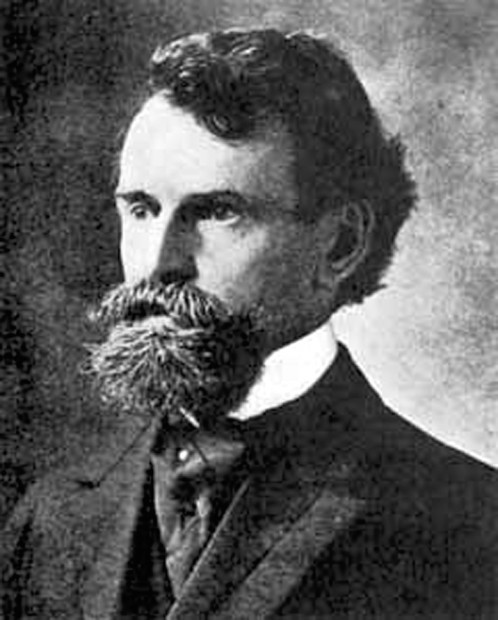
William Andrews Clark was born in Connellsville in 1839, but moved West where he would make his fortune.
?The following is the second of a three-part series about William Andrews Clark, a Connellsville native who went on to become one of the wealthiest and powerful men in the United States during the 19th century. Little is written in local history books about Clark. However, the son of a poor farmer did get the attention of Dr. David Geary, a local historian now residing in Arizona, who agreed to share his extensive research of ClarkÄ¢¹½ÊÓƵ “rags-to-richesâ€� story.
Upon hearing of a gold strike in Montana, William Clark traveled to Bannack, Mont., and opened a store.
“When the miners needed eggs for a drink made with whiskey called “Tom and Jerry,� (William Clark) endured a long trip by wagon over a treacherous route, bought eggs that became frozen, and sold them for $5 each — an exorbitant sum,� said Geary.
William Clark added banking services to his business, accepting gold dust for purchases. The gold would then be sent east and exchanged for currency.
He moved around Montana, but eventually settled in Deer Lodge. To supply his store there, he traveled to New York to order goods.
During one trip, he stopped in Connellsville where he met a childhood friend, Katherine Stauffer. When he returned, he again traveled to Connellsville and married her on May 28, 1869.
“Enroute to Montana, the newlyweds traveled to Chicago, then a city built largely of wooden buildings,� said Geary. “The Clarks saw Chicago before it was largely destroyed by the Great Fire in 1871.�
The couple lived in Deer Lodge and started their family.
The Clarks had five children during their marriage, Mary Joaquina, Charles Walker, William Jr., Paul Francis and Mary Louise.
Although considered well-to-do, it was William ClarkÄ¢¹½ÊÓƵ mining investments in Butte, Mont., that rocketed the family into great wealth.
“(William Clark) bought up ore deposits hoping for silver, but they instead contained copper,â€� said Geary. “His ownership of copper merged with the nationÄ¢¹½ÊÓƵ appetite for copper wires for electricity, for telephones, and for use in manufacturing.â€�
The family moved to Butte where William Clark constructed an ornate mansion, which still stands as a bed and breakfast. The home took four years to build and cost the owner more than $250,000.
In addition to their Montana mansion, the family also had several residences in Paris and spent much time abroad.
“(William Clark) developed an intense admiration for France and things French,� said Geary.
Katherine Stauffer Clark died in 1893 after succumbing to typhoid.
Geary said that his research did not find that either ever returned to Connellsville. However, local relatives did attend her New York funeral.
William Clark, meanwhile, also presided over the Montana state constitutional conventions in 1884 and 1889 as he pursued his political ambitions to become a U.S. senator.
According to history, he allegedly bribed members of the Montana Legislature in return for their votes. At that time, senators were chosen by the legislators.
“When denied a Senate seat because of the bribery allegations, he got MontanaÄ¢¹½ÊÓƵ lieutenant governor to appoint him to a vacant seat while the governor rushed to Montana from an out-of-state trip to nullify the appointment,â€� said Geary.
The corruption led to the passage of the U.S. ConstitutionÄ¢¹½ÊÓƵ 17th Amendment that authorizes the election of senators by popular vote.
Geary said that William Clark was eventually elected to the U.S. Senate.
“Mark Twain once said of William Clark that ‘he is as rotten a human being as can be found; he is a shame to the American nation, and no one has helped to send him to the Senate who did not know that his proper place was the penitentiary, with a ball and chain on his legs,'� said Geary.