

Man with Connellsville ties considered one of the founders of Las Vegas
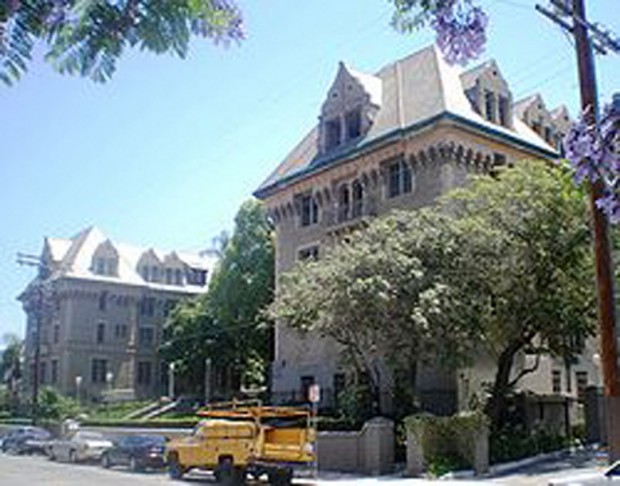
When his mother, Mary Andrews Clark died, William Clark built a memorial home in her honor in Los Angeles, Calif. Initially, it was operated as a YWCA home for young working women. In 1987 it closed after it sustained damage during an earthquake. It reopened in 1995 as housing for low income single workers. The building has been designated as a Historic Cultural Monument and listed on the National Register of Historic Places.
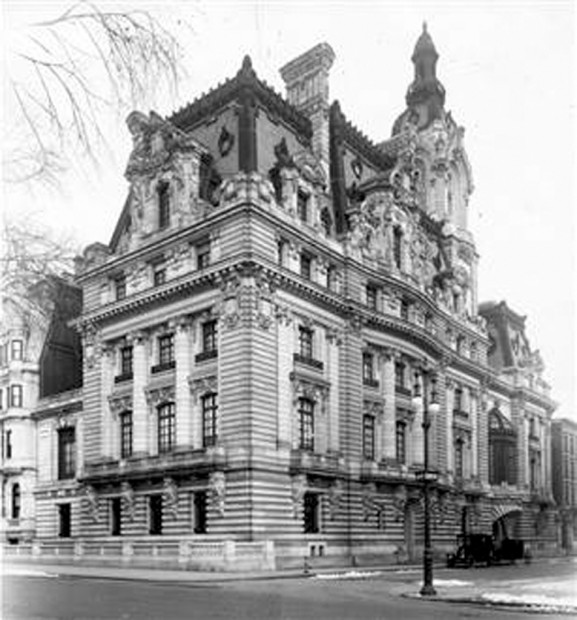
William Clark built the largest mansion to be built on New York City's Fifth Avenue. It stood nine stories tall with 121 rooms. It was later demolished.
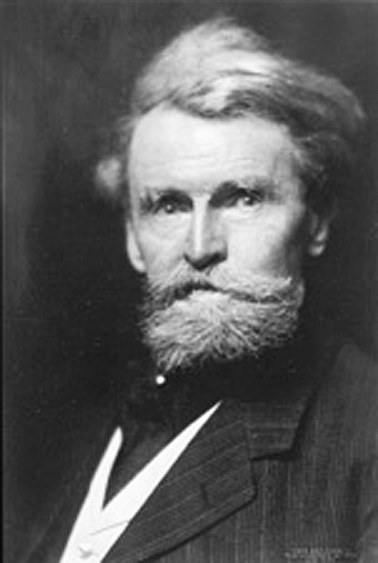
William Andrews Clark, businessman, banker, senator and landowner amassed great wealth during his lifetime. He retired to New York and built the largest mansion in the city. Although costing $10 million to build, a buyer could not be found when it was offered for a mere $2 million. It was later demolished.
?The following is the last of a three-part series about William Andrews Clark, a Connellsville native who went on to become one of the wealthiest and most powerful men in the United States during the 19th century. Little is written in local history books about Clark. However, this son of a poor farmer did get the attention of Dr. David Geary, a local historian now residing in Arizona, who agreed to share his extensive research of ClarkÄ¢¹½ÊÓƵ “rags-to-richesâ€� story.
In 1901, William Clark announced his marriage to his second wife, a woman nearly 40 years his junior.
“He first saw her as a girl in Butte, a daughter of a poverty-stricken man who had impersonated a physician, on stage as the “Goddess of Liberty,� said Geary. “Smitten with her looks, Clark befriended her and stunned Butte by sending her to a private school in France.
“Tongues wagged at the White House when Sen. Clark showed up with his new, young wife.�
The couple had two children, Hugette and Andree.
A letter to Sen. Clark from the Fayette County Commission requesting a monetary donation for a painting for the courthouse went unanswered, according to GearyÄ¢¹½ÊÓƵ research.
William Clark, meanwhile, continued to amass wealth. In addition to his Montana property, he also owned large amounts of land in Nevada, California and Arizona and nearly 32,000 acres in Mexico. In California, a venture to grow sugar beets was marginally successful, while in Arizona he sought to build a “modern� mining town.
“(William Clark) bought copper ore claims around Jerome, Arizona,� said Geary. “The mine became the largest open pit copper mine in the world and (William Clark) built a company town beginning in 1912 to go along with it.
“Today, the town of Clarkdale, near SedonaÄ¢¹½ÊÓƵ picturesque Red Rock country, has become a minor tourist site. Several buildings of the original town still stand.â€�
In Nevada, to service his new railroad from Salt Lake City to Los Angeles, Clark built a railroad depot in the middle of nowhere.
“(In a Nevada desert) he sold lots and called the town Las Vegas,â€� said Geary. “ItÄ¢¹½ÊÓƵ in Clark County, named for him.â€�
When his Connellsville-born mother, Mary Andrews Clark, died in 1907, he built a huge boarding house hotel for working women in Los Angeles to honor her, said Geary.
“It is still standing, well-preserved and on the National Register of Historic Places,� said Geary. “It is the largest monument built to anyone from Connellsville.
“Occasionally, it has served as a film set and seen by millions of people all over the world in motion pictures and television shows.�
William Clark eventually retired to New York where he had established a bank, said Geary.
Over a 13-year period, he built the largest and most ostentatious mansion in the city.
It stood nine stories tall, with 121 rooms, an observatory, auditorium, rotunda, Turkish baths and the largest chamber organ in America at the time.
“In the winter, it took seven tons of coal to heat it that was brought in by a special train,� said Geary. “After his death, the mansion that cost $10 million to build was offered for sale at $2 million, with no buyers because no one wanted the expense of upkeep.�
The house was eventually demolished with the exception of one room, which is now a part of the Corcoran Gallery of Art in Washington, D.C.
At the same time his mansion was being built, he had a large mausoleum erected in Woodlawn Cemetery in the Bronx. Many family members are interred there including his first wife.
William Clark died in 1925.
At the time of his death, he was near equal in wealth to AmericaÄ¢¹½ÊÓƵ richest man, John D. Rockefeller.
In 2008, the filled mausoleum was altered to make room for Huguette Clark.
According to reports, she was entombed just days after her death and without any services or family members in attendance.
Her will was filed in a Manhattan, N.Y., court at the end of June and indicated much of her $400 million estate would be shared by a close friend, a god daughter and a foundation to be established to support the arts.
Geary, meanwhile, said it was a fascinating journey to uncover the story of William Clark.
“Most of the research was done over several years and through various databases, libraries and historical associations in Montana, Iowa, California, Nevada, Arizona, New York, Pennsylvania and Washington, D.C.,� he said. “The best time though, was going to where he was born along the Arch Bridge Road, where his mother was raised along Mountz Creek and where his first wife lived on Peach Street.
“Knowing from other research what Connellsville and the area was like before the Civil War let me step back in time and envision what Clark saw around him as a youth, and how that may have influenced his life.�