

Uniontown home has interesting history
John F. Brothers | Ä¢¹½ÊÓƵ
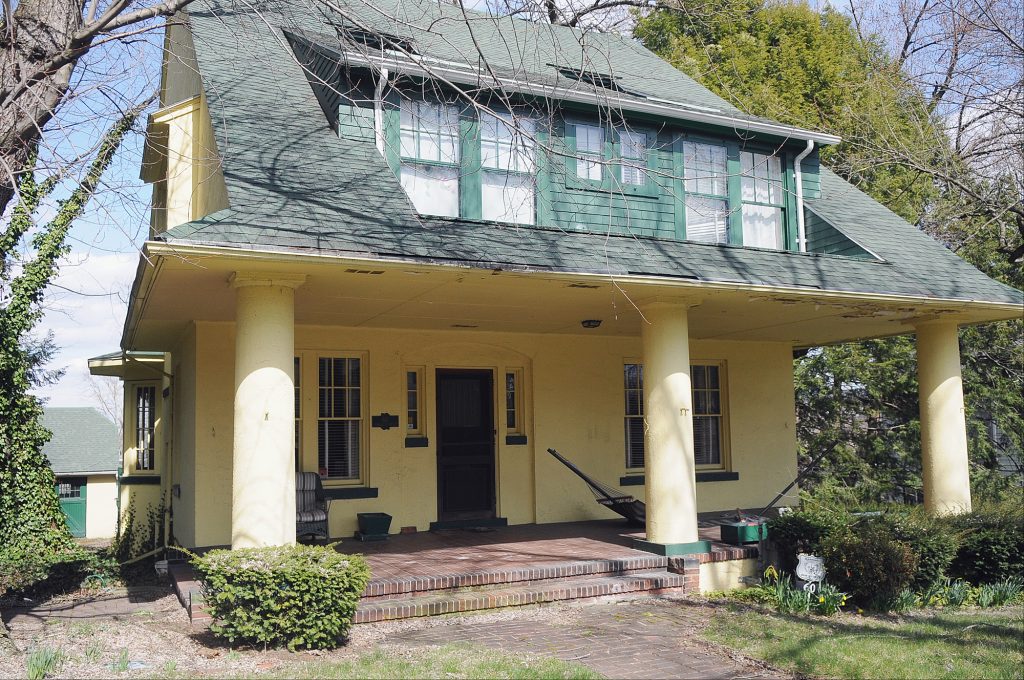
This house at 60 Stockton Ave., Uniontown, was built in 1919 and has 6,000 square feet with a finished third-floor office and a partially finished basement.
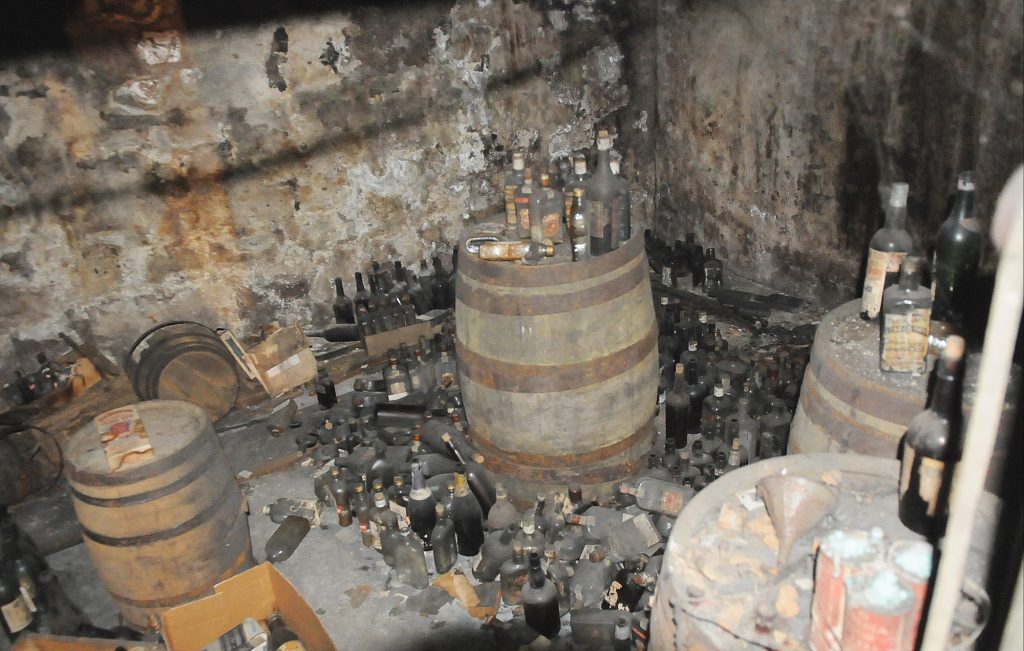
Old barrel and bottles were found in an old vault in a house at 60 Stockton Ave., Uniontown. They were leftover from prohibition days
When the house at 60 Stockton Ave., Uniontown, was built, computers were science fiction.
Now, they are part of the fabric of the home that has graced a city lot for more than nine decades.
Dr. Richard Kaplan owns the home. He operates a physical medicine and rehabilitation practice in Uniontown and is selling it because he has remarried.
However, despite its age, the house is more than up to date, combining the latest in technology with some exceptional features, one of which dates to the era of Prohibition, a national ban on the sale, manufacture and transportation of alcohol that was in place from 1920 to 1933.
As for its heritage, the house at 60 Stockton, Kaplan said, “was built in 1919. The builder soon sold it (in 1923) to Dr. McHugh, a prominent surgeon in Uniontown who died in 1971. Dr. McHughÄ¢¹½ÊÓƵ widow then lived in the home until she died in the early 1990s. I then bought the home with my former wife in 1995,â€� Kaplan said.
He described the home as an Arts and Crafts style bungalow.
“It has six bedrooms, three full bathrooms, one half-bath and one quarter-bath. The house has about 6,000 square-feet, including a finished third floor office (with custom built-in bookshelves) and a partially finished basement.
“There is also a separate carriage house/garage with a partially finished childrenÄ¢¹½ÊÓƵ playroom upstairs. It has been updated to include central air conditioning and backup furnace,â€� he added.
Kaplan, who grew up in New York but has been in Uniontown since 1995 when he set up his practice, also discussed some of the homeÄ¢¹½ÊÓƵ amenities and features.
It has a year-round heated pool with two computer-controlled heating sources, a slide and underwater music.
“The pool is outdoors, but in the winter there is an inflatable bubble (like some health clubs use for tennis courts) and walkway to the rear entrance of the house. So it becomes essentially a winter indoor pool,� Kaplan said.
“The remainder of the home is also computer-controlled for heating/air conditioning, lighting and temperature monitoring,� Kaplan said.
In addition, it has a security system.
“So it has modern features to blend with history,� Kaplan said.
Among its historic features, Kaplan said, the home has “lots of custom work including hardwood floors, pocket doors, built-in cabinets with carving and stained glass.�
In the heyday of the industry Fayette County was best known for, the heat source for the home was coal. However, bringing it up to more modern times, todayÄ¢¹½ÊÓƵ source of heat is a high-efficiency natural gas furnace.
Revealing some of its functions from its early days, the house also has a “working historic chefÄ¢¹½ÊÓƵ call button in the dining room and a non-working historic intercom. It has custom plaster walls and more windows than one could count,â€� Kaplan said.
And, one more bit of history: There is a walk-in vault in the basement that was used during Prohibition for a moonshine operation.
“The moonshine operation is still there,� Kaplan said.
“It appears to be a rebottling operation where moonshine was obtained in big barrels and refilled into whiskey bottles. Equipment and a makeshift alarm system are still there. The room takes up about half the size of the front porch, under which it is located,� Kaplan said.
The ban was mandated by the 18th Amendment to the U.S. Constitution and the Volstead Act set down rules for enforcing the ban and defined the types of alcoholic beverages that were prohibited.
However, private ownership and consumption of alcohol was not made illegal. Prohibition ended with the ratification of the 21st Amendment, which repealed the 18th Amendment, on Dec. 5, 1933.
The movement creating Prohibition was led by rural protestants in both political parties and was coordinated by the Anti-Saloon League.
For more information about the home, call SWC Properties, 57 S. Beeson Boulevard, Uniontown at 724-425-7300.
Jim Pletcher writes a weekly real-estate story for the Ä¢¹½ÊÓƵ from a variety of angles. If you have an interesting story about buying or selling a home in Fayette County and would like a story written about it, please contact Ä¢¹½ÊÓƵ Executive Editor Mark O’Keefe at 724-439-7569.