

Recent roller coaster tragedy has people looking closer at amusement ride safety
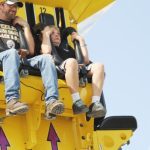
On July 19, Rose Ayala-Goana fatally fell from the Texas Giant roller coaster at the Six Flags Over Texas amusement park.
While the cause for the fall has not yet been identified, this fatality is calling into question the safety of amusement rides — especially in the thick of fair and festival season and summer months when area amusement parks are frequented.
According to the International Association of Amusement Parks and Attractions’ (IAAPA) website, iaapa.org, “Approximately 297 million guests visit the 400 U.S. amusement parks annually and take 1.7 billion safe rides.�
“The Pennsylvania Department of Agriculture takes seriously its charge to protect families who enjoy the stateÄ¢¹½ÊÓƵ amusement rides and attractions,â€� said Agriculture Secretary George Greig in a recent release in response to the Texas tragedy. “PennsylvaniaÄ¢¹½ÊÓƵ amusement ride safety program has a longstanding reputation for being one of the best and safest in the nation. Our safety record speaks for itself.â€�
While there are no federal regulations when it comes to inspecting amusement park rides, each state is responsible for establishing their own criteria on what needs to be inspected and how often. PennsylvaniaÄ¢¹½ÊÓƵ governing agency is the Bureau of Ride and Measurement Standards of the Pennsylvania Department of Agriculture.
“In the state of Pennsylvania it (inspection) is (required) once every 30 days,� said Jeff Filicko, press and media contact for the Pittsburgh based amusement park, Kennywood. “At Kennywood, we do it daily.�
Regulations are a little different for rides that travel as part of a carnival or fair that are constantly taken down and re-built. These rides must be inspected every time they are set up. According to Powers Great American Midways, the company that has operated the carnival at the Fayette County Fair for more than 10 years, safety is their number one priority.
“We have four licensed Pennsylvania inspectors as well as one level two NAARSO (National Association of Amusement Ride Safety Officials) inspector, four level one NAARSO inspectors all of whom are employed full time,â€� says the companyÄ¢¹½ÊÓƵ website powersmidways.com. “These inspectors report to a full time safety coordinator who oversees the safety of the midway. Not only do our employed inspectors look over and approve our rides every day for safety, but also nationally certified safety inspectors inspect all aspects of the PGAM (Powers Great American Midways) midway to insure our guests have a safe experience.â€�
The state requires all amusement companies to register their equipment with the bureau annually. The registered equipment is then reviewed by the advisory board which consists of experts, concerned citizens and a certified engineer. According to the release from the Pennsylvania Department of Agriculture, “All rides must meet strict American Society for Testing and Materials (ASTM) International standards. ASTM International develops safety standards with input from government officials, ride experts and consumer advocates. Pennsylvania officials help develop these standards. Additionally, there is a training, testing and certification program for amusement ride operators.
Filicko said that KennywoodÄ¢¹½ÊÓƵ ride operators are required to keep an eye out for hazards during the pre-opening process in the morning and while the ride is in operation through out the day. Last week, a steel coaster at Kennywood was stopped in mid-ride due to an issue with the rideÄ¢¹½ÊÓƵ sensor malfunctioning. Since the riders were in the lower portion of the lift on The PhantomÄ¢¹½ÊÓƵ Revenge, the decision was made to evacuate. The ride was operational within an hour.While rides are inspected and operators receive training, some of the safety responsibility falls back onto the rider.
According to the Pennsylvania Department of Agriculture, riders should always obey the instructions given by the ride operator such as always keep your arms and legs inside the vehicle, as well as wear provided safety restraints such as seatbelts, harnesses or a lap bar.
“The posted safety warnings are there for a particular reason and guests should be mindful of them and follow them,� said Filicko.
While some parents might be eager to share the ride experience with their younger children, they should obey all height requirements and not encourage children to “stretch their height� while they are getting measured for a ride.
“I can’t tell you how many times parents are upset that their child is a little too short to ride,� said Filicko.
“It (the height requirement) is set by the ride manufacture with safety in mind.�
While ride safety lies in both the hands of the inspectors and the riders, Filicko says riders must always keep safety in mind.
“The number one safety tip would be to obey all posted safety warnings and if you have any hesitations about the ride is to watch it first,� he said.
“Never pressure someone to ride a particular ride if they don’t want to ride it. At the end of the day these rides are supposed to be fun. You want to do everything you can to make sure at the end of the day, it is an enjoyable experience.�