

Woman fulfills dream with purchase of Uniontown house
Joel Brewton | Ä¢¹½ÊÓƵ
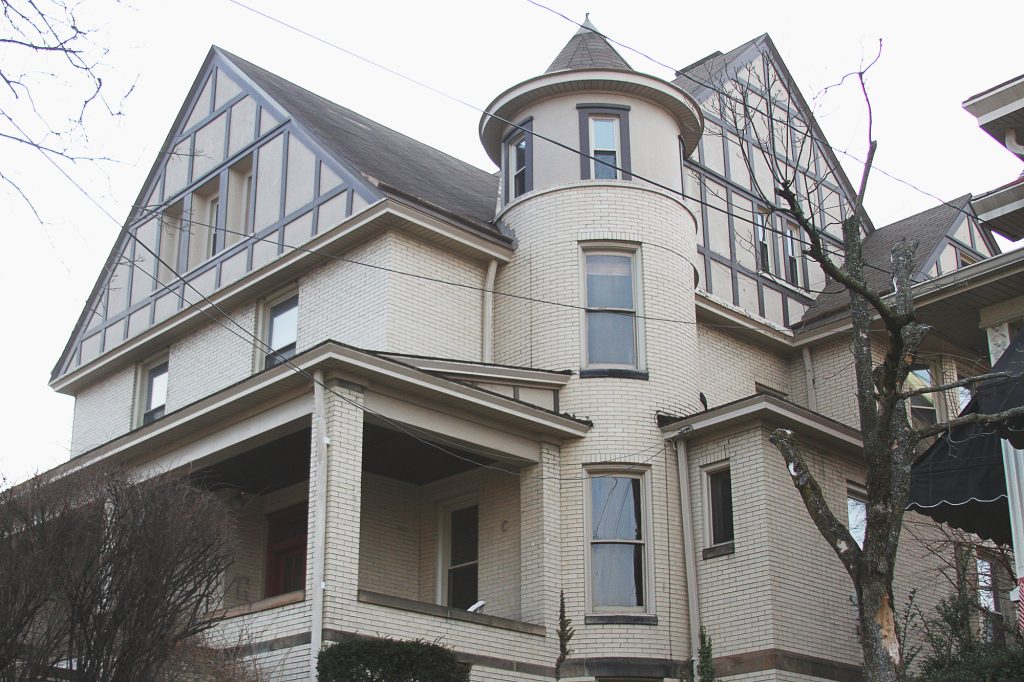
The newly-purchased house of Lauryl Lefebreve in Uniontown.
Joel Brewton | Ä¢¹½ÊÓƵ
The newly-purchased house of Lauryl Lefebreve in Uniontown.
Lauryl Lefebvre has always had a love for historic houses.
Which is one reason why she purchased a 1900-era, 5,000-plus-square-foot home at 172 S. Beeson Ave., Uniontown.
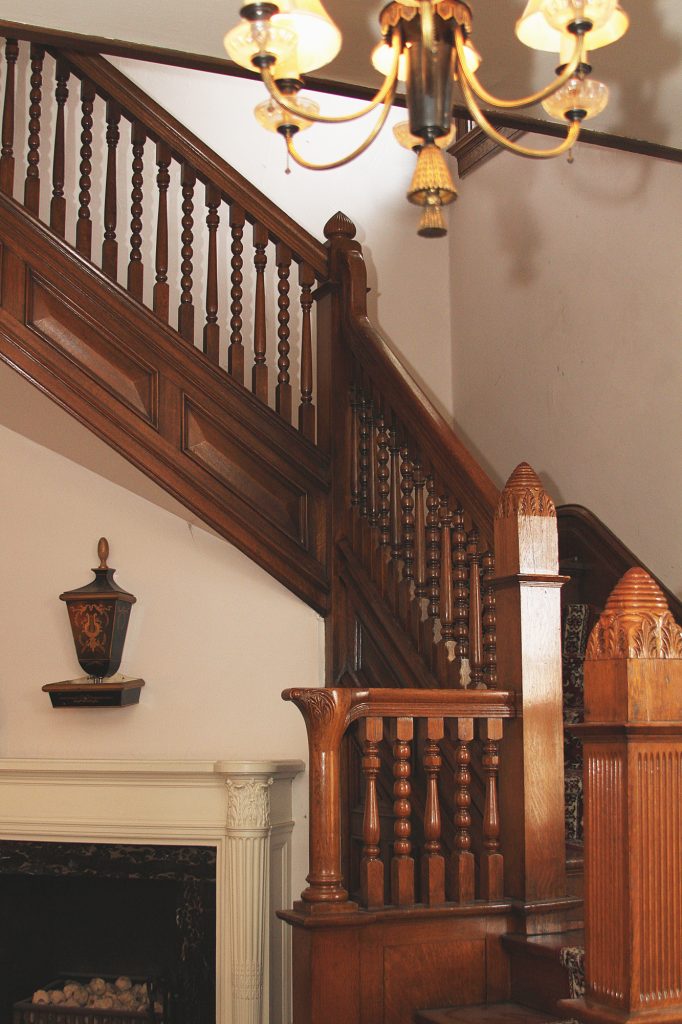
Fitted with hand-carved woodwork, oak floors and mahogany-shaded paneling, Lefebvre plans to restore the home to its original appearance, inside and out.
An assistant professor at West Virginia University (WVU), Lefebvre found the home after an 18-month search for a house she could call her own. Aided by Uniontown real estate agent Scott Cavinee, she closed on the property in last December.
A Michigan-native, Lefebvre also likes the “walkability� of the location as well as the appearance of the neighborhood and its safety.
But she was impressed with not just the appearance of her new home, but its solid structure.
“The way these homes are constructed, the aesthetics, you just don’t see much of that in homes today,� she said. “This house is very well constructed.�
In addition to the artistic woodwork, the house at 172 S. Beeson has some original fixtures, including a tiled half-bathroom off the main foyer. One wall of what had been a dining room is filled with glass door-fronted bookshelves, which, Lefebvre believes may have originally been used for china.
“I still have a lot to do in researching this house,� she said, adding she doesn’t know exactly when it was built or by whom.
Although she works in Morgantown, Lefebvre had little chance finding a home there. In addition to its hidden history, Lefebvre said she bought the home in Uniontown because “housing prices in Morgantown are outrageous,� she said, adding she was surprised to see so many moderately priced homes available in Uniontown.
She searched in nearby towns, including Waynesburg and Clarksburg, W.Va. While Uniontown was the last location for her home search, Lefebvre said she was impressed with the older homes located in the city.
“I came into town for a weekend and was looking in this area. This town is full of historic houses but I don’t see much effort being made to restore them. ItÄ¢¹½ÊÓƵ my hope that starting with this neighborhood maybe there will be an opportunity to define some of the historic districts in Uniontown and see some preservation begin.â€�
Her home, a three-story beige brick with wraparound porch, was formerly owned by Frances Rosenshine. Lefebvre said its narrower profile gives it a more comfortable feel and flow. High-ceilinged rooms are smaller and more homey. Each has a fireplace, which Lefebvre plans to fill with gas-fired inserts so she can better control heating costs. The central heating system is gas-fired hot water radiator heat.
When she bought the house, the first floor had been turned into living quarters for the former owner. The upstairs had been broken into apartments.
Removing first floor carpeting exposed the two-inch wide boards of the oak hardwood floors. She also took out a hall closet that was not original to the house.
“I have lots of fake walls to remove upstairs and I will sand the floors,� she said. “I have a lot of work to restore it.
“I am amazed at how well this house was built. They (the designers) were smart about the floor plan and flow through the house. Getting back to the original floor plan will help the house make sense,� she said.
“I lucked out getting Scott Cavinee as my realtor. He has his office just a few blocks away and he used to live on (nearby) Charles Street. He also has knowledge of downtown,� Lefebvre said.
However, she was a little shocked when she learned how much the real estate taxes are on the property, especially those paid to the city. She was not aware of how several years ago the city was in dire financial straits and raised property taxes by about 40 percent.
“ThatÄ¢¹½ÊÓƵ probably about the only drawback I have seen so far in buying this house,â€� she said.
Lefebvre, an assistant professor in WVUÄ¢¹½ÊÓƵ College of Human Resources and Education, teaches higher education administration, a course that focuses on educational leadership strategies. She recently won a $3,000 WVU Libraries Information Literacy Enhancement Award to assist in curriculum development.
Lefebvre will expand the course with information literacy components such as webinars, collaboration with university librarians, and technology.
Lefebvre has a double Ph.D. in higher education and student affairs, and instructional systems technology, which she obtained from Indiana University in 2009.
She also has a master of science degree in instructional systems technology, and master of science and bachelor of science degrees in geology.