

Approaches differ in teaching about JFK
Associated Press
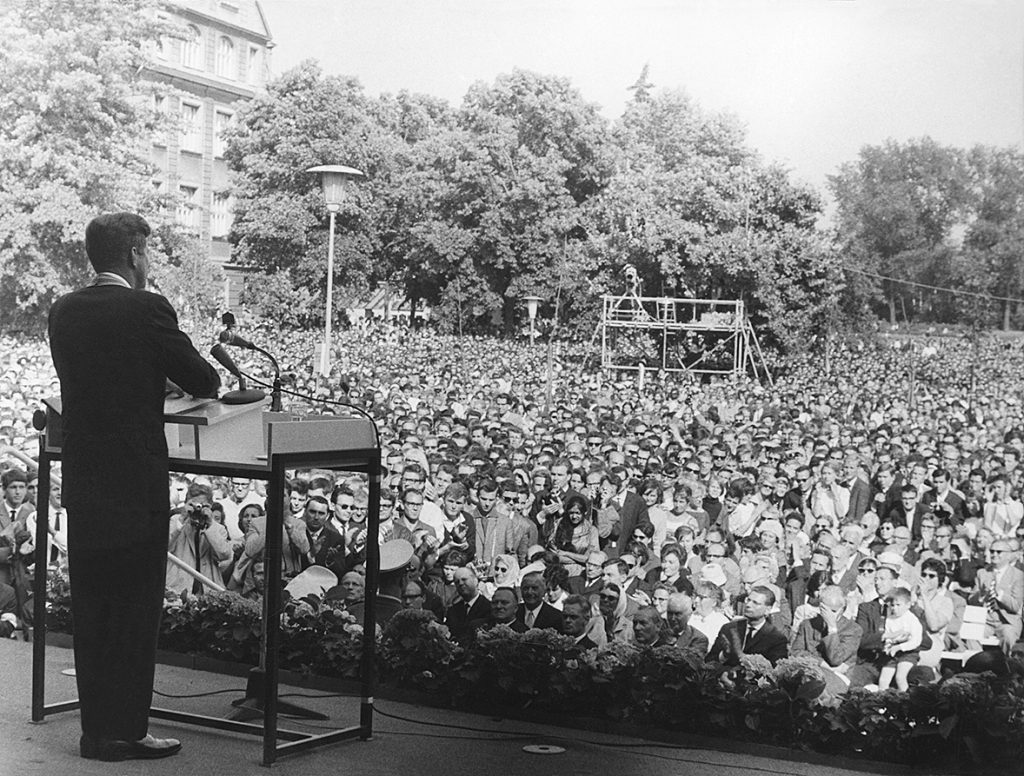
U.S. President John F. Kennedy addresses students of West BerlinÄ¢¹½ÊÓƵ Free University on June 26, 1963, during his visit to Berlin, Germany.
Courie
Madden
The following is the fourth installment in a six-part series examining the life, death and legacy of John F. Kennedy on the 50th anniversary of his assassination.
Teaching generations of students not yet born about the impact of John F. KennedyÄ¢¹½ÊÓƵ presidency, his leadership and his death, is a task educators approach in a variety of ways.
Depending on age, curricula are designed to grab and engage the attention of students and introduce or re-introduce them to the 35th president of the United States.
A primary approach
In a classroom at Albert Gallatin North Middle School, alongside portraits of George Washington, Abraham Lincoln and Martin Luther King, hangs a large portrait of JFK, which also serves as a conversation piece.
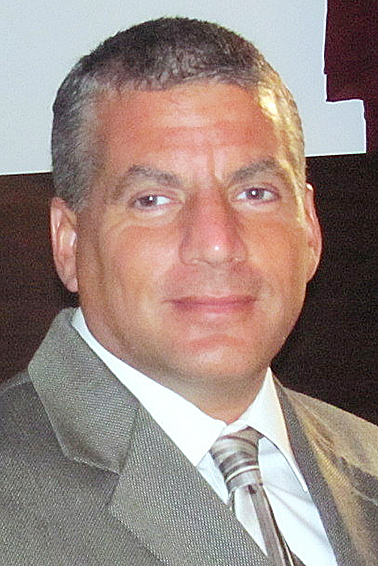
“Very few (students) know who President Kennedy is, and when I begin to tell them who he is, it is as if I am talking about an ancient figure. Once we begin the topic, the students’ curiosity begins to take over, and they have many questions,� said Chuck Courie, who teaches world cultures for seventh-grade students at the school.
In elementary and middle school, many students are introduced to historically significant presidents like Washington and Lincoln, but Courie said students are largely unaware of Kennedy or the period of time he addresses with them.
CourieÄ¢¹½ÊÓƵ students become acquainted with an important role JFK played during his time in office.
“I use my Kennedy lesson to teach tolerance in the seventh grade,� Courie said. “It is not a biography lesson. It is more of an impact lesson on how people can change the world by their actions and lead by example.�
Courie said in class, human rights are discussed all the time and students sometimes say insensitive things about other cultures.
“I can talk about the issues that occur in other countries, but I find it difficult for the kids to relate, because, to them itÄ¢¹½ÊÓƵ a world away or it is ancient history,â€� he said. “I need my students to understand that the United States didn’t become the greatest country in the world without overcoming its own demons.â€�
Courie said he is always trying to build a bridge from the past to the present or from one culture to another in order to show the students we are all people and our similarities by far outweigh our differences.
“So, as I am discussing human rights, I incorporate the issue of civil rights by showing pictures of African Americans being hung, being burned, being sprayed with fire hoses, etc. I then ask my kids, ‘when did this happen?’ and most of them say in the 1800s. They are very surprised to find out that it was in the 1950s and 1960s.�
Courie explains to his students how Kennedy “walked an extremely fine line when it came to civil rights.�
“He became president in an era when Jim Crow laws still dominated the south. He played both sides of the coin by compromising in an attempt to accomplish what was best for an entire nation, very similar to Abraham Lincoln,� he said. “The march on Washington in 1963 was actually called ‘The March on Washington for Jobs and Freedom.'�
CourieÄ¢¹½ÊÓƵ young students learn the goal was to rally support for JFKÄ¢¹½ÊÓƵ civil rights bill while calling attention to the economic challenges confronting the African-American community.
“President Kennedy took a huge political risk by associating his name with the plight of the African Americans,� he said.
Courie, who has been teaching in the district for 12 years, said students are shocked to see photos and are inspired by KennedyÄ¢¹½ÊÓƵ role in future generations.
“I feel that the seventh grade is slightly overwhelmed by the information, but definitely more affected,� he said. “For a few weeks after they are wanting to change the world which is a good thing.�
A high school perspective
Les Everly teaches about Kennedy in his world history class, which is for sophomores, and his advanced placement (AP) history class for junior and senior students at Albert Gallatin Area High School.
In world history, Everly touches on some of the highs and lows of the JFK presidency, including the civil rights movement, Cuban Missile Crisis, the Cold War, Bay of Pigs and the assassination.
“Around the time of the assassination, we watch the Zapruder film and cover the conspiracy surrounding KennedyÄ¢¹½ÊÓƵ death. The students really become interested especially in the conspiracy,â€� Everly said. “They know the assassination, but they don’t know the details.â€�
Everly said his AP students cover and engage more in-depth topics and discussions including KennedyÄ¢¹½ÊÓƵ domestic and foreign policies, his attempt to reduce nuclear arms, and the challenge Kennedy made to young people at the time. He said his students are always surprised with the amount of political involvement of the younger generation at that time.
“ItÄ¢¹½ÊÓƵ one of JFKÄ¢¹½ÊÓƵ best legacies. Being that young, charismatic president, he got young people involved and he inspired them. The Peace Corp, NASA itÄ¢¹½ÊÓƵ all part of it. He encouraged young people to not just sit there and wait for the government to help,â€� Everly said. “He was one of the few political leaders to get young people up and active.â€�
With his upper level history students, Everly examines what is widely thought to be KennedyÄ¢¹½ÊÓƵ biggest failure — the Bay of Pigs, an unsuccessful attempt by U.S. supported Cuban exiles to overthrow dictator Fidel Castro in April of 1961. The failed attempt led to a strengthening of CastroÄ¢¹½ÊÓƵ power and eventually would lead to the Cuban Missile Crisis in the fall of 1962, which brought the nation to the brink of nuclear war with Russia and Cuba.
“He wanted to make the change in Cuba but not risk total U.S. involvement. He owned up to that mistake,â€� said Everly. “He stood in front of the country and said ‘ItÄ¢¹½ÊÓƵ my fault.'â€�
Everly tries to make his students link to that period of time and connect with the political headlines of today. But Everly says few students can relate to the political environment that consumed their grandparents’ generation.
“I tell them they will care in the future,� he said. “In high school they can’t see how it directly impacts them.�
Everly believes the conspiracy surrounding JFKÄ¢¹½ÊÓƵ assassination will continue to change how history teachers cover the topic.
“My classes get into good conspiratorial discussions based on the information that we currently have, but I always tell them history always changes when more information comes out.�
The 34-year-old history teacher, in his third year of teaching an elevated high school curriculum, admits he is also learning.
“There is much more to JFK than what I learned in high school.�
College level analysis
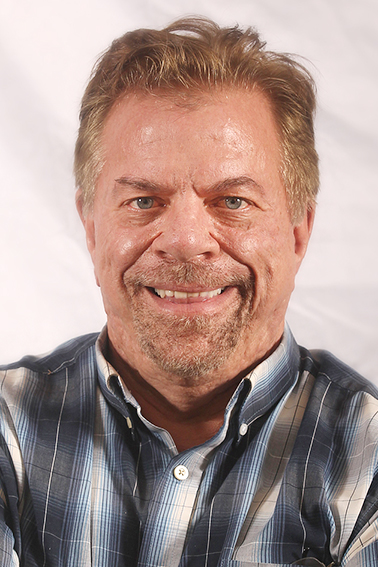
Dr. Sean Madden, professor of history at California University of Pennsylvania, said Kennedy will always remain a popular figure — although his life, death and legacy will continue to be dissected.
“HeÄ¢¹½ÊÓƵ going to be symbolically remembered as Lincoln, Jefferson, Kennedy, maintaining top ranking,â€� he said. “Perception is 99 percent of reality in history.â€�
Over the 25 years Madden has been teaching at Cal U, he has discovered the same reaction to Kennedy over and over again.
“If you ask 100 students to name the best presidents, 89 would put JFK in the top five.�
Madden, however, challenges his students to examine their answer.
“(Kennedy) is relevant and significant if for no other reason than he emerges as a top five president, but then you must ask why,� he said.
According to Madden, the nation is in what historians would call the third iteration of JFK.
The first iteration, Madden explains, happens as historical events unfold.
“Because (Kennedy) died as a president, he is celebrated in the recent history. This iteration lasted about one generation or 25 years after the assassination,� he said.
The second iteration is a fairly critical measurement of history. Madden said KennedyÄ¢¹½ÊÓƵ horrible failure to work with congress and his failures in Vietnam emerged during this period.
“ItÄ¢¹½ÊÓƵ a little further away from the funeral. In the second iteration, thereÄ¢¹½ÊÓƵ an attempt to get a real assessment of character — the less than Camelot life,â€� said Madden.
Madden said although “no historian is void of temporal bias,� a more critical review takes place during the second iteration.
And now, 50 years since the presidentÄ¢¹½ÊÓƵ assassination, in the third iteration, all aspects of JFK are revisited.
“Western culture loves to celebrate anniversaries. I’ve seen 13 new books coming out on various topics covering the fascination with the assassination, Camelot, a reassessment of the 1,000 days, his failures.�
Beyond the evolution of social change that Kennedy is credited with and his motivational appeal, Madden encourages students to dig deeper.
“Much like Reagan, Kennedy was able to stand at the podium and hit harp strings,� he said. “He was charismatic; never mind half of congress wanted to lynch him.�
Madden points to the second iteration evaluation of KennedyÄ¢¹½ÊÓƵ legacy and character.
“He had a horrible legislative record and character. He alienated members on both sides. Kennedy had every bit as many critics as (President) Obama,� he said. “Years after his death, we speculate about his relationship with Marilyn Monroe and alleged drug use. When all this comes out during discussions in upper level classes, you realize greatness is its own measure.�
Madden stresses to students that Kennedy remains an important part of society because he embodied the spirit of the nation.
“We are an extremely resilient and hopeful nation. No matter how bad it is, people still say, ‘yea, but itÄ¢¹½ÊÓƵ America,'â€� he said. “Kennedy will remain an important part of that American story.â€�