

Uniontown synagogue building hits market
Amanda Steen | Ä¢¹½ÊÓƵ
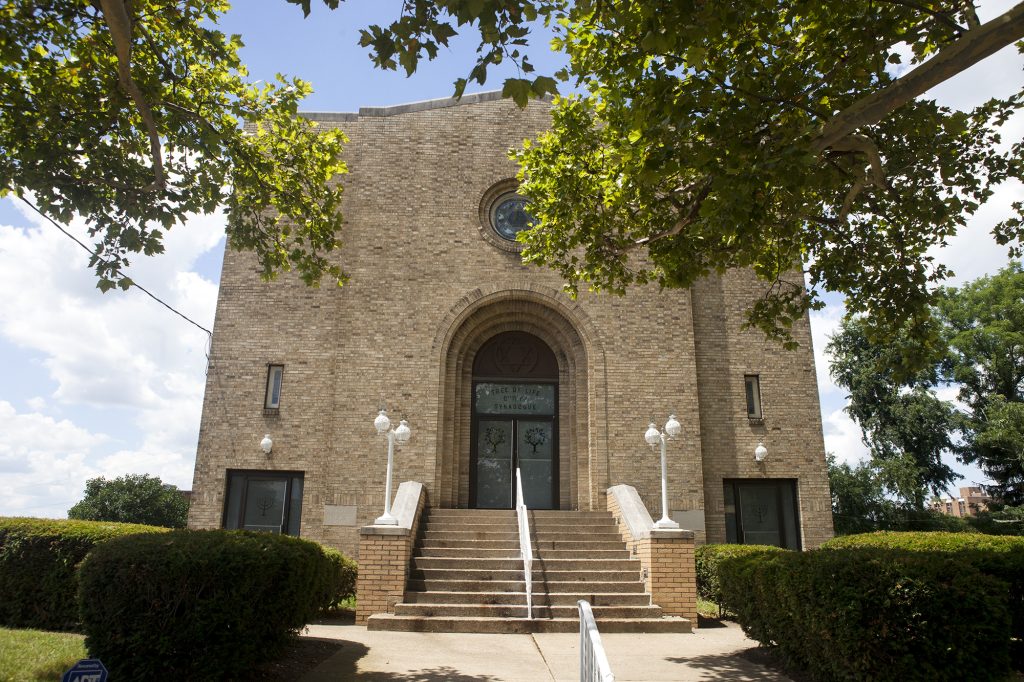
The Tree of Life Synagogue exterior fronts UniontownÄ¢¹½ÊÓƵ Pennsylvania Avenue.
Amanda Steen | Ä¢¹½ÊÓƵ
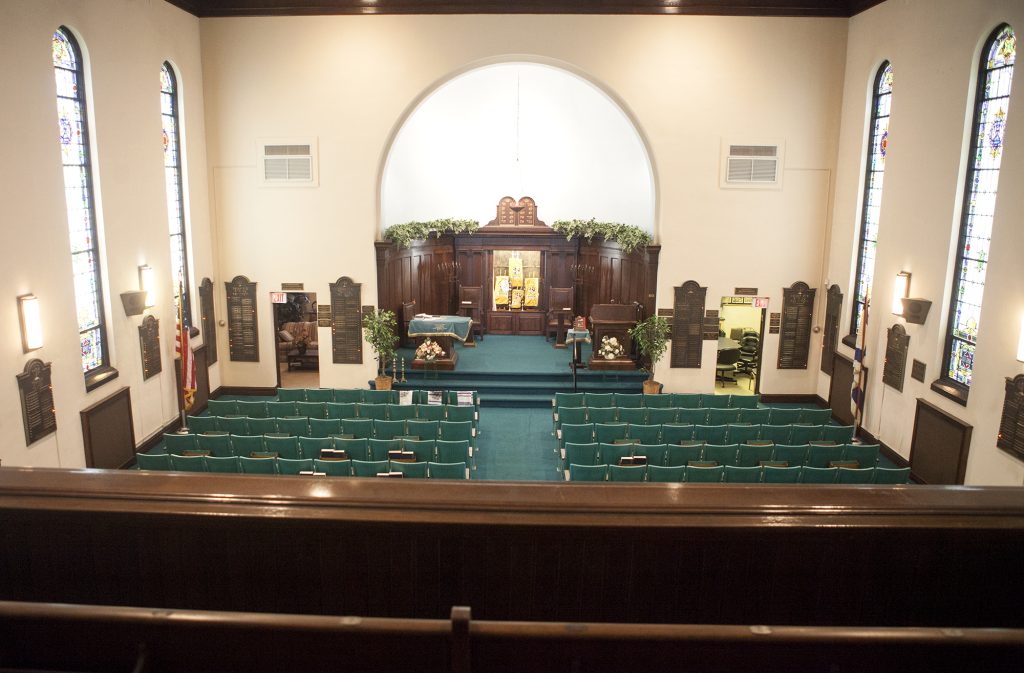
Tree of Life Synagogue interior
Amanda Steen | Ä¢¹½ÊÓƵ
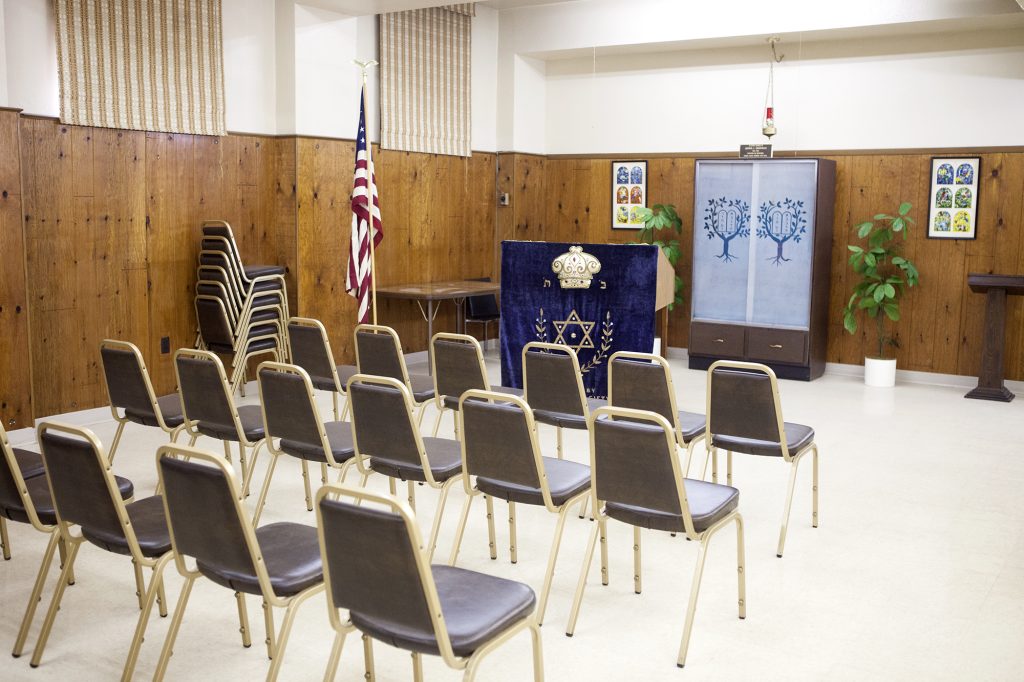
Tree of Life Synagogue interior basement
For more than half a century, the Tree of Life Synagogue in Uniontown has served as a religious landmark for the cityÄ¢¹½ÊÓƵ once-thriving Jewish community.
Built in 1925, the 3,520-square-foot brick, two-story structure on Pennsylvania Avenue was home to about 400 families at its peak.
There are currently 20 members, according Myrna Giannopoulos, the congregationÄ¢¹½ÊÓƵ active president.
“We’re still a viable congregation,� she said.
But, as aging and changing demographics have made it a financial struggle to maintain, the congregation recently decided to sell the building.
It is listed with SWC Properties at $235,000 and includes a large balcony inside the prayer area and an extra lot on the buildingÄ¢¹½ÊÓƵ north side.
“ItÄ¢¹½ÊÓƵ so hard to see it empty,â€� said Giannopoulos, who also heads the synagogueÄ¢¹½ÊÓƵ kosher kitchen.
Member Milt Kronick, 87, of Uniontown, said his family attended the synagogue before he was born.
“ThereÄ¢¹½ÊÓƵ a lot of history there and a lot of memories,â€� said Kronick.
“We had weddings and bar mitzvahs.�
The congregationÄ¢¹½ÊÓƵ name, “Tree of Life,â€� dates to 1902 after its founding members were issued a charter of incorporation by the Fayette County Court of Common Pleas.
The need for a building arose in 1922 after membership grew and services held at places such as various public halls became inadequate.
Giannopoulos said the synagogue also served as a place where the Hebrew language was taught downstairs to children after school, which she and her two brothers attended.
Irving J. Rockoff, a former rabbi of the synagogue, noted in a 50th anniversary program that the building reflected an influence of tradition.
Such tradition is depicted throughout the synagogue beginning with a stained glass window located above the arched entrance of the building with the Star of David.
On the front doors is the menorah, designed by KronickÄ¢¹½ÊÓƵ late sister-in-law and former local artist, Harriet Kronick.
Inside, there are five arched stained glass windows that stretch to the 45-foot ceiling in the congregation.
The windows are etched with the Star of David, the priestly blessing hand sign, the Ten Commandments, a menorah and a set of torah scrolls.
A set of two additional stained glass windows are situated on opposite sides of the foyer in the stairwells.
There is also original mahogany woodwork throughout the congregation and pulpit area that includes built-in storage and a set of glass doors to the case that holds the scrolls, which also feature KronickÄ¢¹½ÊÓƵ design.
Downstairs is a kosher kitchen, with members still meeting for lunch once a month.
“We used to feed 300 to 500 people,� said Giannopoulos.
There is also a sabbath service each Saturday.
David Sarnat of the Jewish Community Legacy Project in Atlanta, Georgia, said synagogues in smaller communities across the country are closing.
As a girl, Giannopoulos recalled other synagogues in the area, including Masontown, Connellsville and Brownsville.
“Every little town had one, and they were all independent,� added Giannopoulos.
“As they closed, people came here,� she said.
According to the National Trust for Historic Preservation, as congregations consolidate or die off, abandoned houses of worship have proliferated in many communities, but are often adaptable to residential and other reuses.