

Time approaching to prepare gardens
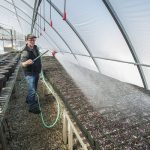
Home gardeners should start thinking about spring and summer planting now so they will be ready to get their hands dirty when the ground thaws.
“It all starts with the soil. A garden is like painting: The more preparation you do, the better your results will be,� said Todd Mullens, nursery manager at Rich Farms in Springhill Township.
Testing soil to determine if nutrients and fertilizers are needed is a good starting point, he said.
Testing kits available at retails stores cost about $10 and are fairly accurate, he said, but more accurate tests are available through Penn StateÄ¢¹½ÊÓƵ Fayette County Extension office.
Extension office staff will instruct homeowners on how to take samples using kits available from the office and send the samples to one of the other extension offices for analysis. That office will send the test results showing the soil needs to the homeowner, he said.
Demand for extension office testing is high in spring so homeowners could have tests performed in the fall for the next season, said Mullens, who said he has a degree in horticulture degree from West Virginia University and has been working in field since 1978.
“The Fayette County extension service is very good. Fine people. They have a lot of knowledge. Very practical,� he said.
Lime should be added if results indicate soil is say too acidic and sulfur should be added if soil is too alkaline, he said, noting that tests should be conducted every three years.
Lime lasts a long time in soil and should be applied every two or three years. If nitrogen or phosphorus is needed, they should be added at the beginning of the planting season because they leach out quickly, he said.
“A soil test is a good thing to do for the homeowner,� Mullens.
Tests can be done as soon as soil is dry enough to work in late March or April.
Optimizing soil conditions will help improve a vegetable gardenÄ¢¹½ÊÓƵ yield and help maintain trees and shrubs, which are long-term investments, he said.
“The more effort you put into preparation, the better you’re yield will be,� Mullens said about gardens. “Always add organic matter. Any compost will help.
Organic material such as mushroom compost, which is used substrate that mushrooms are grown in, kitchen waste and yard clippings improves soil, he said.
Kitchen waste and yard clippings should come from maintained compost piles. Rotted matter works best because it releases nutrients quickly. Fresh material draws nutrients while it breaks down and then releases nutrients, Mullens said.
Slow release fertilizers available at retailers last three to four months, he said. Most are small plastic beads that contain and slowly release the fertilizer.
Vegetable gardens should be planted in places where they receive as much sun as possible and they need one inch of water per week during the growing season, he said.
“Gardens do best in all day sun. They need at least half-day sun. The more sun the better,� Mullens said.
Trees and shrubs should be planted no later than the first week in June, but they can be planter later if they receive enough water.
The weather heats up in June and watering chores often go undone when homeowners go on vacation, he said.
“After that, its too hot and dry without regular watering,� Mullens said. “Many trees planted late die while people are on vacation and can’t water them. They can be planted late if they are watered all summer.�
Most of RichÄ¢¹½ÊÓƵ sales are in the wholesale market with contractors, but the retail side of the business has been growing with the countyÄ¢¹½ÊÓƵ home construction market, he said.
Demand has grown for screening trees and shrubs planted between homes. Evergreens are homeowners favorite choice because they stay green all year and don’t shed leaves, Mullens said.