

Safety a must when using alternative heating sources
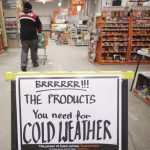
As the temperature drops during the winter season, the Electrical Safety Foundation International (ESFI) has found that many families are turning to alternative heat sources to help warm their homes.
According to Consumer Reports, sales of space heaters are sizzling as millions of homeowners look for ways to help lower their heating bills.
At Brownsville Do It Best Hardware, owner Pat Ballon said gas and electric space heaters are in short supply. “Come January, there won’t hardly be any,� said Ballon.
Ballon said his business stocks around 25 different types of space heaters with the smaller electric ones more beneficial for what he referred to as “zone� heating.
While using a space heater or other heating sources can be cost efficient, itÄ¢¹½ÊÓƵ also important to look at safety issues.
Many people are unaware that the risk of fire from space heaters is three to four times higher than from central heating equipment, ESFI stated.
Consumer Reports said the top of the line space heaters can quickly heat an average sized room for as little as $40 and that electric heaters such as those tested included an array of safety features that reduce the risk of fire.
“Gas, electric or infrared heaters can concentrate heat in part of a room,� said Ballon.
When you shop for an electric space heater, Consumer Reports recommends to look for a label from a recognized testing laboratory such as UL (Underwriters Laboratory), ETL (Intertek), or CSA (Canadian Standards Association) verifying that the heaterÄ¢¹½ÊÓƵ construction and performance meet voluntary U.S. safety standards.
Ballon said a gas space heater is made to be wall mounted, which provides safety against tipping over like many electric heaters. It also has an oxygen sensor that enables it turn off automatically when thereÄ¢¹½ÊÓƵ too much carbon monoxide in the air.
Consumer Reports suggested using fuel-burning heaters only during an emergency, such as a winter power outage.
Ballon said itÄ¢¹½ÊÓƵ also important to unplug electric space heaters after using them.
When using an alternative heating source, ESFI recommends the following:
n Choose a heater that bears the mark of a nationally recognized testing laboratory.
n Read the manufacturerÄ¢¹½ÊÓƵ instruction manual before using any space heater.
n Check the cord before plugging in the heater. If frayed, worn or damaged, do not use the heater.
n Do not use space heaters with extension cords. Plug them directly into an outlet on an unburdened circuit.
n Keep space heaters at least 3 feet away from anything that can catch fire, such as bedding, curtains, furniture, clothing, and paper.
n Place space heaters on level, flat surfaces. Never place heaters on cabinets, tables or furniture.
n Do not use a space heater in damp or wet areas unless it is specifically designed for use outdoors or in bathrooms.
n Keep space heaters out of high-traffic and exit areas.
n Do not use them to warm bedding, cook food, dry clothing or thaw pipes.
n Make certain the circuit into which you plug a space heater can adequately and safely handle the added demand.
n Never leave a space heater unattended. Turn heaters off or unplug them when you go to sleep or leave the room.
n Don’t use space heaters in rooms where children are unsupervised.