

Keep safety in mind with holiday decorating
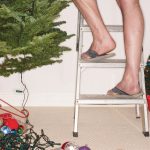
As twinkling lights and festive decorations emerge from storage, itÄ¢¹½ÊÓƵ important to keep safety in mind when making your home merry and bright for the holidays.
Whether indoors or outside, the Consumer Product Safety Commission (CPSC) recommends to use only lights that have been tested for safety, which can be identified on the label from an independent testing laboratory such as UnderwriterÄ¢¹½ÊÓƵ Laboratory (UL).
The Pennsylvania Insurance Department suggests choosing decorations that are flame resistant or flame retardant and to keep holiday greenery well watered.
Scott Conn, shift commander at Uniontown Fire Department, said, when in doubt, itÄ¢¹½ÊÓƵ best to replace holiday lights for all the more they cost.
“You definitely want to make sure the condition of the wires and plugs is good and approved by a (certified) agency like UL,� said Conn.
According to CPSC, an estimated 15,000 people were treated in hospital emergency rooms in 2012 for holiday-related injuries such as falls, cuts and shocks, related to lights, decorations and Christmas trees.
Candle-related fires also averaged more than 12,000 a year in the country.
“Sometimes people are having such a nice time during the holidays that they forget to extinguish candles,� said CPSC Chairman Hal Stratton. “Always put out lit candles before leaving a room or going to bed. Always keep burning candles within sight. Also, make sure your holiday lights bear the mark of a recognized testing lab to show they meet safety standards.�
Conn said replacing scented candles with tart burners or those that are battery operated is a safer alternative and essentially creates the same aesthetic.
To help prevent injuries, CPSC monitors holiday lights and other decorations sold at stores and on the Internet.
The commission also works with the Bureau of Customs and Border Protection to identify and detain unsafe holiday light sets posing fire risks from being distributed in the U.S.
UnderwriterÄ¢¹½ÊÓƵ Laboratory reported that LED Christmas lights are safer than incandescent holiday lights because they consume little power making it more difficult to overload a circuit.
LEDÄ¢¹½ÊÓƵ are also safer for houses with children or pets because they produce very little heat. They are also cool to the touch and made of shatter proof epoxy plastic instead of glass.
New or old however, CPSC stressed the importance of checking each set of lights for broken or cracked sockets, frayed or bare wires, or loose connections.
For those that need thrown away, John Poister, community relations coordinator for the Pennsylvania Department of Environmental Protection (DEP), advised consumers to contact a local retailer, which generally has a holiday light recycling program that offers discounts and incentives on a new lighting purchase.
Other tips provided by CPSC include fastening outdoor lights securely to trees, house, walls or other firm support to protect from wind damage.
Also, use no more than three standard-size sets of lights per single extension cord.
Turn off all lights on trees and other decorations before leaving home or going to bed. Lights could short and start a fire.
Never use electric lights on a metallic tree, CPSC said. The tree can become charged with electricity from faulty lights, and any person touching a branch could be electrocuted.
To avoid this danger, use colored spotlights above or beside a tree, never fastened onto it.
Keep “bubbling� lights away from children because they can tempt them to break the candle-shaped glass, which can cut, and attempt to drink liquid, which contains a hazardous chemical.
While most artificial trees are fire resistant, look for a statement specifying this protection.
Before buying a live Christmas tree, Stacey Palosky, CPSC spokesperson, recommends conducting a three-part stress test.
A fresh tree has needles that resist being pulled off and do not snap when bent, a trunk bottom thatÄ¢¹½ÊÓƵ sticky with resin, and strong limbs that will drop just a few needles if shaken.
ItÄ¢¹½ÊÓƵ important to place the tree away from fireplaces, radiators and other heat sources as well as out of the way of traffic or doorways.
“People don’t realize how fast (live) trees dry out,� said Conn.
“I’ve seen a couple of bad fires from them.�