

Modern love may be one swipe away
Alyssa Choiniere | Ä¢¹½ÊÓƵ
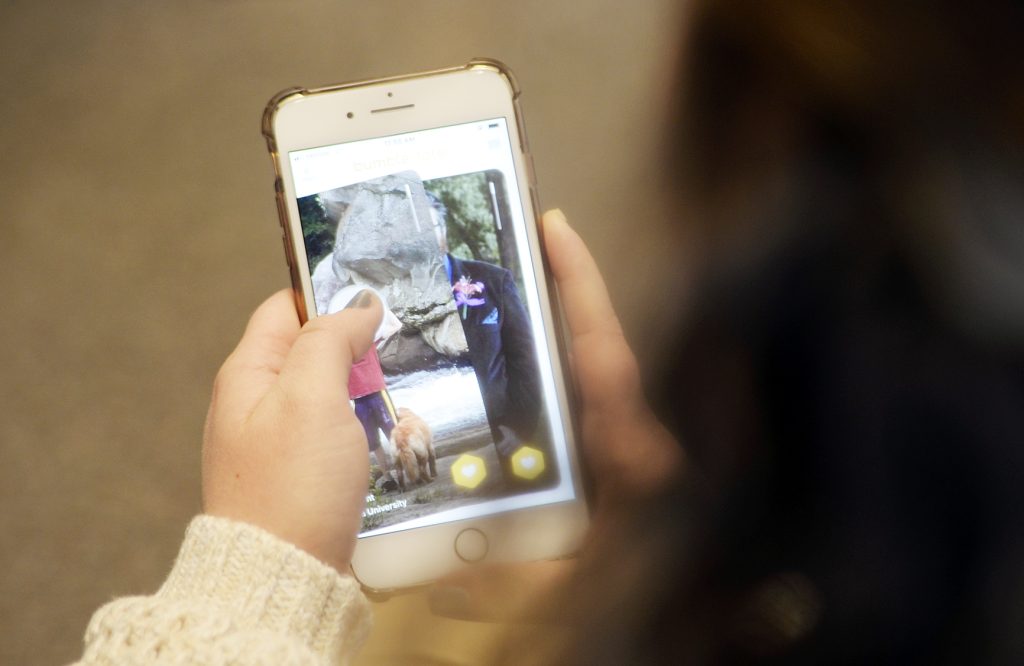
The search for love may remain, but how people look for it in 2019 has changed.
Submitted
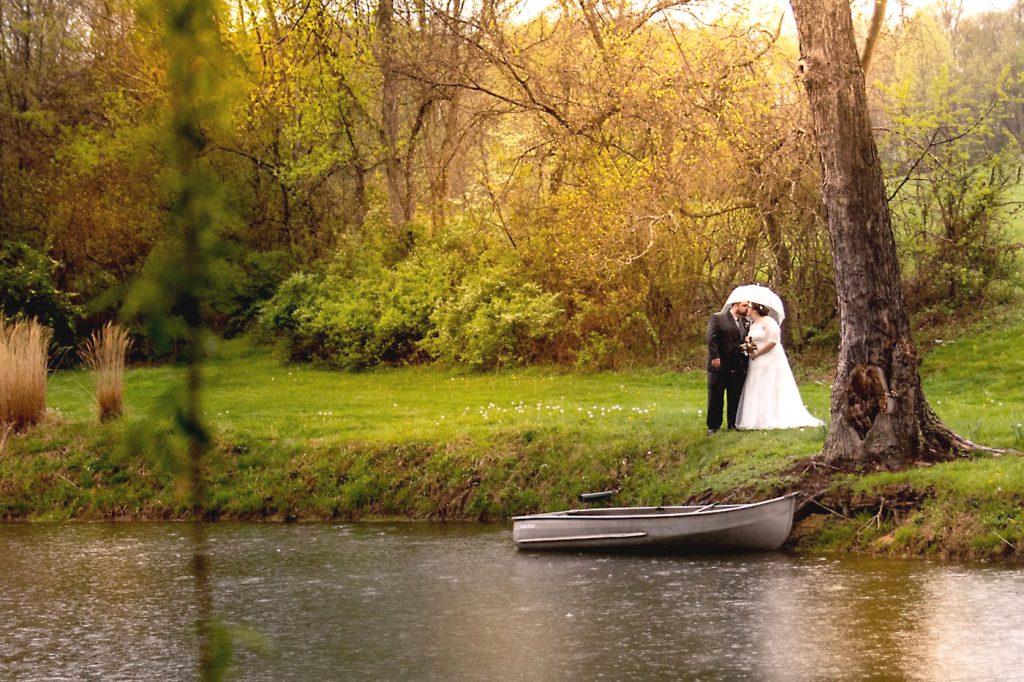
Olivia and Jake Serdy are pictured at JK Farms in Uniontown on their wedding day May 5, 2018. Olivia, a Farmington native, met Jake, of Washington, Pennsylvania, online.
Alyssa Choiniere | Ä¢¹½ÊÓƵ
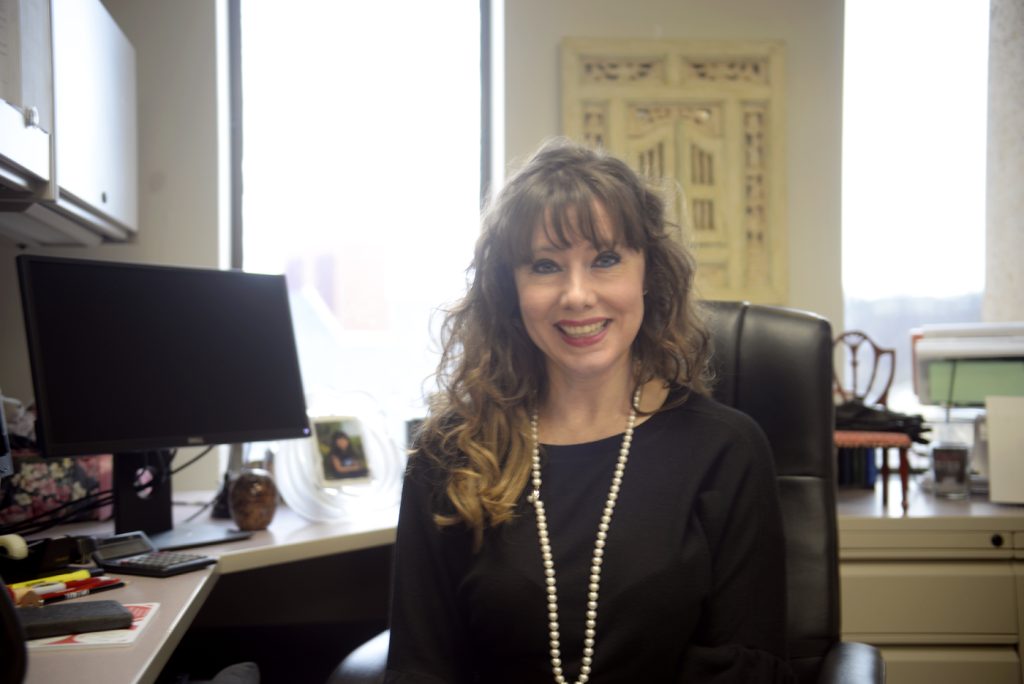
Dr. Emily Sweitzer, a psychologist and sociology professor at California University of Pennsylvania, said love scams predate the internet.
Every romance begins with a story. For an increasing number of modern-day couples, that story begins with a dating app.
“Olivia and I never would have crossed paths,� said Jake Serdy, who met his wife online. “We lived an hour away. We were in different crowds. She was more musically inclined, and I was a jock.�
Couples who met online eclipsed the number of couples who met through friends in 2013 and increased in number every year through 2017, according to a national survey through Stanford University published in January. Couples who meet online have lower divorce rates than those who meet in more traditional ways, the study said.
“There is kind of a stigma associated with online dating that I think makes our parents’ generation hesitant about it,â€� said Olivia Serdy, a Farmington native. “In our generation, itÄ¢¹½ÊÓƵ not unheard of.â€�
Jake begrudgingly joined eharmony when his cousin and friend created his profile.
“I didn’t think it would work,� he said. “But apparently it did.�
He used the dating site off and on for about two years. Olivia joined the dating site in the fall of 2015. Just two days later, Jake sent her a “winky face,â€� the method of initiating contact on eharmonyÄ¢¹½ÊÓƵ platform.
“I messaged him and I said, ‘So I guess this is the next step, huh?� Olivia said.
“You remember exactly what you said?� Jake asked after a pause.
“I remember everything,� she responded.
The two talked online every day until their first date at CheddarÄ¢¹½ÊÓƵ in Morgantown, West Virginia, in January 2016. The couple went on several more dates. He took her to buy her first bow, and he would later teach her to hunt. They officially became a couple in May 2016. They were married at JK Farm in Uniontown May 5, 2018. They bought their first home Dec. 21 in Washington, where they live with their English Labrador retriever, Griz, and a kitten named Otter.
It was ironic, they said, that they used technology to find a person who shared their love of the outdoors. Jake became interested in Olivia when he noticed her profile picture, where she was wearing a camouflage hat and National Rifle Association T-shirt.
“ThatÄ¢¹½ÊÓƵ what did it,â€� Olivia joked.
“Obviously, she was attractive. I could tell from her pictures and her bio that she liked the outdoors, and thatÄ¢¹½ÊÓƵ what I liked,â€� Jake said. “I had no idea where Farmington was.â€�
The inferences a person derives from a profile picture is an example of implicit personality theory, said Dr. Emily Sweitzer, a sociology professor at California University of Pennsylvania. The theory involves a person supposing additional personality traits based on one trait. In the example of a profile picture, a person may infer a person pictured at Disney World is fun-loving, outgoing and enjoys amusement parks.
For Jake, the implications he drew from OliviaÄ¢¹½ÊÓƵ picture were correct – although Olivia discovered while hiking in the snow in Ohiopyle with Jake that he may have exaggerated his love of hiking before one of their earliest dates.
About 81 percent of dating profiles are embellished, according to a study Sweitzer referenced. This is often due to “falsehoods of self-perception,� she said.
“When people are supplying the data about themselves, they may be consciously or unconsciously embellishing the data about themselves,� she said. “What we may think about ourselves may or may not be correct.�
A local counselor who has used dating apps sporadically for about seven years said some people exaggerate positive things about themselves and wait to disclose negatives. Yet, the context can also allow a person to be more honest, said the woman, who asked not be identified.
“They’re comfortable. They’re sitting in their living rooms and their guards are down a bit,� she said.
She noted people online dating should be wary, but general safety tips for meeting a person are the same whether the contact started online or elsewhere. She said her experiences have been “primarily positive,� and she recently started a relationship with someone she met online.
She started dating online because her work and life as a single mom gives her limited social outlets.
“By using technology, you have more of an opportunity to meet people than if you go out to a bar once a month,� she said.
Sweitzer met her husband in college. Although many adults in their mid-20s and older online date because they have limited social outlets, Sweitzer said many of her students are online dating.
“ItÄ¢¹½ÊÓƵ second nature to the current generation to look to technology for everything. They do it for shopping. WhatÄ¢¹½ÊÓƵ the difference? And they’re used to doing in-depth research before they buy a product, so itÄ¢¹½ÊÓƵ the same with people,â€� she said.
She compared online dating to arranged marriages, saying in both situations a person is looking for another person who fills certain criteria, instead of being driven purely by impulse and passion. In both cases, a person builds love over time after the match is created. She attributed lower divorce rates to expansive knowledge about a person – knowing about their quirks and fewer shocking moments as a relationship progresses.
Cutting off contact with a person is also easier with no real-life connections and an endless supply of easily accessible alternatives. A person is more likely to work on a relationship when it is formed in person, she said.
“I think itÄ¢¹½ÊÓƵ very similar to what happened with the TV remote control. If you get bored, you switch the channel. Before that, you gave it time. You were less inclined to get up and walk,â€� she said.
The downside to dating with a short attention span is missing out on a personÄ¢¹½ÊÓƵ mundane qualities, she said, which are naturally a part of everyday life and long-term relationships.
“You’re not exciting every day. You’re not pretty every day,� she said.
“Ghosting,� or dropping contact with a person, is easy to do because the contact is impersonal.
“You don’t have to confront a person, develop empathy for a person. You just quit,� she said.
The more a person does this, they could be building up an “apathetic wall,� she said, becoming desensitized to human emotion.
Sweitzer said time will tell whether online dating is truly successful, saying modern love is in a transitional phase. She described it as a trend she expects is here to stay and evolve with new technology.
“I think we’re at that time in society where we just believe technology can solve all of our problems. I think thatÄ¢¹½ÊÓƵ a falsehood,â€� she said. “ItÄ¢¹½ÊÓƵ a tool. ThatÄ¢¹½ÊÓƵ all it is. Can you use that tool to assist you in your life? ItÄ¢¹½ÊÓƵ not a guarantee.â€�