

Records on summaries, nonviolent crimes to be sealed under state’s ‘Clean Slate’ law
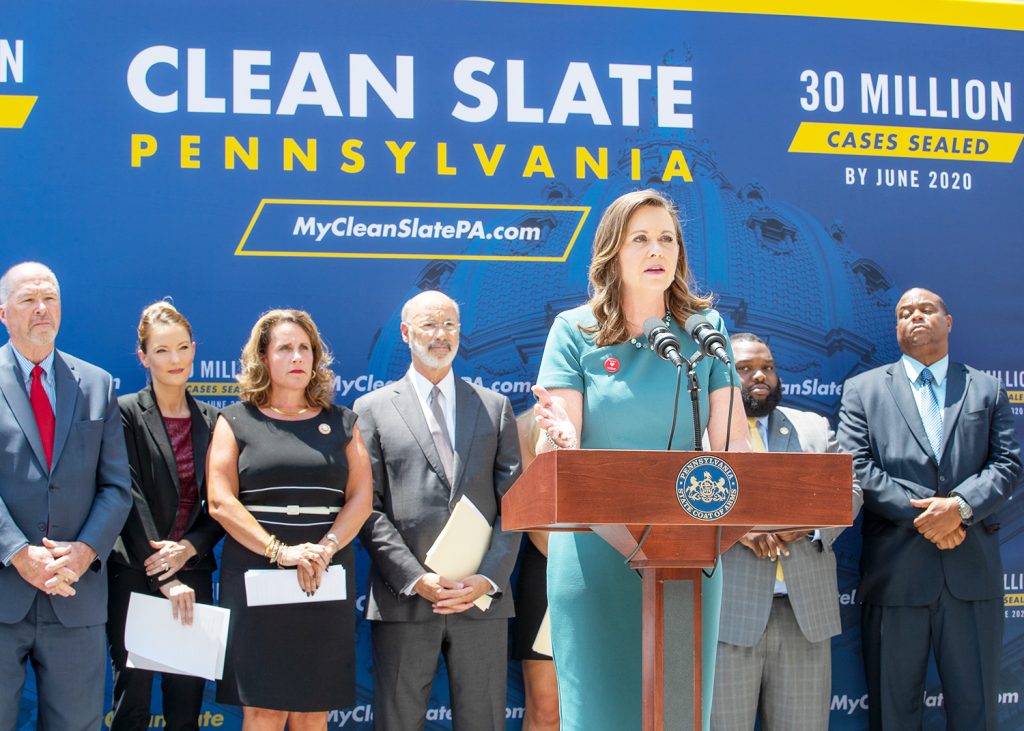
Photo courtesy of Sen. Camera Bartolotta
Sen. Camera Bartolotta speaks at an event marking the stateÄ¢¹½ÊÓƵ new Clean Slate law. Behind her, from left, are Gene Barr, president of the PA Chamber of Business & Industry; Laryssa Gaughen of Americans for Prosperity; Rep. Sheryl DeLozier; Gov. Tom Wolf; Rep. Jordan Harris and Rep. Ed Gainey.
Trista Thurston
Trista Thurston
Trista Thurston
Trista Thurston
Trista Thurston
Those convicted of certain offenses may find their criminal records automatically sealed under the stateÄ¢¹½ÊÓƵ “Clean Slateâ€� law.
Just a few of the examples of cases that can be sealed are second-degree and third-degree misdemeanors, such as theft and drunken driving. The sealing process started at the end of June.
Repeat offenders and those with a spate of charges may find themselves out in the cold.
Defendants are not eligible if they have a criminal history that includes a felony, two first-degree misdemeanors or four second-degree misdemeanors.
State Sen. Camera Bartolotta said she was also working on legislation to help keep people from being “endlessly ensnared� in the probation system.
“We’re only hurting ourselves by holding back people who have a criminal record,� she said.
An automated computer process will identify records to be sealed, which include offenses with dispositions that are not convictions; summary convictions more than 10 years old and for which all court-ordered financial obligations are satisfied; and convictions of second- and third-degree misdemeanors or ungraded misdemeanors after which the defendant has been free from any other felony or misdemeanor conviction for 10 years and has paid all court-related costs, fines and fees.
Excluded are crimes of violence, corruption of minors, cruelty to animals, crimes against family members, firearms offenses, those who are required to register as sex offenders, and attempt, conspiracy or solicitation to commit any of those offenses.
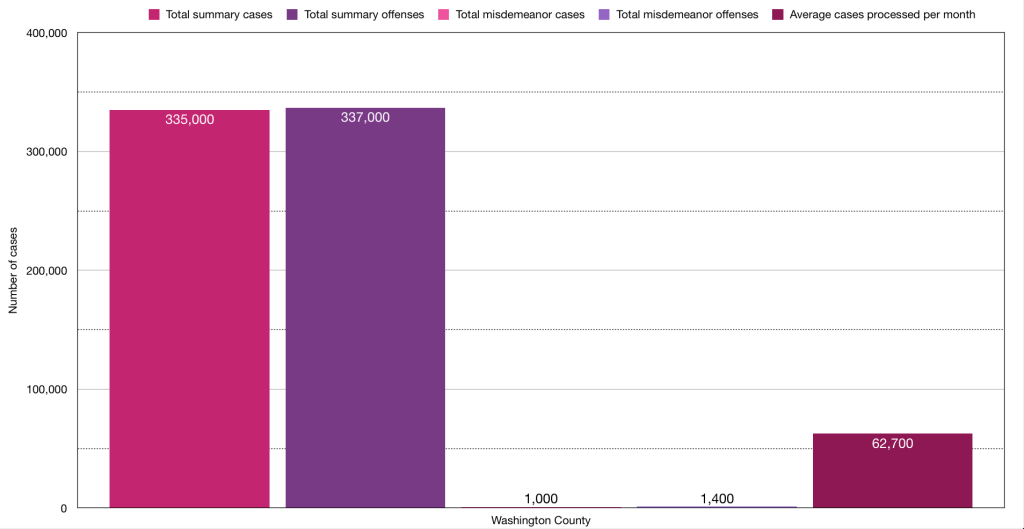
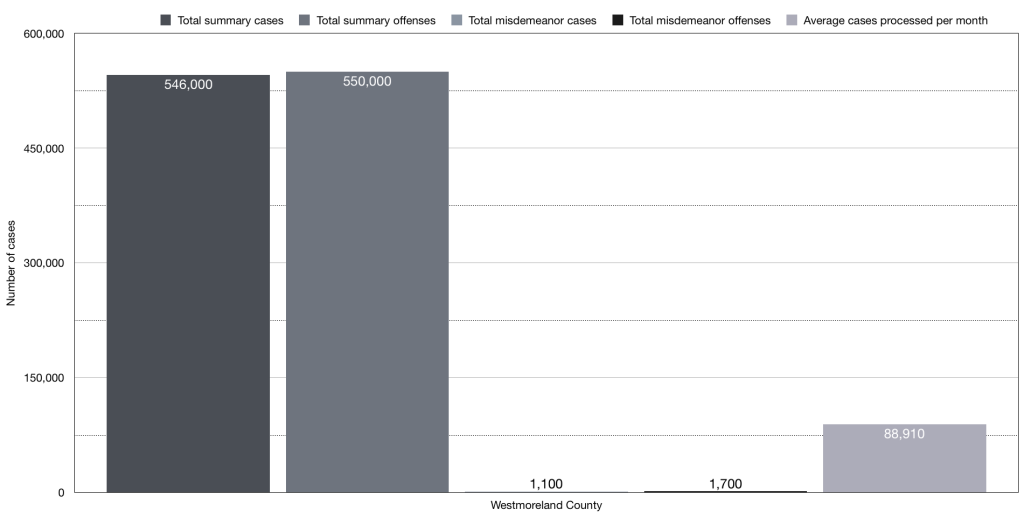
The laws provides a full year – until June 2020 – to process the initial backlog of cases and offenses.
More than 40 million offenses and 30 million cases from Courts of Common Pleas and proceedings before magisterial district judges are eligible for sealing under the Clean Slate Law.
Although they will no longer appear on public docket sheets, the records can be viewed on secure online dockets.
Sealing, according to a Legal Aid Society fact sheet, differs from expungement, which results in a record no longer existing, with limited exceptions such as law enforcement and court access for second or subsequent offenses, such as drunken driving.
Sealing protects a record from public view, with the exception of law enforcement, the courts, Children and Youth Services and professional or trade licensing agencies.
Cases resulting in a mix of conviction and nonconvictions will not result in automatic partial sealing, but defendants can petition for expungement where applicable.
Examples of nonconviction occur when charges are withdrawn, dismissed or end with an acquittal.
According to legal services, the expungement process varies slightly from county to county:
n In Greene and Fayette counties, state police criminal background must be attached to the petition.
n Fayette County requires that the petition be filed with the clerk of courts office, which submits it to the district attorneyÄ¢¹½ÊÓƵ office for consent or objection before the petition is presented to a judge.
n In Greene County, the procedure is similar, but a petition is submitted to the DAÄ¢¹½ÊÓƵ office.
n In Washington County, expungement applications must go to the district attorneyÄ¢¹½ÊÓƵ office for consent or objection. If the DAÄ¢¹½ÊÓƵ office objects, a hearing can be requested. If probation was involved due to admission to the Accelerated Rehabilitative Disposition program or probation without verdict, the application must go to the clerk of courts office to confirm that all costs have been paid, then go to the adult probation office to confirm compliance with its supervision.
Elected officials recently observed the one-year anniversary of the Clean Slate legislation that Gov. Tom Wolf signed into law June 28, 2018, leading the nation as the first state to seal criminal records through automation.
Potentially 30 million criminal records could be sealed, starting with the most recent and reaching into the 1960s and 1970s.