

Why was Maine shooter allowed to have guns? Questions swirl in wake of massacre
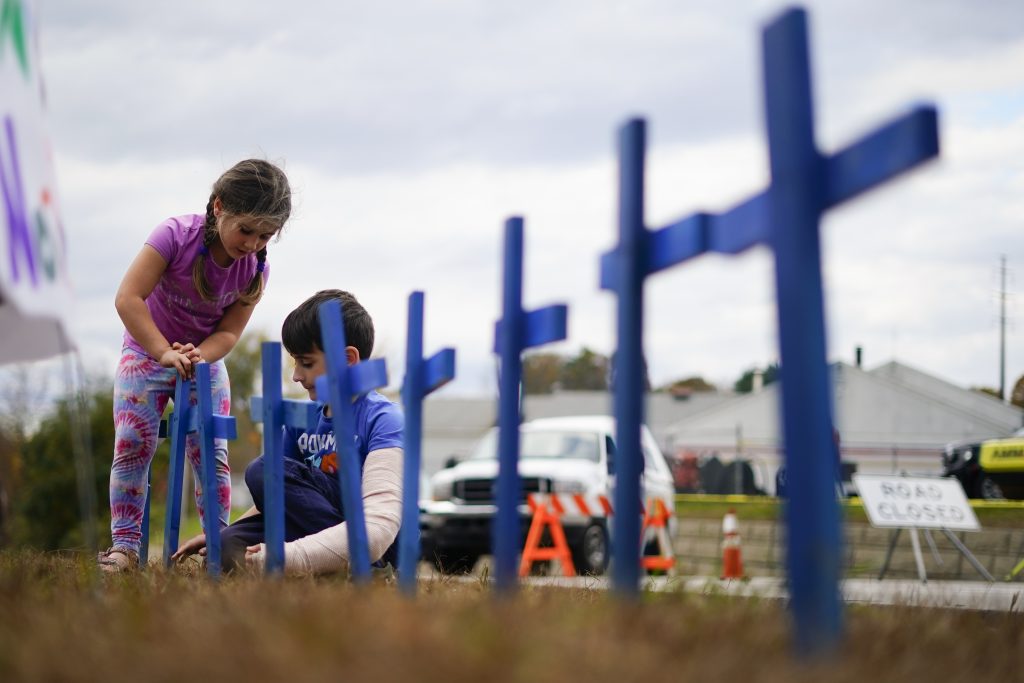
Lucy Allard, 5, and her brother Zeke Allard, 8, plant crosses in honor of the victims of this week's mass shooting in Lewiston, Maine, Saturday, Oct. 28, 2023. The residents of Lewiston are embarking on a path to healing after a man suspected of killing several people earlier this week was found dead.
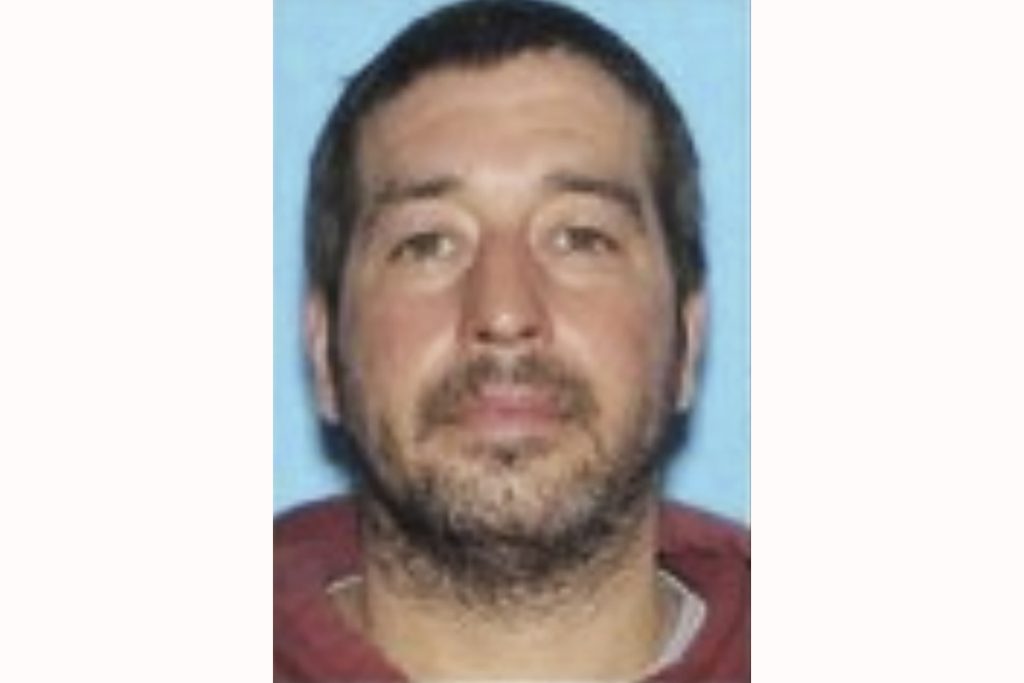
This photo released by the Lewiston Maine Police Department shows Robert Card, who police have identified as a person of interest in connection to mass shootings in Lewiston, Maine, on Wednesday, Oct. 25, 2023.
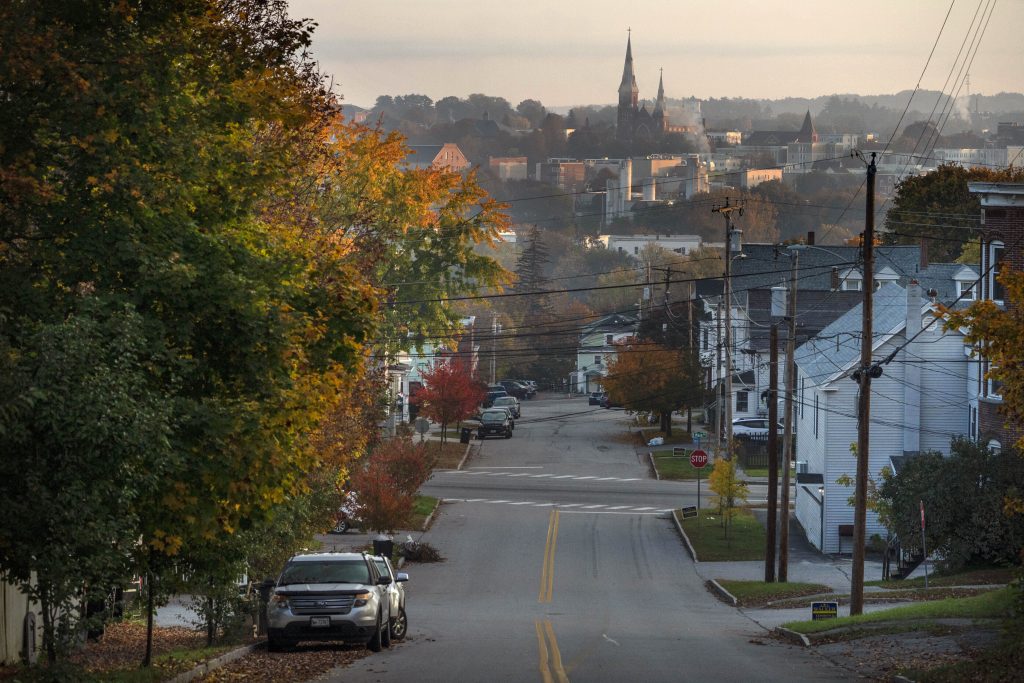
CORRECTS DATE TO OCT. 27, NOT OCT. 26 - The streets remain quiet in this view looking towards Lewiston, Maine, from the neighboring city of Auburn, as a lockdown remains in effect following this week's deadly mass shootings, Friday, Oct. 27, 2023. Police are still searching for the suspect who killed several people in separate shootings at a bowling alley and restaurant on Wednesday.
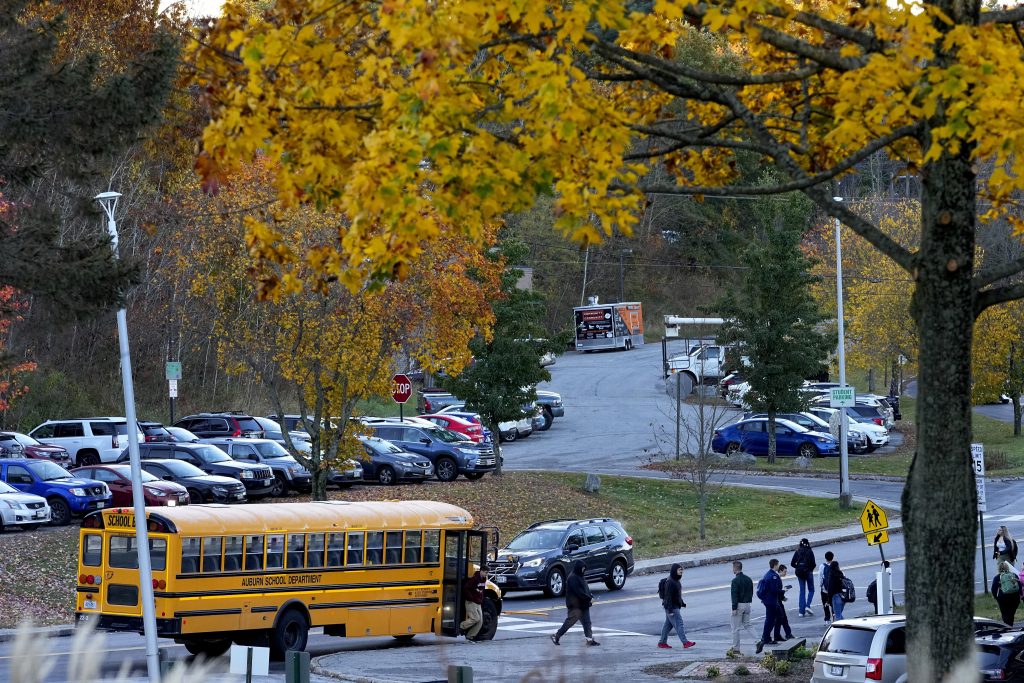
High School students return to school for the first time since the shootings that claimed 18 lives in their community, Tuesday, Oct. 31, 2023, in Lewiston, Maine.
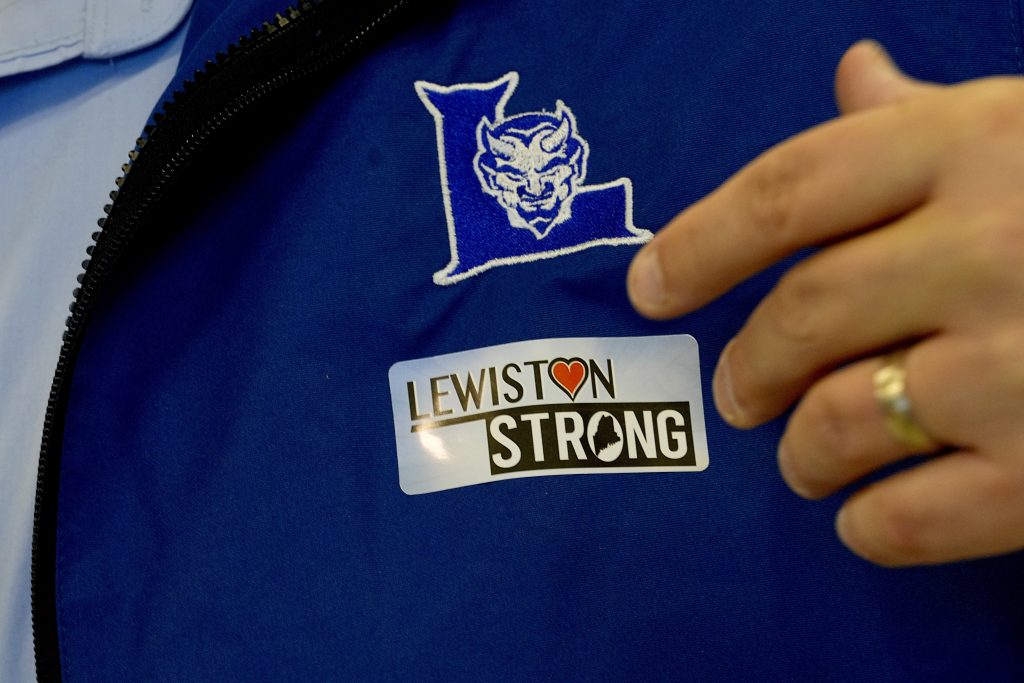
School Superintendent Jake Langlais applies a Lewiston Strong sticker to his jacket as high school students return to school for the first time since the shootings that claimed 18 lives in their community, Tuesday, Oct. 31, 2023, in Lewiston, Maine.
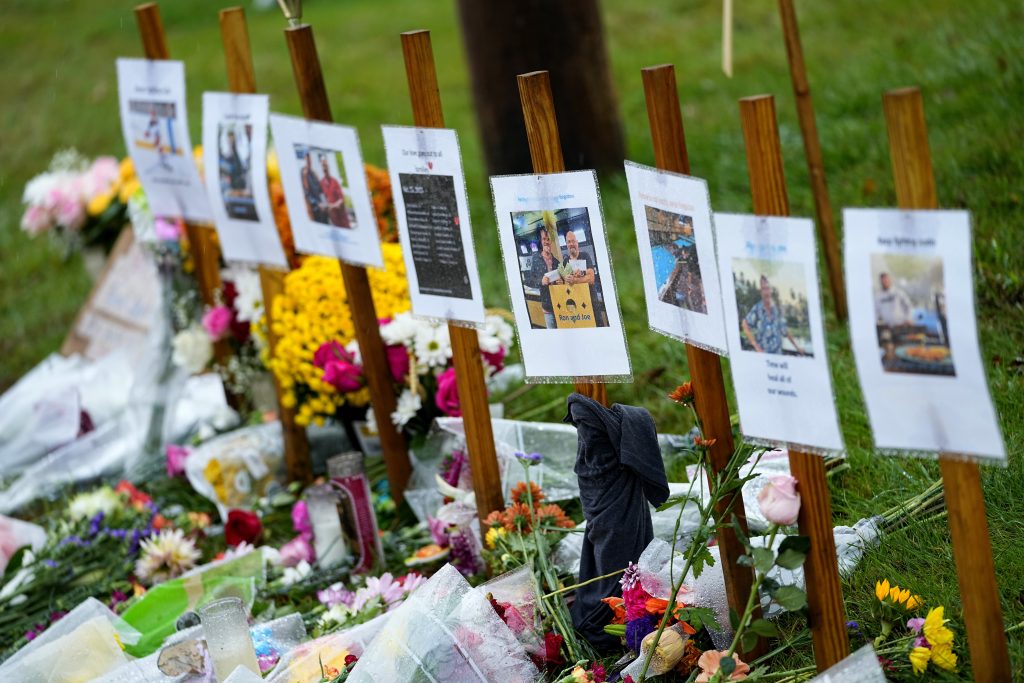
Rain soaked memorials for those who died sit along the roadside by Schemengees Bar & Grille, Monday, Oct. 30, 2023, in Lewiston, Maine. Investigators are still searching for a motive for the massacre that claimed 18 lives as the community seeks a return to normalcy.
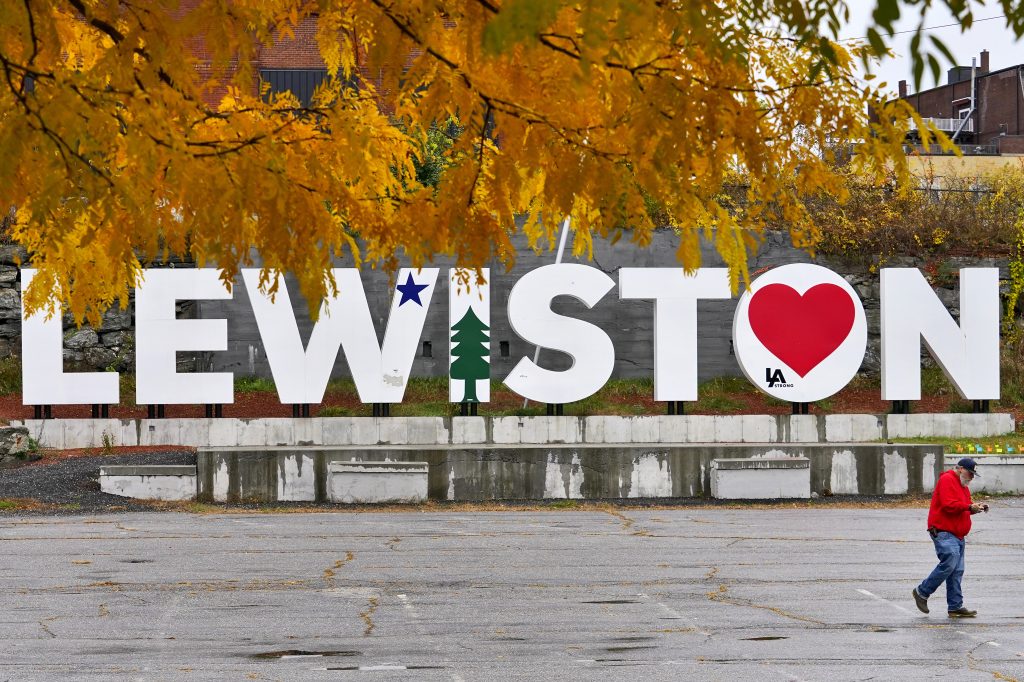
A man walks past a make-shift memorial at the base of the Lewiston sign at Veteran's Memorial Park, Sunday, Oct. 29, 2023, in Lewiston, Maine. The community is working to heal following shooting deaths of 18 people at a bowling alley and a bar in Lewiston on Wednesday, Oct. 25.
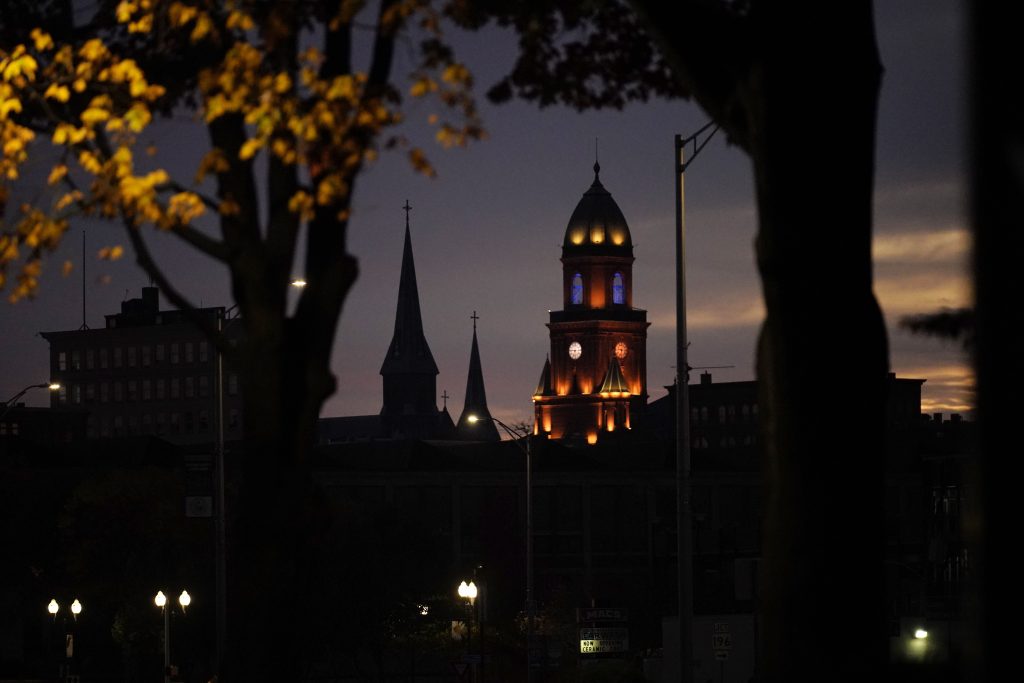
City Hall tower and church steeples are seen at dawn in Lewiston, Maine is seen at dawn, Thursday, Oct. 26, 2023. Residents have been ordered to shelter in place as police continue to search for the suspect of Wednesday's mass shooting at a local bar.
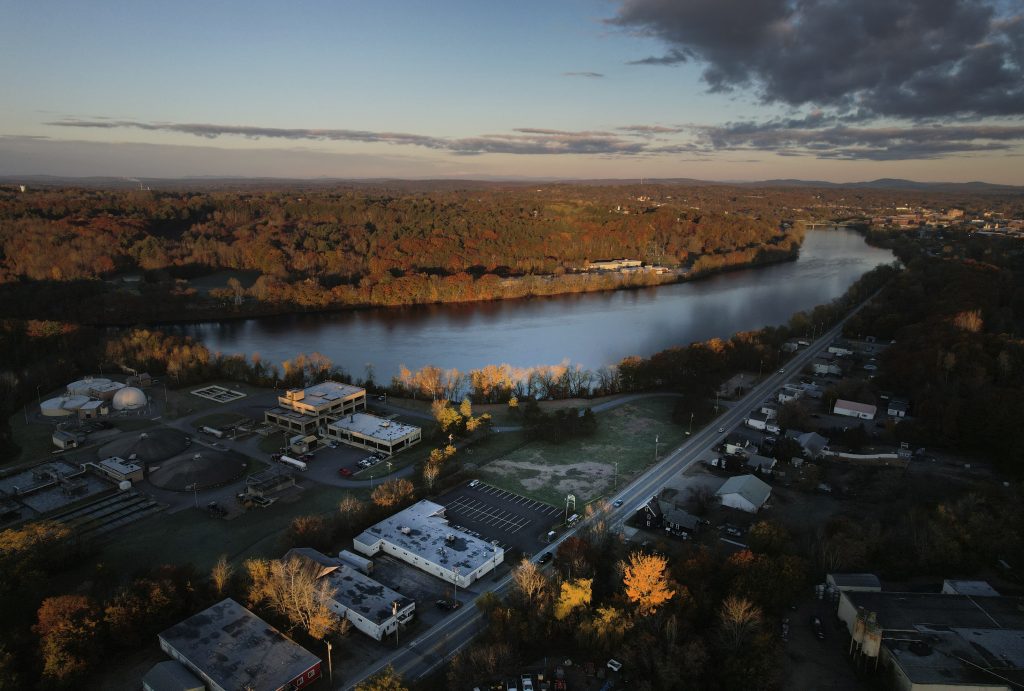
Schemengees Bar and Grille in Lewiston, Maine is shown on Wednesday, Nov., 1, 2023, just a week after a shooter entered the restaurant and killed several people. The Army reservist, Robert Card, had opened fire in a bowling alley and then at the bar, killing 18 people, on Wednesday, Oct. 25.
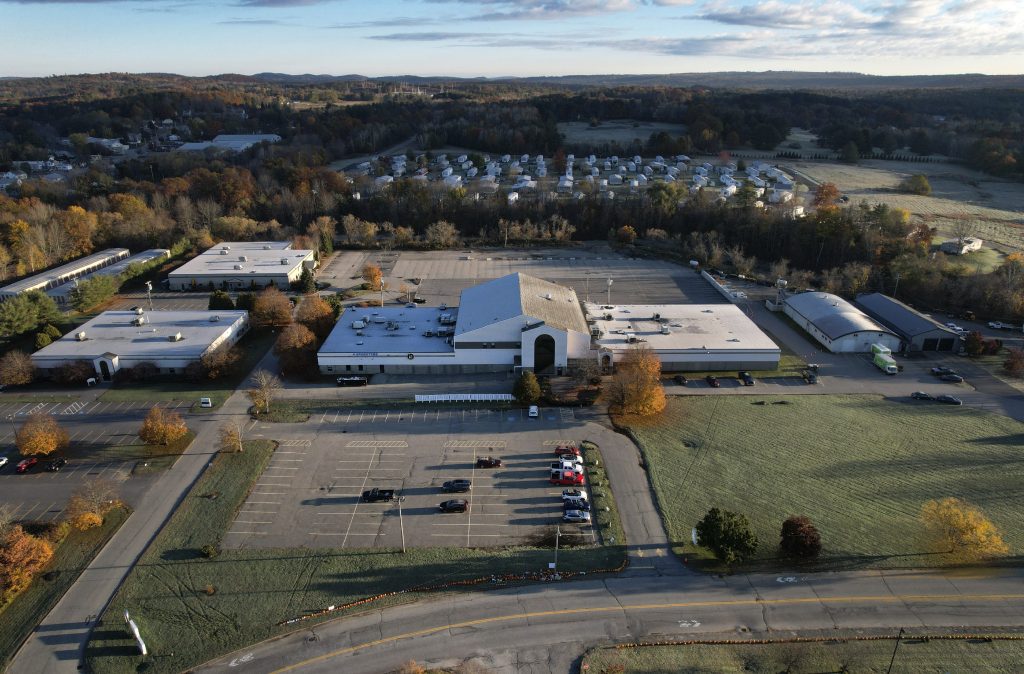
Just-In-Time Recreation bowling alley, in Lewiston, Maine is shown, on Wednesday, Nov. 1, 2023, just a week after a shooter entered the establishment and killed several people. The Army reservist, Robert Card, had opened fire in the bowling alley and then at a local bar, killing 18 people, on Wednesday, Oct. 25.
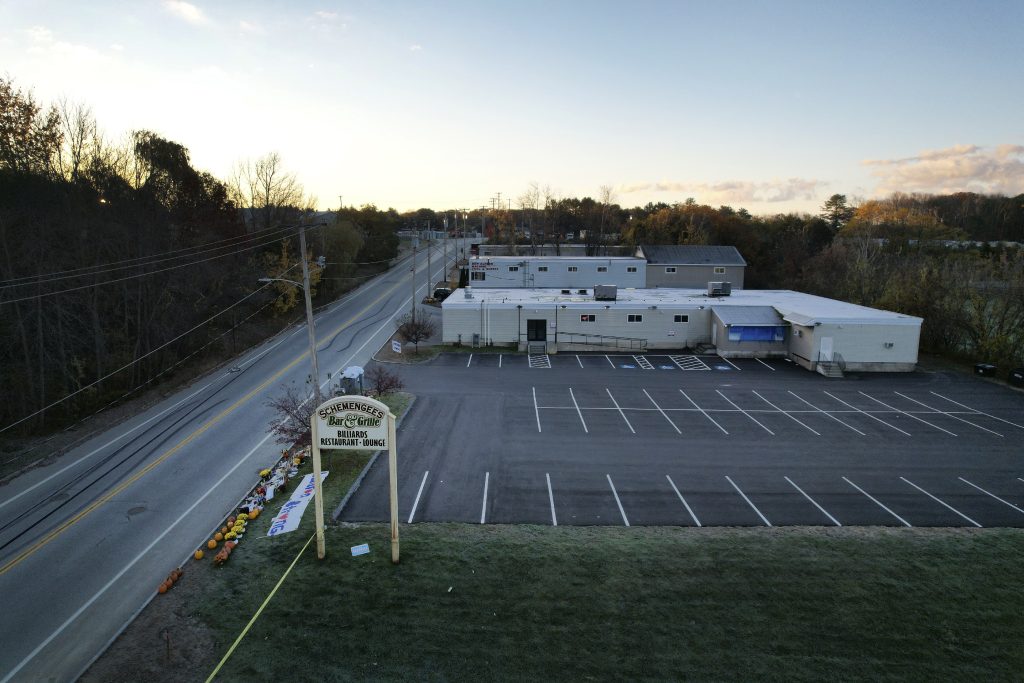
Schemengees Bar and Grille in Lewiston, Maine is shown, on Wednesday, Nov., 1, 2023, just a week after a shooter entered the restaurant and killed several people. The Army reservist, Robert Card, had opened fire in a bowling alley and then at the bar, killing 18 people, on Wednesday, Oct. 25.
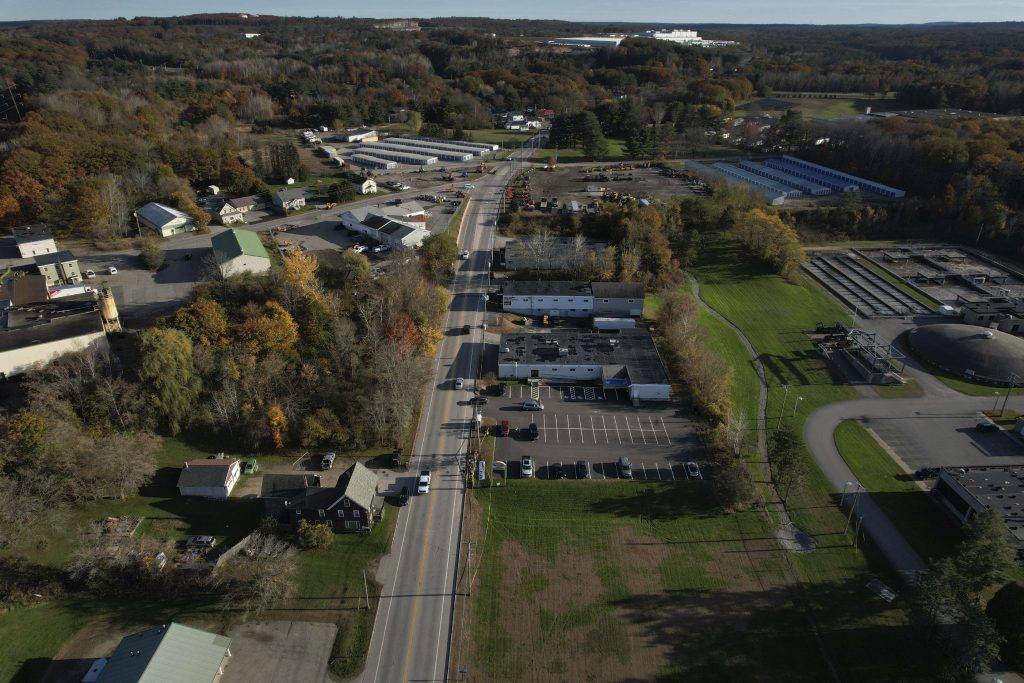
Schemengees Bar and Grille in Lewiston, Maine is shown, on Tuesday, Oct. 31, 2023, just a week after a shooter entered the restaurant and killed several people. The Army reservist, Robert Card, had opened fire in a bowling alley and then at the bar, killing 18 people, on Wednesday, Oct. 25.
LEWISTON, Maine (AP) — A history of mental illness. An array of weapons. Law enforcement knew about his potential for violence. But he was still able to own guns and commit the deadliest mass shooting in MaineÄ¢¹½ÊÓƵ history.
One week later, many in Lewiston and nationwide are asking: Why did he have guns at all?
Robert Card was identified by authorities as a person of interest four hours after he shot and killed 18 people and wounded 13 others at a bowling alley and a bar in MaineÄ¢¹½ÊÓƵ second-largest city. But Card, who was found dead two days after his rampage, had been well known to law enforcement for months.
“This is the clearest-cut case I’ve seen where an extreme risk protection order could have saved all these lives,� said Mark Collins, federal policy director at the gun-violence prevention group Brady, referring to measures often called � red flag� laws, which Maine does not have.
“This guy did everything short of taking out a front-page ad in the newspaper saying he was going to commit an atrocity,� Collins said.
The intensifying scrutiny over CardÄ¢¹½ÊÓƵ access to firearms underscores the difficulty in seizing guns from potentially dangerous people with mental illness — especially when numerous states and jurisdictions are involved, as was the case with Card.
The U.S. Army reservist spent time in a psychiatric facility in New York this summer and he reportedly blamed fellow military officials for his hospitalization, according to a letter an unidentified member of the unit wrote to a Maine sheriffÄ¢¹½ÊÓƵ deputy.
ItÄ¢¹½ÊÓƵ unclear when the letter was sent, but the writer describes getting a call from a friend of CardÄ¢¹½ÊÓƵ who was concerned Card was “going to snap and commit a mass shooting.â€� The letter was included in the deputyÄ¢¹½ÊÓƵ Sept. 15 report about efforts to contact Card.
Card threatened to shoot up the Army reserve drill center in Saco, Maine, and other places, and said that he was going to get “them.�
“Since the commander and I are the ones who had him committed we are the ‘them,'� wrote the unidentified letter writer. “He also said I was the reason he can’t buy guns anymore because of the commitment.�
Authorities at the state and federal level have not said that CardÄ¢¹½ÊÓƵ history of mental illness should have triggered laws that kept him from owning guns. There was nothing on CardÄ¢¹½ÊÓƵ record before the shooting that would have kept him from passing a federal background check to buy a gun, the Bureau of Alcohol, Tobacco, Firearms and Explosives said in a statement.
Involuntary commitments are reported to federal authorities differently from state to state, said Collins.
Generally, though, not everyone who gets mental health treatment at a facility is considered involuntarily committed. ThatÄ¢¹½ÊÓƵ a determination legally made by a court or a board, which then communicates it to another state body tasked with sending that information to the federal background-check system maintained by the FBI.
Each state has an agency that should report it, but itÄ¢¹½ÊÓƵ not legally required everywhere, he said. Maine does require the State Bureau of Identification to report commitments to the FBI database.
Facts about the shooting – and the police response – will be determined by an independent commission, Democratic Gov. Janet Mills said Wednesday, adding she wants to know “what more could have been done to prevent this tragedy from occurring.�
Concern about CardÄ¢¹½ÊÓƵ behavior accelerated following an altercation he had with fellow Army Reserve members. Card and other members of the Army ReserveÄ¢¹½ÊÓƵ 3rd Battalion, 304th Infantry Unit were in New York for training on July 15 when he accused several of them of calling him a pedophile, shoved one of them and locked himself in his motel room. The next morning, he told another soldier that he wanted people to stop talking about him.
“I told him no one was talking about him and everyone here was his friend. Card told me to leave him alone and tried to slam the door in my face,â€� the soldier later told Maine authorities, according to documents released by the sheriffÄ¢¹½ÊÓƵ office.
New York State Police responded and helped bring Card to a hospital at the U.S. Military Academy in West Point for an evaluation. Card spent 14 days at the Four Winds Psychiatric Hospital in Katonah, New York, which is a few miles (kilometers) from West Point.
Jonathan Crisp, an army lawyer for two decades before starting a criminal defense practice, said when soldiers are committed involuntarily to mental health facilities by others in the chain of command, it is a “reportable� event under Army regulations that triggers a requirement to alert others, including the FBI.
“If they took him and he didn’t want to go and he refused to be admitted, itÄ¢¹½ÊÓƵ a slam dunk,â€� Crisp said. “This should have been reported.â€�
Questions over military protocols that should’ve been enacted with Card are similar to those raised after a 2017 mass shooting during Sunday services at a church in Sutherland Springs, Texas. More than two dozen people — including eight children — were shot and killed by a gunman who had served in the Air Force before the attack and had once escaped a mental health center.
After Card left the psychiatric facility in early August, the Army directed that while on duty, he shouldn’t be allowed to have a weapon, handle ammunition or participate in live-fire activity. It also declared him to be non-deployable.
Military experts say that even if CardÄ¢¹½ÊÓƵ commanders determined he shouldn’t be around weapons after being committed, they would have had only a handful of options to implement, such as prohibiting him from handling weapons while on duty or attempting to sever him from the Army Reserves. ThereÄ¢¹½ÊÓƵ little they can do when the citizen-soldiers are back in civilian life.
Several weeks after his release from the hospital, on Sept. 15, a deputy was sent to visit CardÄ¢¹½ÊÓƵ home in Bowdoin, about 10 miles (16 kilometers) southeast of Lewiston, for a wellness check. A deputy went to CardÄ¢¹½ÊÓƵ trailer but couldn’t find him.
The sheriffÄ¢¹½ÊÓƵ office then sent out a statewide alert seeking help locating Card. It included a warning that he was known to be “armed and dangerousâ€� and that officers should use extreme caution.
On Sept. 16, the same deputy and another one returned to CardÄ¢¹½ÊÓƵ trailer. CardÄ¢¹½ÊÓƵ car was there and the deputy said he could hear him moving around the trailer, but no one answered the door, according to the deputyÄ¢¹½ÊÓƵ report.
Deputies didn’t have legal authority to press the case if Card didn’t want to open the door, Sagadahoc County Sheriff Joel Merry said Wednesday .
On Oct. 18, the sheriffÄ¢¹½ÊÓƵ office canceled a statewide alert seeking help locating Card.
A week later, shortly before 7 p.m. on Oct. 25, authorities began receiving 911 calls about a gunman at the Just-In-Time Recreation bowling alley in Lewiston.
Condon reported from New York, Whitehurst from Washington, D.C., and Kruesi from Nashville. Associated Press writers David Sharp, Jake Bleiberg, Robert F. Bukaty, David R. Martin and Matt Rourke in Lewiston, Maine, and Michael Casey in Boston contributed to this report.