

Judge likely to be next South Carolina chief justice promises he has no political leanings
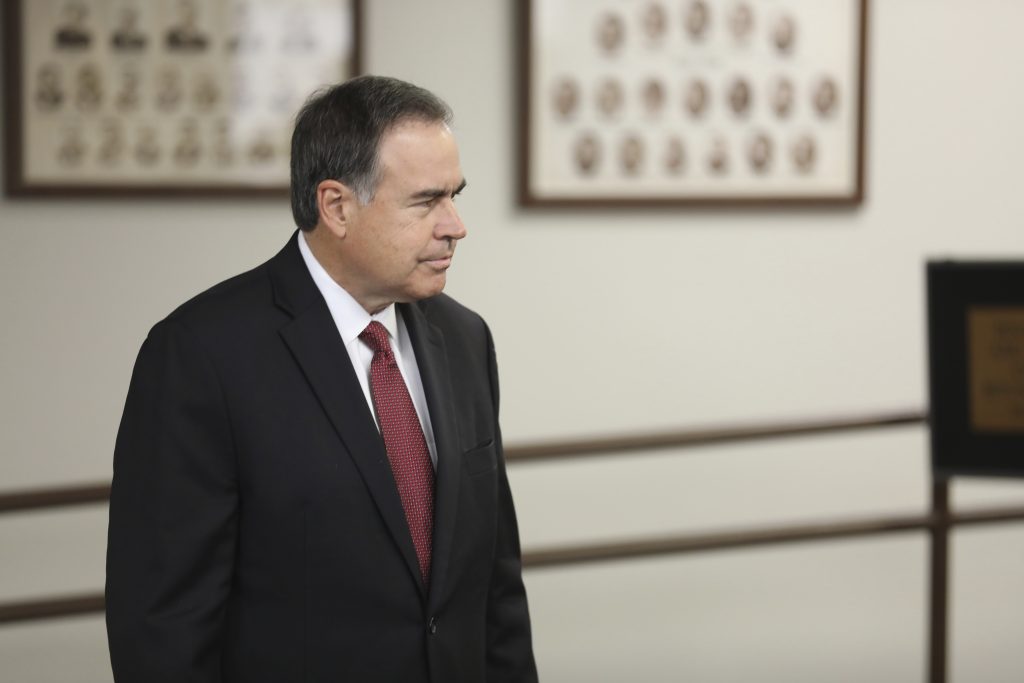
South Carolina Supreme Court justice John Kittredge prepares to testify before the Judicial Merit Selection Commission on Monday, Nov. 6, 2023, in Columbia, S.C. Kittredge is the only candidate to be South Carolina's next chief justice.

South Carolina Supreme Court justice John Kittredge listens as Judicial Merit Selection Commission Chairman Rep. Micah Caskey, R-West Columbia, asks a question during a hearing on Monday, Nov. 6, 2023, in Columbia, S.C. Kittredge is the only candidate to be South Carolina's next chief justice.

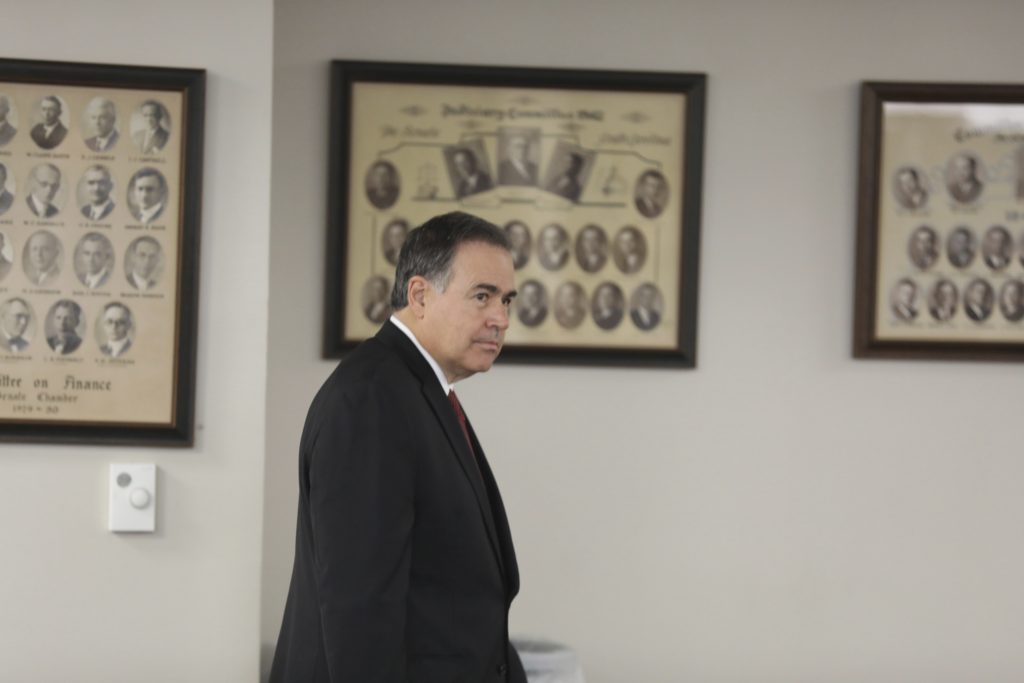
South Carolina Supreme Court justice John Kittredge leaves after testifying before the Judicial Merit Selection Commission on Monday, Nov. 6, 2023, in Columbia, S.C. Kittredge is the only candidate to be South Carolina's next chief justice.
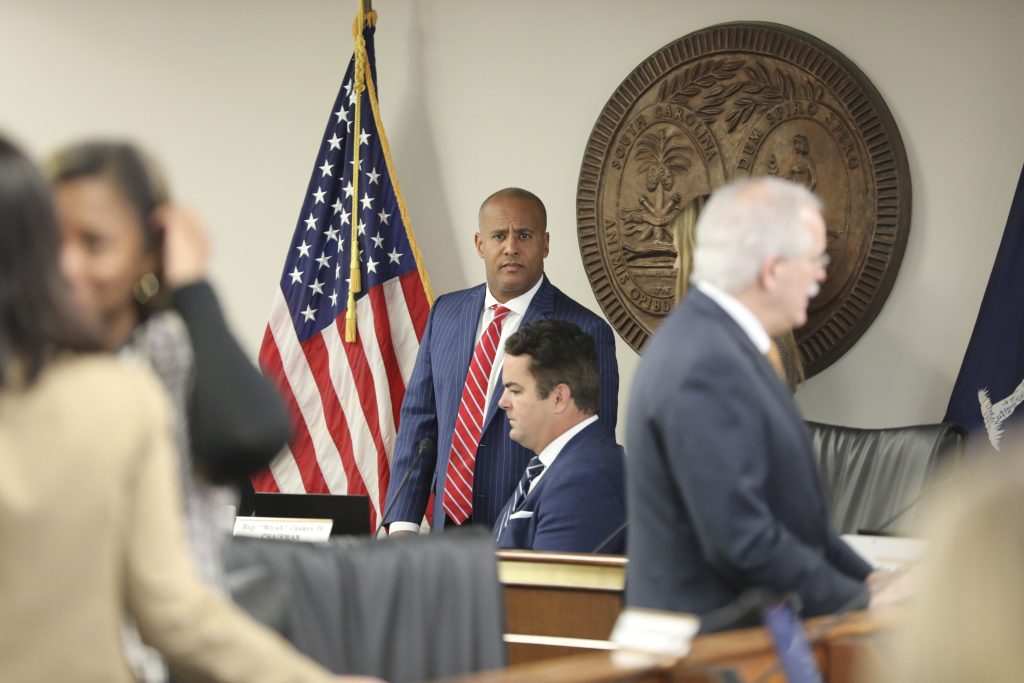
South Carolina Rep. Todd Rutherford, D-Columbia, waits for the start of a hearing of the Judicial Merit Selection Commission on Monday, Nov. 6, 2023, in Columbia, S.C.
South Carolina Supreme Court justice John Kittredge prepares to testify before the Judicial Merit Selection Commission on Monday, Nov. 6, 2023, in Columbia, S.C. Kittredge is the only candidate to be South Carolina's next chief justice.
COLUMBIA, S.C. (AP) — The only candidate running to be South CarolinaÄ¢¹½ÊÓƵ top judge defended the stateÄ¢¹½ÊÓƵ method of having lawmakers fill the stateÄ¢¹½ÊÓƵ bench, saying appointees are ethical and qualified.
John Kittredge laid out his vision for being chief justice Monday at the first meeting this month of the state Judicial Merit Selection Commission. He didn’t face extremely adversarial questions and committee members noted he did not have an unusual number of critical comments from public questionnaires.
A 32-year veteran of all four levels of South Carolina state courts, Kittredge is running to replace Chief Justice Donald Beatty when he is required to retire for age next summer.
Kittredge said he has no political leanings and respects the separation of powers that gives the General Assembly the role of creating public policy. “Judges adjudicate. Judges do not legislate,� he said.
“I have tried diligently to apply the law fairly. I am apolitical and I believe that with every fiber of my being,� Kittredge said.
Several aspects of the South Carolina judiciary are under increasing scrutiny. All five members of the Supreme Court are men, the only state high court in the nation without a woman.
The court ruled 3-2 against a more severe abortion ban in January before lawmakers made a few tweaks. A newly appointed justice sided in favor of the law and another justice switched his vote, allowing the state to enforce the new ban on abortions when cardiac activity is detected, around six weeks into pregnancy.
The composition and role of the Judicial Merit Selection Commission itself is also being debated. South CarolinaÄ¢¹½ÊÓƵ Legislature elects judges and the commission — made up of six lawmakers who are all lawyers and four private attorneys — decides whether candidates are qualified and narrows the field to three if necessary.
Critics of the system want legislators who are lawyers off the panel because they might appear before the judges they screen. There also are suggestions to have the governor nominate judge candidates and then have the General Assembly vote.
“Whether this commission should exist at all is a question for another day and another forum,� said Republican Rep. Micah Caskey, who is the chairman of the panel.
That question may start getting answered Tuesday. Caskey is one of 13 House members on a special commission that will begin hearings on whether to change how judge candidates are brought before the Legislature. The panel is also tasked with deciding whether to recommend more training and higher qualifications for lower level magistrates and steps that could enhance the publicÄ¢¹½ÊÓƵ confidence in the judicial system.
Kittredge will testify before that committee. But for now, he said he didn’t want to say much. He did defend the way South Carolina chooses judges, saying all the money that enters public elections undermines fairness and trust in the system. He also defended the people who make it through the screening and are elected to the bench.
“The people you elect, the men and women to the bench of this state, the overwhelming majority are good and decent people of high ethics,� Kittredge said.
Kittredge promised if he is elected, he wants to make the Supreme Court act faster both in deciding what cases it will hear and issuing opinions after those hearings. He promised more transparency and accountably, especially with disciplinary matters and hearings for attorneys accused of wrongdoing.
“We can have a wonderful system, but if the public doesn’t believe itÄ¢¹½ÊÓƵ fair, itÄ¢¹½ÊÓƵ not,â€� Kittredge said “Perception is a reality.â€�
Over 10 sessions in November, the commission will talk to about 85 judge candidates ranging from Family Court and Circuit Court through the Court of Appeals and the state Supreme Court.