

How a South Dakota priest inspired 125 years of direct democracy — and the fight to preserve it
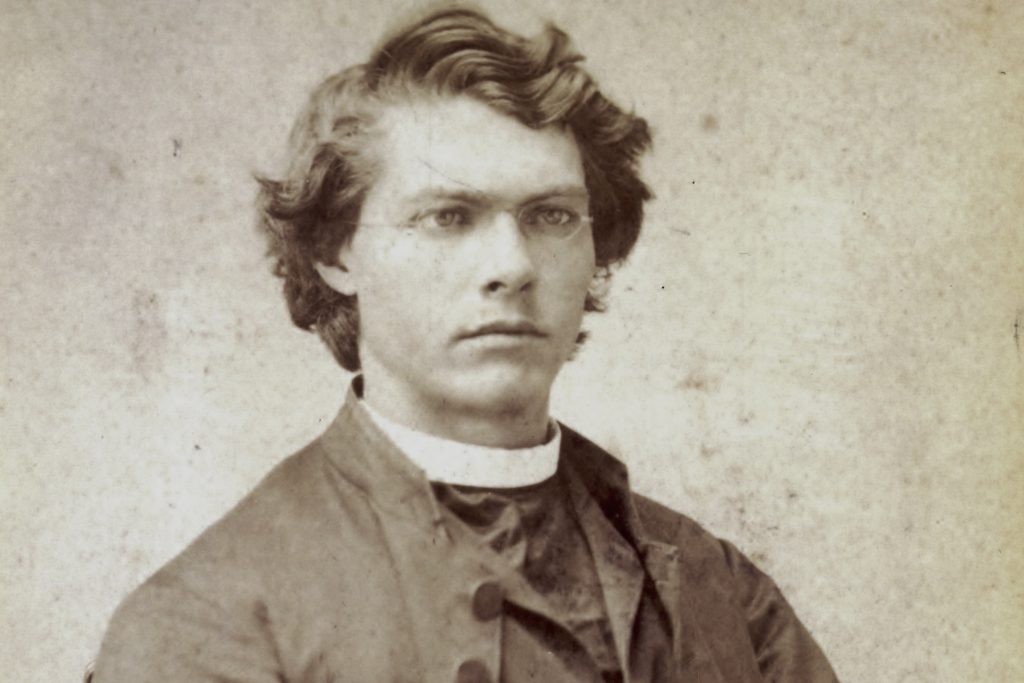
This photo provided by the Presentation Sisters Archives in October 2023 shows an undated portrait of the Rev. Robert W. Haire, a socialist Catholic priest and influential direct democracy advocate who lived in Aberdeen, South Dakota, in the late 1800s and early 1900s. Some refer to Haire as the "father of the ballot initiative process," because his ideas and advocacy were influential in South Dakota becoming the first in the nation to enact a statewide citizen initiative and referendum process.
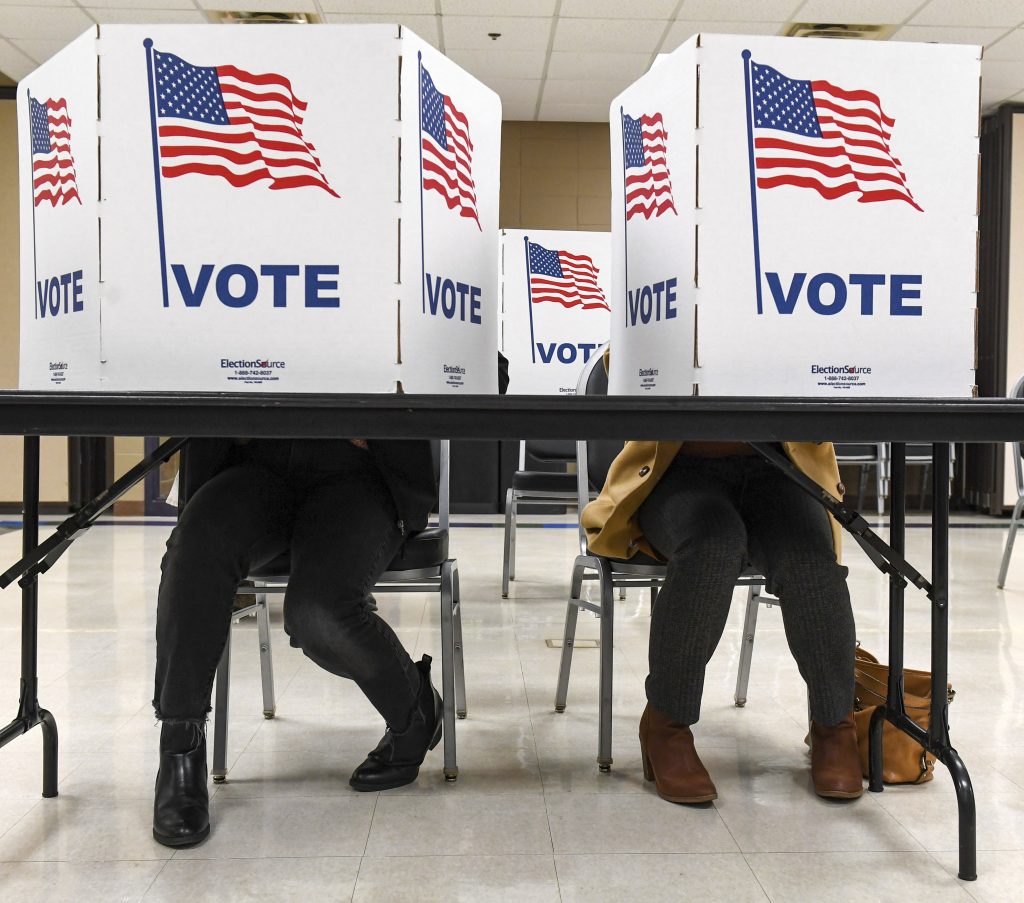
FILE - Voters sit side-by-side as they fill out their ballots on Tuesday morning, Nov. 8, 2022, at Morningside Community Center in Sioux Falls, S.D.
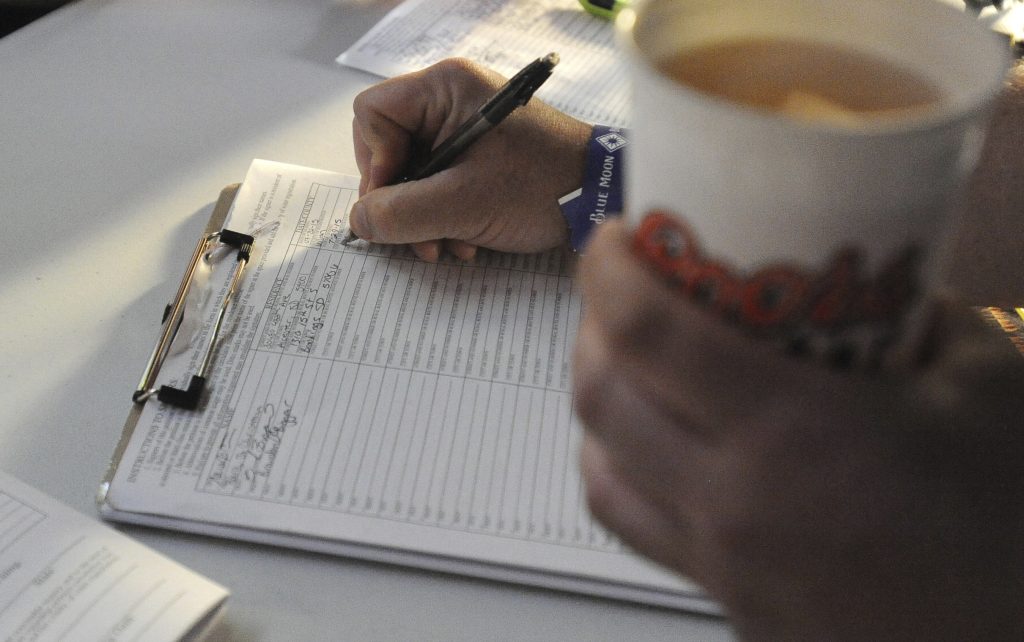
FILE - Brandon Biggar signs a marijuana petition at Big's Sports Bar in Sioux Falls, S.D. Wednesday, July 29, 2015. South Dakotans Against Prohibition officially kicked off its campaign to put a measure on the November ballot in 2016 that would ask voters whether the state should decriminalize marijuana.
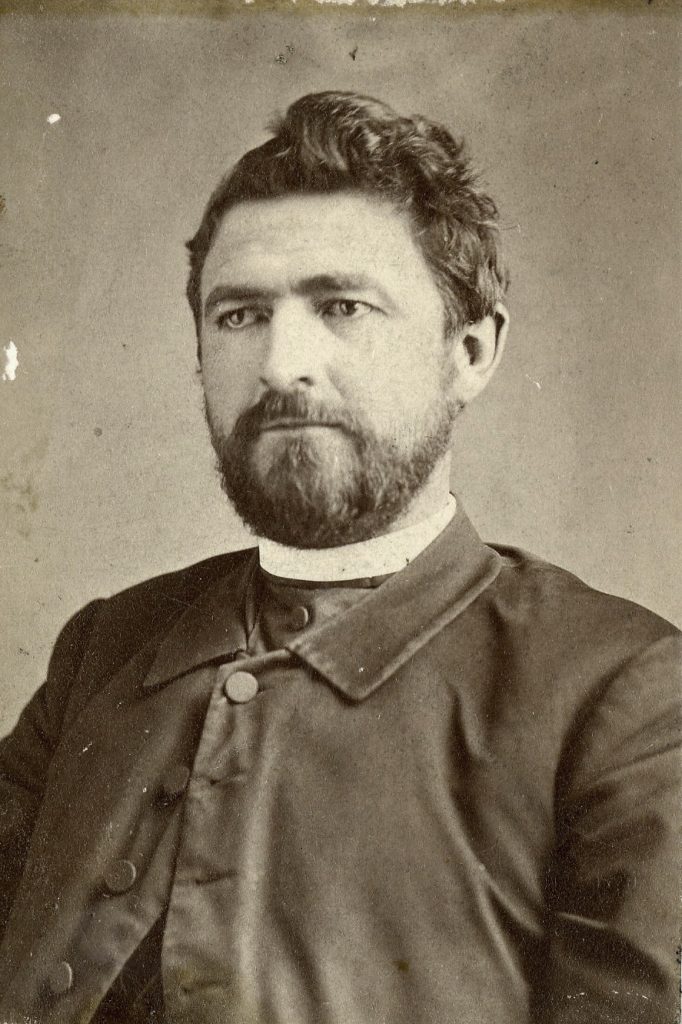
This photo provided by the Presentation Sisters Archives in October 2023 shows an undated portrait of the Rev. Robert W. Haire, a socialist Catholic priest and influential direct democracy advocate who lived in Aberdeen, South Dakota, in the late 1800s and early 1900s. He is an obscure historical figure today, but some still invoke his name in their fight to preserve their ballot initiative rights.
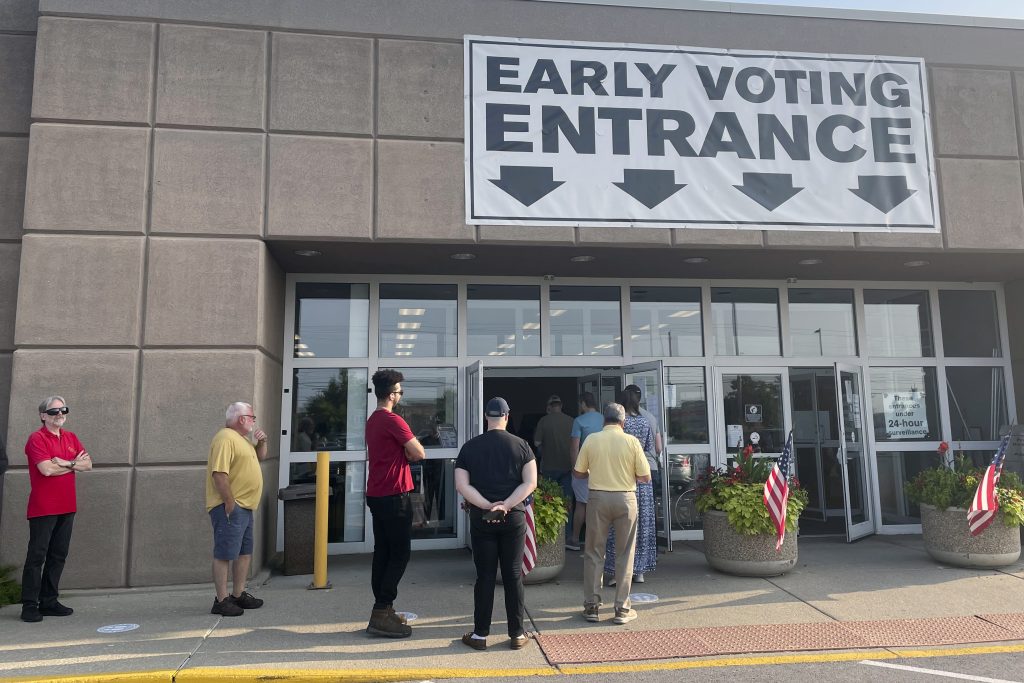
FILE - Ohio residents line up to vote early in-person on Issue 1 in front of the Franklin County Board of Elections in Columbus, Ohio on Thursday, Aug. 3, 2023. Ohioans are voting on whether to make it harder to amend the state's constitution – a decision that could impact another upcoming November vote on abortion rights in the state.
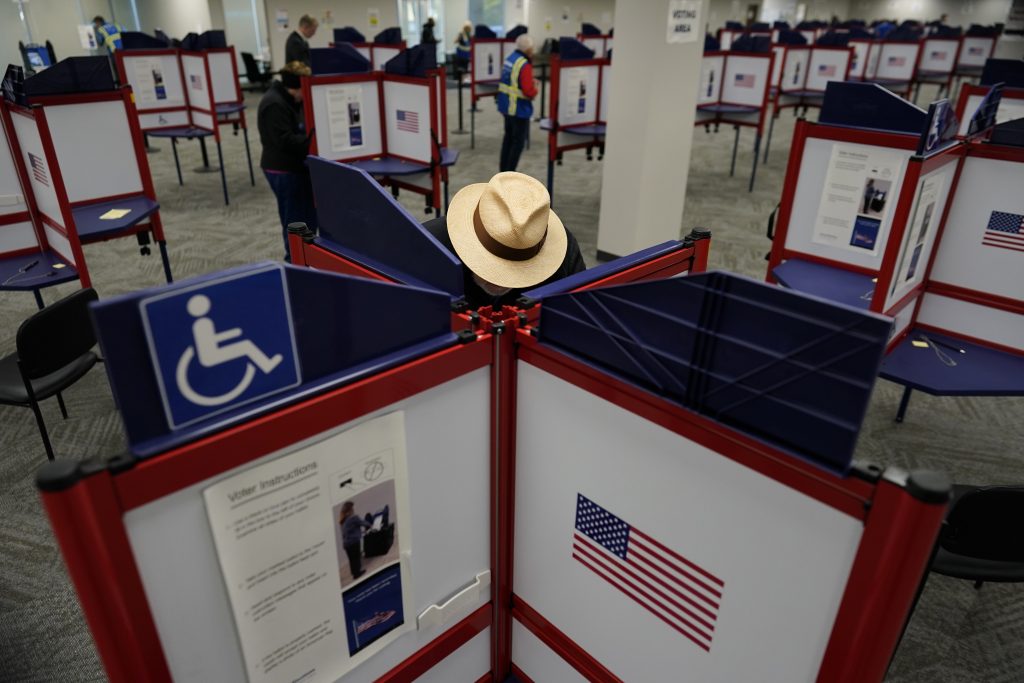
FILE - Rod Sommer stands in a partitioned booth and fills out his ballot during early in-person voting at the Hamilton County Board of Elections in Cincinnati, Wednesday, Oct. 11, 2023.
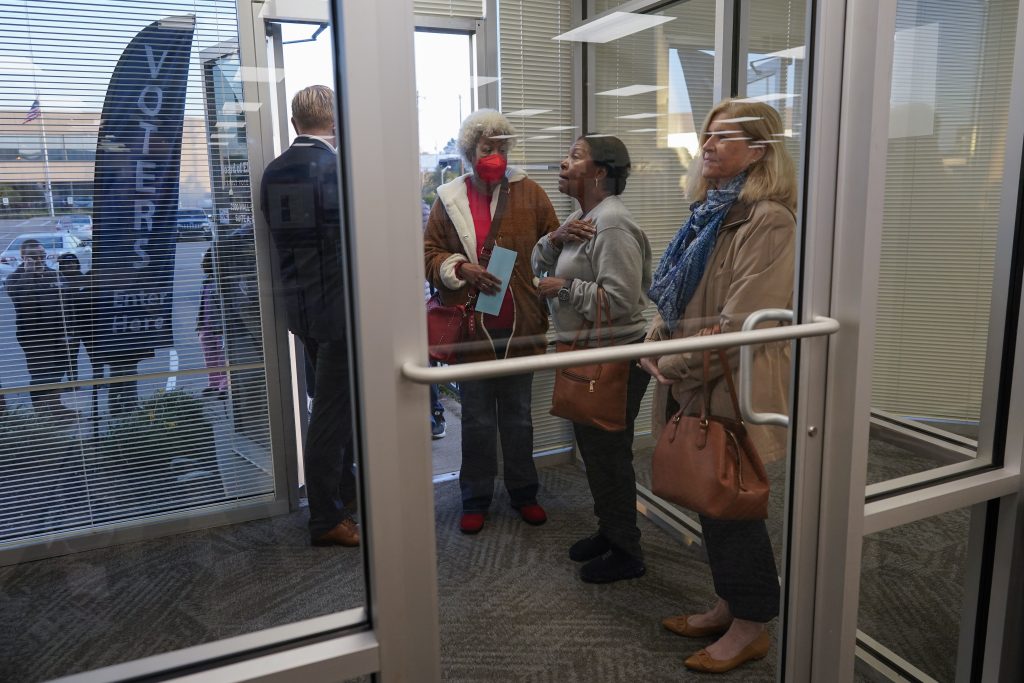
FILE - Voters line up at the door before the start of early in-person voting at the Hamilton County Board of Elections in Cincinnati, Wednesday, Oct. 11, 2023.
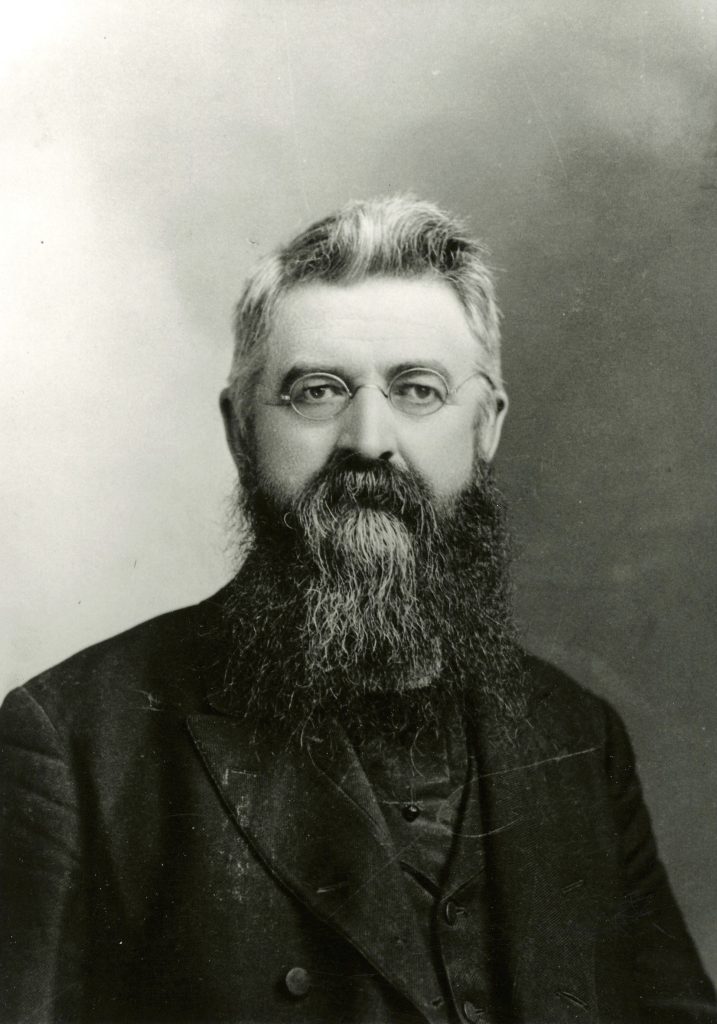
This photo provided by the Presentation Sisters Archives in October 2023 shows an undated portrait of the Rev. Robert W. Haire, a socialist Catholic priest and influential direct democracy advocate who lived in Aberdeen, South Dakota, in the late 1800s and early 1900s. Along with his ballot measure legacy, Haire also started an Aberdeen church that is still active today and so is the Presentation Sisters, the Catholic community he invited to Aberdeen to set up a school in 1886.
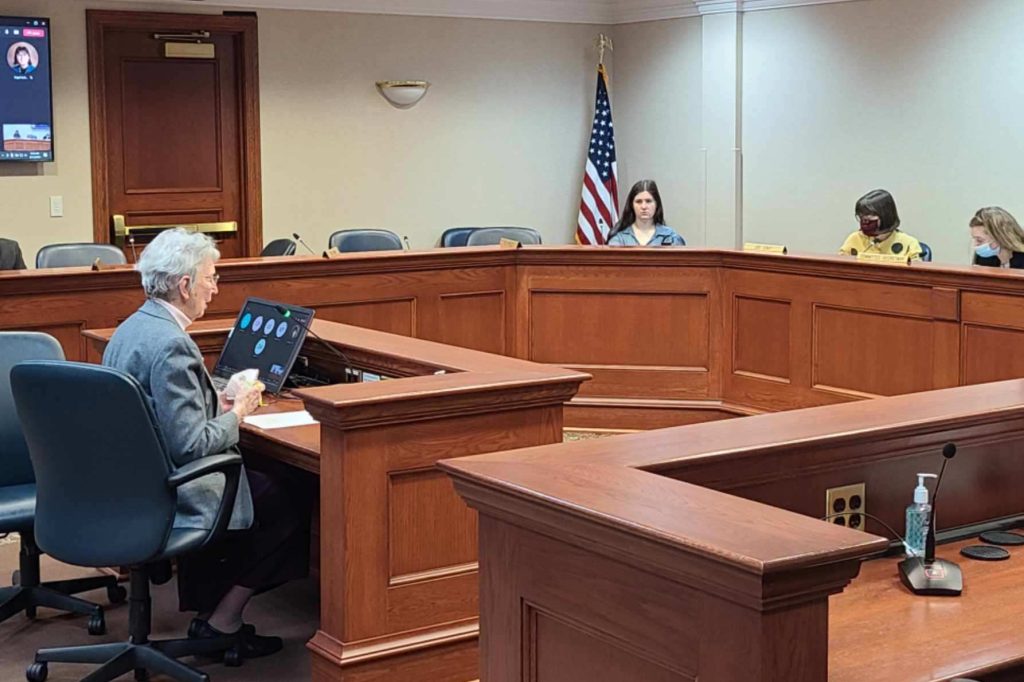
In this photo provided by the Presentation Sisters, Sister Kathleen Bierne testifies before state lawmakers at the capitol in Pierre, South Dakota, in March 2022. Bierne became a lobbyist in recent years, advocating for healthcare, education, housing, immigration and other issues in line with the Presentation Sisters' historic mission.
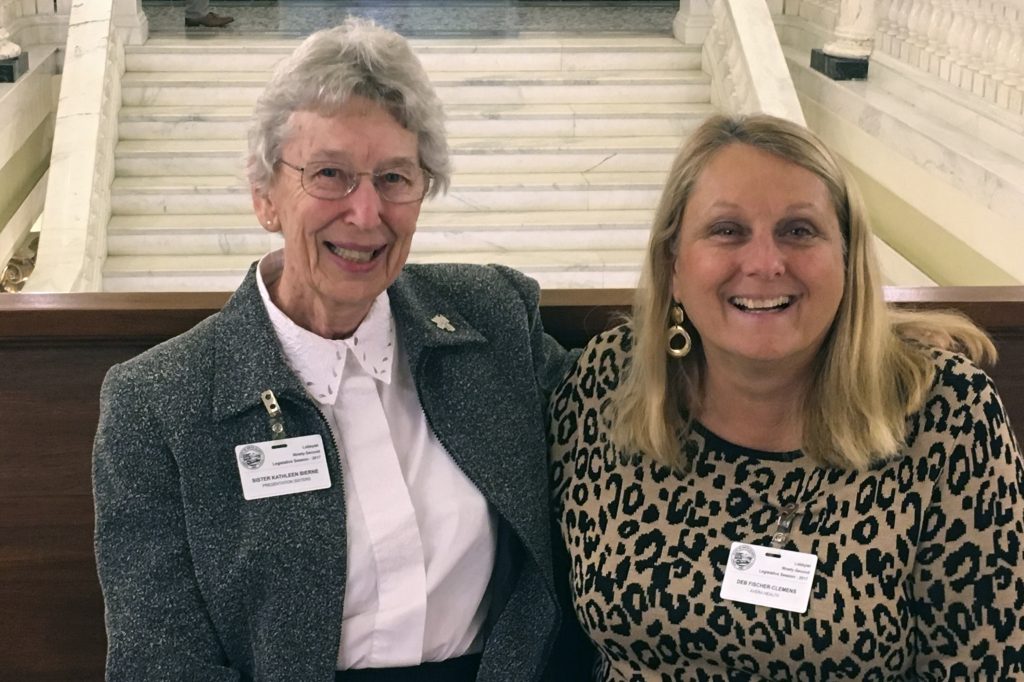
In this photo provided by the Presentation Sisters, Sister Kathleen Bierne, left, poses for a photo with Deb Fischer-Clemens, a longtime healthcare lobbyist and a former lawmaker, at the state capitol in Pierre, South Dakota, in March 2017. Fischer-Clemens mentored Bierne when the Catholic sister became a state lobbyist for the Presentation Sisters.
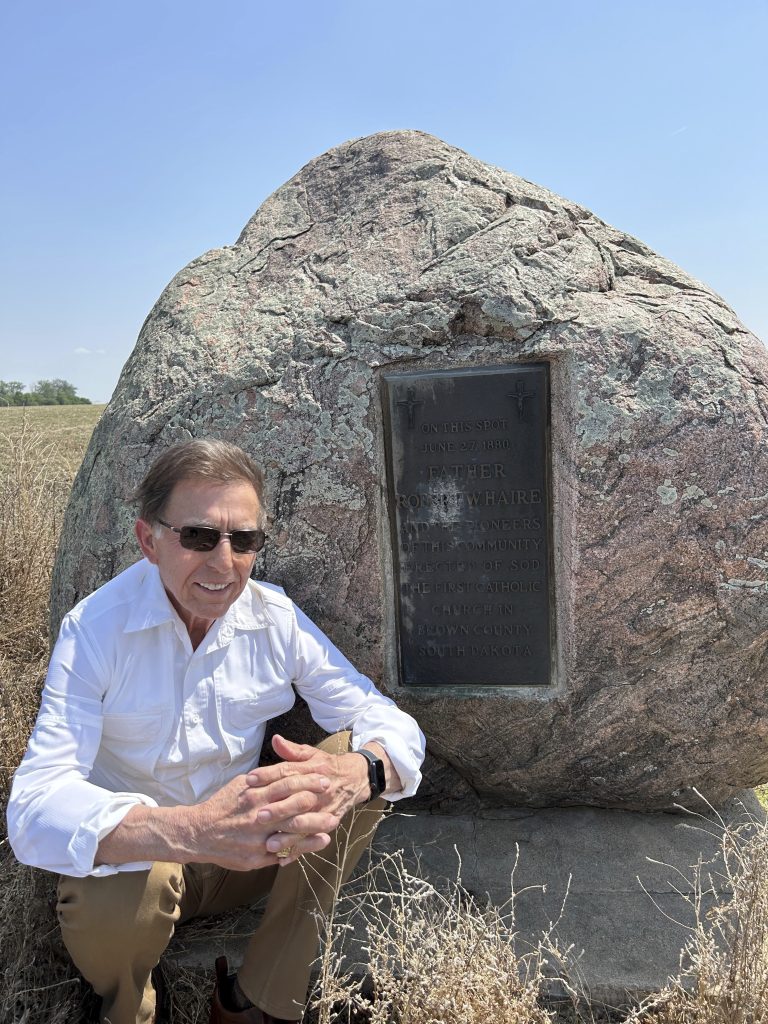
In this photo provided by Tom Heinz, the South Dakota businessman poses for a photo in front of a monument marking the first Catholic church in Brown County, South Dakota, on Friday, May 26, 2023. The church was founded by influential Catholic priest, the Rev. Robert W. Haire, who Heinz called the "father of the ballot initiative process" in his testimony earlier this year opposing a bill that would have created more restrictions for citizen-initiated constitutional amendments.
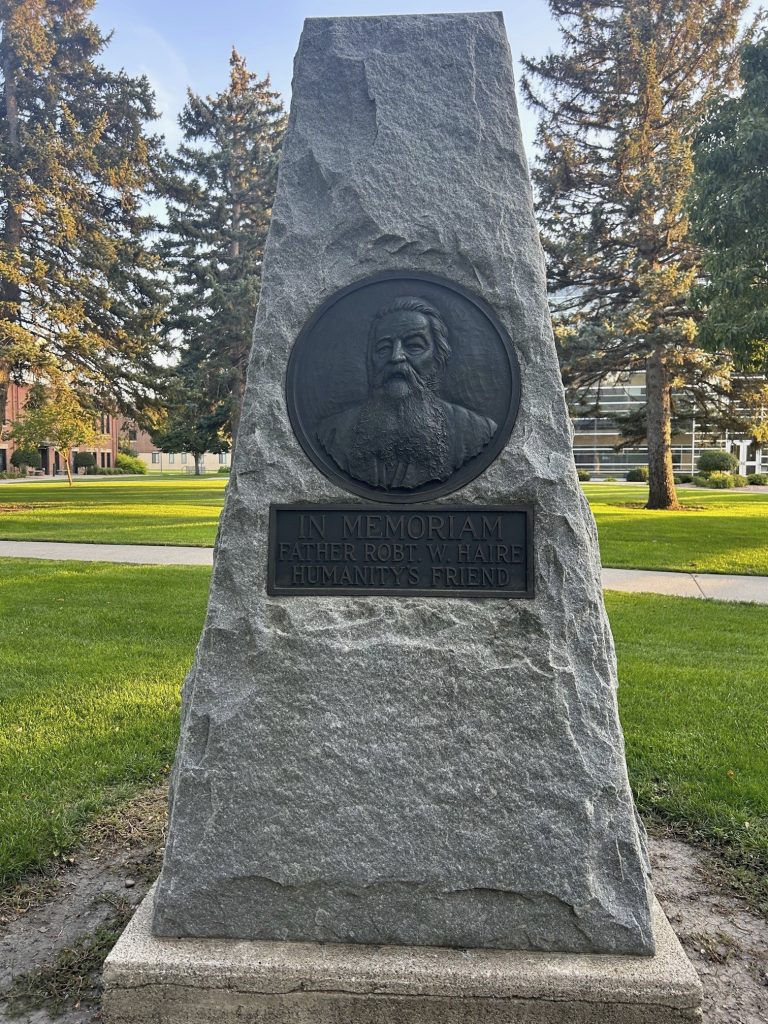
In this photo provided by Tom Heinz, a monument dedicated to the Rev. Robert W. Haire, calling him "humanity's friend," stands on Northern State University campus in Aberdeen, South Dakota, on Wednesday, Sept. 13, 2023. The socialist Catholic priest and direct democracy advocate served on the South Dakota Board of Regents and was influential in establishing the university.
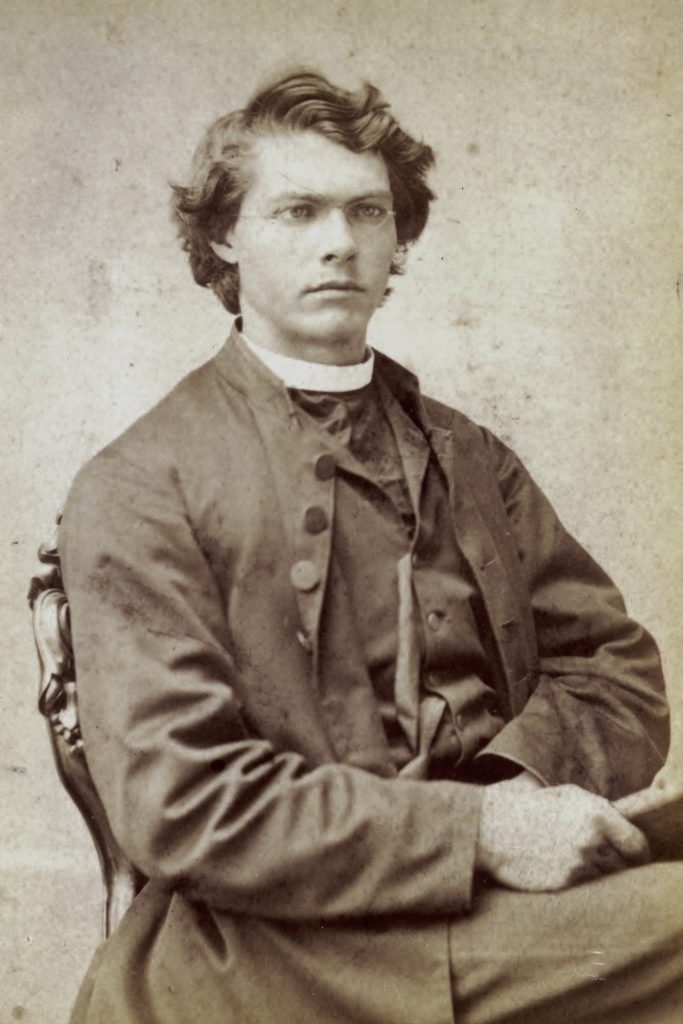
This photo provided by the Presentation Sisters Archives in October 2023 shows an undated portrait of the Rev. Robert W. Haire, a socialist Catholic priest and influential direct democracy advocate who lived in Aberdeen, South Dakota, in the late 1800s and early 1900s.
Thanks to a rabble-rousing, socialist priest, itÄ¢¹½ÊÓƵ a milestone year for direct democracy in the U.S. and not just because Ohio voters are circumventing their Republican-controlled legislature to decide for themselves if they have constitutional abortion rights.
The practice of citizen-originated ballot measures began 125 years ago when South Dakota became the first in the nation to enact a statewide initiative and referendum process. More states followed, and the movement giving voters lawmaking powers grew far bigger than the Rev. Robert W. HaireÄ¢¹½ÊÓƵ spirited advocacy for it.
The pioneering Catholic priest is an obscure historical figure today. But some still invoke his name in their fight to preserve voters’ ballot measure rights. Others carry on with the advocating, educating and ministering that Haire set into motion — whether they know it or not.
South Dakotans still cherish being able to vote on their stateÄ¢¹½ÊÓƵ laws and constitution — and thatÄ¢¹½ÊÓƵ HaireÄ¢¹½ÊÓƵ legacy, said Cory Heidelberger, who has led ballot-question campaigns and legally challenged Republican efforts to weaken the process. Nearly 75% of South Dakotans called citizen ballot initiatives critical to the democratic process in a 2021 statewide poll, and almost 62% opposed making it harder.
“It represents for me the fundamental idea of the equal dignity of every human being,� said Heidelberger, who blogs about South Dakota politics.
The people, he said, deserve lawmaking power too: “They’re no better, but they’re no worse than any one legislator sitting in Pierre making a decision.�
South DakotaÄ¢¹½ÊÓƵ initiative and referendum came about during an agrarian populist movement. The political conditions were brief but just right in 1897 for lawmakers to approve it; voters passed it the following year. In a memoir compiled by the state Socialist Party, Haire is credited with writing the amendment itself. (Constitutional amendments by initiative were enacted in 1972.)
Today, residents in about half of U.S. states can put issues like Medicaid expansion and marijuana use to a public vote. Recently itÄ¢¹½ÊÓƵ Republican lawmakers who have tried to erode the process. Democrats and left-leaning groups locked out of power in Republican-led states are using ballot measures to force votes on popular issues.
In one of 2023Ä¢¹½ÊÓƵ most-watched examples, early voting is underway in Ohio and expected to draw heavier-than-normal turnout. This summer, Ohioans knocked down a Republican-led plan to increase signature requirements and the raise the approval threshold for constitutional amendments, including the abortion one, from 50% to 60%.
“ThatÄ¢¹½ÊÓƵ just a version of what we’ve seen from the very beginning, that legislators have always tried to cut it back,â€� said John Matsusaka, director of the University of Southern CaliforniaÄ¢¹½ÊÓƵ Initiative and Referendum Institute.
The politics of using citizen ballot measures are situational. He pointed to Republicans in California and Democrats in Ohio.
“ItÄ¢¹½ÊÓƵ the guys who are out of power that can’t get the time of day from the legislature that think, ‘Well, maybe this is my only recourse?'â€� Matsusaka said.
In “Citizen Lawmakers: The Ballot Initiative Revolution,â€� David Schmidt describes the complex U.S. origins, naming Haire as one of the countryÄ¢¹½ÊÓƵ first two reformers to propose the idea.
This makes Haire, who was suspicious of politicians, the father of a critically important “escape valve,� said Drey Samuelson, Democrat and former chief of staff for retired U.S. Sen. Tim Johnson of South Dakota.
“If you can’t pass them through the legislature in states that don’t have ballot initiatives, you’re basically done,� said Samuelson, who is helping lead a ballot-initiative campaign for open primaries in South Dakota. He criticized Republicans for trying to weaken the process — something he expects will continue.
Initially, Haire called for more radical change: Abolishing the stateÄ¢¹½ÊÓƵ representative legislature and letting the electorate make the laws instead. He argued for it in the Aug. 8, 1891, issue of The Dakota Ruralist: “There would be no humbugging in committees as now, no secret sculduggery, and passing bills at the last hour of the legislature.â€�
It is hard to parse whether HaireÄ¢¹½ÊÓƵ faith or political views motivated him, said Janine Giordano Drake, an Indiana University history professor. She said there were so many socialist clergy in the 1890s that Christian Socialist Fellowship formed with loose ties to the Socialist Party.
The Catholic Church opposed socialism, she said, but celebrated social democracy and universal voting rights.
Republican State Sen. Michael Rohl, whose district includes Brown County where Haire spent much of his ministry, told The Associated Press that ballot initiatives are a “necessary evil.� They are susceptible to special interests and most voters focus on the overall issue instead of the proposed details, but they can be a check on lawmakers and party politics, he said.
Rohl, who thinks the benefits outweigh the risks, said he supports improvements but not restrictions. His main concern with the process is government attempts to claw back the right, which would make it out of reach for the average South Dakotan but not deep-pocketed special interests.
“You don’t have to support most ballot measures to support the process,� he said. “The ability to vote ‘No’ is just as important and powerful as the ability to vote ‘Yes.'�
As for HaireÄ¢¹½ÊÓƵ politics, Rohl didn’t mince words: “It may have been originally created by the work of a socialist priest, but even a blind squirrel will find an acorn every now and then.â€�
HaireÄ¢¹½ÊÓƵ views have put him on the outs before. The well-educated, former Presbyterian from Michigan fought hard for what he believed to be right, including direct democracy, education, labor rights, womenÄ¢¹½ÊÓƵ suffrage, helping the poor and temperance.
“He loved a square-toed opponent as well as an adherent, seeing the man above the difference of honest thought,� declared the Aberdeen News after his March 1916 death.
His prolific advocacy filled speeches and newsprint, but his staunch alcohol opposition led his bishop to remove him from the Aberdeen parish he founded.
Sister Kathleen Bierne also advocates for issues she believes are right, but took a different approach than Haire, who invited her Catholic community, the Presentation Sisters, to set up a school in Aberdeen in 1886. He later became chaplain for them and their hospital.
Christian missionaries built much of the countryÄ¢¹½ÊÓƵ education and healthcare infrastructure, said Drake, the historian.
“It was the people who ran those missions organization that were the most interested in advocating for the poor,â€� Drake said. “Where did we get democracy in this country? ItÄ¢¹½ÊÓƵ often the people who work among the poor.â€�
In 2016, Bierne became a lobbyist, a role that relied more on building relationships with state lawmakers than breaking them to effectively advocate for healthcare, education, housing, immigration and other issues in line with the Presentation Sisters’ historic mission.
“Some of those have become much more divisive because of the lack of balance in our own legislature,â€� she said. “We’ve had to walk a much more careful route. … We would probably not get by with Father HaireÄ¢¹½ÊÓƵ way of dealing with life right now.â€�
Even still, he was revered for living out Jesus’ teachings, she said, noting a remembrance of Haire from Socialist Party leader, Eugene Debs:
“He sought out the sorrowing and suffering, spent all his time in ministering to them and loved them with all his great heart.�
Earlier this year, lawmakers considered adding more signature requirements for constitutional amendments by initiative. It didn’t pass, but Republican sponsor Rep. Liz May argued in committee, “Shouldn’t us changing our constitution be a little harder?�
Businessman Tom Heinz, an independent also with the open primaries campaign, testified against it in writing. Heinz, who has relatives buried in the same cemetery as Haire, wanted legislators to know the priestÄ¢¹½ÊÓƵ name and how South Dakota led the way:
“There is a famous saying in our country: ‘If it ain’t broke, don’t fix it!’ Well, the initiative process in our state isn’t broken.�
Associated Press religion coverage receives support through the APÄ¢¹½ÊÓƵ collaboration with The Conversation US, with funding from Lilly Endowment Inc. The AP is solely responsible for this content.