

Photo Essay: A surreal view of a nation unable to move on the cycle of gun violence.
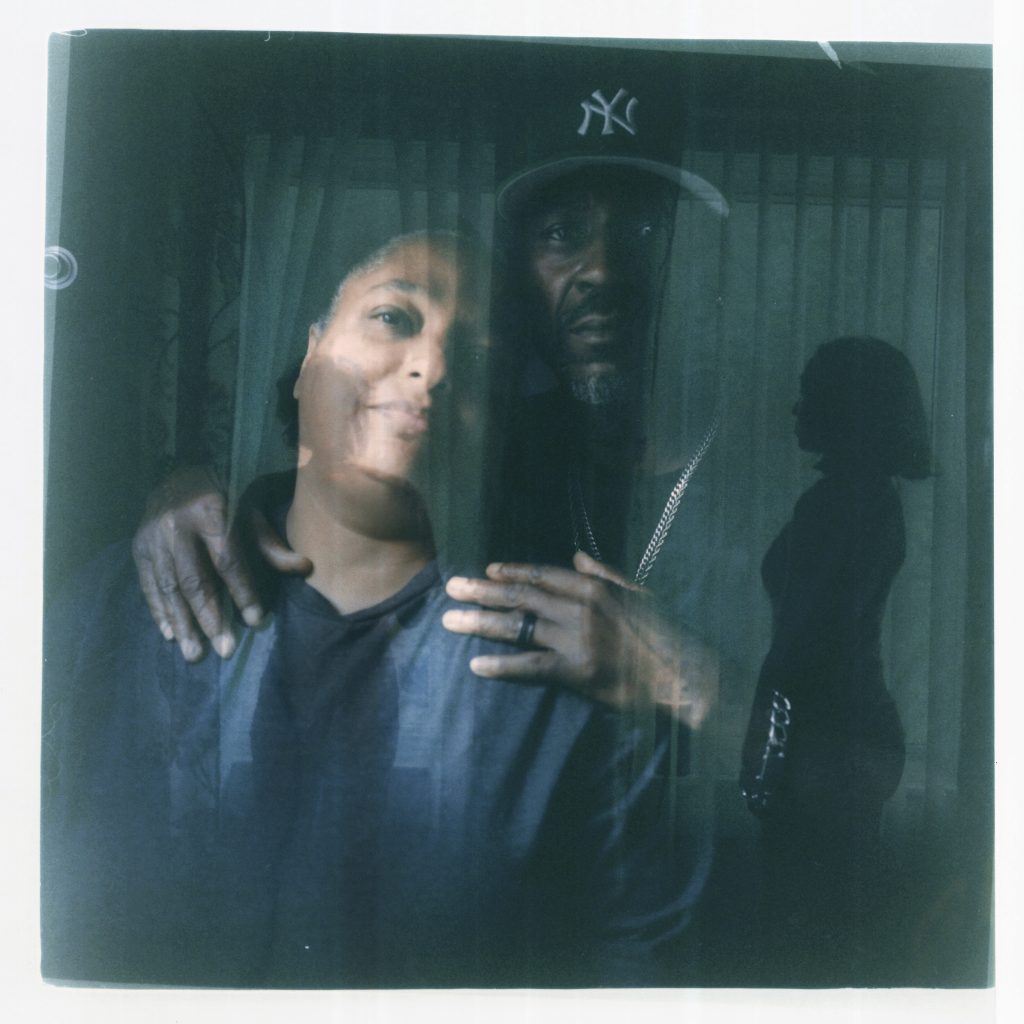
In this double exposure darkroom print made from two film negatives, a portrait of Krista Gwynn, left, and Navada, right, is layered with a portrait of their daughters, Navada, 15, left, and Victoria, 21, as they look out of the window of their home in Louisville, Ky., Tuesday, Aug. 29, 2023. Krista recalls that after their 19-year-old son, Christian, was killed in a drive-by shooting four blocks from home in 2019, her husband blamed himself for not doing more to protect him. Just two years later, Victoria, then also 19, was shot and injured at a park. Now the Gwynns have pulled their youngest child, Navada, out of school, home schooling to keep her safe. The two girls stay close to their parents and Victoria gets suspicious when cars slow down past their house. When the girls go out, Gwynn's husband insists on driving them, even to a friend's house blocks away. He carries a pistol for protection, pointing out that people, not their guns, are responsible for committing violence. "Who wants to live with the fact that when I take my child to the park I have to watch every person who drives through?" Krista Gwynn says. "I have to listen to every conversation on the other side of the park that turns into an argument, because bullets don't have a name."
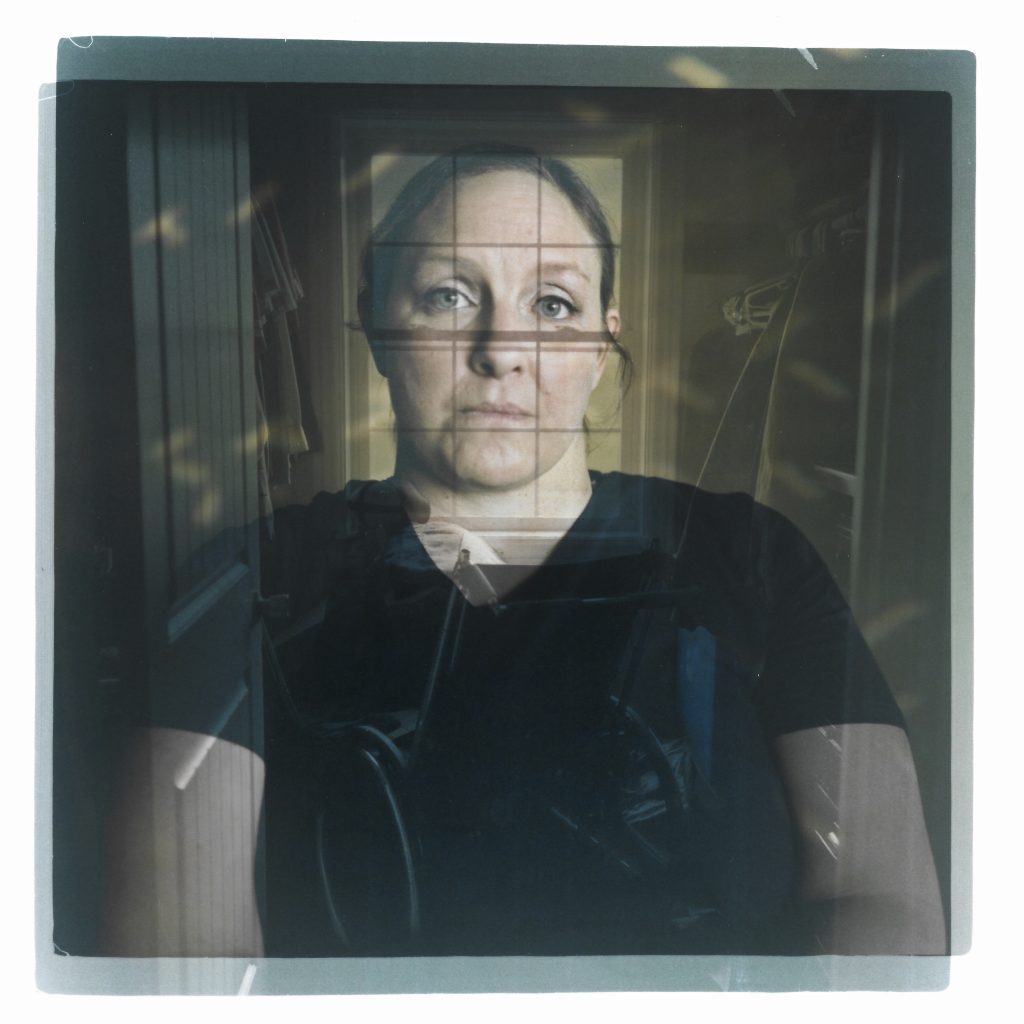
In this double exposure darkroom print made from two film negatives, a portrait of Missy Jenkins Smith, a survivor of a school shooting in 1997 which left her paralyzed, is layered with a photo of her wheelchair she uses for showering as it sits in her closet at her home in Kirksey, Ky., Monday, June 5, 2023. Even after two and a half decades, Jenkins Smith still recalls the moment in exacting detail. That night, she and husband, Josh, had taken their son to Chuck E. Cheese to celebrate his third birthday. On the drive home, he asked, "Mom, why are you in a wheelchair?" Jenkins Smith never had a choice about whether to keep what had happened to her hidden. Paralyzed from the chest down when one of the shooter's bullets severed her spinal cord, she had been honest with herself and others about the injury and the circumstances. In a way, talking about it was like therapy, she says. But that was very different from explaining it to a small child. Her child.
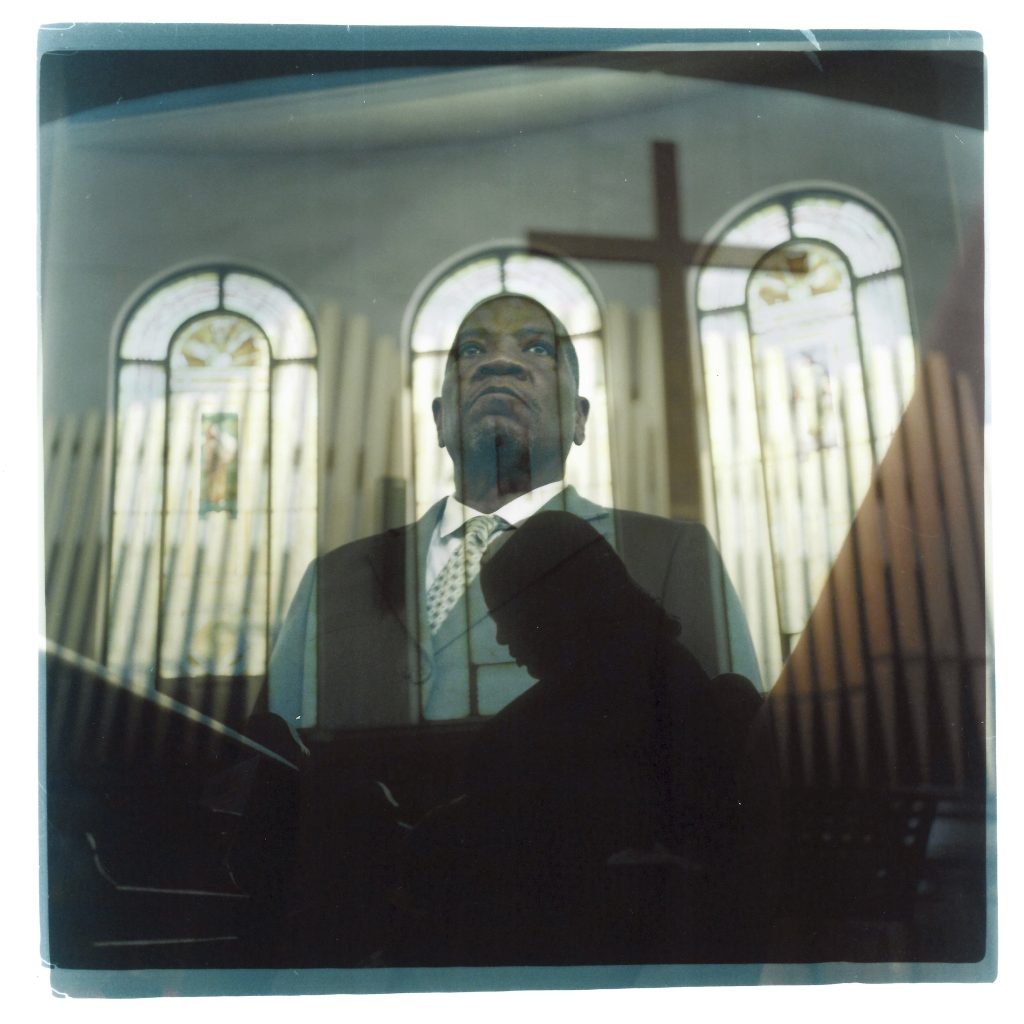
In this double exposure darkroom print made from two film negatives, a portrait of Rev. Jimmie Hardaway Jr. looking out from the altar of Trinity Baptist church is layered with a photo of a parishioner bowing her head in prayer during a service Sunday, Aug. 20, 2023, in Niagara Falls, N.Y. The decision Hardaway has made to carry a pistol on him during church services is a distinctly American one. And it spotlights rising friction between the assertion of two very American principles: the right to worship and the right to own guns. "I'm really not free if I have to sit here and worry about threats to a congregation," says Hardaway, one of several religious leaders who sued New York officials last fall after lawmakers restricted guns in houses of worship. He notes the similarities between Trinity's worshippers and those at a historic Black church in Charleston S.C., where a mass shooter killed nine people in 2015. "I'm really not free," says Hardaway, whose city struggles with one of the state's highest rates of violent crime, "if I know that there's someone who can do harm and I can't do anything to protect them."
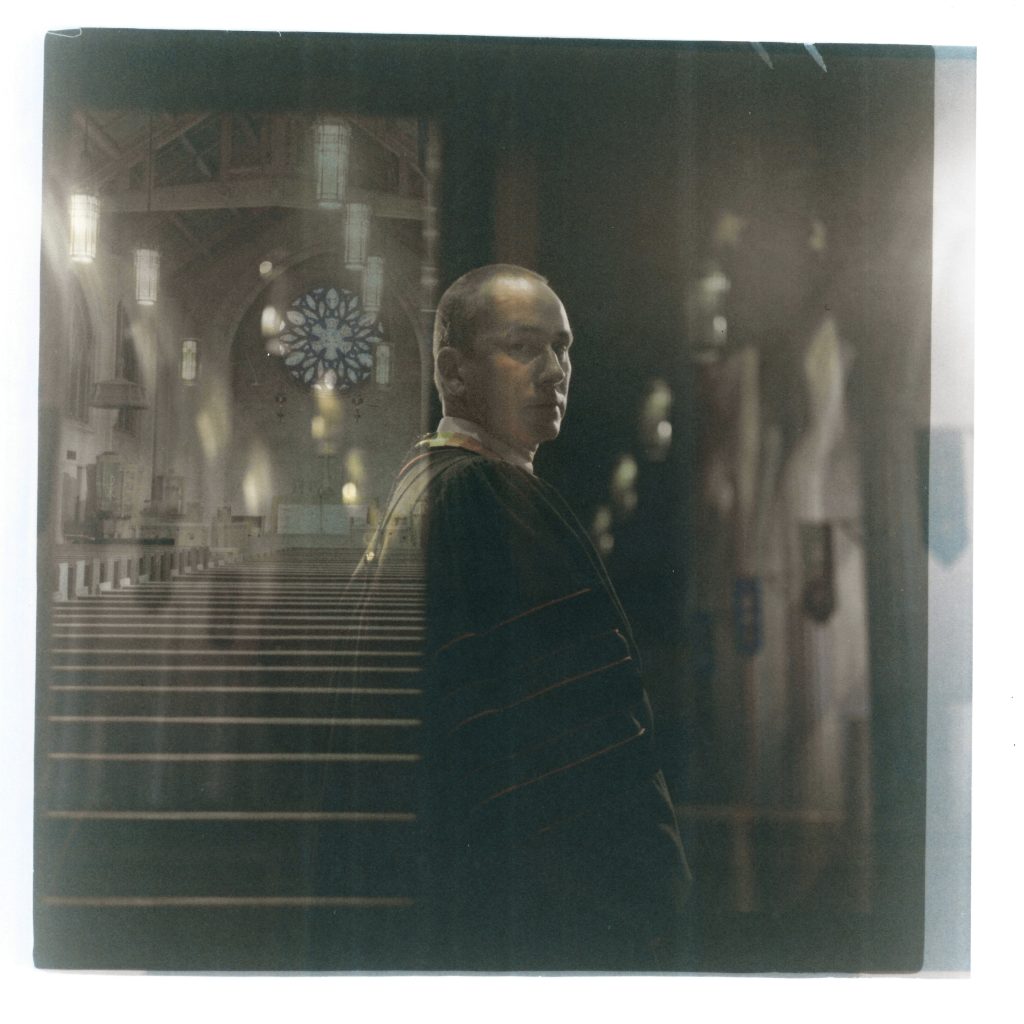
In this double exposure darkroom print made from two film negatives, a portrait of Rev. Stephen Cady is layered with a photo of the sanctuary of Asbury First United Methodist Church where he preaches, Monday, Aug. 21, 2023, in Rochester, N.Y. His church, in a city where 63 people were killed in shootings last year, presides over a leafy neighborhood of carefully kept homes largely bypassed by the violence. But for a congregation unsettled by the increase in mass shootings and the deaths across town that garner far less attention, the way forward would only be darkened by adding even more guns, Cady says. To Cody, the right to bear arms – and the proliferation of 400 million guns and thousands of shootings it has enabled – undermines the freedom to worship in peace. "As a people of faith our adherence is not to the Second Amendment. It's to the Second Commandment, which is 'Love your neighbor as yourself," he says. "And more guns do not help you love your neighbor."
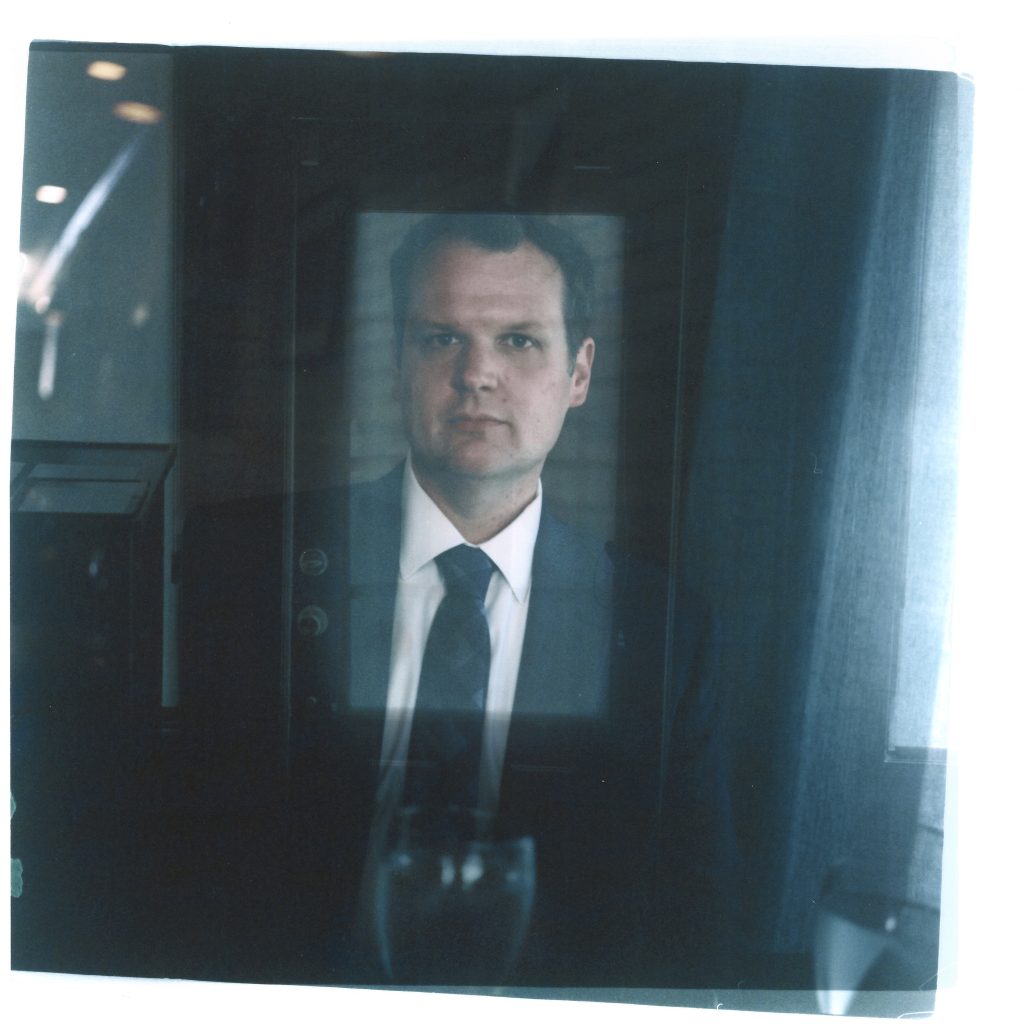
In this double exposure darkroom print made from two film negatives, a portrait of Hollan Holm seated in a restaurant is layered with a photo of the front door he's facing while out to dinner with his family in Louisville, Ky., Saturday, June 3, 2023. Holm was shot but survived one of the first school mass shootings to shatter the American consciousness a generation ago. Whether or not he wanted to acknowledge the trauma that stemmed from the shooting, though, it remained present. In restaurants, Hollan made sure to get a chair facing the door, intent on watching for approaching threats. When an unfamiliar man wearing a trench coat and carrying a backpack entered church one Sunday, Hollan tensed up, so alarmed by what the visitor might do that he and his wife had to leave. In a country that has weathered a record number of mass killings this year and a surge in youth deaths by firearms, trying to reassure children about the shootings that have become all too common in American life could challenge any parent. It can be even harder for the children of Columbine and a series of school shootings that foreshadowed it, now that they have children of their own. "I mean, I can't really go into crowds of people and not be concerned about maybe somebody's going to do something with a gun … and I don't want them to have to live like that," Holm says of his children. "I just want them to be kids."
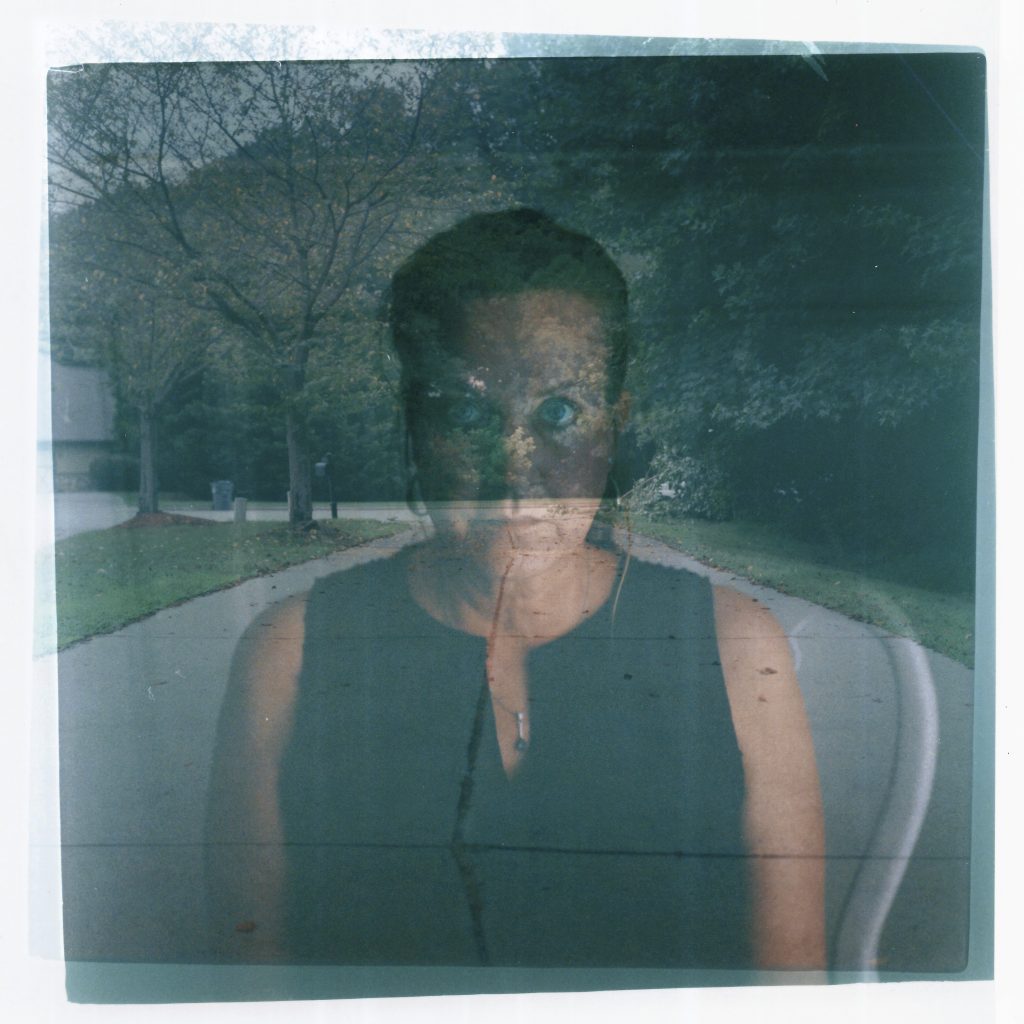
In this double exposure darkroom print made from two film negatives, a portrait of Janet Paulsen is layered with a photo of the driveway where her estranged husband shot her six times in 2015, before killing himself at the home where she still lives in Acworth, Ga., Tuesday, Aug. 8, 2023. As Paulsen prepared to leave her husband, who had become increasingly unstable over their 15-year marriage, she snuck down to his gun safes one night while he slept to try to change the combination locks. "When I went to get my protection order, I brought pictures of all of those firearms with me." When he violated that protection order, a court ordered deputies to confiscate his guns who removed about 70 firearms from their home. The deputies, though, left a handgun in a pickup truck parked in the driveway, unsure if the order covered his vehicle. Five days later, Scott Bland ambushed Paulsen in the garage as she stopped home with groceries. He used the 9 mm semiautomatic pistol to shoot her six times, as she tried to flee, before killing himself. "It took me five years to get up the courage to divorce him, because I knew I would pay a price. And you know what happened when I did? He shot me," said Paulsen, 53, a former property manager and endurance athlete who was left partially paralyzed in the shooting. Her care has since cost about $2.5 million, much of it born by society at large through health insurance payments. "Every step of the way it seemed like his rights were more important … than mine and my children's," she said, her normally stoic voice breaking.
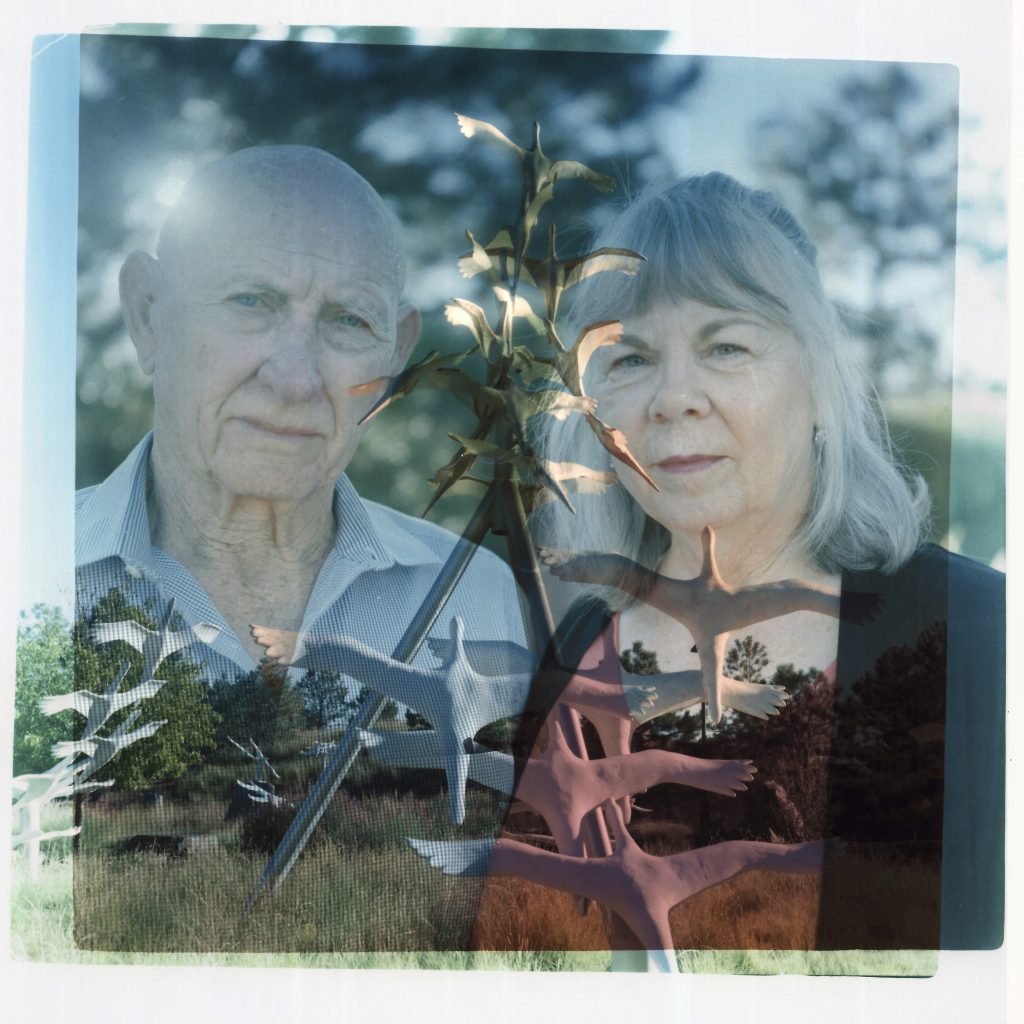
In this double exposure darkroom print made from two film negatives, a portrait of Lonnie, left, and Sandy Phillips from Tuesday, Sept. 5, 2023, is layered with a photo of the memorial to the victims of the 2012 mass shooting at a movie theater in which Jessica Ghawi, Sandy's daughter and Lonnie's stepdaughter, was killed in Aurora, Colo. Suffering through their own personal loss after the mass shooting, the couple set out to help other parents like them, traveling to shooting sites around the country. The trip continued for a decade. They'd found themselves in Newtown or Parkland or Uvalde or whatever fresh hell had just been put on the map. They had lessons to share, advice that could only be amassed by someone who'd lived through the same. So, Sandy would clasp the hands of the mourners and ask about the ones they'd been robbed of and mouth words that could surprise her as much as those who listened. "You will," she said confidently, "find joy again." Sometimes, Jessi visits her mother in her dreams, usually appearing as a toddler. When she awakes, she'll squeeze her eyes closed and try and coax the dream to return. She begs for more. "Let me feel her touch me," she says. "Let me feel her hug me. Let me feel her kiss me on the cheek again. Let me hear her laugh again. Let me hear her high heels coming up the walkway." Let me, she wishes, be happy.
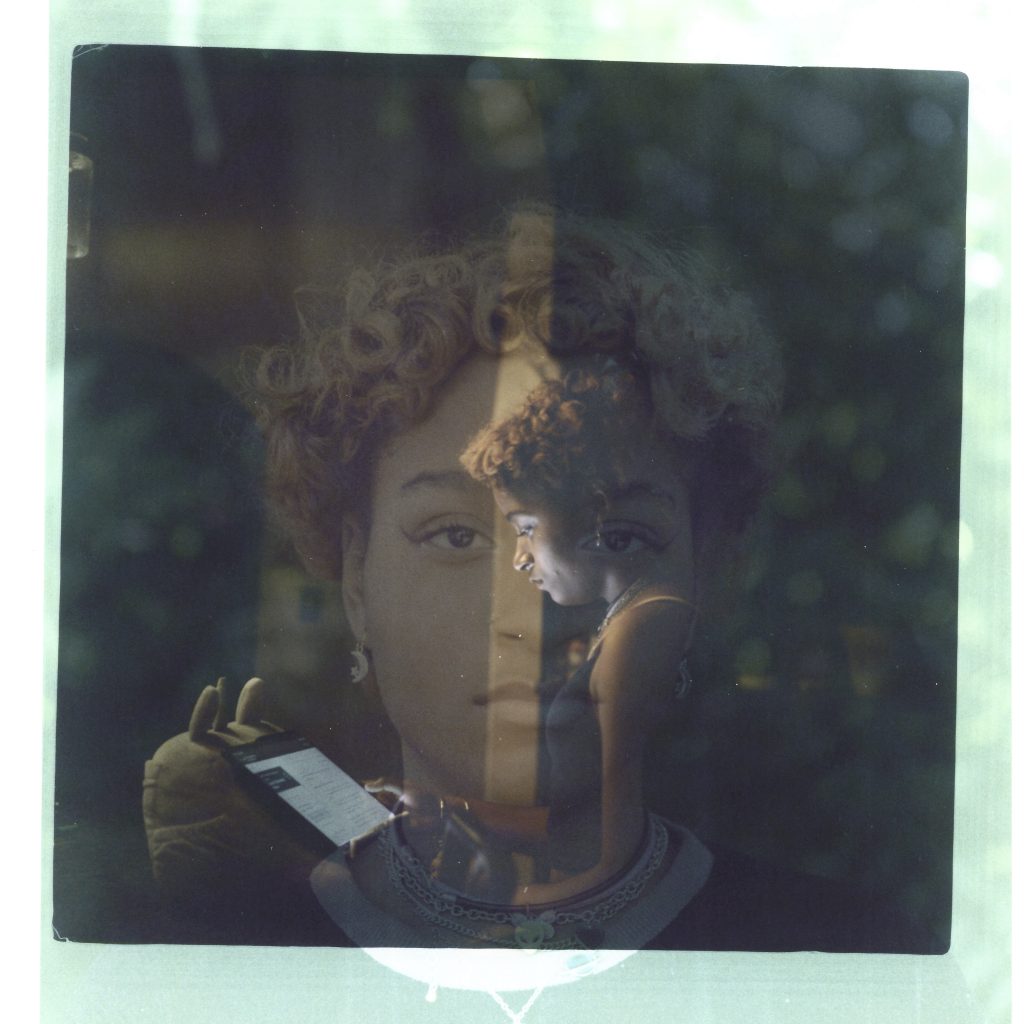
In this double exposure darkroom print made from two film negatives, a portrait of Navada Gwynn, 15, is layered with a photo of her working on a tablet while she's homeschooled at her house, Tuesday, Aug. 29, 2023, in Louisville, Ky. Gwynn's older brother, Christian, was shot and killed in a 2019 drive-by shooting blocks from their house. Two years later, her sister, Victoria was shot and injured while sitting in a park but survived. Her parents have now pulled Navada out of school to keep her safe. She stays close to parents and rarely goes out without them. "I feel better at home. I have anxiety, kind of because what happened to them." Navada said about her siblings. She prefers being close to her family rather than worry about her safety at school. And when her anxiety kicks in, she'll listen to music, or color or play with her dog, Honey. "She really feels being with us is the safest place to be," said her mother, Krista. "She always wants to be where one of us is."
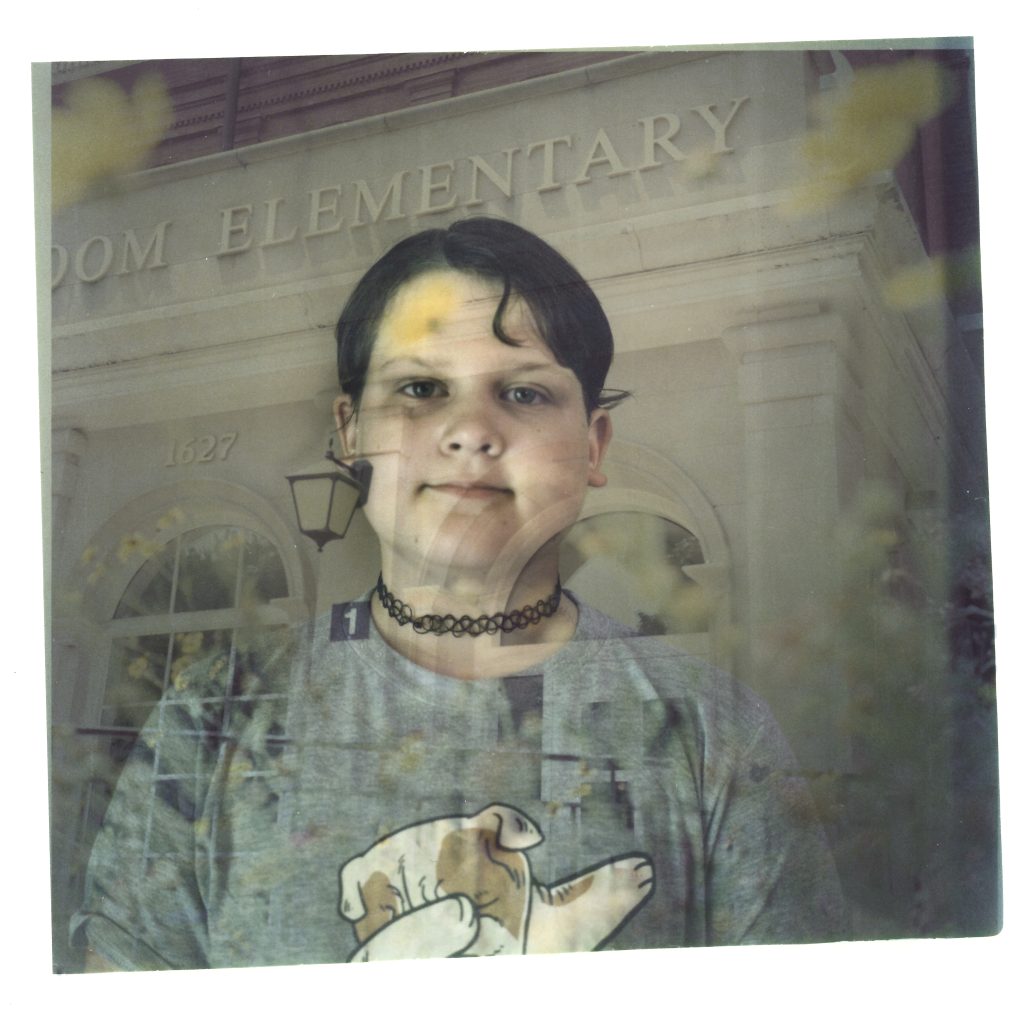
In this double exposure darkroom print made from two film negatives, a portrait of Sylvia Holm, 11, is layered with a photo of the elementary school she just graduated from in Louisville, Ky., Sunday, June 4, 2023. Holm's father was shot and survived one of the first school mass shootings to shatter the American consciousness a generation ago. When Sylvia started kindergarten, at the dinner table that fall, she announced that her class had learned a new drill. First her teacher locked the classroom door and turned off all the lights. Then she instructed the children to stay very quiet, "so the bad person wouldn't find them." When she turned seven, Sylvia heard her father's story for the first time during his speech on the steps of the federal courthouse in Louisville. She looked stricken, her eyes wide with fear. When Sylvia learned how close in age the children in Uvalde were to the friends around her, she started crying. Still, Sylvia says, if today's children are going to find ways to stop school shootings when they grow up, it was better to know. "When I was her age I would think, oh, the grownups are going to solve this. And here's she's telling us we're going to solve the problem," Kate says. But the expression on Sylvia's face remains stone serious. "Because the adults haven't done enough," she says.
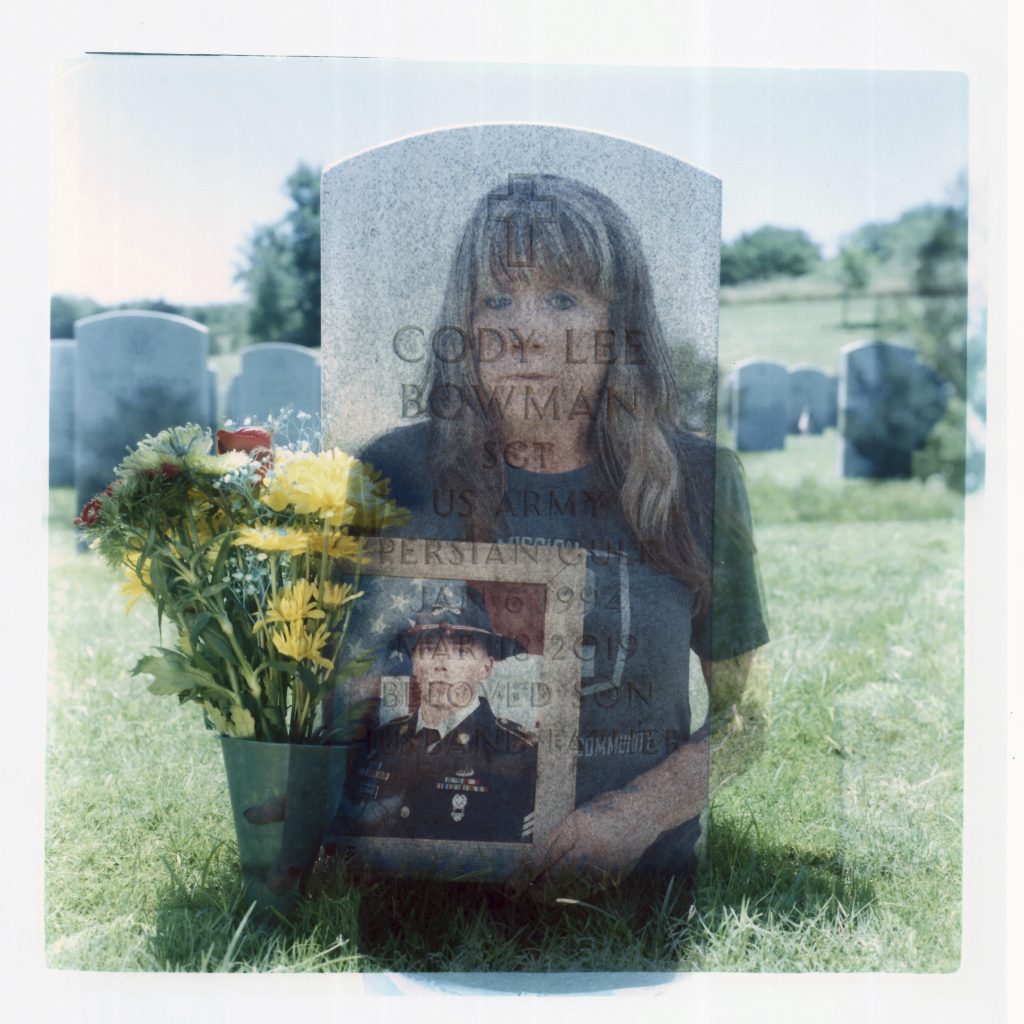
In this double exposure darkroom print made from two film negatives, a portrait of Barbie Rohde holding a photo of her son, Army Sgt. Cody Bowman, is layered with a photo of his tombstone at the Dallas-Fort Worth National Cemetery, Sunday, June 11, 2023, in Dallas. For decades, discussions of suicide prevention skirted fraught questions about firearms; the Army has punted implementing measures that might be controversial. But a growing movement has taken hold, among researchers, the Veterans Administration, ordinary people like Rohde: if this country wants to get serious about addressing an epidemic of suicide, it must find a way to honor veterans and active-duty military personnel, respect their rights to own a gun, but keep it out of their hands on their darkest days. She had been worried about her son. Most of his hand had been blown off in a training accident. He told his mom he didn't know if he could continue his military career, and all he'd ever wanted to be was a soldier. He asked for his guns, which she had been holding. She'd hesitated. But they were his, and this is Texas. Then the military officers said: "Your son Sgt. Cody Bowman died of a self-inflicted gunshot wound." "And I really don't remember the rest of the day," Rohde said. "I just sat on the floor and screamed." She didn't eat for six days. She decided she wanted to be with her son. "I'm glad I didn't have a gun. Because if I would have had a gun, I believe I'd have finished the job. I need to be here, I still have a lot to do," she said. "And I wish Cody wouldn't have had a gun."
There is no straightforward path forward after a life is torn apart by a shooting. There is no simple solution to AmericaÄ¢¹½ÊÓƵ unique problem of relentless gun violence. On both counts, the answer is full of nuance and complication.
This series of film photographs is similarly layered, each image a combination of two separate clicks of the shutter, carefully double-exposed by hand in the pitch-black of a traditional darkroom. One picture is placed atop the other and fused to create a single image.
Each captures the twin realities of the subjects in the way only a double exposure photograph could, creating dueling focal points to which the eye cycles back and forth
ItÄ¢¹½ÊÓƵ a surreal view of a nation unable to move on from its own cycle of gun violence.
Krista and Navada Gwynn are seen with silhouettes of their daughters, Navada and Victoria. KristaÄ¢¹½ÊÓƵ son Christian was killed in a drive-by shooting in Louisville, Ky., in 2019; Victoria survived a shooting two years later. The parents are consumed with worry about the safety of their surviving children.
Missy Jenkins Smith is layered with a photo of her wheelchair. She survived a school shooting in 1997 in Paducah, Ky., that left her paralyzed from the chest down.
The Rev. Jimmie Hardaway Jr. looks out from the altar of his church in Niagara Falls, N.Y., as a congregant bows her head in prayer. After watching worshippers elsewhere be targeted, he now carries a pistol to services.
The Rev. Stephen Cady, with the sanctuary of the church where he preaches in Rochester, N.Y. He rejects the proliferation of guns and says people of faith should look to the Second Commandment, not the Second Amendment.
Hollan Holm is seated in a restaurant as his eyes are trained on the eateryÄ¢¹½ÊÓƵ door. He survived a school shooting a generation ago in Paducah, Ky., but the scars remain and he fears violence could visit him again.
Janet Paulsen is seen with the driveway at her home, where her estranged husband shot her six times in Acworth, Ga. After he violated a protective order, deputies confiscated more than 70 guns, but left one in his pickup truck. He used it to ambush her.
Lonnie and Sandy Phillips are seen at a memorial for victims of a shooting at a movie theater that killed her daughter in Aurora, Colo. The loss spurred a decade-long trip by the couple to other mass shooting sites.
Navada Gwynn in two images: standing for a portrait, and working on her tablet at her Louisville, Ky., home. After her older brother was fatally shot and her sister survived a shooting, her parents pulled her out of school to keep her safe. The violence has left Navada shaken and anxious.
Sylvia Holm with her elementary school in Louisville, Ky. Her father survived one of AmericaÄ¢¹½ÊÓƵ first mass shootings in a school and shooting drills have been a fact of life in her own childhood. She believes the burden falls on her generation to work to solve the countryÄ¢¹½ÊÓƵ gun problem.
Barbie Rohde in Dallas at the gravesite of her son, who died by suicide. He was an Army sergeant who had lost much of his hand in a training accident. All he had ever wanted to be was a soldier.