

Dewey decimal what? Local school districts transition libraries into digital media centers

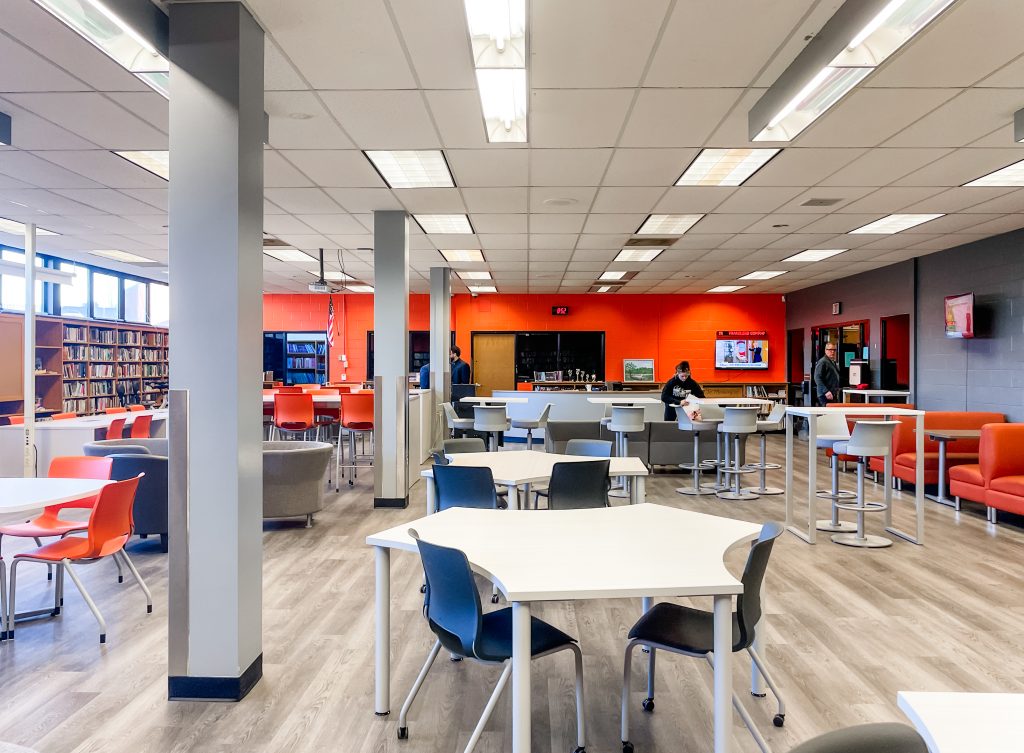
The space was bright and modern, filled with funky modular furniture and flat screen TVs, but it was the exercise bikes, two pieces of sleek gym equipment set against a stack of bookshelves, that stuck out.
“ItÄ¢¹½ÊÓƵ like a desk,â€� said Brandon Robinson, superintendent at Jefferson-Morgan School District, gesturing to the FitDesk. “You can put books on it.â€�
Do teens actually ride the stationary bikes inside the Learning Commons, a large space lined with books, an homage to its former life as the schoolÄ¢¹½ÊÓƵ library?
Wesley Loring, the high school principal, nodded enthusiastically.
“Kids, during lunchtime, will jump on there,� he said.
Jefferson-Morgan began renovating its library, affectionately called The LC, before the pandemic, and this is the first year the space is being fully utilized as intended: an open area in which students study, socialize and grow. The transition from traditional library to a digital media center with flat screen TVs and stock market tickers is part of a nationwide trend to modernize education and make learning more accessible.
 Katherine Mansfield/Observer-Reporter
Modular furniture is trending at local schools, including Jefferson-Morgan, where tables can fit together like puzzle pieces for larger gatherings, like debates or small speaker events. The district holds school board meetings inside the updated, multipurpose Learning Commons.
“We get a chance to change what education looks like, and what educational spaces look like. We’ve had a focus on really improving our educational spaces, making them look more modern. Lots of times kids, they’re coming here, they play chess, or they play different games. They want these kinds of spaces,� Robinson said.
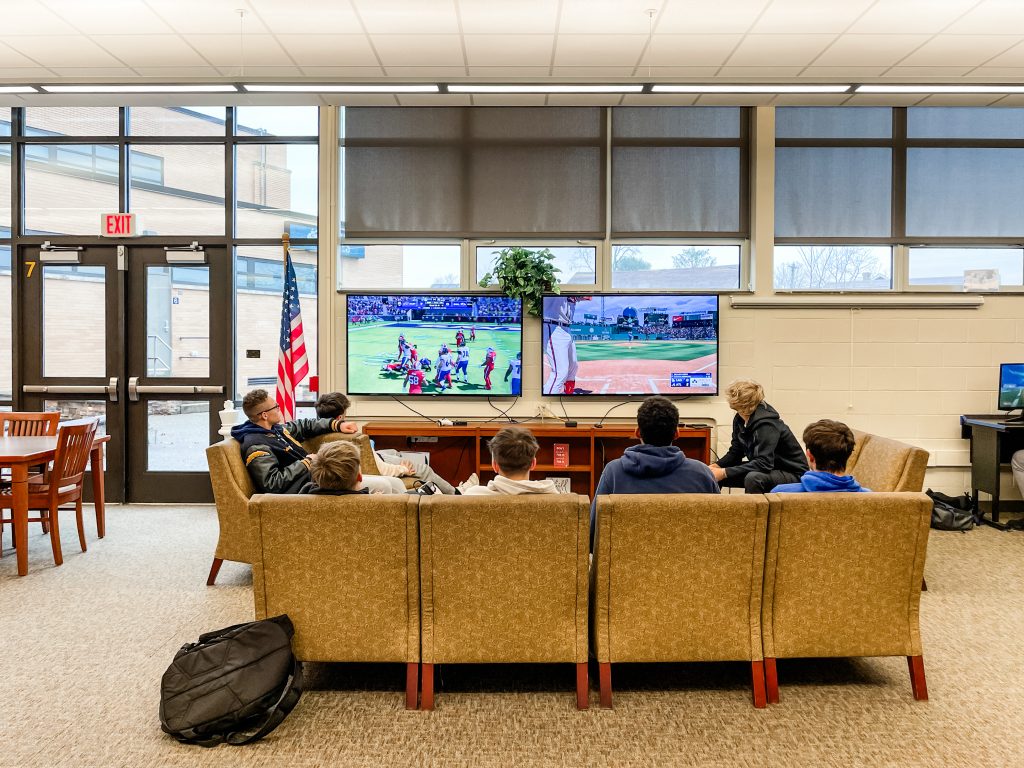
The space serves as a larger classroom, when teachers need one. ItÄ¢¹½ÊÓƵ also a place where students come to take virtual classes, including collegiate courses, and study. Students socialize and play games in the LC; clubs host small speaker events; the district holds school board meetings; and some even still check out books when social studies teacher Donald Cochran, also a librarian, mans the circulation desk.
“We still have books to be checked out, if they want, just because we don’t have a local library,� Robinson said.
“We have inner-loan, too, so if anybody wants anything from the other libraries, they can get it shopped here,� Cochran added. “You can get it anywhere in Pennsylvania.�
Robinson said the Learning Commons allows students more freedom, and he has witnessed the importance of the space in academic and personal development and growth post-COVID. Since renovating the learning center, the former library has gone from welcoming 20 students a day to more than 20 per class period, Robinson said.
“We never close the Learning Commons. … You need a mental health break? Come down here, have your headphones in, take 10 to 15 minutes before you go to your next class,â€� Robinson said. “We’re just trying to make more of, for our high school especially, of a college-style feel where itÄ¢¹½ÊÓƵ not, you’re in this class for 40 minutes, to go to the next class for 40 minutes, and itÄ¢¹½ÊÓƵ just that rat race.â€�
At nearby Southeastern Greene School District, the high school library retains its bookish charm, but superintendent Dr. Richard Pekar said there are perks – literally – to visiting the space.
“We have a coffee shop in the mornings, in the library. We do get 30 or 40 kids. We’ve got people hanging out in there, checking out books during that time,� Pekar said.
Recently, the library updated its books and technology offerings to appeal to a new generation of high schoolers.
“I think thereÄ¢¹½ÊÓƵ still value in kids checking out books,â€� Pekar said, but, “the convenience of the online books is fantastic.â€�
SGSDÄ¢¹½ÊÓƵ library is still used for research and as a classroom teachers bring students to when they need to spread out to work on larger projects. Pekar hopes to slowly update the space, though, and make it more accessible to students.
“TodayÄ¢¹½ÊÓƵ libraries have changed so much. ‘Media center,’ really, is even an old term. Libraries have become more of a college-type student hall, where schools are trying to attract kids to come in … and incorporating different forms of technology, and trying to draw kids in to utilize those spaces,â€� he said. “We have talked about trying to turn it into a hub of their school.â€�
A hub like the Carmichaels Area Junior/Senior High School Library, one of the first local districts to transition from library to student union, which Pekar has toured.
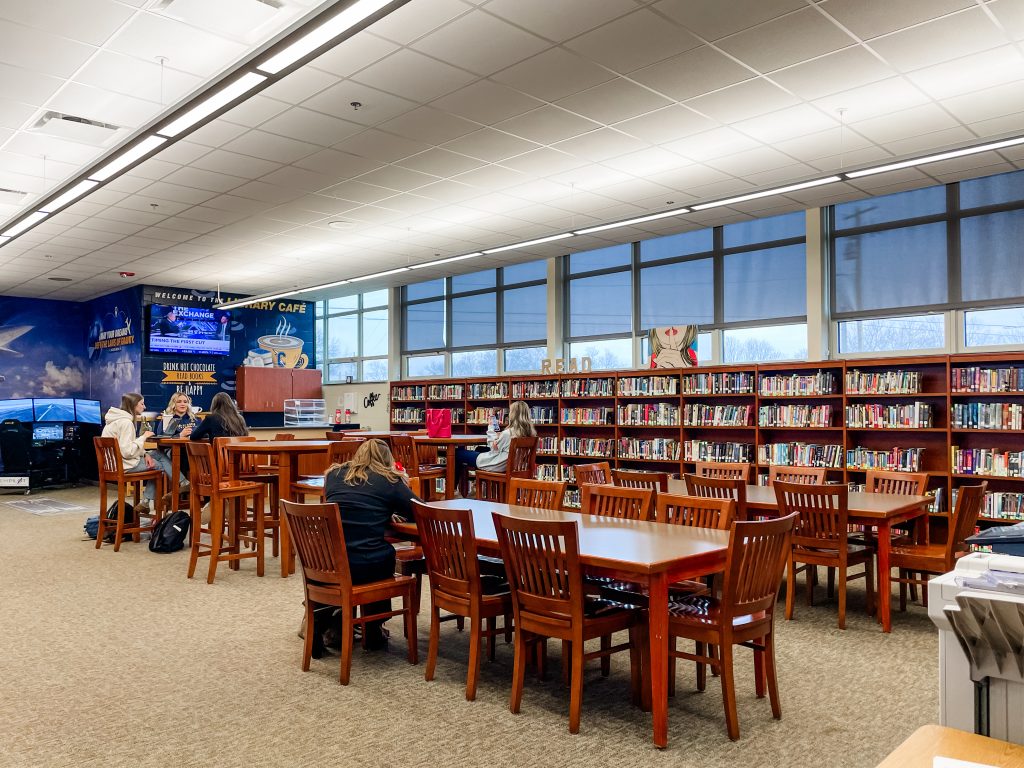
About five years ago, Carmichaels turned its library into an educational hangout complete with an esports arena and coffee shop.
“You don’t have a choice,â€� said Cassie Menhart, librarian/media specialist and esports coach, of the upgrade. “If the library doesn’t evolve with the, I don’t know if itÄ¢¹½ÊÓƵ the wants or needs of the students, but I think thatÄ¢¹½ÊÓƵ why libraries have shut down. They’re not offering something, or enough, to keep the whole school interested.â€�
There are high top tables at the coffee shop, which sells freshly-baked chocolate chip cookies to fund MenhartÄ¢¹½ÊÓƵ book club and the districtÄ¢¹½ÊÓƵ esports team and a massage chair and gumball machine, utilized by entrepreneurship classes to teach passive income.
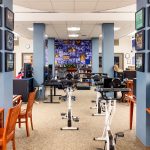
Menhart purchased three exercise bikes and treadmill with a grant, and students, usually middle schoolers, will often open a book or listen to an audiobook while using them, she said.
 Katherine Mansfield/Observer-Reporter
Exercise bikes and a treadmill are popular with younger students, who read or listen to audiobooks during the day. The equipment is situated near the CASD alumni entrepreneurs wall: those alum who visit MenhartÄ¢¹½ÊÓƵ entrepreneurship class and come bearing a t-shirt are featured on the Learning Center wall.
Students often play chess in the Learning Center, which also houses flight simulators, thanks to an alumni donation.
One can still check out a book from the Learning Center, and classes do meet there; itÄ¢¹½ÊÓƵ, essentially, a massive, multipurpose classroom and hang out center for students and teachers.
For Menhart, drawing students into the underutilized library was a goal as the district underwent junior/high school library renovations.
“ThereÄ¢¹½ÊÓƵ something in here for everyone. If itÄ¢¹½ÊÓƵ not books, it could be flying, it could be the stock market, it could be esports, it could be hanging out with your friends for lunch,â€� Menhart said. “When I was building this, I wanted it to feel like a student union, like when you go to college. I want this to be a place they want to come. And it is.â€�
While some local districts already offer a less conventional space in which students learn and socialize, others are just beginning their library transformations. Bethlehem-Center School District is working to secure grants to transform its junior/senior high school library into an inviting learning hub.
“We didn’t have a ton in our library that was being used, so we are hoping to be able to provide our students with more digital resources, so that they can tap into any number of reading materials, any subject that they could possibly want, through an online database. ThatÄ¢¹½ÊÓƵ the direction that we, as a society, are moving toward,â€� said Dr. Betsy D’Emidio, director of curriculum, instruction and student services. “Our hope is to create a digital learning center that will house STEM equipment, and it can be used for 21st century learning.â€�
D’Emidio and Superintendent Donald MacFann both oversaw a similar transition at East Allegheny School DIstrict. D’Emidio has secured grants from community organizations, and with that funding Bethlehem-Center will purchase 3D printers and a heat press, a vinyl cutter and a garment printer, a robotics kit and a hydroponic garden, and AR/VR goggles.
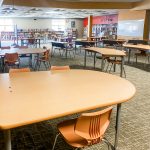
The district recently cleared out the former library and is planning a makeover, including new modular furniture, which can be configured several different ways to facilitate learning, before moving in the technology.
 Courtesy of Betsy D’Emidio
“Technology is just crazy, itÄ¢¹½ÊÓƵ exploding. ItÄ¢¹½ÊÓƵ strange, because we are preparing kids for jobs that don’t yet exist. What we have to do is prepare them with the basic knowledge they would need to be able to learn other skills,â€� D’Emidio said, noting Beth-Center worked with Carnegie Mellon University to determine what technology and programs will best support the districtÄ¢¹½ÊÓƵ students.
“We’re just trying to get up to speed so that when they graduate high school, they can step into a job in the 21st century workforce or they can move on for additional training in some sort of technology field.�