

Local brothers remain in ICE custody
Moshannon detainees stage hunger strike

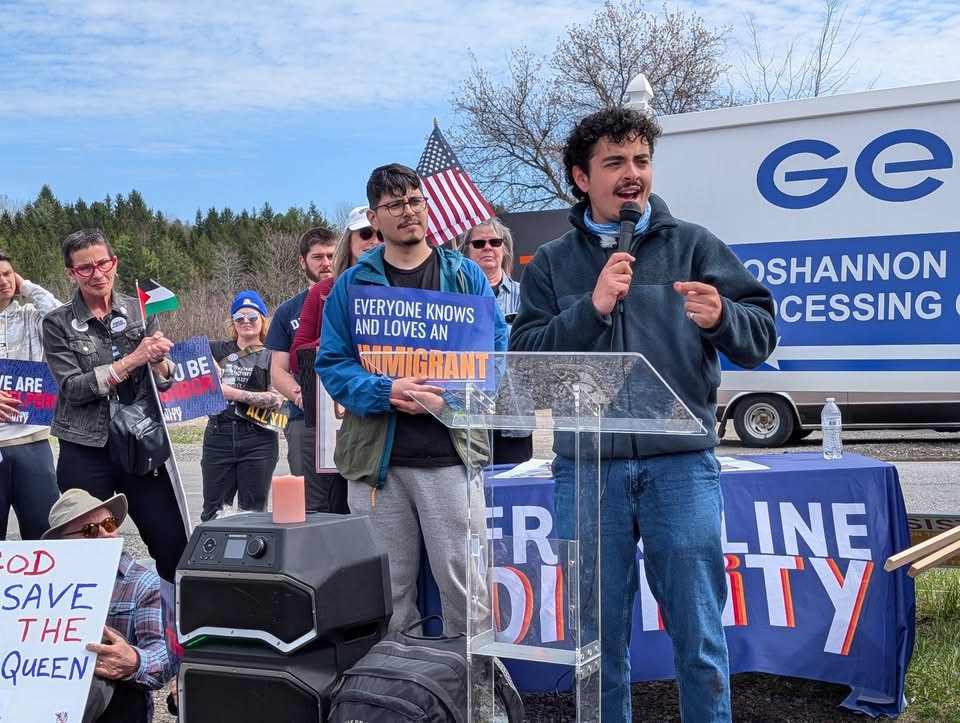
Two brothers who are members of Our Lady of the Miraculous Medal Church in Meadow Lands remain in ICE custody, with one detained at Moshannon Valley Processing Center in Clearfield County and the other moved from Moshannon to Cambria County Prison in Ebensburg after being hospitalized for a stomach ailment.
Aroldo Alvarado Garcia, 40, has been detained since Dec. 5, and his wife, Esperanza, and advocates protesting conditions inside the facility are worried about his health, which they say has deteriorated during his four-and-a-half months at the detention center.
GarciaÄ¢¹½ÊÓƵ brother, Julio Garcia, 43, was arrested by U.S. Immigration and Customs Enforcement agents in March, and he has been held at Moshannon since.
The attorney for Aroldo Garcia – who, like his brother has no criminal record – has filed a habeas corpus petition for the release of Garcia from custody due to health concerns.
“He was not eating, he was throwing up, he had diarrhea. He is depressed, and we are worried about how he is doing,â€� said Erenia Karamcheti, a social worker at Miraculous Medal who has pressed for GarciaÄ¢¹½ÊÓƵ release. “We have been told that there are a lot of people who are sick in there.â€�
Julio Garcia is awaiting a deportation hearing.
About 100 detainees at Moshannon reportedly are on a hunger strike that began April 16 to protest what they say are unsanitary conditions they are being held in. The group is demanding better medical care and food.
According to Shut Down Detention Campaign, an advocacy group that aims to close down immigrant detention centers across Pennsylvania and New Jersey, detainees have reported being served spoiled milk with a black substance in it, stale bread, and water containing worms.
Moshannon is a privately operated detention facility owned by the Florida-based GEO Group, which operates several for-profit prisons throughout the country. It is the largest ICE detention center in the Northeast, with a capacity for 1,876 detainees.
Previous reports by the ACLU-PA and Temple UniversityÄ¢¹½ÊÓƵ School of Law in 2024 noted spoiled, unhealthy, and insufficient food and cases of medical neglect. Since Moshannon opened in 2021, at least three people have died in the facilityÄ¢¹½ÊÓƵ custody.
Jaime Martinez, executive director of the Pittsburgh-based nonprofit Frontline Dignity, is calling for the immediate shutdown of Moshannon Valley and an independent investigation into the facilityÄ¢¹½ÊÓƵ conditions and oversight.
“Anything less is a refusal to confront what is already in plain view. A hunger strike is a sign that something is fundamentally wrong. No one should have to withhold food to be seen, heard, or treated as fully human. We have an urgent moral obligation to respond to what our neighbors are enduring every day,� said Martinez.
Martinez, 23, led an eight-day, 130-mile walk from the Pittsburgh ICE field office to Moshannon, where, at the April 12 walkÄ¢¹½ÊÓƵ conclusion, he and a group called for its closure and voiced solidarity with those detained inside the center.
Currently, four Miraculous Medal Church members, including Julio Garcia, are being held in Moshannon.
Karamcheti said since August 2025, as many as 18 church members have been detained and released or voluntarily or involuntarily deported.
Karamcheti has worked to secure the release of several of the detainees and has led efforts to help the families of those who are locked up.
The Garcia brothers entered the United States more than 16 years ago. Aroldo Garcia is the father of a 7-year-old son, while Julio Garcia and his wife, Antonia Aquilar, have four children.
Pittsburgh immigration attorney Joseph Murphy confirmed he heard about the hunger strike, and said inmates have also reported suffering from blood pressure and heart issues.
“We have been hearing complaints about the food, for sure, and an outsized number of people complaining of heart issues,� said Murphy.
Martinez and advocacy groups have called conditions inside detention “inhumane.�
“Every day in that detention facility, people are stripped of their dignity, their mental health is pushed to the limit, they are often trapped without due process and representation, they face verbal and physical assault, there have been deaths and there have been documented human rights violations,� said Martinez. “What is awful is rich people are getting richer from these detention centers, at the cost of our humanity.�
According to Clearfield County records, the federal government pays the GEO Group about $3.4 million a month for the facility, plus additional fees per detained person. Clearfield County receives $200,000 a year according to agreements with ICE and GEO Group. That agreement is set to expire in September.
In a statement, Clearfield County Commissioners said they have had “multiple discussions with senior GEO staff,� and that GEO reported an inmate who became ill during lunch on April 16 was taken to the infirmary, diagnosed with influenza, quarantined, and returned to the general population.
“However, 50-70 detainees eating in the same pod then refused their evening meal, fearing (incorrectly) that the food caused the illness,� according to GEO.
GEO reported that on Friday, Saturday, and Sunday, “all meal trays were taken and GEO received zero complaints about the food,� and that GEO has not received food complaints recently, and at no time has the company received a complaint about rotting food or live items in the food.
GEO also reported that “a member of leadership samples every meal before it is approved for distribution to the detainees.�
The commissioners said in the statement that they “take the well-being of detainees very seriously and will continue to communicate with GEO leadership to ensure standards are met.�
As of early 2026, ICE is operating a record number of detention facilities, with more than 72,000 immigrants – up from 37,000 a year ago – detained in about 225 active detention sites ranging from dedicated ICE facilities and private prisons to county jails, military bases and newly converted warehouses, according to the Deportation Data Project, which collects and posts U.S. government immigration enforcement datasets.
As of early April, approximately 70.8% of those held in ICE detention had no criminal convictions, according to TRAC, a records access clearinghouse.
But President Donald J. TrumpÄ¢¹½ÊÓƵ administration plans to significantly expand immigration detention over the next four years, using $45 billion from the “One Big Beautiful Bill Act,â€� and aims to hold an estimated 100,000 people.
The Department of Homeland Security earlier this year purchased a warehouse in Berks County for $87 million and a warehouse in Schuylkill County for nearly $120 million, with plans to convert them into ICE detention centers. However, those plans are facing significant pushback from local residents, community organizers, and state officials.
“We do not want these detention centers in our communities – they pose serious health, safety, and economic risks to the people of Berks and Schuylkill counties,� said Pennsylvania Gov. Josh Shapiro. “If the federal government continues to move forward with these plans, my Administration will aggressively pursue every option to prevent these facilities from opening and needlessly harming the good people of Pennsylvania.�
Meanwhile, Karamcheti and advocacy groups continue to fight for the freedom and dignity of detained immigrants.
“We immigrants are not criminals,� said Karamcheti. “Rather, we are honest people striving for a better future for our families, a future where we do not have to live in the shadows and in fear.�