

Identifying and Treating Seasonal Illnesses

Identifying and Treating Seasonal Illnesses
December ushers in winter and with it several seasonal respiratory illnesses. Flu (Influenza A and B viruses), the common cold (often rhino- virus) , and RSV (respiratory syncytial virus) are among the most common illnesses that occur during the colder months. Covid-19 (SARS-CoV2) has also been circulating throughout the year and may become a more seasonal illness. Dr. Jeffrey James, infectious diseases specialist, at WVU Medicine Uniontown Hospital, took some time to answer some questions about these seasonal illnesses, when to see a doctor, and how you can protect yourself and your loved ones.
What are the most common symptoms of these seasonal illnesses, and can I tell the difference between them?
All these respiratory illnesses have very common symptoms. It is often very difficult for even a health care provider to tell the difference based on symptoms alone. Below are some of the similarities and differences between these illnesses:
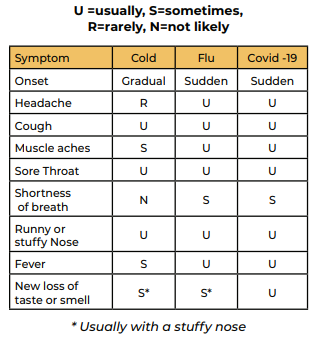
As you can see from above, distinguishing between these illnesses based on symptoms alone is difficult. In general, common cold symptoms tend to be less severe and come on more gradually, but Covid 19 and flu can both present with mild symptoms. You can contact your healthcare provider or visit, and urgent care center and they can determine if it would be appropriate for you to receive testing for these viruses.
What is RSV (respiratory syncytial virus) illness?
RSV is a virus that typically infects young children, though adults can also become infected. There have been increased number of cases this year in younger children and infants compared to other seasons. Symptoms of RSV can range anywhere from the common cold to flu like symptoms. Generally, RSV presents in infants and children with runny nose, decreased appetite, coughing, sneezing, fever and wheezing.
Signs of severe disease in infants need to be closely watched because it can be difficult to tell when very young children are experiencing severe symptoms. The following symptoms indicate severe disease: High pitched whistling or wheezing noise, breathing very fast, childĢ¹½ÊÓƵ ribs stick out because they are taking such deep breaths, and turning blue around the lips. Refusing to breast feed or bottle feed, lack of tears when crying, and no urine in the diaper for 6 hours are symptoms that can signify dehydration and can be dangerous if left untreated.
When do I need to go to the emergency room?
If your child has the serious symptoms described above, you should go to the nearest emergency room.
You should go to the emergency room if you have any of the following symptoms: shortness of breath that is not normal for you, blue lips, chest pain /pressure, or confusion.
You may have other symptoms that you have concerns about, and you should call your healthcare provider about these. Your healthcare provider is the best person to give you advice on whether you should go to the emergency room.
How can I prevent becoming ill?
– Avoid close contact with people who are sick. When you are sick, keep your distance from others to protect them from getting sick too
– If possible, stay home from work, school or errands when you are sick
– Cover your mouth and nose when coughing or sneezing
– Consider wearing a mask which can help prevent spreading germs and from you getting them
– Wash your hands often either with soap and water or alcohol-based products
– Avoid touching your eyes, nose, mouth
– Clean and disinfect frequently touched surfaces at home, work or school
Should I get vaccinated for flu and Covid -19?
Vaccination is the most effective way to prevent both illnesses. Vaccines are not 100% effective, but they lower the risk of getting seriously ill or becoming hospitalized. If you do become sick the symptoms are often lessened if you have been vaccinated. The vaccines can’t give you the flu or Covid -19.
Are there medications I can take for these illnesses?
There are now medications available to treat the flu and Covid -19. Your healthcare provider is the best person to contact and discuss if any of these medications would be appropriate for you. Patients that have chronic medical conditions or are over age 65 should particularly contact their health care provider as they are often candidates for these medications.
Sponsored content brought to you by WVUMedicine