

Bait-up for trout:ThereÄ¢¹½ÊÓƵ more to it than waiting
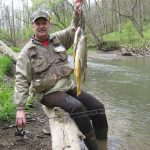
Excepting the Monday after Thanksgiving when deer season opens, yesterday marked the most anticipated day in this areaÄ¢¹½ÊÓƵ outdoor year. Trout fishing kicked off in all streams and lakes that can support these discriminating and desirable fish.
Our regionÄ¢¹½ÊÓƵ menu of waters offers something for everyone, from lakes where you can set up at a fixed location and fish in a social setting to remote mountain brooks harboring wild trout that require hard hiking to reach.
Local waters also offer various tackle options. On a few streams–like parts of Dunbar Creek and Meadow Run–the Fish and Boat Commission has imposed Fly-Fishing-Only or Artificial-Lures-Only regulations to maintain a less pressured angling resource on those particular sections. Anyone is welcome to fish there, as long as they use the specified tackle.
But the vast majority of streams–and all lakes–are managed under “general regulations,� which means anglers may use any tackle, with anything tied to the end of the line to entice a bite, including natural bait.
Nearly all anglers begin their fishing lives by fishing with bait. Some later experiment with and develop fly-fishing or casting only artificial lures. But bait remains as popular as it is deadly. The Survey of Pennsylvania Trout Anglers conducted in 2008 by the research firm, Responsive Management, found that 82 percent of trout fishermen use bait at least sometimes.
That survey didn’t ask which baits anglers prefer but minnows are a clear favorite on Pennsylvania trout streams.
“For typical stocked fish, you don’t need a minnow over an inch-and-a-half long,� said Don Wright of Allenwood, Lycoming County, who fishes minnows in the streams of northcentral Pennsylvania. “Use a No. 8, open-shank hook tied to about 10 inches of “Vanish� fluorocarbon leader. Trout can’t see it,� Wright said. “Then, and this is important, tie that leader to a barrel swivel at the end of the line. Under most conditions, don’t use any split-shot; that swivel will be enough weight and it will prevent the line from twisting as the minnow spins. If you find you need to add weight in high water, place it above the swivel.�
“Cast the minnow about 20 degrees upstream but don’t just drift it ‘dead.’ Give it some action with the rod tip. If the water is murky and cold, minnows are better than any other bait or lure in early season.�
Wright likes to hook minnows through the lips if he plans to release his catch. He believes that tends to hook the trout farther forward in the mouth.
Walt Fulps runs Trout Hunter Guide Service in the Ozark Mountains of southern Missouri. He agrees with WrightÄ¢¹½ÊÓƵ tackle advice but says you’ll seldom catch big trout on little minnows. “Once brown trout mature, they start looking for real meals,â€� Fulps said. “You have to cast them something with some heft.â€�
In Fulps’ view, fishing any trout bait in streams is exactly like fishing nymphs on a fly rod. ItÄ¢¹½ÊÓƵ important to read the water. “Folks tend to think that with bait you can use the ‘sit and wait’ method,â€� he said. “But that only works for fish that don’t know how to use the current. Even with stocked trout, it only takes a couple of days for them to learn where to hold and let food drift to them. You have to look for those places and drift your bait through. ItÄ¢¹½ÊÓƵ an active kind of fishing.â€�
Fulps advocates using a strike indicator with baits, as fly fishermen do over nymphs and wet flies.
Rainbow trout are a popular species with local anglers. Rainbows originated in the Pacific coast drainage where they co-evolved with salmon. They are instinctively “programmed� to eat salmon eggs, a hot bait for rainbows no matter where they are stocked.
Boyd Pfeiffer lives in Maryland but has fished Pennsylvania streams all his life. He says salmon eggs need to be fished on the right hook to be at their best. “The best salmon egg hooks are specialty hooks with a turned-up eye, often available on a snell. Run the hook through and out the side of the egg, then turn 180 degrees to embed the point back into the egg, resulting in a completely hidden hook,� Pfeiffer said.
Otherwise, fishing eggs, worms or even processed commercial baits in streams is about the same as minnows, without the added rod-action. “Drift through likely runs, pools and current seams,� Pfeiffer said. “Follow the bait with the rod tip and keep the line snug, but not tight, to the bait, to detect strikes. Add only enough weight to get down to the fish.�
Stealth is as important as tackle and technique to Don Feigert of Hermitage, who fishes for wild brook trout in remote streams on the Allegheny National Forest. “Wild trout in small streams are easily spooked, Feigert said. “I wear a camo hat and shirt and always approach a potential trout lair with great stealth. I look for cover–a rock shelf, log jam, or fallen tree, and try to position myself so that when the trout darts out for my bait, it will be looking away from me, not toward me. Every fisherman has made the mistake of poor positioning, and seen the trout swirl away at the last moment, just before it takes the bait.�
The Fish and Boat Commission will re-stock most streams and lakes through late May. If the weather is cool and rainy this spring, expect good trout fishing well into summer.