

Monessen grad Crabtree has ties to Fayette County
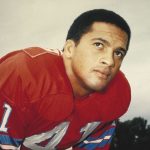
Eric Crabtree is one of many great athletes to come out of Western Pennsylvania. Crabtree went to high school at Monessen, but it is a little known fact that he has Fayette County ties, his mother was from Brownsville.
“My family was from Brownsville,â€� Crabtree stated. “ThatÄ¢¹½ÊÓƵ basically where I began to play sports competitively. I lived in Brownsville. I was there every summer and every holiday. I lived in Monessen, but I spent all my summers as I was growing up in Brownsville. ThatÄ¢¹½ÊÓƵ where I played most of my sports until I got about nine or 10 years old.â€�
Crabtree was a part of some great football teams during his high school years at Monessen. The Greyhounds went 9-1 his junior season, and were knocked out of a match up with Class AAA champion Beaver Falls and Joe Namath in 1960, when they lost to McKeesport, 26-13.
The Greyhounds rebounded in 1961 under second-year head coach Joe Gladys and posted a 10-0 record and Wilkinsburg, 7-6, in the Class AA WPIAL Championship game in front of a then record crowd for a WPIAL football game, as some 18,886 watched at Forbes Field on Nov. 24, 1961.
“We had a lot talent at Monessen,� Crabtree recalled. “It was a small high school. I don’t know why but everything seemed to come together at one time. We had great athletes. We had the “Big Three,� as we were called, with myself, Bill Malinchak and Ben Jones.
“We were all friends in Monessen. We had Little League, junior high, high school and everybody just knew each other. I can’t say we were super friends, but everybody knew everybody well.�
Monessen coming into the WPIAL championship game against Wilkinsburg, but the Greyhounds were in a dogfight with a talented Wilkinsburg that featured the likes of All-State players in quarterback Jack White, running back Richie Martha, center Bill Pochial and guard Tom Grim.
Wilkinsburg took a 6-0 lead in the third quarter and Monessen trailed for the first time all season. In the fourth quarter, Ben Jones bolted 48 yards for the game tying touchdown. Paul “The Toe� Barton kicked his 30th extra point (a state record in 1961) and Monessen owned a 7-6 lead. The Greyhounds defense preserved the victory.
“My theory is we played Donora in the game before we played Wilkinsburg,� Crabtree offered. “We beat them, 33-0, but it was one of the most physical games I had ever played in, and I think we were kind of out of gas when we played Wilkinsburg. They had a good football team and it was a good game. I thought we could have played better and we didn’t. I thought we were just a little flat for some reason, but we won the game.�
Crabtree was an All-State selection in football at Monessen and during the 1960 and 1961 seasons, Crabtree averaged 8.5 yards per carry while gaining 1,386 rushing yards with 23 touchdowns. He played in the Big 33 game, and helped the West defeat the East, 39-0. Crabtree did most of the damage scoring on a 54-yard pass and run play. He caught four other passes for 132 receiving yards.
The 6-0, 185-pound Crabtree also was a standout basketball player at Monessen. The Greyhound played in a tough Section 5 with the Uniontown Red Raiders. In 1959-60, Monsessen was 7-7 in section play and they went 8-6 in the section in 1960-61. In 1961-62, the Greyhounds battled Uniontown for the section title. They beat the Red Raiders, 72-58, at Monessen and lost, 89-47, at Uniontown.
Both teams finished 13-1 in Section 5 and played a playoff game at the Pitt Fieldhouse. Uniontown nipped the Greyhounds, 70-68, and went on to win the WPIAL title and the PIAA State Championship.
“We had some tough games with Uniontown,� Crabtree recalled. “Former Red Raider Ben Gregory was a good friend of mine later out here in Denver and he said after they beat us they cruised by everybody else. Don Yates was a heck of a player for Uniontown, we couldn’t stop him, about all we could do was foul him.
“I enjoyed basketball, it was a lot of fun. I just liked sports and it always helps when you are on a good team. I played baseball also and it might have been my favorite sport. I actually thought about playing professional baseball. If I had played baseball I would have had to go down South and my mom didn’t want me going down South in that era, so she encouraged me to take a football scholarship.�
For Crabtree, Monessen was a particularly tough environment in which to grow up. The son of a white father and a black mother, Crabtree found it hard to find his place in a town where “there wasn’t any real ethnic or racial mixing.�
“Sometimes the white kids would chase me home and sometimes the black kids would chase me home. It was pretty tough.�
He accepted a scholarship to play football at Pitt.
“There were a lot of schools that wanted me to play for them,� Crabtree said. “I picked Pitt, I didn’t want to get too far away from home. I wasn’t ready to leave home then, Pitt was close and I felt comfortable going there.
“I had a lot of pressure to go to Pitt to integrate the football team. I had a lot of public pressure and social pressure to go to Pitt where they had not recruited a black player since 1952.�
Despite the social atmosphere on the Pitt campus, Crabtree flourished for the Panthers. He amassed career receiving totals of 68 catches for 1,117 yards and nine touchdowns, including 45 receptions his senior season.
A two-way collegiate and scholastic player, Crabtree finished with 3,385 career all-purpose yards. He played in the prestigious East-West Shrine game and received All-American accolades from the United Press International, Associated Press and Time Magazine.
“We had some good teams at Pitt,� Crabtree stated. “We had an excellent football team, we just had a lot of talent. My sophomore year we were No. 3 in the country and finished 9-1.�
In 1966, Crabtree was one of just three players to be drafted by both the National Football League (Baltimore) and American Football League (Denver).
He played six seasons of professional football for the Denver Broncos (1966-68), Cincinnati Bengals (1969-71) and New England Patriots (1971).
Crabtree played in 83 total games with 32 starts. He finished with 164 receptions for 2,663 yards, and 22 touchdowns. Crabtree also had 37 net rushing yards on eight attempts.
With Cincinnati in 1969, he made 40 receptions for 855 yards and seven touchdowns. A year later when the NFL and AFL merged, he helped the Bengals win the AFC Western Division.
After football, Crabtree owned a construction company in Denver, but the hard hits on the football field took a toll. Since 2004, Crabtree has battled with severe depression, which resulted in the end of his marriage and, he said, several suicide attempts.
Crabtree is one of more than 4,000 former National Football League players who have joined a class-action lawsuit in federal court in Philadelphia against the NFL, which they claim concealed information on the dangers of concussions and repetitive head traumas.
“They knew,� said Crabtree. “People, would say they were punch drunk. It was concussion.
“I’m involved with the lawsuit which is in the Supreme Court right now. ThereÄ¢¹½ÊÓƵ about 20 players and their attorneyÄ¢¹½ÊÓƵ that are fighting it. It has been a rough road since I stopped playing, the game takes a lot out of you and itÄ¢¹½ÊÓƵ tough to readjust.â€�
Inducted into the Mid Mon Valley Sports Hall of Fame in 1998, Crabtree was also inducted into the Pennsylvania Sports Hall of Fame in 2015.
Crabtree, 72, is retired and still resides in Denver. He did not have any children from his marriage.
“A funny story,â€� Crabtree stated. “I dated a girl a long time ago and her daughters adopted me as their dad and I’m a grandpa, and itÄ¢¹½ÊÓƵ pretty nice.â€�
George Von BenkoÄ¢¹½ÊÓƵ “Memory Laneâ€� column appears in the Monday editions of the Ä¢¹½ÊÓƵ. He also hosts a sports talk show on WMBS-AM radio from 10 a.m. to noon on Saturdays.