

Pirates’ fans cast wary eye on 2016 season
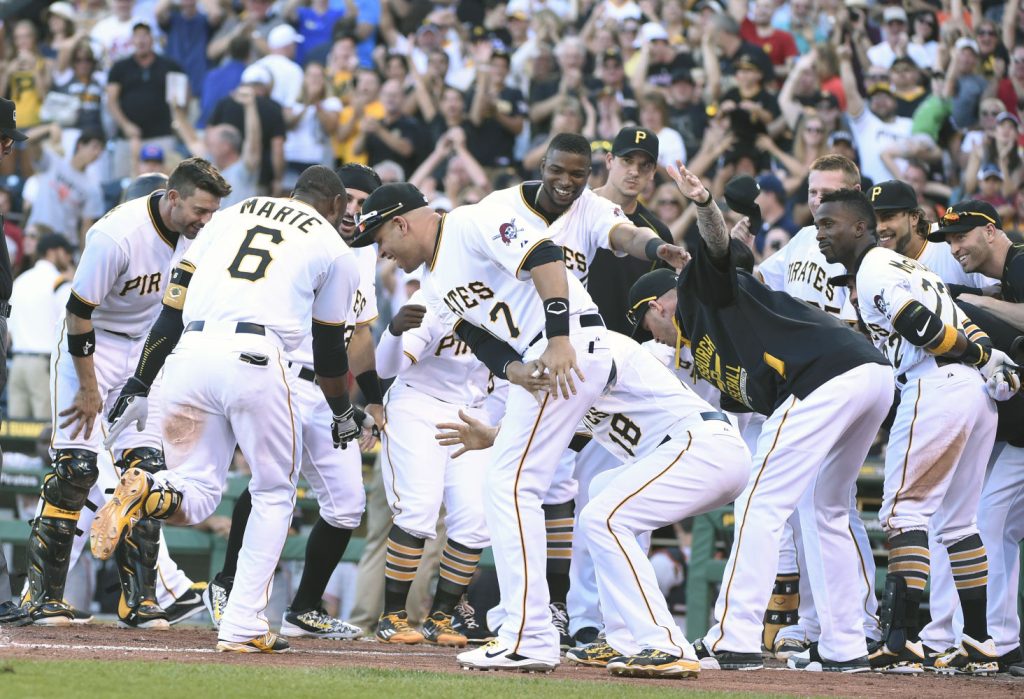
Fans at PNC Park cheer in the background as the Pittsburgh Pirates' Starling Marte (6) is greeted by his teammates after hitting a bottom-of-the-ninth, game-winning home run against the Giants on Aug. 22 last year. The Pirates have made the playoffs three consecutive seasons but their fans' faith could be tested in 2016 as the team dealt fan-favorite Neil Walker among other offseason decisions that have drawn the ire of followers.
Associated Press
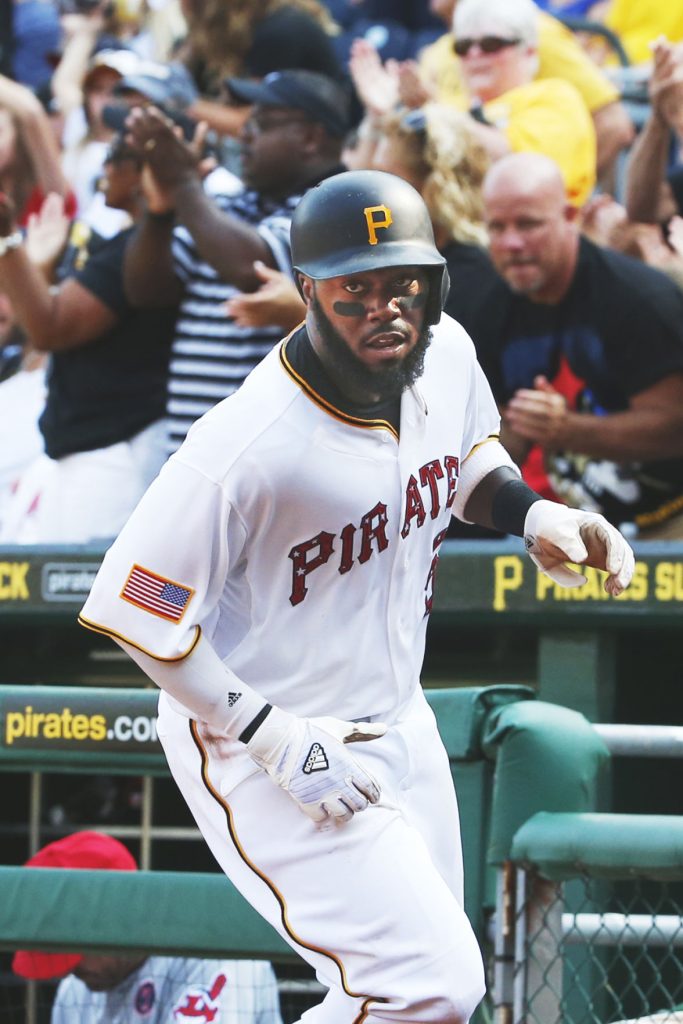
Fans at PNC Park cheer in the background as Josh Harrison scores on a single by Neil Walker that led to a 1-0 win over the Indians on July 4 last season. The Pirates have made the playoffs three consecutive seasons but their fans' faith could be tested in 2016 as the team dealt fan-favorite Walker among other offseason decisions that have drawn the ire of followers.
Pittsburgh Pirates manager Clint Hurdle is regularly celebrated for a desire to “re-bond the city with its ball club,â€� a mantra oft-cited during the teamÄ¢¹½ÊÓƵ steady rise back to contention.
Following three consecutive winning seasons, itÄ¢¹½ÊÓƵ tempting to proclaim the mission as accomplished.
Even still, the previous 20 years of futility remain in the rear-view mirror. They hover as a grisly reminder that as gradual as the teamÄ¢¹½ÊÓƵ recent success has been, a sport without a salary cap combined with changing landscapes could derail that progress at a considerably faster rate.
On the heels of questionable roster moves giving way to a growing vocal minority of fan unrest, can that re-bonding survive anything less than a repeat of last yearÄ¢¹½ÊÓƵ 98-win season?
If you attended the recent PiratesFest fan convention, you might not be so sure. The annual gathering is often viewed as pure fan service — an opportunity for fans and their families to inch closer to their idols.
On this day, three days after the team traded Pittsburgh native Neil Walker to the New York Mets, a peculiar tension filled the David L. Lawrence Convention Center. Random patches of Mets blue perforated the usual sea of black and gold. It did not take much eavesdropping to overhear fans with serious misgivings in regards to team owner Bob NuttingÄ¢¹½ÊÓƵ intentions.
Early that morning, starting pitching stalwart Charlie Morton was traded to the Philadelphia Phillies for minor league fodder. Often a lightning rod for criticism, the longest tenured Pirates starting pitcher on the current club quickly became a fulcrum for the building criticism of the teamÄ¢¹½ÊÓƵ management. In that way, he was instantly transformed from a frequent scapegoat into somewhat of a martyr.
As fans awaited a chance to find the answers they craved through player and management Q&As, a scheduled session with the official Pirates chef took place. After demonstrating one of his charges’ favorite quick snacks (a banana and peanut butter burrito), the chef fielded several softball questions until the tension went from a simmer to a boil.
“Yes I have a question,� a frail voice echoed from in the back of the audience, where a microphone was set up.
“I want to know what Neil Walker liked to eat before he was traded to the New York Mets!�
The anger in her voice rose, and she added an addendum in case her point was not clear.
“Did everyone hear THAT?�
Credit PNC Park in-game host Joe Klimchak for successfully diverting the question, but there was more in store, and this time the players felt fans’ ire.
The playerÄ¢¹½ÊÓƵ Q&A session was well attended, with stars such as Andrew McCutchen, Josh Harrison and Starling Marte in attendance. Greg Brown moderated questions from the audience, but it wasn’t long before reliever Tony Watson fielded the first curveball.
“My question is for Tony,� a shaky voice cracked, “Are you ready to replace Mark Melancon as closer when he is traded before next year?�
A nervous laughter overtook the room. A few smatterings of applause served as a weak ice-breaker as Watson searched for the right words.
It would be the second tough spot for Watson that day, as he later explained that he was at breakfast with Morton when the latter received the news that he’d been dealt.
General Manager Neal Huntington, President Frank Coonelly and Hurdle did not fare better during their Q&A session. A fan clambered to the podium to ask Huntington “Can you explain the thinking behind bringing Jon Niese in for Walker?�
You’ll have to use your imagination, but the tone of that question and inflection suggested more venom that the words on the page can convey.
The emotions of that day can easily be chalked up to the still-raw reaction to WalkerÄ¢¹½ÊÓƵ departure. The two months that followed that day were filled with questionable moves from a team that seems to be losing lock-step with its National League competition.
With the team just beginning full workouts at spring training, can fans hold onto the trust built up by an organization with 280 wins over the past three years?
A quick sampling of vocal, supportive fans on various internet fan forums shows the trust runs surprisingly deep.
Tony, 31, is a father of two living in the Philadelphia suburbs. A Pittsburgh native, he makes it back for 3-4 games per year. One of those is an annual tradition in which he and his wife Jamie celebrate their anniversary at the ballpark.
Clearly, the Pirates are a part of their lives. Does he have faith that the team has done enough to remain in the playoff picture? To even be competitive?
“Yes. Absolutely. ItÄ¢¹½ÊÓƵ all about sabermetrics and trust,â€� he told me. “To take a second to look back and see that this team won 98 games with such a horrendous defense is astounding.â€�
His comment is telling. The team let enigmatic first baseman and defensive liability Pedro Alvarez walk to free agency. Even with his 23 errors and frequent strikeouts, AlvarezÄ¢¹½ÊÓƵ departure left a fanbase fractured. Fans wondering how the team could replace his 27 home runs were lined up to debate against those thankful to see him go.
Even with the trust that the organization has built up with Tony, he is still realistic, as seen when I asked him if missing the playoffs would be seen as a failure.
“Failure? Sure. Massive failure? Not so much. I see this as a bridge year. Not something anyone likes, but is needed.�
ItÄ¢¹½ÊÓƵ not just fans that are preaching patience.
Dan Zangrilli is a host for radio broadcasts on the Pirates radio network. As part of his duties, he takes calls from fans after each game. He anticipates a new level of patience among fans.
“I think a strong, vocal, minority can sometimes grab more of the market share of the fan base than what actually exists and they control the narrative,� Zangrilli told me recently. “I think a majority of the educated fans out there (and there are a lot) believe the team makes prudent decisions and tries to field the best 25 it can. I don’t think 2016 will be any different form 2015 or 2014 for that matter.�
Zangrilli continued.
“For the most part, yes, the city has been re-bonded in my opinion. Their record-setting attendance numbers the last two seasons have lent to this being more fact than mere perception.�
Scott is a 41-year-old diehard Pirates fan. A season ticket holder, he finds his way to at least 70 games a year. It took some convincing — Scott did not pony up for the seats until after the teamÄ¢¹½ÊÓƵ triumphant wild-card win against the Reds — but he now values the game as a vehicle to bond with his son.
“What got me back was the shimmer in his eyes, tucked under the shade of his ballcap and just over his tanned little cheeks as he punches the glove in his hand hoping the next ball comes to him,� Scott said.
ScottÄ¢¹½ÊÓƵ fandom wasn’t always this bright. When I asked him if he thought he would ever see seasons such as the last three during the teamÄ¢¹½ÊÓƵ infamous 20-year losing streak, he was very candid in his thoughts.
“There were times that I didn’t, but I always figured there would be a salary cap or something eventually. I was shocked that they were able to climb out of that hole without the aid of forced financial equivalency across the league.�
From his seat, Zangrilli believes that the specter of the 20-year losing streak still looms large over the fan base.
“It plays. ItÄ¢¹½ÊÓƵ still there,â€� Zangrilli said.
“Less and less, however, as the years go on and the Pirates continue to win. Twenty straight years of losing will alienate a lot of fans. For some it will take more tangible results than others to make them believers. However, I’d like to think the majority of the fans are tuned into the reality of the Pirates’ situation playing in this league and have a strong appreciation for the successes they’ve enjoyed despite the odds being so heavily stacked against them.�
In a way, the Pirates may have found the exact right moment to explore the possibility of a “bridge year.� With fan support at a near all-time high, the team is in much better shape to weather its yearly war of attrition in seeing talented players go.
Mission accomplished indeed.