

Raptor wings of autumn; why and where
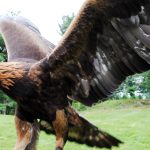
You may have noticed the daylight period growing shorter these past weeks. You can be sure that birds have noticed it too. Soon that change will trigger an annual event thatÄ¢¹½ÊÓƵ one of the marvels of the natural world — southward migration. Every fall, millions of birds of species not adapted to cold and snow wing to warmer locations. Depending on the species, wintering grounds might be anywhere from the Chesapeake Bay to the jungles of South America.
We tend to think of waterfowl, especially flocks of wild geese, as the classic example of this autumn exodus. But less obvious are the annual southward flights of raptors, the birds of prey — hawks, falcons and eagles, which pass overhead in silence, without the clamorous “honking� of migrating geese.
Some bird enthusiasts, though, pay attention to the fall raptor migration, and know exactly where to go to witness its amazing spectacle. When these birders want to see hawks and eagles in migration, they go to one of a handful of precise locations along the Appalachian Mountain chain.
Unlike geese, which are strong long-distance flyers that plow ahead through any winds or storms, raptor wings and flight muscles are built more for hunting mode. For some, including most hawks and all eagles, hunting mode means soaring. They hold their wings motionless, kite-like, catch the wind and soar while searching below for prey. For other raptors, like falcons, hunting mode is a short burst of powerfully rapid wingbeats, enabling them to overtake an unfortunate pigeon, dove or duck in mid-flight.
So, although raptors are supremely well adapted to aerial hunting of one style or another, they need help on long migrations covering thousands of miles. They get that help from the wind. ThatÄ¢¹½ÊÓƵ why hawk-watchers go to the mountain crests every autumn.
For thousands of miles along the Appalachians, from Quebec southwest to the Carolinas, winds strike the mountains and are shunted upward.
Hawks, falcons and eagles know this and they follow the highlands every fall, riding on air currents that lift and carry them southward. From September through November, knowledgeable birders can see a spectacular procession of raptors pass by, sometimes at eye-level, from traditional hawk-watching sites along the mountainous migration corridor.
The sequence is always the same. First, as early as mid-August, come the broad-winged hawks, sometimes dozens of them in what birders call “kettles,â€� swirling funnels of soaring hawks that spiral on the wind while moving generally southward. Soon after, come bald eagles and ospreys, mostly singles, soaring straight ahead. Later, in a generally predictable series, come the red-tailed hawks, kestrels, CooperÄ¢¹½ÊÓƵ hawks, red-shouldered hawks and, finally, smaller numbers of golden eagles whose fall migration peaks always in November.
The Appalachians’ best-known hawk-watching spot is in Pennsylvania. Appropriately named, Hawk Mountain, straddles a sharp ridge that forms the border between Berks and Schuylkill counties in the eastern part of the state. ItÄ¢¹½ÊÓƵ both an annual destination for raptor enthusiasts and an international icon in wildlife conservation.
For decades, until the mid-1930s, it had been a custom of local gunners to climb Hawk Mountain, station themselves on the prominent outcrops, and shoot hawks and eagles as they passed by. Thousands were gunned down every autumn.
The Pennsylvania Game Commission encouraged the hawk shooting at that time, offering a bounty on most raptor species.
Around 1931 an amateur ornithologist, Richard Pough, visited Hawk Mountain after the carnage and photographed hundreds of hawk carcasses. Rosalie Edge, an early conservation activist from New York, saw PoughÄ¢¹½ÊÓƵ photographs and immediately leased 1,400 acres atop Hawk Mountain. Edge hired New England bird enthusiast Maurice Broun to patrol the property and the shooting ceased. Later she bought the mountaintop outright and deeded it to the Hawk Mountain Sanctuary Association, incorporated in 1938 as a Pennsylvania non-profit organization. Hawk Mountain Sanctuary Association has protected the site ever since, performing conservation research and offering wildlife education to the public.
Today, thousands of hawk-watchers climb Hawk Mountain every fall to view the migration, and it is illegal to kill any bird of prey anywhere in America.
Although Hawk Mountain is the best-known and most popular hawk-watching destination, a handful of others stand scattered along the mountains. At least one — Allegheny Front Hawk Watch — is conveniently close to southwestern Pennsylvania.
Allegheny Front Hawk Watch
Accessible from Rte. 160, SR 1018 and SR 1035 (Lambert Mountain Road) east of Central City, Somerset County. Hawk-watch perched 800 feet above valley floor to the east. Good place to see golden eagles in November.
WaggonerÄ¢¹½ÊÓƵ Gap
Ridgetop on the Cumberland-Perry county line. Recognized hotspot for bald eagles; as many as 25 bald eagles per day seen in September; 500 per season. From Carlisle, take Rte. 74 north six miles to the top of Kittatiny Ridge.
Stone Mountain
From State College take Rte. 26 south, over Tussey Mountain to McAlevyÄ¢¹½ÊÓƵ Fort. Best days here are after cold fronts, with northwest winds striking the ridge.
Hawk Mountain Sanctuary
Take I-78 east to Hamburg, PA and ask anyone or look for signs. Most popular hawk-watch spot in North America. Raptor museum, educational exhibits, interpretive talks, bookstore, trails, dramatic views and lots of hawks and eagles in the fall. Two different mountaintop outlooks; one is wheelchair accessible.
For precise directions to hawk-watch sites, visit www.pgc.pa.gov