

Cold forecast heats ice-angling fervor
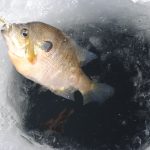
A friend who writes about the outdoors for a newspaper in eastern Pennsylvania coined a phrase I like and have borrowed often. He calls those who trudge onto a frozen lake, bore a hole through the ice, then drop down a line, the “Frozen Chosen.â€� HeÄ¢¹½ÊÓƵ an avid ice-fisherman himself and with that title he conveys admiration for that small segment of the outdoor public that has a lot of fun outdoors while other people are just waiting for spring.
Except when thereÄ¢¹½ÊÓƵ a hard wind, ice-fishing isn’t even uncomfortable. Most participants will tell you that when they get out there and start fishing, they hardly notice the cold. And on a sunny afternoon in the 30s, you start peeling off layers.
Ice-fishing has a lot going for it and itÄ¢¹½ÊÓƵ surprising there aren’t more dedicated “hardwaterâ€� anglers. You can ice-fish anywhere you can fish conventionally, and you can reach places you can’t fish from shore in the warm months without a boat. You don’t need expensive equipment either. I bought the simple rods (www.schooleyicetackle.com) some friends and I began ice-fishing with for three dollars each at the Bass Pro Shop store in Harrisburg some years back. They’re now going for about $11 but thatÄ¢¹½ÊÓƵ still cheap for a fishing rod. Speaking of friends, ice-fishing is a great social activity. Everyone drills their hole, drops down their bait, sits on a bucket and waits. While you wait you talk. You can’t get away from one another, so pick the right group to fish with in the first place.
The weather forecast for the next week is promising for ice-anglers. We haven’t had much fishable ice the past two winters and the “Frozen Chosen� will be keen to get out. But ice-anglers should never let their eagerness supplant safety.
ItÄ¢¹½ÊÓƵ hard to state rigid guidelines for ice-fishing safety because there are so many variables involved in freezing water in a natural environment. Generally, four inches of clear ice is considered strong enough to support one angler or a group spread well apart. But never assume that the ice is uniform thickness throughout a lake or pond. Fallen logs or stumps will absorb heat from the sun, then release it at night, causing the ice above to be thinner. Anywhere thereÄ¢¹½ÊÓƵ a current–such as an inflow or outflow from a lake–should be avoided and assumed to be less stable than calm water. Even snow can influence ice formation. Where snow has been blown clear by the wind, ice will generally form quicker and stronger. Where it piles up in drifts, or lays evenly on the surface, snow acts as an insulator and the water below will freezer more slowly than otherwise at the same air temperature.
ItÄ¢¹½ÊÓƵ a good practice to drill a test hole from any available dock or pier before venturing out on the surface. Measure the ice with a ruler and be honest about the reading. You’re only fooling yourself and your companions if you cheat. After I drill a test hole, I like to place one finger on the underside surface of the ice, then move the ruler down until I can feel it with my finger, aligned with the underwater surface. Then just read the rule. This monthÄ¢¹½ÊÓƵ issue of Pennsylvania Angler & Boater magazine, published by the Fish and Boat Commission says that ice seven inches thick can support “group activitiesâ€� and eight inches will hold up a car. By the way, clear ice is stronger than grainy, gray ice.
Never ice-fish alone. If there is one outdoor pursuit you should never do by yourself, itÄ¢¹½ÊÓƵ ice-fish. You need someone there with whom you’ve discussed a plan should something go wrong. We take lots of rope along, and if we’re near enough to shore we tie one end of a rope to a tree. We also wear PFDs (personal flotation device) or life jackets, just in case. If someone looks at me weird for wearing a life jacket on the ice, thatÄ¢¹½ÊÓƵ their problem not mine. ThereÄ¢¹½ÊÓƵ just no good reason not to wear one.
We also have ice-spikes that you wear around your neck. These can be used to gain traction on the ice to drag yourself out, should you fall through.
When discussing ice-fishing, you must acknowledge the degree of risk. But if you make sure the ice is sufficiently thick, don’t venture into unknown or unstable ice, and take along safety equipment, there aren’t many activities that are more enjoyable. Remember that you need a new 2018 fishing license after Jan. 1.
Ben Moyer is a member of the Pennsylvania Outdoor Writers Association and the Outdoor Writers Association of America