

Massive die-off: Invasive beetle destroying local ash trees
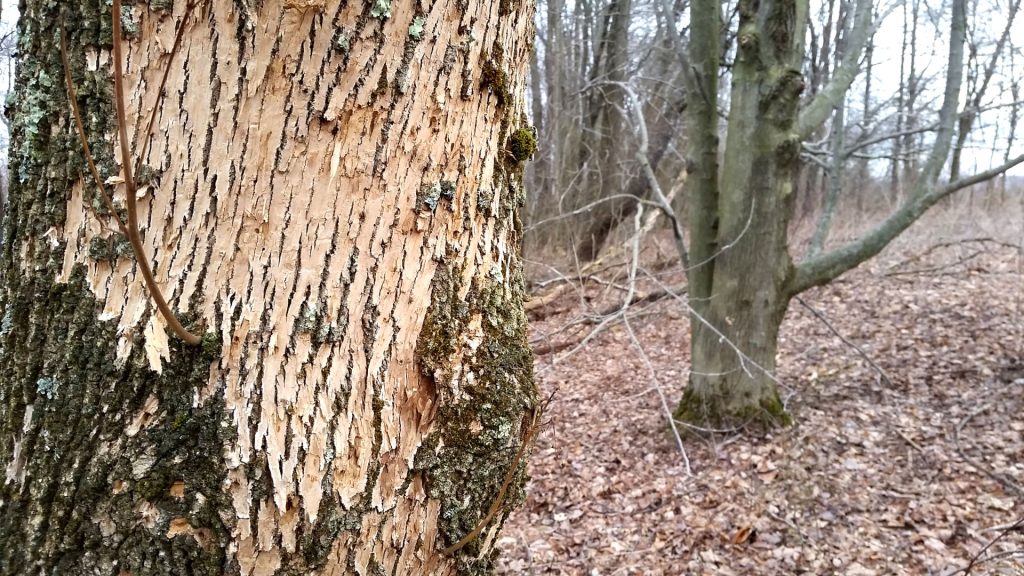
Invasive emerald ash borers have nearly killed this ash tree in Farmington, as they have millions of others across the Midwest and Northeast. Flaking bark and the invaders’ “D� shaped exit holes are ash borer evidence.
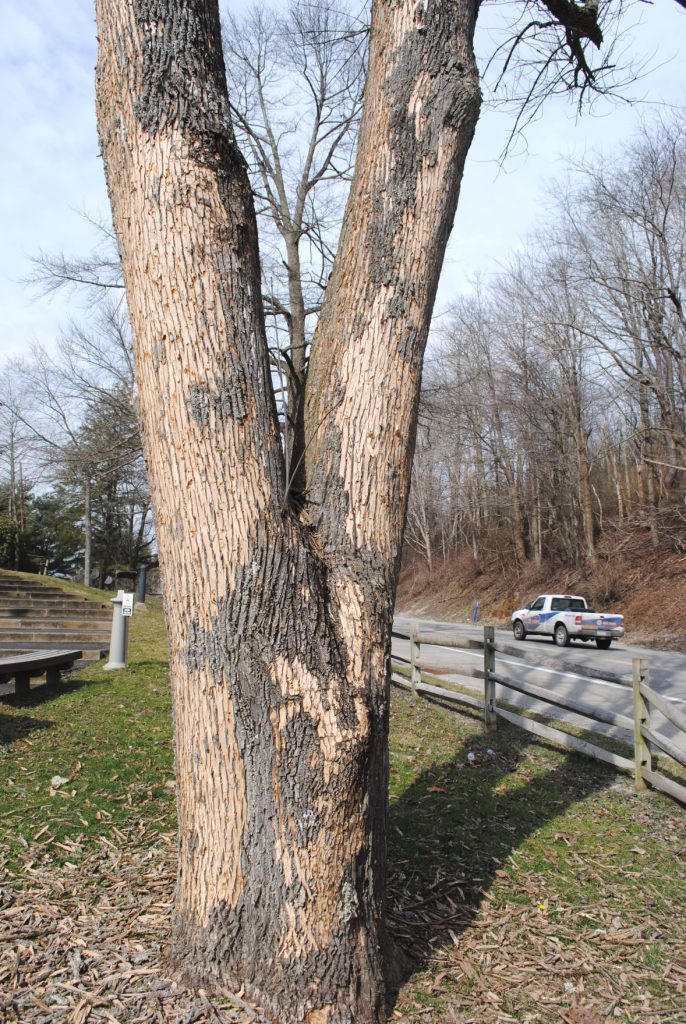
Invasive emerald ash borers killed this ash tree at Fort Necessity National Battlefield, as they have millions of others across the Midwest and Northeast. Flaking bark and the invaders’ “D� shaped exit holes are ash borer evidence.
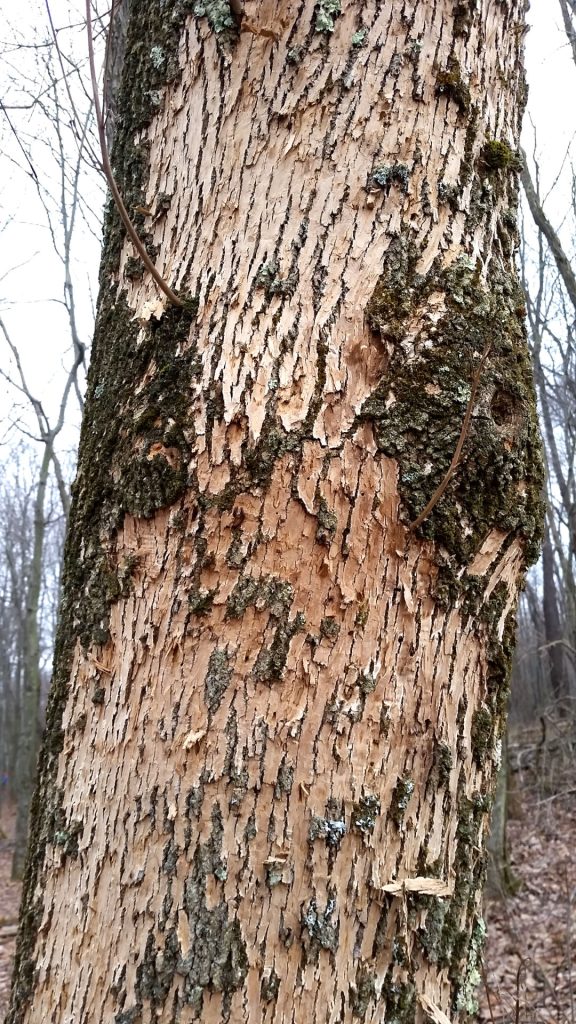
Invasive emerald ash borers have nearly killed this ash tree in Farmington, as they have millions of others across the Midwest and Northeast. Flaking bark and the invaders’ “D� shaped exit holes are ash borer evidence.
They’re hard to miss — now that they’re gone. Ash trees, some of the most valuable and important trees in American forests, have died by the millions over the past five years, killed by an invasive beetle called the emerald ash borer. Foresters are not optimistic. Many believe the borer will continue its ravages until the beautiful, useful ash ceases to exist as a familiar American tree.
Around here, white ash and green ash represent the genus of about 65 different ash species. The devastation happened so fast that itÄ¢¹½ÊÓƵ both amazing and unnerving. In winter, when there is no screening foliage, dead ash trunks stand out like beacons in the woods, their gray, chain-pattern bark flaked away by weather and by woodpeckers searching out ash borer larvae. In summer, a drive along most any rural road–especially, but not exclusively, in the lowlands–will present ranks of stark skeletons against the foliage of other trees. I never realized how abundant ash was in our local forests until they were dead. This fall, while hunting in woods I’ve stalked through for years, I marveled at massive specimens I never noticed until their reddish death pallor, left behind by the shedding bark, revealed their presence.
To point out how rapidly the ash tree succumbed, readers may remember about eight or 10 years ago, when you could see purple boxes, about the size of a mailbox, hanging from trees all around the region. Many who noticed those oddities wondered at their purpose. The purple boxes were ash borer traps, filled with attractive borer-pheromones and placed by foresters to detect the early arriving borers in western Pennsylvania woodlands.
Emerald ash borers are native to parts of China and Korea, in forests remarkably like our own here in temperate North America. In their native range, ash borers are preyed upon by many diseases, fungi, birds and other insects that are part of that ecosystem, so the borer is held in balance and never does serious harm to ash trees in Asia.
But ash borers arrived in America, possibly by hitch-hiking in wooden packing crates, in the early 1990s. They were first detected in Michigan and have spread throughout the Midwest and Northeast ever since, slowly on their own wings but helped along by people moving firewood from infested areas.
Here the ash borer has no natural enemies. Nothing eats it except woodpeckers, which pick some of the larvae out of the trunks. So, once the ash borer invades new territory, its numbers explode.
The adult ash borer is a slender, metallic-green beetle. But itÄ¢¹½ÊÓƵ the waxy-white, worm-like larvae that does the damage. Adult females lay eggs on ash bark, and hatching larvae chew into the living tissue beneath. There they bore tunnels under the bark. If there are too many larvae, boring too many tunnels, they girdle the tree so that water and nutrients can’t move up and down, strangling their own host. ThatÄ¢¹½ÊÓƵ what happened to hundreds of thousands of ash trees around here, and millions from the Atlantic Coast to the Great Plains. As the larvae mature into adults they chew outward through the bark leaving a “Dâ€� shaped hole about the size of a pencil-end eraser.
This loss is more than cosmetic. Ash is a valuable timber tree, its limber but strong and shock-resistant wood is used in furniture and construction. If you’ve ever watched a Major League baseball game, you’ve seen ash in action. Ash has long been the preferred wood for bats but more maple bats are used today, partly because healthy ash is hard to find. If you noticed more broken bats with the switch to maple, so did the MLB. The leagues had to launch strict wood-grading and inspection regulations to reduce the number of breaks.
A more poignant story about ashÄ¢¹½ÊÓƵ disappearance was told a few years ago at Fort Necessity National Battlefield. Members of the Odawa tribe, which has long lived along the shores of Lake Michigan and Lake Huron, retraced the journey to Fort Necessity to commemorate the 1754 battle where their ancestors fought with the French against English encroachment. Ash was abundant in Great Lakes forests and the Odawa used it to make tools, baskets, and the finest canoes among all Native peoples.
The Odawa at Fort Necessity demonstrated how they select an ash tree, separate the wood into workable “splits� and fashion useful implements. They told how these skills had almost disappeared, but those who maintained it were beginning to teach the craft to young people who responded with pride in their ancient culture, and gained income from selling unique works.
Sadly, as they began to resurrect ash-working skills in a new generation, the borers arrived and the ash died out.
Ash is also important as a living part of the forest. Big trees tend to form cavities, used by wood ducks, owls and many other birds for nesting. Squirrels, turkeys and grouse eat the seeds, ironically shaped like canoe paddles.
Another big loss for our region is that ash (before the borer) grows well on abandoned, or reclaimed, coal mine sites, reducing soil erosion and pollution.
Perhaps more immediately relevant to most readers, dead ash trees stand along highways all around Greene and Fayette counties. At some point, every one will fall. ThereÄ¢¹½ÊÓƵ not much motorists can do except note those locations and be aware of this hazard.