

Panfish: AnglingÄ¢¹½ÊÓƵ great equalizers
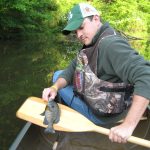
Fishing can be intimidating, and thatÄ¢¹½ÊÓƵ unfortunate. The specialized selection of flies to match seasonally-timed insects, the complex sonar devices deployed from boats, and the daunting array of all kinds of modern equipment can sometimes make fishing seem too difficult to try.
I know thatÄ¢¹½ÊÓƵ true because I’m intimidated too. I’d like to be able to go out on a big lake and catch prized deep-water gamefish, especially walleyes. But I’m deterred by the prospect of owning, registering, insuring, towing and mooring a power-boat. And I’m just not likely to teach myself to use the electronic gear you need to target fish in such places. Heck, I’m intimidated by “smartâ€� phones. I admire and envy those who master that realm of the angling universe but I acknowledge itÄ¢¹½ÊÓƵ not for me in this lifetime. In fishing, I opt for smaller streams and the shallows around lakes and ponds where I can see whatÄ¢¹½ÊÓƵ happening, or predict whatÄ¢¹½ÊÓƵ likely to happen, with trout, bass or that supreme equalizing force among all fish and fishermen–panfish.
Panfish are wonderful, and they’re probably the reason most fishermen begin and continue fishing. You can make their pursuit difficult and technical if you want to but itÄ¢¹½ÊÓƵ not necessary.
Panfish are not a scientifically meaningful class of fish. ItÄ¢¹½ÊÓƵ a loosely defined catch-a term of angling slang for any number of fish that are of modest size, abundant, mostly easy to catch, excellent on a plate after catching and, as some even say, shaped like a “pan.â€�
Around here, the popular panfish are bluegills, crappies, and any of the many related members of the sunfish family — redear sunfish, pumpkinseed, rock bass and several others. And, if you think about their body shape, they are, crudely anyway, shaped like a pan, broad and “flat.�
Anyone, with the most basic gear and 30 seconds of coaching, can catch panfish. They are inquisitive and always seem hungry. Admittedly, crappies — largest and most prized of panfish — can sometimes require some finesse and special gear, but bluegills and the other sunfish are reliable targets, especially in early summer. And most anyone can get to where panfish live, which is any public lake or any farm pond where you have permission to fish. Panfish are simply the best of all reasons for beginners, families, kids, and anyone who enjoys the outdoors to fish.
To catch bluegills and other panfish, impale a garden worm on about a No. 10 hook, suspend that about two feet beneath a common red-and-white bobber, and cast it out–not too far from shore–with a simple spin-cast reel on a typical casting rod, about six feet long. Notice that the text above used the word “aboutâ€� many times. That was deliberate because panfishing is not an exact science. ThereÄ¢¹½ÊÓƵ room for lots of experimentation, and you’ll still catch fish. There is no reason for intimidation. To increase your already high prospect of success, however, make that cast near some weeds, driftwood, stumps, or a dock or pier. Bluegills and other panfish like to relate to some type of physical structure within their environment. Then just wait for the bobber to dance, set the hook and catch a panfish. ThatÄ¢¹½ÊÓƵ about all there is to it. As you can imagine, kids love it, which is understandable because itÄ¢¹½ÊÓƵ fun for anyone.
Some local lakes are excellent places to pursue panfish. Surveys done by the Fish and Boat Commission biologists identify Virgin Run Lake in Franklin Township as one of the best. “Historical data shows Virgin Run Lake has always yielded a high-quality sunfish population in terms of size of fish and number of fish,� the biologists wrote in a 2015 report. “The lake is home to an extremely abundant bass population and an exceptional sunfish population.�
Dunlap Creek Lake, Greenlick Dam and Cranberry Glade Lake are other good local panfish destinations open to public fishing.
To get the most enjoyment from panfish, keep a few to eat. They’re worth it. Learn to fillet them. Dozens of videos posted on the internet show the technique step-by-step. Dip the fillets in beaten egg, roll in cornmeal to coat, and fry in hot oil just a minute or so on each side to golden brown. Watch the frying fish closely. They’re easier to catch than to cook just right.
For catching panfish, even a fishing license doesn’t need to be intimidating, for one day at least. July 4 is the Fish and Boat CommissionÄ¢¹½ÊÓƵ “Fish for Free Day.â€� You can actually fish for trout, bass or any species on that day without a license but panfish are “entry levelâ€� fish and the opportunity seems to fit them best.
Ben Moyer is a member of the Pennsylvania Outdoor Writers Association and the Outdoor Writers Association of America.