

Water like to go down hill

Jack Hughes
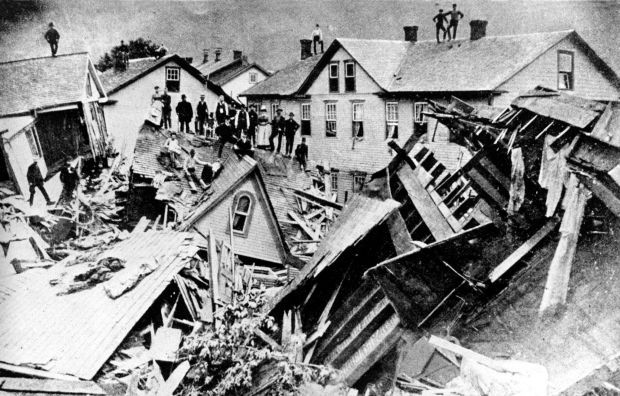
People stand atop houses among ruins after flooding in Johnstown, May 30, 1889.
Roberto M. Esquivel|Ä¢¹½ÊÓƵ
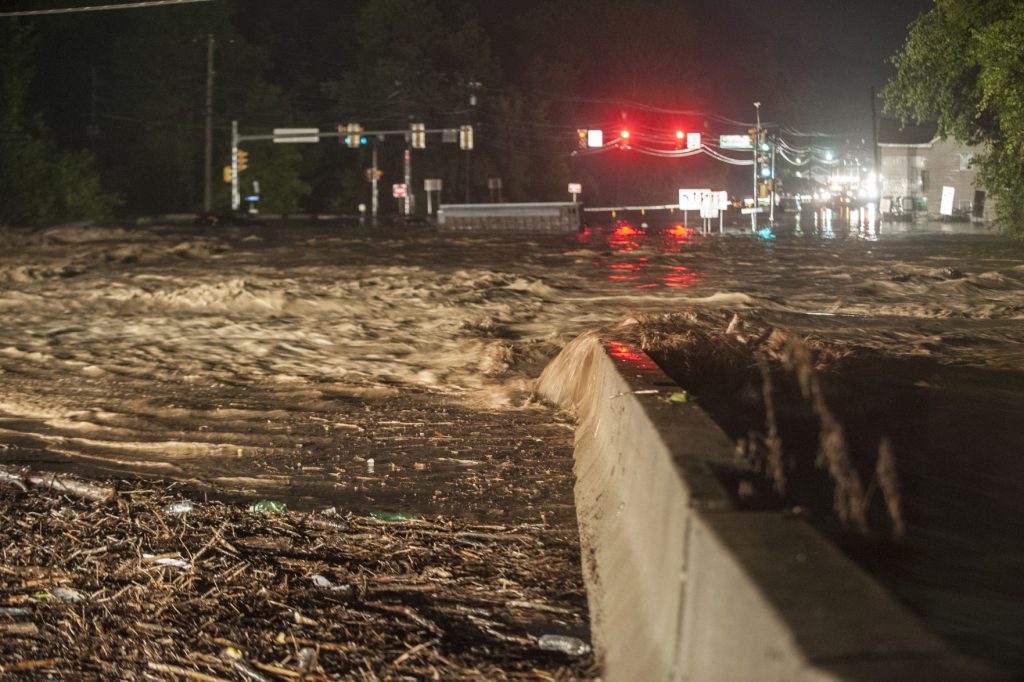
Fast moving flood waters cover Route 119 in Connellsville Township Aug. 28. First responders reportedly had to rescue the occupants of two vehicles that became trapped by the flood waters.
Floods have always been part of weather history in southwestern Pennsylvania.
The 1936 flood in Pittsburgh completely submerged the downtown area.
Just last year, devastation came to nearby Connellsville in the form of quick flash flooding.
The Pittsburgh flood of 1936 resulted from more widespread snow melt combined with lots of rain and ice flows on the three rivers flowing into the city.
The hilly terrain of our area certainly adds to the problem, since rains from storms that visit our area have no place to go but down those hills and into the streams.
Flash flooding is the worst since it leaves little time for warning those in harmÄ¢¹½ÊÓƵ way.
The most devastating flash flood ever to occur in the United States was the famous Johnstown flood of 1889.
Only three other events have killed so many Americans in a single day: the Galveston, Texas, hurricane of 1900; the attacks on the World Trade Center and Pentagon in 2001; and the attack of Pearl Harbor in 1941.
The flood was the result of torrential rains leading to the collapse of the South Fork Dam above the Little Conemaugh River Valley.
The dam had been built to create a reservoir for a resort community catering to PittsburghÄ¢¹½ÊÓƵ industrial barons.
When the dam gave way, a wall of water at times 40 feet high, plunged down the valley and overwhelmed the city of Johnstown, drowning the city and killing 2,200 of its citizens.
The rescue operation that ensued brought Clara Barton and the newly founded Red Cross to national attention. This organization still plays a large role in disaster relief.
This was supposed to be the one in a 1,000 year flood event; but history so often does repeat itself.
Rain began to fall in the Johnstown area on the evening of July 19, 1977.
It turned into a tremendous downpour and by morning 11.82 inches of rain was rushing down the hilly terrain around Johnstown and 128 million gallons of water poured into the valley.
Once again the city of Johnstown was submerged.
Thanks to better warning the death toll was only 85; however the physical devastation was much worse than the 1889 flood.
An article in the Tribune-Democrat mentioned that the Bethlehm Steel Plant was also submerged.
The mill was in the midst of extensive renovation to help revitalize the steel industry.
The 1977 flood delayed the renovations and eventually the mill closed in 1992. The decline in the steel industry and the flood took a toll on the population of the city of Johnstown.
By 1980, the city had lost 19.4 per cent of its population. A lot of this change is as a result of 11.82 inches of rain falling in a ten hour period.
As we look to the future, flash floods will always be a part of the make-up of southwestern Pennsylvania.
A very long time ago, these same mountains were as tall as the Rockies out west, and I am sure flash floods have played a big part in wearing away the once tall chain of mountains we call the Appalachians.