

Dunbar Creek a special place; Comments needed
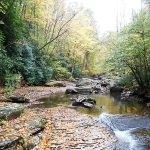
Dunbar Creek sort of hides itself nearby. Except for a short span upstream from the town of Dunbar, it rarely flows within plain sight of a road. Its lower reaches slide through a shallow gorge east and out of view of Rte. 119, secretly entering the Youghiogheny River above Connellsville. Within Dunbar Borough itÄ¢¹½ÊÓƵ confined in narrow chutes, so the creek is easy to overlook. And DunbarÄ¢¹½ÊÓƵ headwaters drain a remote forested basin atop Chestnut Ridge, where few people venture unless they are fishing for trout, looking for rattlesnakes, or hunting bears in the fall. Dunbar Creek is generally taken for granted, totally ignored, or, a few times, cursed when it floods. Yet, Dunbar Creek, especially the upstream headwaters and their tributaries make up an uncommonly beautiful place where most natural elements of our regional forests remain intact.
Even the source of its name is obscure. The stream is called “Dunbarâ€� to commemorate Thomas Dunbar, the British officer in General BraddockÄ¢¹½ÊÓƵ army left behind near what is now Jumonville to guard the wagons and heavy baggage while the “flying columnâ€� pressed on toward Fort Duquesne in 1755. Though Colonel Dunbar is not well known to history, that behind-the-lines assignment turned out the be the best stroke of luck of his life.
But Dunbar Creek is attracting attention now, and itÄ¢¹½ÊÓƵ all good. The state Department of Environmental Protection (DEP) is proposing to re-designate Dunbar Creek and most of its basin–40.2 total stream-miles (from the source downstream to the mouth of Gist Run just above Dunbar Borough) as an Exceptional Value (EV) waterway.
DEP bases the level of scrutiny and protection afforded to streams on a system of designation categories. The categories are determined by water quality and how the stream is currently used. Exceptional Value is the highest designation possible. Only a handful of streams in the state currently meet this standard, and no others in Fayette County. If Dunbar Creek is re-designated to EV the streamÄ¢¹½ÊÓƵ current high quality water, and its primary use for trout fishing, would be the over-riding considerations in any permit reviews for proposed development projects that might negatively impact the stream. Re-designation to EV would demonstrate that people beyond this region are recognizing that, in Dunbar Creek, Fayette County holds a unique natural resource that residents can take pride in, and visitors will want to experience.
Dunbar Creek is like a lot of streams in this region, geologically speaking. ItÄ¢¹½ÊÓƵ called a “freestone streamâ€� because it springs out of sandstone, with only limited contact with limestone deposits underground. The chemistry is complicated, but waters arising from limestone bedrock can absorb a lot of acidic pollution from exposed coal seams or from acidic precipitation. Freestone streams, though, like nearly all in our region, are chemically fragile (chemists call this “weakly bufferedâ€�). Only a slight amount of acidic pollution can tip the balance against fish and aquatic insects.
ThatÄ¢¹½ÊÓƵ happened in Dunbar CreekÄ¢¹½ÊÓƵ past, and it could happen again. Decades ago, mining in the headwaters allowed sulfuric acid to discharge into the stream, wiping out life in some tributaries. Only the dilution of those streams with Dunbar CreekÄ¢¹½ÊÓƵ main stem allowed even stocked trout to survive, and that was marginal. Anglers who have fished Dunbar Creek for a long time will remember the years when the Fish and Boat Commission could not stock Dunbar in early spring before the season. That was because freestone streams tend to be more acidic at that time, and with the additional acid from mine drainage, plus the acidity of melting snow, it was a total waste of lost trout to stock before later in the spring when acid levels moderated.
Now, though, things are different and much better on Dunbar. DEP is making this proposal based on 22 years of water quality and stream insect surveys dating back to 1996. DunbarÄ¢¹½ÊÓƵ water quality and the diversity of its aquatic life have improved markedly throughout that span. Fish and Boat stocks trout several times each year, early spring included, and fishermen regularly catch wild trout, spawned naturally in the stream.
Improvement is largely due to two decades of volunteer work by the Chestnut Ridge Chapter of Trout Unlimited, which raised money through annual banquets, won Growing Greener grants from the state, and worked with many partners to install a buried limestone treatment bed system near the worst of the acid mine discharges. Trout Unlimited also supplements that facility with twice-a-year additions of limestone sand to three treatment sites in the Dunbar Creek headwaters. Some partners with Trout Unlimited in this effort have been the Pennsylvania Game Commission (much of the stream basin is within State Game Lands 51), Western Pennsylvania Conservancy, Fayette County Conservation District, Fayette County Commissioners, California University of Pennsylvania, Mountain Watershed Association, Dunbar SportsmenÄ¢¹½ÊÓƵ Club, Wharton Township Supervisors and Dunbar Township Supervisors.
Anyone who values Dunbar Creek for its trout fishing, its clean water or its scenic beauty (or anyone who doesn’t, for that matter) can comment on the proposed re-designation to EV. To submit comment, go to DEPÄ¢¹½ÊÓƵ webpage at www.dep.pa.gov. Click on “public participationâ€� in the blue banner at the top of the page. A menu will drop down. Select ECOMMENT. This will show you a full page of various DEP proposals. Two-thirds down the page is: Draft Stream Evaluation Report: Dunbar Creek, Fayette County.
If you click on “Draft Reportâ€� on the left side, you can read the report about Dunbar Creek. ItÄ¢¹½ÊÓƵ interesting, though somewhat technical. If you click on “submit commentsâ€� on the far right, you will see a box in which you can offer your opinion about the proposed change. Comments must be submitted by August 13.
This re-designation can help enhance the image of Fayette County beyond our borders. Coupled with other positive developments, including progress on the Sheepskin Trail, Dunbar can become an admired outdoor recreation destination. More importantly it will protect a Fayette County resource of rare and uncommon value.