

Burrowing owls demonstrate natures resiliency

Jack Hughes
Associate Press
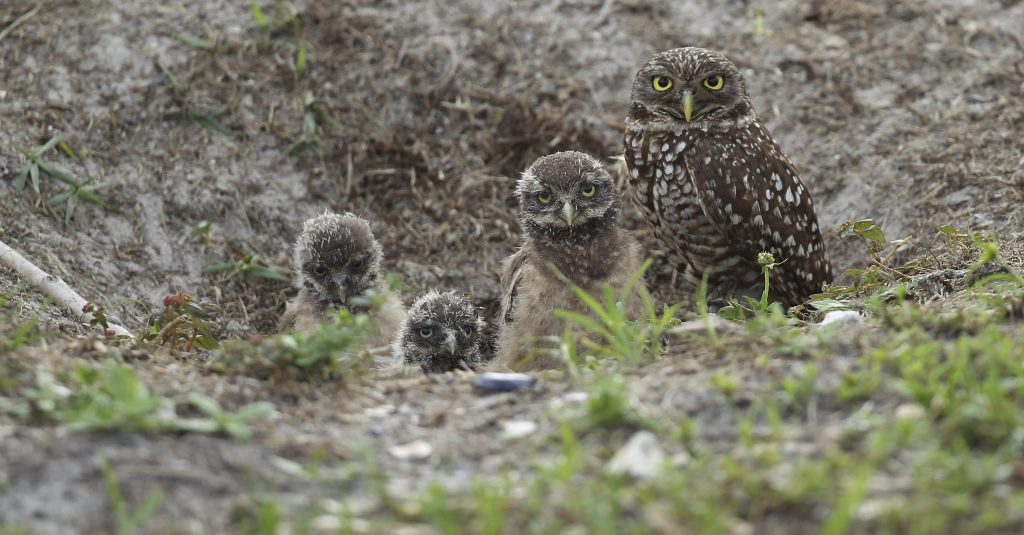
A mature burrowing owl and three young chicks sit at the entrance to their nest in Brian Piccolo Park in Pembroke Pines, Fla. Wednesday, May 2, 2012. Burrowing owls are the only North American owl that nests underground, and sometimes they will nest colonially with just a few feet separating each burrow.
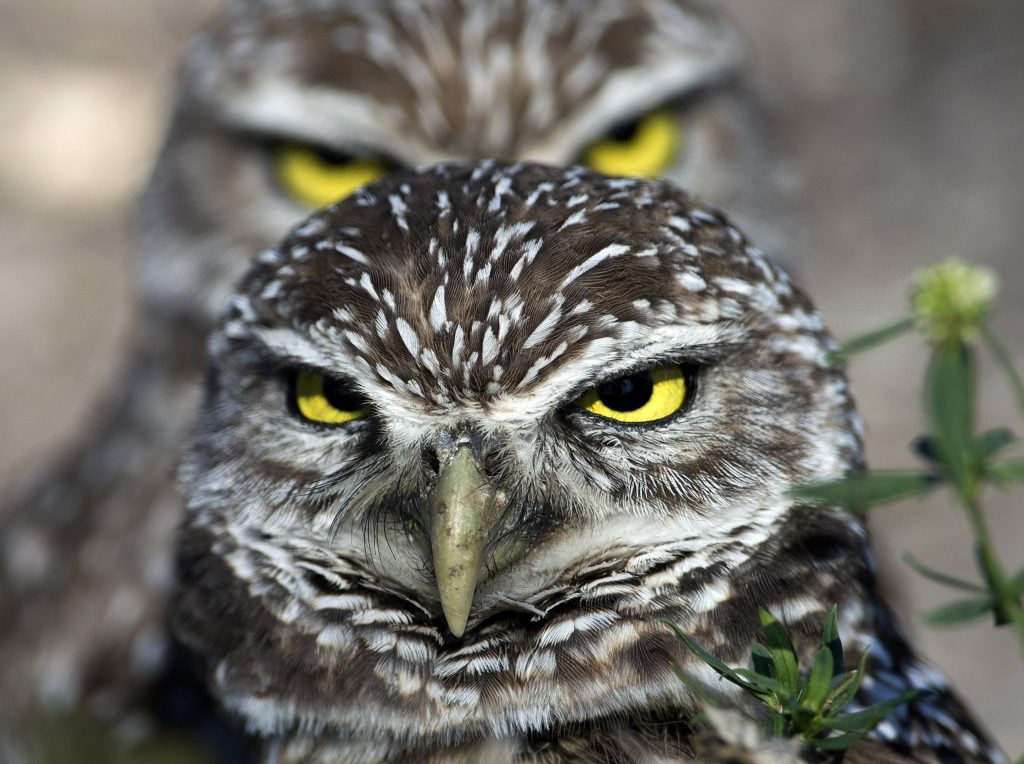
Two burrowing owls peer from their underground nest entrance, watching whatever is near their home, Friday, Jan. 25, 2013, in a Cooper City, Fla. park. Officials there is a shrinking population of 3,000 owls. Expanding home and business construction has destroyed much of what was their homes. In some places, officials are trying to draw the owls to man-made holes in protected areas.
We got to spend a few days on Marco Island, Florida, this month and were treated to sunshine and pleasant temperatures. Marco Island is part of the 10,000 Islands and is just about the last of civilization before the Florida Everglades. It is a fascinating area with an abundant wildlife population.
While the area us teeming with all different species, my favorite animal in the area is the burrowing owl, which are state threatened. They are native to South Florida and a few of our western states. Otherwise, you will not find them in any of other parts of the country.
The center of Hurricane Irma passed right over Marco Island six months ago with its storm surge, heavy rains and 120 mph winds. The island suffered a lot of damage and I was concerned about the wildlife population while the strom passed, especially the owls which I have come to love.
We were pleased to find that only one death was reported among the owl population, along with three serious injuries. The injured all recovered in a local wildlife hospital. One bald eagle was lost, too, but it had flew into a power line. Like the owls, the island eagles survived the storm with a lot of tree damage, but their nests pretty much still intact.
The burrowing owl is a success story on Marco Island in spite of the increased urbanization on the island. In the year 2000, there were just a few owls on the Island and today the population is over 350. Last season, 203 out of 234 burrow sites were occupied by 169 pairs, which produced 317 fledglings overall.
Owls can dig through the sandy soil at the rate of 7 feet per couple of hours. Nests are often 5 feet deep and from 5 to 10 feet long. Even with the storm surge and rains from the hurricane, the nests held up well and drained out very quickly. Burrowing owls are the only owl species to nest underground. Once they choose a partner, they mate for life. I love watching the owls sit on their perch or gather outside the burrow. That 360-degree neck turn is truly fascinating.
Thirty five volunteers who are part of Owl Watch of the Audubon of the Western Everglades monitor nests during the nesting season and keep lots and open areas safe for the burrowing owl sites. The volunteers also build perches for the owls near nesting sites which allow the owls to protect their nests and scout for food. Their favorite foods are lizards and frogs. Local building codes protect the owls, but still allow owners to build and use their properties. ItÄ¢¹½ÊÓƵ a great partnership in which everybody wins, and judging by the continued success of the owl population, it shows what can be done to preserve nature.