

Southwestern Pennsylvania, the land of the double spring
Jack Hughes
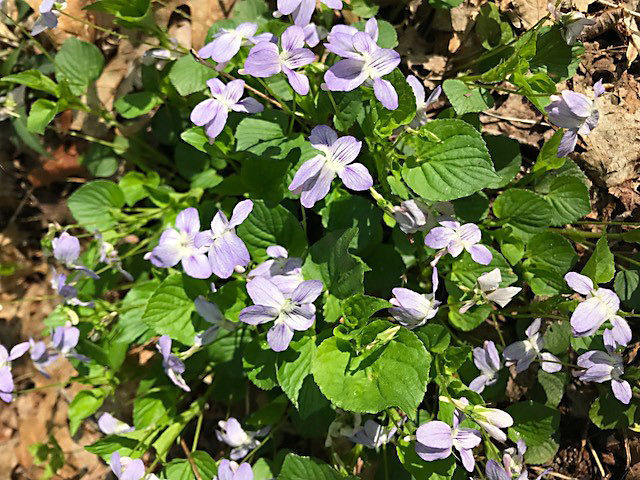
Violets are shown along the Great Allegheny Passage bike trail recently.

Jack Hughes
I think itÄ¢¹½ÊÓƵ safe to say that that the winter weather that we experienced through much of March and April if finally over. Most folks are pleased that we are enjoying some great spring weather — time to get out in the yard to clean up the debris from winter and begin mowing. Others take to the woods for a wild flower hike, a bike ride or to do some fishing. Whatever the reason, our area is filled with so much natural beauty — mountains, streams and open meadows give us such a variety of terrain. Mother Nature is busy putting the finishing touches on the landscape, adding a bit more color and the canopy of leaves to allow for some shade when the summer temperatures heat up.
On a bike ride this morning, I was treated to the sounds of the forest as the squirrels and chipmunks danced along the forest floor. In the distance the gobble of a turkey and rounding a curve on the trail a couple of deer stared at me before snorting and heading off not to be bothered by my intrusion. Along the trail, the sound of water is everywhere at this time as recent rains have fed hillside streams and small rivulets are cascading down on their journey to the larger river and the Gulf of Mexico.
The warm weather is causing a rush of spring growth and it only takes a few hours to see the landscape turn from green to a sea of vibrant color as the wildflowers continue their bloom. Everywhere there are purple, yellow, white and lavender violets and the purple wild geranium are replacing earlier wildflowers that have already bloomed and faded. On a sad note is the loss of the natural dogwood trees that, at one time, colored our woods with their vibrant white blossoms. It almost looked liked it had snowed when you surveyed the woods. Only a few survive and these seem to favor open areas at the bottom of the hillsides. When we bought our home in the mountains, we had 12 natural flowering dogwood trees. Today we have only one left and it struggles to survive.
What is most striking to me is the visual picture that one gets when looking at our mountains from the lower elevations. You can see the line of spring growth inching up the mountains each day.
The bottom is fully green, the middle has some green and the tops of the mountains still look, well, wintry. Lower elevations are about two weeks ahead of the mountains and are now fully green and most of the flowering trees and shrubs are now blooming or have already spread their color. If you live in the lower elevations you can experience spring all over again by just driving up to the mountains.
In the fall the reverse is true when mountain folks first see the turning of the leaves and the fall colors and then some two or three weeks later the colors spread down the mountain sides and into the lower elevations. Both the early spring in the lower areas and the early fall in the higher terrain are the result of temperatures in the mountains being some 5 degrees cooler. This holds back spring growth and in the fall allows the leaves to begin to change earlier.
This whole process is truly fascinating and I am ever so thankful to live in an area with such beauty and diversity.
Happy spring!