

Cleaning fish and game an essential, insightful task
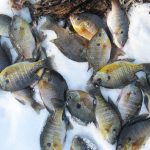
A golfer, my wife Kathy is fond of joking that I should take up that sport because when you have a good day on the course, no onerous tasks await you afterward. You share a drink with friends, compliment one another on long putts, and you’re done. SheÄ¢¹½ÊÓƵ referring, I know, to my fishing and hunting. Success in those pursuits results in game or fish to skin, fillet, butcher or pluck, always in the cold and dark, at late hours when a chair by the woodstove tempts with warm comfort.
Poking fun about such self-imposed duties is only natural, and I’ve done it myself. When my son Aaron was younger, he likely wearied of my jesting about the generational change that evolved in the preparation of bounty gleaned outdoors. “When I was a boy,â€� I told him, “It was the kidÄ¢¹½ÊÓƵ responsibility to clean any fish or game that my dad, uncles and I brought home.
“But, nowadays,â€� I went on with the punchline, “somehow, it morphed into DadÄ¢¹½ÊÓƵ job. WhatÄ¢¹½ÊÓƵ up with that?â€�
Something about the game-care obligation records deep memories that reach back even further. When I was very young, too young to go along on hunts, my dad, uncles and their friends returned from the woods with jaw-dropping bags of wild pheasants, grouse, rabbits and squirrels. While the men relaxed inside–before they cleaned their game–I lingered there in the cold admiring those gorgeous ringnecks. Once, I was so stricken by those birds’ splendor that I hid my fatherÄ¢¹½ÊÓƵ penknife to spare them from final dissection, as if that would make any difference at that point in their fate.
It helps to approach cleaning game as something that simply needs done. Ducks are admittedly tedious. Their fine puffy down is hard to remove from corners and folds. Fortunately, in a way, I don’t get many, though roasted wood ducks make a fine repast.
Turkeys pose a different challenge; they’re big. One option is to just fillet out the breast meat, which accounts for 90 percent of the edible flesh. If your image of an oven-ready turkey is a commercially-produced Butterball, you would not recognize the lithe, athletic anatomy of a wild turkey after plucking. My in-laws long forbade me to serve a wild bird at Thanksgiving because the rangy creature in no way resembled its over-fed, store-bought substitute.
I have done it but filleting out a turkeyÄ¢¹½ÊÓƵ prime breast cuts feels like a betrayal to the bird, whose drumsticks, if I’m honest, are bundles of indestructible tendon. So, I pluck, which takes a long time, especially when your fingers are wet, cold and shedding flexibility. Occasionally, I read about “shortcuts,â€� like dipping the bird in boiling water or encasing it in melted wax so the feathers “peel right off.â€� But I only face the task once or twice a year, so it seems more efficient to just go ahead and get it done, without elaborate contrivances.
I skinned a lot of squirrels when I was younger because squirrel was revered in our home as the finest of all wild meats, a view I still hold. But I haven’t shot a squirrel in a long time, partly because the skinning of a small, tightly constructed mammal is somewhat tiresome, but more so because the most enjoyable part of high-dining on squirrel was sharing the experience with other people who relished it too. That culture feels harder to come by now. So, I contemplate bagging a mess of squirrels for the table, but they always scurry off unmolested.
Cleaning wild game teaches you things firsthand that you otherwise would never appreciate. ItÄ¢¹½ÊÓƵ amazing to me that there is no direct connection between the bones of a deerÄ¢¹½ÊÓƵ front leg and the rest of its skeleton. But it makes elegant sense when you think about how a deer lives.
The front leg “floats� free, linked to the ribcage, not by bone, but through flexible yet incredibly strong layers of muscle, cartilage and tendon. When a deer bounds through the woods, its front feet hit the ground with great force. To withstand that impact, a rigid bone-to-bone joint would need to be massively built, bulk that a deer can’t afford. So, it compensates with a flexible link that is streamlined but absorbs the shock. Pretty neat.
A deerÄ¢¹½ÊÓƵ back leg is built with opposite purpose. It must propel the animalÄ¢¹½ÊÓƵ weight forward. So, that rear joint is a solid ball-and-socket. It rotates as needed but itÄ¢¹½ÊÓƵ also rigidly efficient at transferring energy from muscles into movement. Pretty neat, too.
Of course, a domestic cow exhibits that same design, inherited from wild bison-like ancestors. The modern cow has more built-in agility than it needs for its unchallenged life in the pasture.
Cleaning game and fish isn’t so objectionable. The right state of mind is an asset, accepting that proper care of anything you take it upon yourself to kill is only a necessary part of the larger act. Once you’ve pulled the trigger or creeled a fish, you really have no choice, so set your mind, roll up your sleeves and get it done.