

Birding for the homebound: In this time of forced confinement, take pleasure and inspiration in birds
Ben Moyer
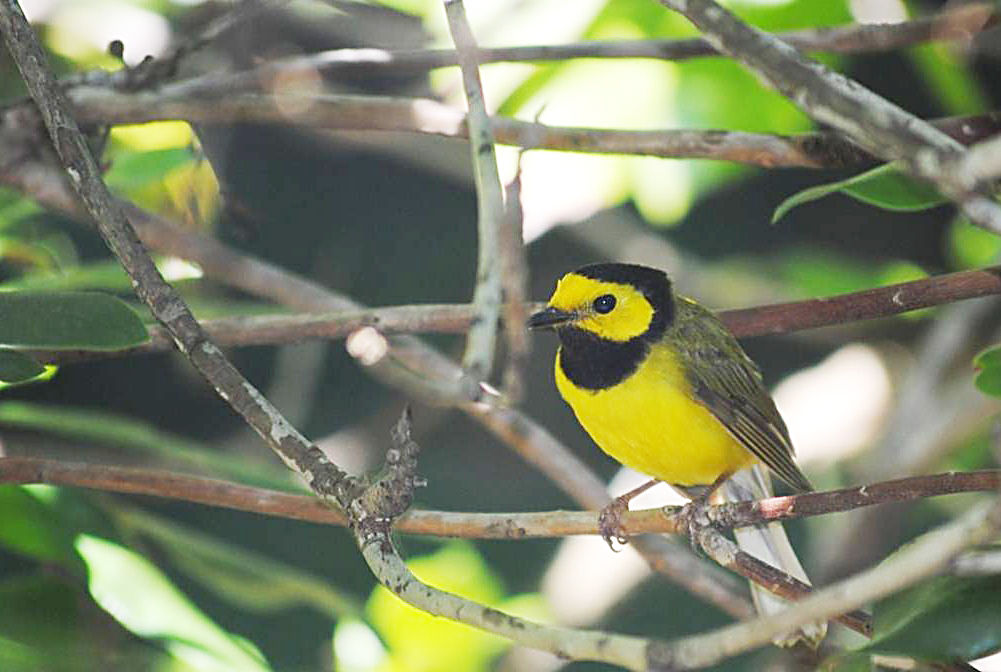
Beginning birders can discover a surprising variety of birds near home. This hooded warbler (nicknamed the “Steeler birdâ€� by the columnistÄ¢¹½ÊÓƵ wife) frequents shrubbery in a mountain backyard.
Ben Moyer
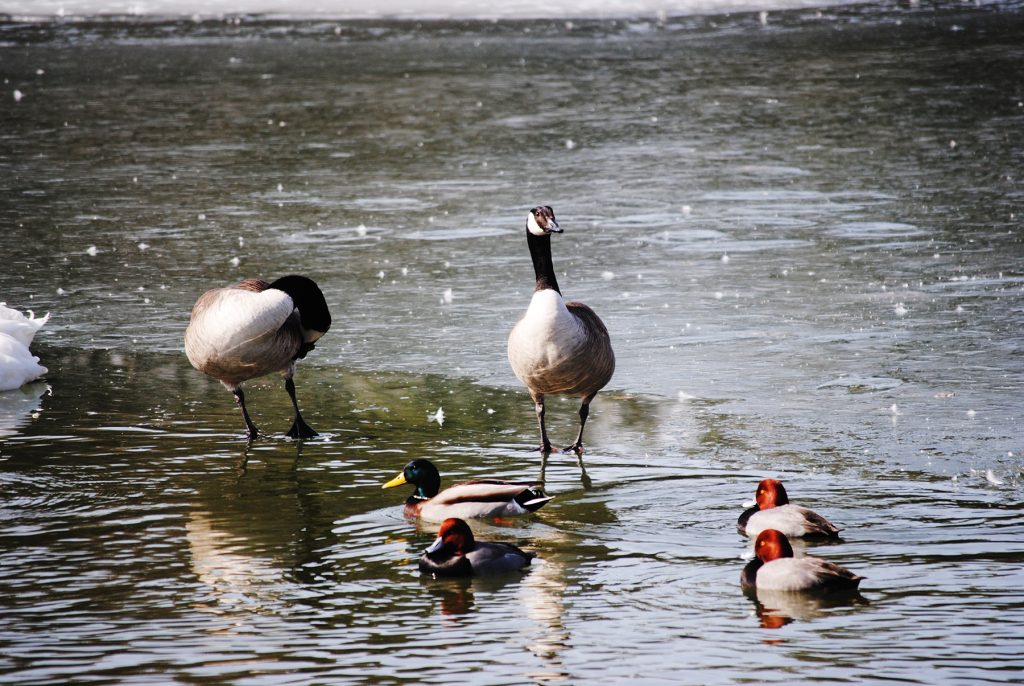
A short drive to Dunlap Creek County Park near New Salem revealed these redhead ducks (foreground), mallard duck, and Canada geese (background)..
Ben Moyer
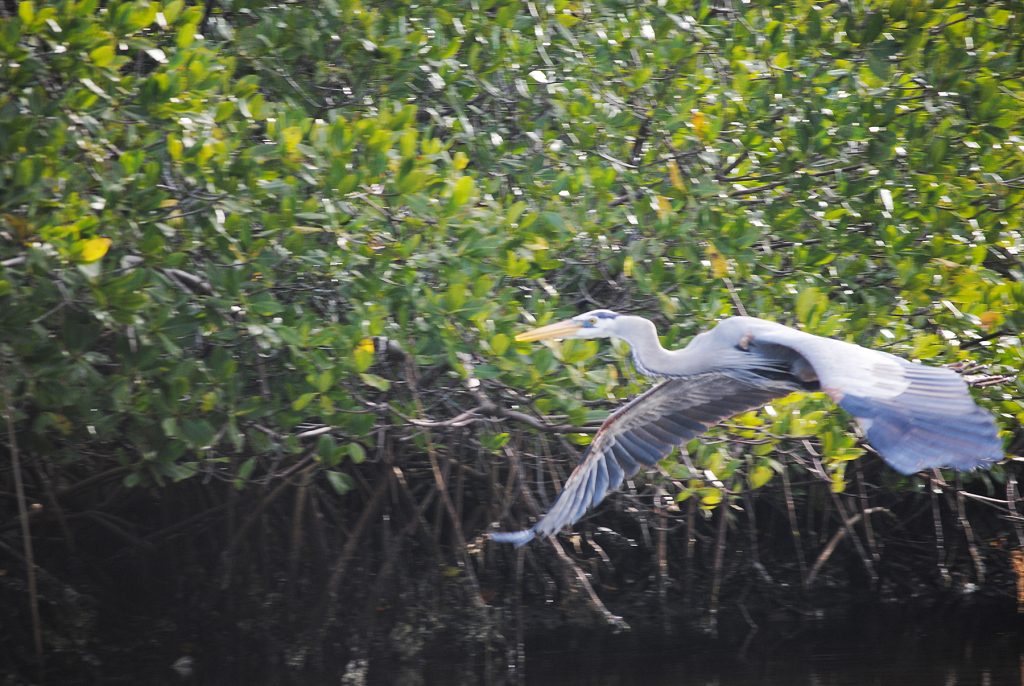
This great blue heron flushed from a mangrove swamp inside Ding Darling National Wildlife Refuge in Florida, but a bird of the same species raided friends’ backyard goldfish pond in South Union Township last summer.
There is nothing good about this situation we’re in. Still, some aspects are better than they might be. One is that what will hopefully prove to be the peak of confinement is happening in spring, the season when nature is most generous with marvels. Even if we are marooned at home much of the time, springÄ¢¹½ÊÓƵ resurgence is there to behold, especially birds.
Birds are a diverse, colorful, and active expression of the natural world. Birds of some kind are obvious anywhere, even the most urban places. Millions of people enjoy watching birds; some passionate, others more casual. This could be a time to join them in a study that spices a lifetime.
Birders around here are fortunate. Nearly 200 species of birds are known to nest in Pennsylvania, and dozens more migrate through each spring and fall. We can’t claim all those 200 in our local area, but short trips to our public places with low people-density lead to forest, grassy parks, and wetland backwaters and lakes. Each kind of setting harbors its own suite of birds. And here, most residential districts feature strands of woods, shrubs, and open sky, so birds can be noted and enjoyed at home. Close friends who live in South Union Township were surprised to see a great blue heron, a large, fish-eating, wading bird normally associated with wild swampland, peering down into their goldfish pond last summer. After a few unfortunate casualties among the fish, my friends covered the pond with screen. But the heron wouldn’t give up. For weeks it returned to straddle the pond, hoping to somehow spear more fish.
No pastime presents fewer obstacles to entry than birding. There are no fees, and you don’t need equipment. Even if you do opt for birding gear, the requirements stop at binoculars. Not long ago, a field guide to birds (in book form) would have been recommended here. I still use mine but anyone with a smart-phone can now find bird-identification help on-line. Maybe itÄ¢¹½ÊÓƵ a “senior habitâ€� but I still find a book handier to use. The best is the timeless “A Field Guide to the Birdsâ€� from the Peterson Field Guide Series (The series also offers guides to trees, wildflowers, insects, shells, edible plants, and more).
The only rule in birding is simply to pay attention. ItÄ¢¹½ÊÓƵ surprising how many different birds will reveal themselves after just a few moments open to what might be seen. Once cultivated, observation becomes habit. You will find yourself noticing birds that would have escaped appreciation before. Once, waiting at a stoplight, I enjoyed the sight of an adult bald eagle cruising over downtown Waynesburg because I’ve nurtured the habit of noting such things. I don’t remember now, but I hope I didn’t cause the driver behind me to toot the horn when the light changed to green.
New birders may be deterred by the fear of trying to memorize different birds’ colors and patterns. But smart birding is much easier than committing plumage to memory, and so much more fun. Identifying a bird is more a matter of whittling down the choices, at least thatÄ¢¹½ÊÓƵ how itÄ¢¹½ÊÓƵ taught through PetersonÄ¢¹½ÊÓƵ Field Guide. The guide encourages you to note more than just a birdÄ¢¹½ÊÓƵ plumage. Also consider its size, its behavior, the time of year, its song, and the kind of place you observed the bird. Put all those factors together and you arrive at a few choices. Study the illustrations, or on-line photos, and you can make an informed confirmation of the bird you’ve seen.
Backyards and open park settings are good places to begin as a birdwatcher. There are few obstructions to vision, and many birds that frequent such places are already familiar — robins, grackles, bluebirds, and others. Once you master the birds of open settings, you can advance to woodland. Birdwatching in forest can be more of a challenge, but also more rewarding. Our most diverse, interesting and colorful songbirds, including our roughly two dozen species of multi-hued warblers, haunt the deep woods.
ItÄ¢¹½ÊÓƵ a mistake, though, to assume that every one of us can access such priceless wild places. Another book on my shelf reaches out to those who cannot, and I was privileged to meet the soft-spoken man who wrote it. His name is John C. Robinson, and he titled his book “Birding for Everyone.â€� RobinsonÄ¢¹½ÊÓƵ premise that even casual attention to birds can excite, engage and inspire people fits this moment well. He maintains that even in — especially in — big city surroundings, birds are an accessible and worthy diversion. Birding for Everyone is available from most of the on-line book-sellers, and you can see Robinson sharing his thoughts on the value of birding in urban neighborhoods on YouTube. Just type in: John C. Robinson, Birding for Everyone and you’ll find his presentation. The Roving Naturalist is another good instructional series you can watch on-line.
As we enjoy the outdoors this spring, we must never forget the healthcare heroes who cannot now engage in such pleasures. Thank you to all and take care.
Ben Moyer is a member of the Pennsylvania Outdoor Writers Association and the Outdoor Writers Association of America.