

January Spark: On a Pa. flintlock hunt, all must go right
Ben Moyer
Pennsylvania has offered a special flintlock deer season, after Christmas, since 1978. West Virginia instituted a similar hunt two years ago, called the “Heritage Season� in the Mountain State.
Ben Moyer
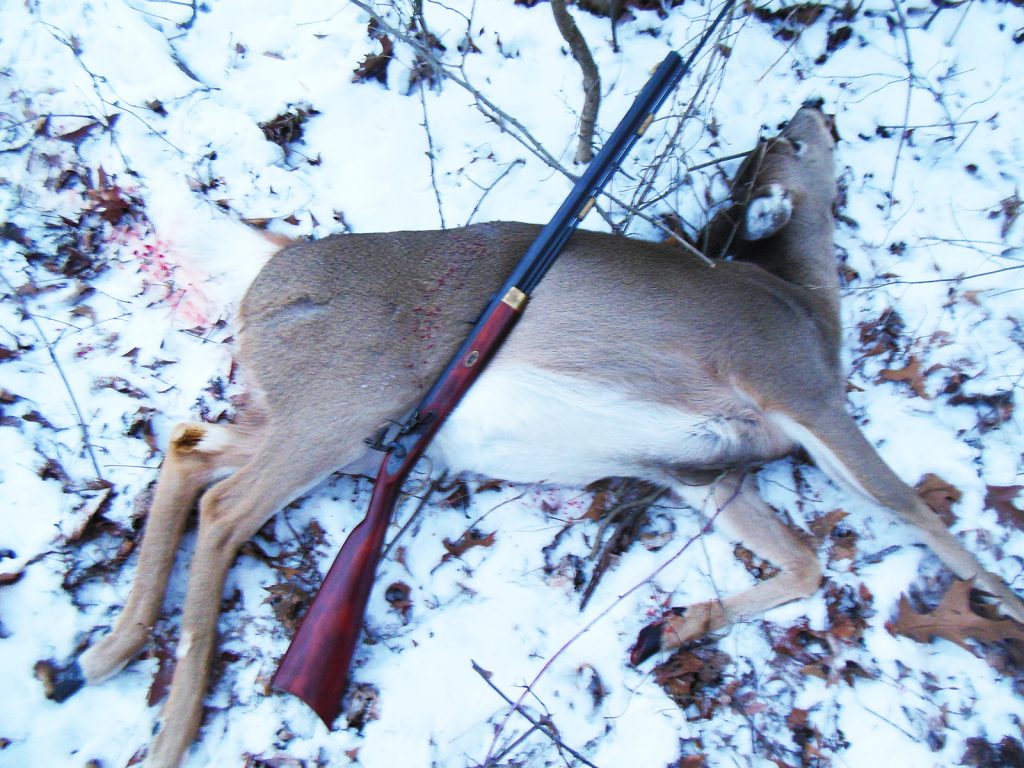
The flintlock season offers high-quality outdoor experience but, due to a flintlockÄ¢¹½ÊÓƵ limitations, relatively few deer are taken.
Last November, this column discussed the opening of deer season. But unless you’re an avid deer hunter, the span when itÄ¢¹½ÊÓƵ legal to take a whitetail may be longer than you think. The big event, regular firearms season, ended back in mid-December but the final moments of opportunity ticked away only last Monday, Jan. 20, at sunset.
Deer hunters enjoyed a more than 3-week bonus this year (Dec. 26-Jan. 20), but thereÄ¢¹½ÊÓƵ a catch to this last-gasp season. To participate, you must go primitive. The only legal firearm for hunting deer in Pennsylvania after Christmas is one with flintlock ignition, state-of-the-art technology when George Washington, Half King, and the unfortunate Ensign Jumonville kicked off the French and Indian War atop our Chestnut Ridge in 1754.
An introductory brief is appropriate. Modern rifles fire a sealed cartridge with bullet, propellant and primer all contained in the same unit. That cartridge is loaded into the breech where itÄ¢¹½ÊÓƵ protected from weather.
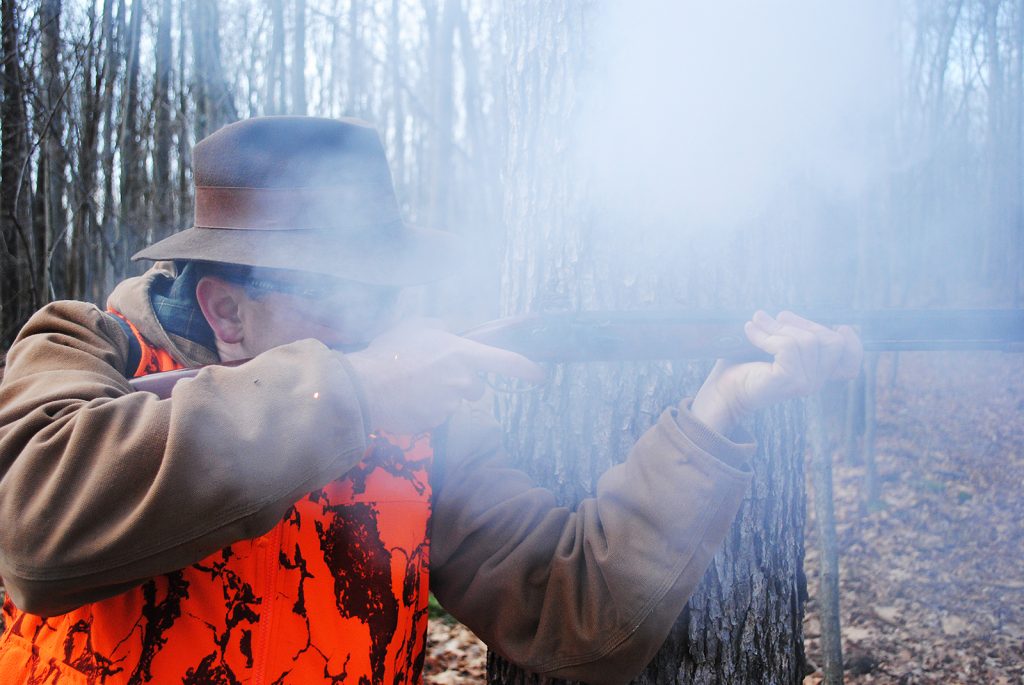
To load a flintlock, you push gunpowder and ball (powder first) down the barrel with a ramrod. Ignition begins outside the breech in the open air, when a wedge of stone (the flint) clasped between two jaws on a spring-cocked arm, strikes a steel plate (the frizzen) which (hopefully) showers sparks into a little pan containing fine-ground black powder. The sparks ignite that primer, which burns through a small hole in the side of the barrel to explode the main charge, seated behind the leaden-sphere bullet. A lot of things can go wrong, resulting in an impotent “click� instead of the hefty “bang� you hoped for.
ThereÄ¢¹½ÊÓƵ no intention to be irreverent here, but experience with a flintlock makes you wonder how the combatants at Fort Necessity (July 1754) managed to inflict as many casualties as they did (The British regulars and Virginia militia suffered 101 killed or wounded, the French and Indians 22). Much of the battle was fought in a drenching rain. Ever heard that folksy saying “Keep your powder dryâ€�? That goes back to the flintlock days when wet powder meant no “bang.â€� No bang meant no harm done to an enemy, or no fresh meat if you were hunting.
ThereÄ¢¹½ÊÓƵ another surviving saying with frontier roots. A “flash in the panâ€� is a flintlock misfire that happens when the flint sparks, but the priming powder fails to burn through to explode the main charge. ThereÄ¢¹½ÊÓƵ plenty of smoke, but still no bang.
Rain and warm weather hampered this yearÄ¢¹½ÊÓƵ flintlock season–warm enough to dull hunting motivation. A few mornings featured thin snow in the mountains, but no snow graced the lowlands.
Still, the last days were colder. I picked a promising spot on a Greene County hillside and set up with the flintlock pointing downhill, to my left, where I judged it most likely that a deer might appear. I don’t hunt from a tree-stand, so I try to set up to minimize movement if a shot is presented.
The fallen leaves were frozen, crisp; it was impossible to walk quietly. A little after 9:00 a.m., the unmistakable “crunch, crunchâ€� of deer walking in the leaves seeped through the cold woods. ThatÄ¢¹½ÊÓƵ a moment that makes your breath snag, short and quick, which may explain why humans in the modern age continue to hunt deer at all.
The crunching got louder, and it was continuous, indicating multiple deer. A single deerÄ¢¹½ÊÓƵ cadence is more irregular, as it stops and starts. But when many deer are traveling together, unalarmed, at least one of them is always making a step.
When the leaves are “crunchy� in that way, it can be hard to tell the direction from which a sound originates. Finally, it was clear the deer were approaching from behind, over my right shoulder, the worst possible angle. There is no way a hunter on the ground can turn around and get in position to shoot at a white-tailed deer in that situation. Try it and they’re gone, and you feel foolish. Your only chance is to remain motionless, hoping they’ll pass behind you, angle downhill, and offer a shot to your left.
I risked a slow turn of the head and watched the deer close the gap under the bill of my hat–quite a sight as their puffs of breath steamed out in the chill. The first few passed behind as hoped, but a big doe in the middle of the string stopped and peered right at me; from 15 yards (antlerless deer are legal game in the flintlock season).
When she stomped a front foot, I knew I was made. Then she snorted, wheeled and the whole bunch crashed away, white flags flailing in every direction.
Later, a single deer paced unaware into my ideal shot zone, downhill and left. I watched it over the sights as it ambled around for several minutes within lethal range (nothing is sure with a flintlock). But I couldn’t pull the trigger. It was a 6-point buck–three on each side, counting the brow tines. ThatÄ¢¹½ÊÓƵ not a legal deer in Wildlife Management Area 2A, all of Greene and that part of Fayette County west of Rte. 119.
That restriction was imposed in 2003. I understand the ruleÄ¢¹½ÊÓƵ logic, but those frontier hunters in the 1750s had some advantages over us moderns, after all.
Ben Moyer is a member of the Pennsylvania Outdoor Writers Association and the Outdoor Writers Association of America.