

Rainbow boost
Stocking trout to provide recreational fishing is such a part of our outdoor culture that it almost seems natural. But trout-stocking is more complex, with more potential complications, than fisheries managers once believed.
Many surviving native fisheries around the country have been harmed by dumping in hatchery-raised trout of species alien to those waters. In other places, native populations have been diminished by reproductive mixing with stocked fish of the same species, because the hatchery plants lacked the genetic resilience of wild fish.
Artificial stocking was an almost automatic response to the polluted waters and depleted native fisheries resulting from the industrial revolution and 19th century logging boom across Pennsylvania. Most streams could no longer support naturally reproducing trout populations, and the state Fish Commission began raising and stocking trout around 1888. But demand for recreational angling grew fast, and state hatcheries had to keep up. By 1932 the Commission was stocking 1 million trout each spring.
By late May of this year, the Fish and Boat Commission will have planted about 3.2 million brook, brown, and rainbow trout in 700 streams and 130 lakes around the state for the upcoming season. Cooperative trout nurseries run by sportsman clubs and other groups raise an additional 1.2 million fish for public angling. PennsylvaniaÄ¢¹½ÊÓƵ stocking program may be one of the largest such enterprises in the world.
But observant anglers may notice a difference this year, depending on where they fish. The Fish and Boat Commission has begun to reduce the number of brook trout it will stock and increase plantings of brown and rainbow trout.
The shift isn’t huge this year but will grow more pronounced in the future. In 2019, the commission stocked 440,000 brook trout, but they’ll cut that total to 364,000 in 2020. Browns and rainbows will replace that reduction.
There are several reasons for the shift. Some deal with economic efficiency–to get more recreational “mileage� from stocked fish, some attempt to cope with changing environmental conditions, and, most importantly, the drop in brook trout stocking is intended to reduce potential harm to surviving populations of wild, native brook trout, mostly in headwater tributaries.
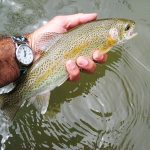
Brook trout our only stream-dwelling trout native to Pennsylvania (The related lake trout is native to Lake Erie). Rainbow trout, native to Alaska and the Pacific coast, thrive as hatchery-raised fish, but rarely reproduce when stocked in Pennsylvania waters (Local anglers can tell you that in at least two local streams, that generality doesn’t apply). So, Fish and Boat plans to release more rainbows because they present less risk of establishing populations that compete with native brook trout for habitat and food.
But the primary conservation reason for the shift away from stocking brook trout is that brook trout–both wild and stocked–are the preferred host for an invasive species that could wreak great harm on wild populations–gill lice. These tiny crustaceans have been found in several streams in central Pennsylvania, and one here in the southwest. The lice look like tiny grains of rice, and they live on the inner, red parts of a brook troutÄ¢¹½ÊÓƵ gills. Blood is close to the surface there, and the lice latch onto the gill tissues and extract nutrients from the troutÄ¢¹½ÊÓƵ blood. Heavy infestations can kill trout or weaken them to succumb to other stresses. Because brook trout are the favored host of the lice, and because stocked brook trout could possibly carry the parasites–though sample lots of Fish and Boat hatchery fish are inspected and certified–the commission wants to reduce the number of possible hosts for this dangerous pest.
Another justification for stocking more rainbow trout is that, according to Fish and Boat, studies have shown that stocked rainbow trout are less mobile within a stream system than stocked brook or brown trout. Rainbows, then, remain more accessible to fishermen because they tend to stay nearer to their stocking location. The commission wants stocked trout to be accessible to anglers because they are expensive to raise. A stocked fish not caught is, essentially, wasted.
Both rainbow and brown trout (native to Europe) are also more tolerant of warm water temperatures than the brook trout. Many credible studies, including local research by scientists at California University of Pennsylvania, document that PennsylvaniaÄ¢¹½ÊÓƵ trout streams are reaching higher summer temperatures, for longer periods, than 30 years ago. Stocking relatively temperature-tolerant fish where appropriate won’t help wild brook trout survive warmer water in their haunts, but browns and rainbows will more reliably provide fishing recreation if spring and early summer are hot.
A review of the trout stocking schedule shows that anglers fishing Chaney Run in the mountains near Elliotsville are the only local fishermen likely to notice the strategic shift away from stocking brook trout this year. Chaney Run, a tributary to Big Sandy Creek, was always stocked with brook trout in the past. This yearÄ¢¹½ÊÓƵ schedule, however, indicates ChaneyÄ¢¹½ÊÓƵ fish will be exclusively brown trout. Several streams in Somerset County may be affected by the change.
Except for special-regulation sections that permit fishing year-round, stocked trout streams are closed to fishing from March 1 until the season opens, this year on April 18. Trout stocking schedules, plus more information on PennsylvaniaÄ¢¹½ÊÓƵ trout stocking program, its history, cost, and objectives are available on the Fish and Boat CommissionÄ¢¹½ÊÓƵ website at www.fishandboat.com.
Ben Moyer is a member of the Pennsylvania Outdoor Writers Association and the Outdoor Writers Association of America.