

Feasting on fish: Get those trout out of the freezer and serve them with flair.
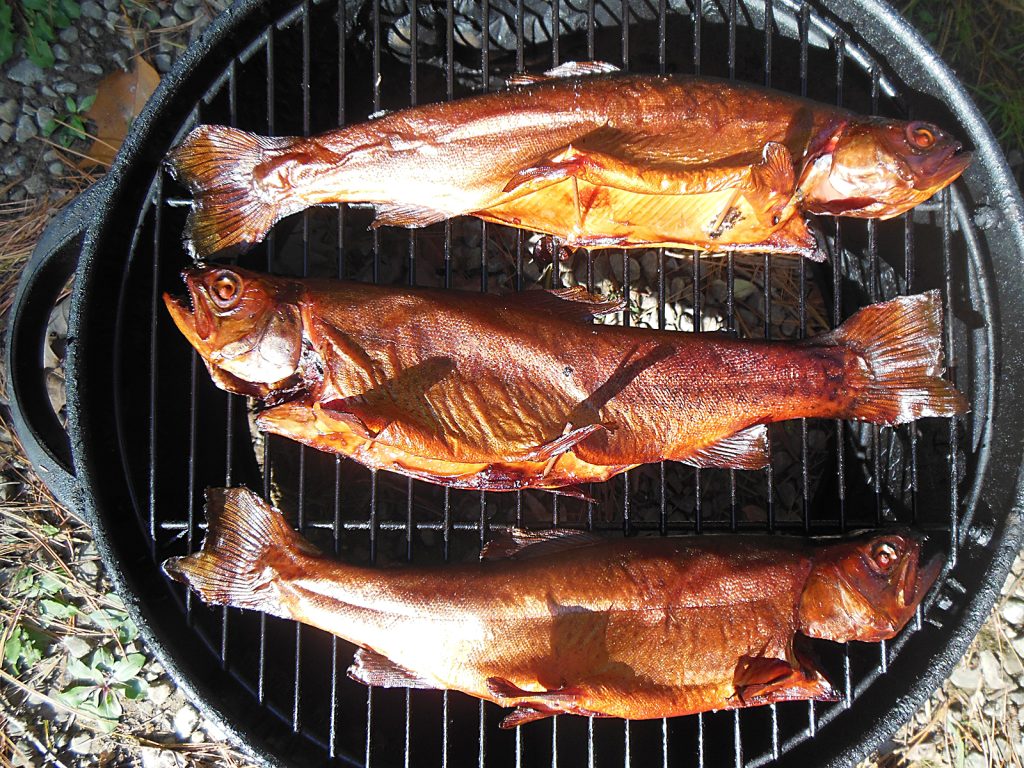
Smoked trout are a novel and delicious way to serve your catch. Follow manufacturerÄ¢¹½ÊÓƵ recommendations for best results from your smoker. (Photo by Ben Moyer)
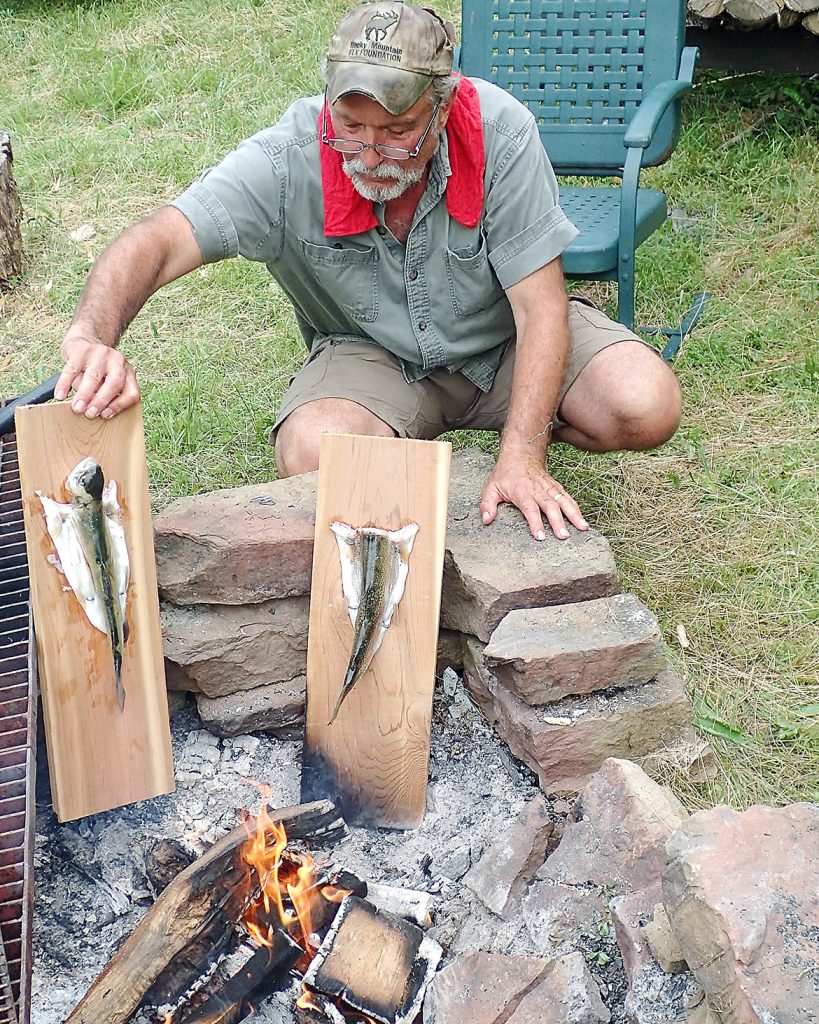
The writer broils trout on cedar planks left over from house-siding. The charring cedar imparts flavor that complements the fish. (Submitted photo)
Trout season started out with a surprise, then a span of high water. But conditions have settled, crowds (which weren’t supposed to be crowds anyway) have thinned and, hopefully, readers have a few trout in the freezer.
Trout have a way of staying there too long. Because their preparation takes some special but simple care, itÄ¢¹½ÊÓƵ easy to put their cooking off until an ideal time. ItÄ¢¹½ÊÓƵ better to use trout when they’re fresh, or at least before they’re freezer-burned. So, how to serve those trout to maximize your familyÄ¢¹½ÊÓƵ and friends’ enjoyment?
Paradoxically, the recipe for trout I savored most, years ago, is my least favorite way to prepare them today. The gusto of those long-ago trout feasts was all about the setting. We camped out deep in the Monongahela National Forest, along West VirginiaÄ¢¹½ÊÓƵ Cranberry River, and dined on big skillets of trout for days, dusted with flour then fried crisp over a campfire in the bacon grease we’d saved from breakfast. Do that on a kitchen stove at home and your fish will lack a “certain something.â€� Plus, that method does pose some cardiological considerations that we never thought about back then.
Trout can be fine-dining, or they can be bland and forgettable. I don’t keep many trout these days, so I like to do those with some flair and imagination. Here are some ideas:
Smoked trout
You can smoke trout whole or as fillets. I like to do them whole for the presentation. Place the fish in a brine solution of one-half cup kosher or pickling salt to each quart of water. Throw in a big handful of brown sugar for flavor.
Place the fish in the brine so they are completely submerged. I brine mine overnight, but most recipes call for about three hours. I don’t see the difference.
Take the fish out, wipe off excess brine with a paper towel, and let them dry on a rack in the refrigerator overnight. This does make a difference. The fish must be completely dry for the smoke flavor to “stick.�
Meanwhile, place chips, chunks, or twigs of your preferred wood in a bucket of water, also overnight. The wood smokes best if green or wet. I generally use hickory because itÄ¢¹½ÊÓƵ a great taste and it grows in the woods near my house. You can get bags of smoking chips in the outdoor-living sections of retail stores.
There are many ways to improvise a smoker, but itÄ¢¹½ÊÓƵ easier to get consistent results with a commercial model–either electric, charcoal, or propane. Follow the manufacturerÄ¢¹½ÊÓƵ instructions for setup. I’ve always used propane and like the results.
Get the fire/heat going and aim for a temperature of about 180 degrees. Place the fish on smoking racks with plenty of space between for smoke circulation. Whole fish take about three hours, fillets less. When the fish take on a rich “barkâ€� color from the smoke, and if you push with a fingertip and the flesh “cavesâ€� but slowly resumes its shape, itÄ¢¹½ÊÓƵ done.
Smoked trout is at its best served chilled. ItÄ¢¹½ÊÓƵ wonderful as an appetizer or novelty snack, but a little goes a long way because of the rich flavor.
Grilled trout
Trout are best grilled whole; fillets dry out too quickly. Dry the fish well, as for smoking, then brush on some olive oil. Smear the inside of the body cavity with butter, season inside and out, liberally, with salt and pepper, then tuck some lemon slices inside. Grill until nicely browned, then turn with a wide spatula and grill the other side.
Tip: clean the grill well and oil the rack before cooking to prevent the fish from sticking.
Trout baked in foil
Again, whole fish are preferred. Prepare the fish exactly as for grilling but place them on a sheet of aluminum foil. Add a splash of lemon juice or beer if you have it with you (both works nicely), then fold the foil so it seals the fish inside. Grill for about 10 minutes per side (this may take some experimentation to get right).
A friend and I have been doing this by raking some coals out of a campfire and placing the foil packets directly on the coals. Never fails to please.
Cedar-plank broiled trout
I saved some odd ends from the cedar boards we used for siding on the house. They impart a wonderful flavor that complements fish. I take a whole fish, gutted, and season with salt, pepper, and lemon, then spread it wide on the plank with the back of the trout, or “skin-sideâ€� up. Use tacks or fencing-staples to pin the fish to the plank. Just prop the plank a few feet from a campfire and let the fish broil until the juices run down across the wood and the skin browns. This method is a bit more “troubleâ€� but the results are worth it. And thereÄ¢¹½ÊÓƵ no cleanup; you can use the plank for your plate.
Consider releasing all wild or native trout you catch, as they’re more valuable in the stream than on a dish. Stocked trout are fine for these preparations.
Ben Moyer is a member of the Pennsylvania Outdoor Writers Association and the Outdoor Writers Association of America.