

Fair Trade: Eagle salves letdown on turkey hunt
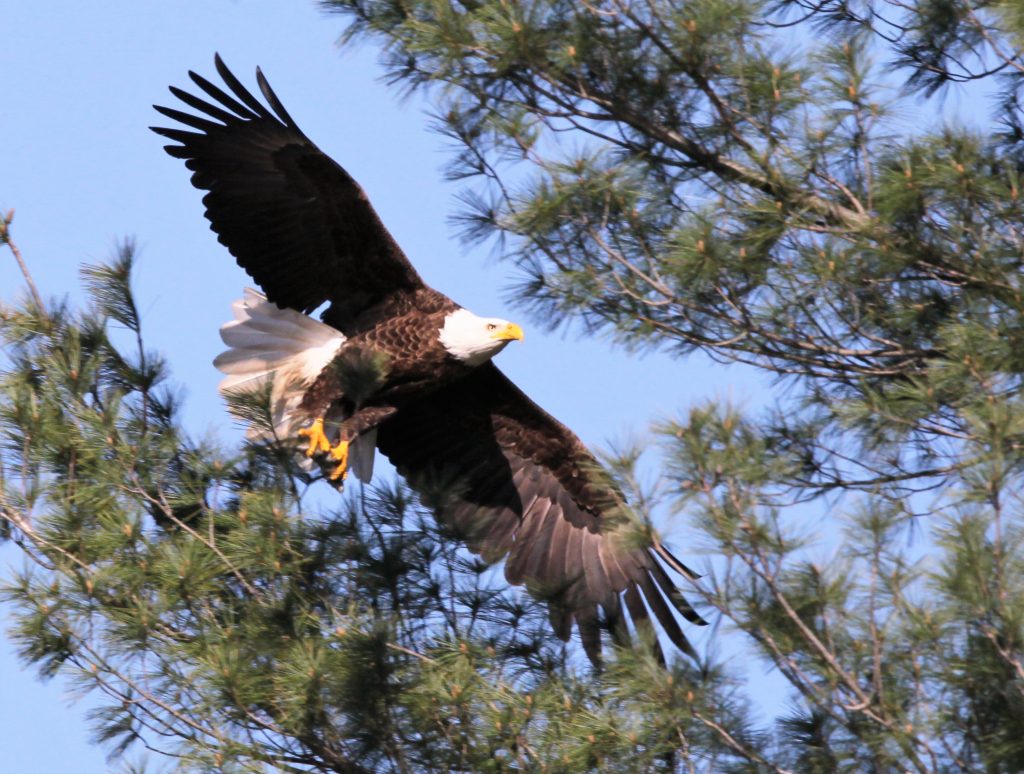
Photo courtesy of Pennsylvania Game Commission
Sightings of bald eagles are increasingly common along the Youghiogheny River corridor and at local lakes such as Cranberry Glade Lake, Indian Creek Reservoir, and Virgin Run Dam.
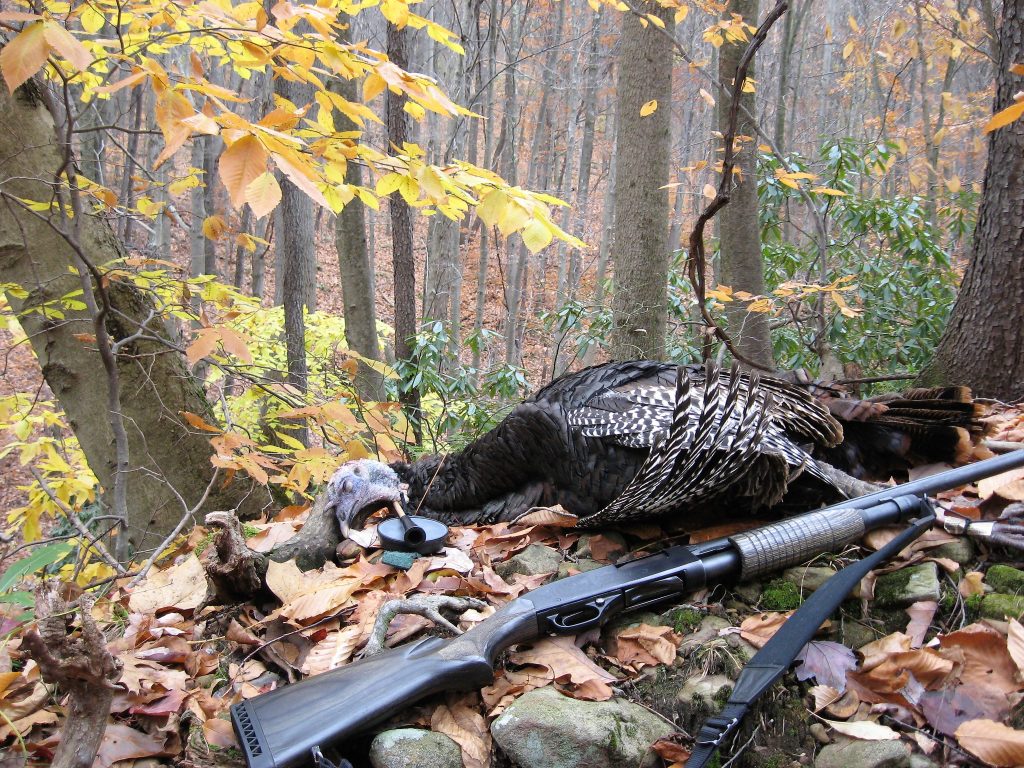
Ben Moyer
The columnist was unsuccessful tagging a turkey like this one on the 2020 fall seasonÄ¢¹½ÊÓƵ opener, but other encounters in the woods made the hunt a success.
Gleaning a turkey direct from the Pennsylvania woods was once a popular way to secure that Thanksgiving bird. But participation in fall turkey hunting has declined in recent years, while enthusiasm for the spring hunt remains robust. A decade ago, the Game Commission estimated the state had about 200,000 fall turkey hunters, but current surveys show that slightly more than 10 percent (96,000) of the stateÄ¢¹½ÊÓƵ 800,000 or so hunters went after a turkey in the 2019 fall season. Only about one in 10 those hunters bagged a “guest of honorâ€� for their holiday table.
Despite the cooling zeal for hunting turkeys in autumn, it remains one of my favorite pursuits. Wild turkeys were scarce around here when I began hunting pheasants and grouse with my dad as a kid. But later, I was invited to hunt from a friend and colleagueÄ¢¹½ÊÓƵ camp in Potter County where turkeys were abundant. My friend, Lou Hoffman, was publisher of Pennsylvania Sportsman magazine, and he knew and loved the rugged Potter County hollows. He always had a plan for how to sneak around a point or peek over the contour to surprise a flock. Searching out turkeys was physically demanding on those steep slopes, but we enjoyed a lot of action scattering flocks and calling birds back to the gun.
Things always change outdoors, and we now have more stable turkey populations in southwestern counties than do the stateÄ¢¹½ÊÓƵ northern mountains. Wildlife Management Unit 2C, which includes the Fayette County ridges, now has the longest fall turkey season in the state.
I felt confident as the season opened with a foggy dawn on Oct. 31. I’d hiked to a spot overlooking the Youghiogheny Gorge in Ohiopyle State Park where I’ve had good fortune with turkeys. It was easy to tell a flock was nearby. The mat of golden leaves across the slope was pocked with fresh “scratchings� where turkeys had scraped away the leaves for fallen wild cherries, grapes, and beechnuts.
A boulder wedged against a big poplar offered a good place of concealment where I could watch the scratched-up feeding zone and the river-hill below. It proved a fortunate selection. When the sun scorched away the fog it ignited the coppery-gold gloss of beech leaves across that whole slope, a rewarding view of autumn, even with no wild turkey bonus.
Something dark and less reflective moved to my right, drifting closer through the beeches. It was a gorgeous high-tined buck, seeming intent on a doeÄ¢¹½ÊÓƵ scent-trail laid down before my arrival. He stopped several times, offering what would have been lethal shots with a rifle, and prompting an impulse to return in December, even though thereÄ¢¹½ÊÓƵ no way I could get that buck back to the truck from there whole. “I’ll skin him on-site and pack out the meat and antlers,â€� I concluded. ThatÄ¢¹½ÊÓƵ an ambitious dream, but entertaining to contemplate.
Turkeys yelped back to my calls from far down in the gorge but refused to climb within range. And, enjoying the view, I lacked motivation to clamber over steep rocky terrain in pursuit.
Soon the view got better. A large bird soared graceful ovals against blue sky over the gorge. I watched it through the bare branches, losing it in tangled twigs, then picking it up as it passed across gaps. Its wing-strokes between glides were stronger, more purposed, than a turkey vulture. Soaring, the wings were held nearly straight out from the body, without the prominent “Vâ€� angle a vultureÄ¢¹½ÊÓƵ wings form when viewed head-on. I looked for the telltale sign that would prove the bird was indeed what I hoped. Finally, it banked into the sunlight and its head and tail gleamed white. Its loops soon reached nearer and passed lower, and I counted myself fortunate to have taken a seat in burnished beech woods, at the rim of a river gorge, while an adult bald eagle surveyed the same scene from overhead. No turkey weighted my pack on the hike back to the truck, but I’d come out ahead trading one big bird for the sight of another.
The fall turkey season continues in Wildlife Management Unit 2C, FayetteÄ¢¹½ÊÓƵ mountains east of Rte. 119, through Friday, Nov. 20, then resumes for a 3-day span at Thanksgiving, Nov. 25-27. The shorter season in Wildlife Management Unit 2A, FayetteÄ¢¹½ÊÓƵ lowlands west of Rte. 119, all of Greene County and most of Washington, ends Saturday, Nov. 14. There is no Thanksgiving season in Unit 2A. Only one turkey may be taken during the fall season, but a fall bird can be of either sex.
Though wearing fluorescent orange is no longer required while hunting turkeys, itÄ¢¹½ÊÓƵ prudent use is still recommended by the Game Commission and hunting safety experts. Consider wearing an orange hat while moving about. When set up in a stationary location to call, display an orange band around a nearby tree to alert any approaching hunter of your presence. The fall woods are even more enjoyable when your mind is at ease.
Ben Moyer is a member of the Pennsylvania Outdoor Writers Association and the Outdoor Writers Association of America.